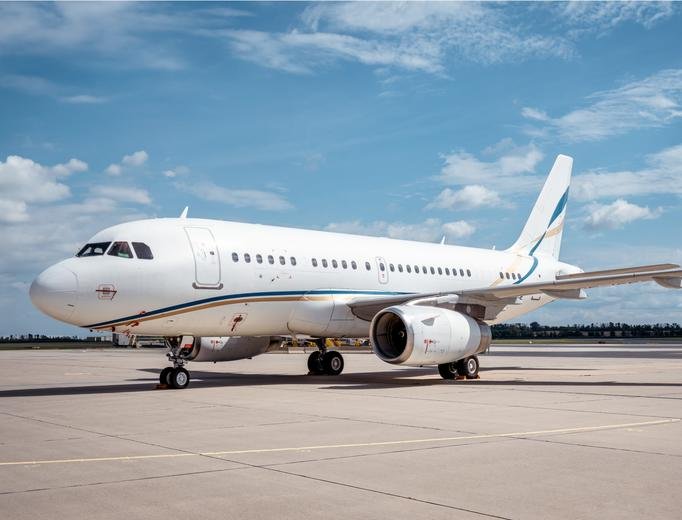
Boeing 737 Aircraft – History
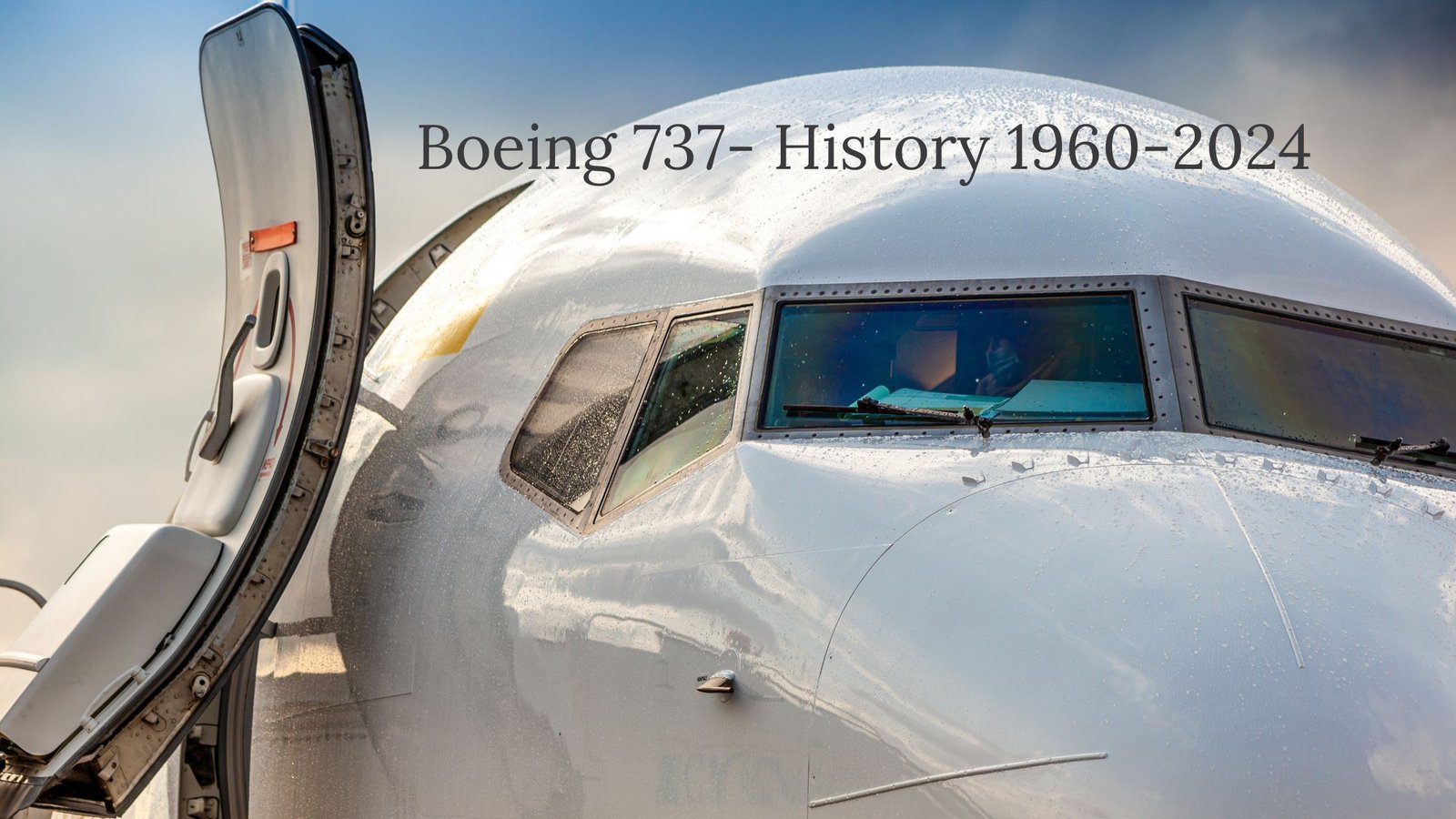
The Complete History of the Boeing 737: Every Generation, Every Model
Six decades, four generations, and more than 12,500 aircraft delivered — the story of how a 1964 market study became the backbone of global short-haul aviation.
The Boeing 737 is one of the two most successful commercial jet programs in aviation history — more than 12,572 aircraft delivered since 1967, with an estimated 9,000+ still in active service worldwide today. This is its complete story: six decades of engineering evolution, market dominance, and hard-learned lessons — updated for where the program actually stands in September 2026, not where it stood when this article was first written in 2024.
The Birth of the Boeing 737 (1964–1968)
In the early 1960s, Boeing's engineers and sales team identified a widening gap in the market: airlines needed a reliable, economical jet for short regional routes — something smaller than the 707 and 727, which dominated long-haul flying. The result was a clean-sheet design that would become aviation's most successful narrow-body program.
April 9, 1967: The Boeing 737-100 took its first flight from Boeing Field in Seattle. Lufthansa was the launch customer, receiving the first delivery in December 1967 — making it the only U.S. narrowbody to launch with a non-U.S. airline.
Boeing made a bold structural choice: mount the engines beneath the wings rather than at the tail (as Douglas did on the DC-9). This lowered the aircraft's center of gravity, simplified ground maintenance, and allowed a wider fuselage cross-section. That decision still defines the 737's shape today.
737-100 First Flight
The original prototype takes off from Boeing Field. Powered by Pratt & Whitney JT8D engines. Seats 85–130 passengers with a range of 2,850 km.
737-200 Enters Service
A stretched fuselage adds 1.88 m and boosts range to 3,440 km. This variant becomes the workhorse of the 1970s, with 1,144 aircraft eventually delivered — far outselling the 100 series.
Original Series Specifications: 737-100 vs 737-200
← Scroll to see all columns →
| Specification | 737-100 | 737-200 |
|---|---|---|
| First Flight | 1967 | 1967 |
| Length | 28.65 m | 30.53 m |
| Wingspan | 28.35 m | 28.35 m |
| Max Takeoff Weight | 49,940 kg | 52,390 kg |
| Range | 2,850 km | 3,440 km |
| Passenger Capacity | 85–130 | 102–136 |
| Engines | Pratt & Whitney JT8D | |
| Total Produced | 30 | 1,144 |
Source: Boeing production records; Wikipedia 737 Original series data, cross-checked September 2026.
The Classic Series: 737-300, -400, -500 (1984–2000)
By the early 1980s, the original 737s were showing their age against newer, more fuel-efficient competitors. Boeing's answer was the "Classic" series — a ground-up re-engine using the CFM International CFM56 turbofan, which cut fuel burn dramatically and reduced noise to meet tightening airport regulations.
737-300
Launched 1984. The launch variant of the Classic series, seating up to 149 passengers. First to use CFM56 engines. Became a bestseller for short-to-medium European and domestic U.S. routes.
737-400
Launched 1988. A stretched -300, designed to replace aging 727-200s. Highest capacity of the Classic series at up to 188 seats, but slightly shorter range due to added weight.
737-500
Launched 1990. A compact replacement for the 737-200, pairing Classic-era avionics with a smaller airframe. Popular with airlines serving thin routes and airports with challenging terrain.
Classic Series Technical Specifications
← Scroll to see all columns →
| Specification | 737-300 | 737-400 | 737-500 |
|---|---|---|---|
| Entry into Service | 1984 | 1988 | 1990 |
| Length | 33.4 m | 36.45 m | 31.01 m |
| Wingspan | 28.88 m | 28.88 m | 28.88 m |
| Max Takeoff Weight | 62,820 kg | 68,040 kg | 60,560 kg |
| Range | 4,204 km | 3,815 km | 4,444 km |
| Passenger Capacity | 128–149 | 146–188 | 108–132 |
| Engines | CFM International CFM56-3 | ||
| Total Produced | 1,988 (1,113 + 486 + 389) | ||
Next Generation Series: 737-600 Through -900 (1998–Present)
The 737 Next Generation (NG) series, introduced from 1998, was Boeing's most significant rework of the platform since the original design. Engineers redesigned the tail, extended the wingspan by roughly 24% over the Classic, added winglets to reduce drag, and introduced a modern glass cockpit. The 737-800 from this family became the best-selling 737 variant ever built, with deliveries approaching 5,000 aircraft. NG production wound down through the early-to-mid 2020s as Boeing shifted its narrow-body line fully to the MAX, but thousands of NG-series jets remain in daily service today.

737-600
Smallest NG variant. Designed to replace the 737-500. Despite competitive economics, it saw weak sales — only 69 delivered — as airlines preferred larger-capacity options.
737-700
Direct replacement for the 737-300. A strong seller, especially among U.S. carriers. Southwest Airlines made it the backbone of its fleet. The BBJ (Boeing Business Jet) is based on this variant.
737-800
The most popular 737 variant ever built, with nearly 5,000 delivered. The -800 became the standard aircraft for low-cost carriers globally, from Ryanair in Europe to Lion Air in Southeast Asia.
737-900 / -900ER
Longest NG variant. Targeted at the Airbus A321. The 900ER added extended-range tanks and an additional emergency exit. United and Lion Air were major operators.
Next Generation Series Technical Specifications
← Scroll to see all columns →
| Specification | 737-600 | 737-700 | 737-800 | 737-900 |
|---|---|---|---|---|
| Entry into Service | 1998 | 1998 | 1998 | 2001 |
| Length | 31.2 m | 33.6 m | 39.5 m | 42.1 m |
| Wingspan | 35.8 m | 35.8 m | 35.8 m | 35.8 m |
| Max Takeoff Weight | 65,090 kg | 70,080 kg | 79,015 kg | 85,139 kg |
| Range | 5,648 km | 6,370 km | 5,765 km | 5,925 km |
| Passenger Capacity | 108–130 | 126–149 | 162–189 | 178–220 |
| Engines | CFM International CFM56-7B | |||
The 737 MAX Series: Innovation and Recovery (2011–Present)
Boeing launched the 737 MAX program in August 2011, driven by the competitive threat of the re-engined Airbus A320neo. Rather than design an all-new aircraft, Boeing chose to re-engine the 737 NG with the CFM LEAP-1B engine — delivering roughly 15% better fuel efficiency — while making targeted aerodynamic improvements.
The 737 MAX was grounded worldwide from March 2019 to November 2020 following two fatal crashes that killed 346 people. The cause — MCAS software failures — led to sweeping redesigns, new pilot training requirements, and fundamental changes to Boeing's engineering oversight. The aircraft returned to service with enhanced safeguards and has flown well over a million flights since without a recurrence of an MCAS-related accident (see the Safety section below for developments since 2024).
737 MAX 7
Smallest MAX variant, replacing the 737-700. Offers the longest range in the MAX family. FAA type-certified August 3, 2026 — well over two years later than Boeing originally planned — with first delivery to launch customer Southwest Airlines pending as of this writing.
737 MAX 8
The most-ordered MAX variant. Direct replacement for the 737-800. Operated by American Airlines, United, Ryanair, and dozens of carriers worldwide. The two aircraft lost in the 2018–2019 accidents were MAX 8s.
737 MAX 9
Stretched version of the MAX 8. Gained unwanted attention in January 2024 when an Alaska Airlines MAX 9 suffered a door-plug blowout in flight, triggering a temporary FAA grounding of MAX 9 aircraft with the same door-plug configuration.
737 MAX 10
Largest MAX variant and Boeing's direct competitor to the Airbus A321neo. Still awaiting final FAA certification as of September 2026 — flight testing completed in July 2026 and certification is expected imminently — with first delivery to launch customer WestJet expected in 2027.
737 MAX Series Technical Specifications
← Scroll to see all columns →
| Specification | MAX 7 | MAX 8 | MAX 9 | MAX 10 |
|---|---|---|---|---|
| Certification / First Delivery | Certified Aug 2026; delivery pending | Certified & delivered since 2017 | Certified & delivered since 2018 | Not yet certified (pending, ~Oct 2026 expected) |
| Length | 35.56 m | 39.52 m | 42.16 m | 43.8 m |
| Wingspan | 35.92 m | 35.92 m | 35.92 m | 35.92 m |
| Max Takeoff Weight | 80,286 kg | 82,191 kg | 88,314 kg | 89,815 kg |
| Range | 7,130 km | 6,570 km | 6,570 km | 6,110 km |
| Passenger Capacity | 138–153 | 162–189 | 178–220 | 188–230 |
| Fuel Efficiency vs NG | ~15% improvement (LEAP-1B engines) | |||
Certification dates per FAA and Boeing newsroom statements, verified September 2026.
Safety Record: A Generation-by-Generation Analysis
Across nearly 59 years and over 12,500 deliveries, the 737's safety record tells a nuanced story — one of steady, dramatic improvement through the Classic and NG eras, interrupted sharply by the MAX crisis of 2018–2019.
Whole-program lifetime totals across every 737 variant combined, compiled from Aviation Safety Network / NTSB accident records (via Wikipedia's "List of accidents and incidents involving the Boeing 737"), as of the most recent available compilation.
An earlier version of this article stated precise hull-loss, fatal-accident, and fatality counts broken out separately for the Original, Classic, and NG generations. We could not independently verify those exact figures to a standard we're comfortable publishing — Boeing's own Statistical Summary of Commercial Jet Airplane Accidents reports generational accident rates per million departures rather than a clean table of raw counts, and other public compilations don't cleanly split by 737 sub-generation either. Rather than repeat unverifiable numbers, we've replaced them with the sourced whole-program total above, the qualitative summary below, and the MAX-specific figures — which are precisely documented — later in this section.
Original Series (737-100 & -200)
The early 737s operated during the 1970s and 1980s, an era of far less mature global aviation safety standards, less capable weather radar and terrain-awareness technology, and less standardized crew training — factors that affected every aircraft type flying at the time, not just the 737. Most accidents from this period were attributed to crew factors, adverse weather, and air traffic control issues rather than fundamental airframe flaws. Because the type flew for decades under these conditions, the Original series accounts for a disproportionate share of the 737 family's lifetime hull-loss total shown above. The 737-200's "gravel-kit" variant, notably, proved particularly robust in remote unpaved-runway operations and remains in service in a handful of markets today.
Classic Series (737-300, -400, -500)
The Classic series showed meaningful safety improvement over the Original series. Its most consequential accidents were United Airlines Flight 585 (1991) and USAir Flight 427 (1994) — both caused by an uncommanded rudder hardover. The resulting investigation led to a complete redesign of the 737's rudder power control unit and established new international standards for handling-qualities certification that influenced aircraft design well beyond the 737 program.
Next Generation Series (737-600 through -900)
With over 7,000 delivered and billions of passenger-miles flown, the NG series has an outstanding safety record relative to its operational scale — among the best of any commercial jet family in absolute terms. The 737-800 in particular is regarded as one of the safest commercial aircraft ever built per departure. Notable NG-era accidents — including Gol Transportes Aéreos Flight 1907 (2006), Kenya Airways Flight 507 (2007), Turkish Airlines Flight 1951 (2009), and flydubai Flight 981 (2016) — remain individually well documented, but do not represent a systemic type-wide pattern the way the MAX's MCAS issue did.
737 MAX
MAX figures are precisely documented and well corroborated across independent sources — unlike the earlier generations discussed above. No additional MAX hull losses or fatal accidents have occurred since March 2019.
The Maneuvering Characteristics Augmentation System (MCAS) was added to compensate for the larger LEAP-1B engines changing the aircraft's handling characteristics. MCAS relied on a single angle-of-attack sensor. When that sensor failed on Lion Air Flight 610 (October 2018) and Ethiopian Airlines Flight 302 (March 2019), it repeatedly commanded nose-down trim — which neither crew was able to overcome, killing all 346 people aboard the two flights combined. Post-grounding fixes included dual-sensor inputs, pilot override authority, and mandatory simulator training before the MAX returned to service in November 2020.
The January 2024 Alaska Airlines door-plug incident (detailed above) prompted a wider regulatory response than the headline grounding alone. In September 2024, the NTSB issued an urgent safety recommendation covering a rudder rollout guidance actuator affecting both NG and MAX fleets. In June 2025, the NTSB's final report on the Alaska Airlines incident attributed the root cause to gaps in Boeing's manufacturing quality-control processes and employee training, alongside FAA oversight shortfalls. In July 2025, an American Airlines 737 MAX 8 experienced a non-fatal landing-gear-related fire during a takeoff abort at Denver; all 179 occupants evacuated with one minor injury. None of these events involved MCAS or resulted in a hull loss, and no new fatal MAX accidents have occurred since January 2024 — but they underscore that Boeing's manufacturing-quality scrutiny, not just MCAS software, remains an active regulatory focus through 2026.
Global Fleet & Top Operators (2026)
More than 12,572 Boeing 737s have been delivered since 1967, with an estimated 9,000+ still in active service — spread across every inhabited continent, operated by airlines ranging from global legacy carriers to ultra-low-cost startups. Precise, continuously updated fleet counts require a live fleet-tracking subscription (e.g., ch-aviation, Cirium, planespotters.net); the regional split below is an approximate, order-of-magnitude picture rather than an exact current census.
Approximate 737 Fleet Distribution by Region
Relative ordering based on known operator geography (Southwest, Ryanair, and major North Asian/Chinese carriers); not sourced to a specific current fleet census.
Top 5 Boeing 737 Operators
-
1Southwest Airlines (USA)Operates an all-737 fleet of 700+ aircraft — the only major U.S. carrier to fly exclusively one aircraft type. Primarily 737-700s and 737-800s, with MAX 8s an increasing share of the fleet.
-
2Ryanair (Ireland)Europe's largest low-cost carrier. Operates 450+ 737-800s and holds one of the largest MAX 8 order books in history, including the high-density "MAX 200" configuration.
-
3American Airlines (USA)Fleet of 300+ 737s, including 737-800s and MAX 8s, used across its dense domestic network and short-haul international routes.
-
4United Airlines (USA)Operates 300+ 737s spanning the 737-700, 737-800, and 737 MAX 9 variants. The January 2024 door-plug incident involved a United-operated aircraft.
-
5China Southern Airlines (China)Asia's largest 737 operator, with 200+ aircraft across NG and MAX variants serving China's vast domestic network.
Key Technical Innovations Through Six Decades
Engine Evolution
Pratt & Whitney JT8D (Original Series, 1967–1988): The first-generation engine. Reliable but loud by modern standards, and not competitive on fuel efficiency with the turbofans that followed.
CFM56-3 (Classic Series, 1984): The breakthrough. Fuel consumption dropped 20–25% versus the JT8D. The engine's larger diameter required the characteristic "hamster pouch" flat-bottomed nacelle, because the 737's low ground clearance left no room to mount it conventionally beneath the wing.
CFM56-7B (NG Series, 1997): Further refinements to the fan blades and combustor cut emissions and noise, earning Stage 4 noise certification globally. It became the most widely produced aircraft engine variant in history.
CFM LEAP-1B (MAX Series, 2017): Composite fan blades, an advanced combustor, and a 3D-woven fan inlet deliver roughly 15% better fuel efficiency than the CFM56-7B. The engine's larger diameter is what necessitated MCAS — moving it forward and upward changed the aircraft's handling characteristics.
Aerodynamic Milestones
The 737 NG series increased wingspan from 28.88 m to 35.8 m — roughly a 24% jump — enabling a higher aspect ratio and reduced induced drag. The Blended Winglet, introduced on the NG in 2001, improved fuel efficiency by a further 4–5%. The MAX series upgraded to the Advanced Technology (AT) Winglet, a split-tip design Boeing states provides an additional efficiency gain over the blended winglet.
Avionics and Cockpit
The NG series introduced Boeing's first full glass cockpit on the 737: the Honeywell-supplied Common Display System (CDS), with large LCD screens replacing the original electromechanical instruments. The MAX upgraded to a larger-format display suite with improved situational-awareness tools. Critically, both the NG and MAX cockpits are rated as type-similar — pilots can transition between them with differences training rather than a full type rating, a key economic selling point for airlines (and part of why the MCAS-related training gaps were so consequential).
Because the 737 has always been designed for low-cost ground operations, it can be serviced without ground power carts. The APU (Auxiliary Power Unit) and ground-accessible service panels were engineered for rapid turnarounds — a feature that low-cost carriers depend on to keep aircraft flying 12–14 hours per day.
The Future of the Boeing 737
Boeing's near-term commercial future remains closely tied to the 737 MAX program. With roughly 4,846 unfilled MAX orders on its books as of June 30, 2026, the program remains central to Boeing's commercial recovery — though real headwinds persist, from certification delays to sustained manufacturing-quality scrutiny.
Boeing 737 MAX 10 Certification
The MAX 10 — critical for competing against the Airbus A321neo — had not received final FAA certification as of mid-September 2026. Flight testing concluded in July 2026 after 976 certification flights and more than 2,060 flight hours across three test aircraft; both Boeing and FAA officials have indicated certification is imminent, with an expected timeline around October 2026, though MAX-program timelines have slipped before. Launch customer WestJet expects first deliveries in 2027.
737 MAX 7 Certification
The MAX 7 received its FAA type certificate on August 3, 2026. As of this writing, Boeing and launch customer Southwest Airlines were preparing for the first delivery, which had not yet occurred.
737 MAX 200 (High-Density Variant)
Ryanair operates a variant sometimes called the "MAX 200" — a high-density MAX 8 configured for up to 197 passengers with reinforced floors and additional exits, designed to drive seat-mile costs to their lowest possible level for short-haul operations. As of June 2026, roughly 207 MAX 200s remained in Ryanair's unfilled order book.
Competition: The Airbus A320neo Family
The rivalry with the Airbus A320neo family has tightened considerably since this article was first written. A320-family cumulative deliveries passed roughly 12,260 aircraft in late 2025, running nearly neck-and-neck with the 737's 12,572+ — meaning the "world's most-produced jet" title, long assumed to belong to the 737, is now a genuinely close race rather than a foregone conclusion. Airbus captured the majority of single-aisle orders in several recent years, partly reflecting lingering MAX reputational concerns and Boeing's production-quality issues; Boeing's recovery depends on sustaining higher, more reliable delivery rates through the remainder of the decade.
Sustainable Aviation Fuels & the 737
Boeing has certified the 737 MAX for 50% Sustainable Aviation Fuel (SAF) blends, with a stated goal of 100% SAF compatibility by 2030. The LEAP-1B engine's combustor design is well-suited to higher SAF concentrations, giving the MAX platform a credible path into a decarbonizing aviation sector.
Corporate & Regulatory Context
Boeing's broader legal exposure from the 2018–2019 MCAS crashes remained unresolved for years after the original grounding: a proposed 2024 guilty-plea agreement on a felony fraud conspiracy charge was rejected by a federal judge in late 2024 over procedural objections, and the matter continued through further proceedings into 2025–2026. Readers researching the program's corporate and legal history should check current court filings directly, as this remains an evolving situation.
Boeing holds approximately 4,846 unfilled 737 MAX orders out of 7,206 total orders placed, with 2,360 delivered to date. The backlog breaks down as roughly 3,118 MAX 8 (including 207 MAX 200), 1,404 MAX 10, 276 MAX 7, and 190 MAX 9 — representing several years of production at current build rates and demonstrating sustained airline demand despite the program's turbulent history.
Charter & Acquire a Boeing 737 with Safe Fly Aviation
For all its history as an airline workhorse, the Boeing 737 also shows up regularly in the charter and cargo world — moving sports teams, tour groups, and pilgrimage parties on the passenger side, and time-critical freight on the cargo side. Safe Fly Aviation arranges both, working as a broker and charter arranger with access to a global network of licensed operators — Safe Fly does not itself operate commercial aircraft; every flight is performed by an appropriately licensed Air Operator Certificate (AOC) holder, matched to the mission.
Passenger Group Charter
Through Safe Fly's commercial airliner charter service, the Boeing 737-800 is listed as a standard narrow-body option — seating roughly 160–189 passengers — for corporate events, sports-team travel, and domestic or medium-haul international group movements of 20 to 500+ passengers, tailored to group size and itinerary.
Freighter & Cargo Charter
On the cargo side, Safe Fly provides access to converted 737 freighters through its global operator network, with charter quotations typically available in under 90 minutes. Two 737 freighter types are covered in dedicated Safe Fly guides: the Boeing 737-800 Freighter (737-800BCF), a modern, efficient conversion well suited to regional and medium-haul cargo missions, and the Boeing 737-400 Freighter, a smaller, older conversion still active in many regional cargo markets.
For readers tracking how the 737's role in commercial fleets is shifting, Safe Fly's aviation-intelligence desk also covers the growing trend of passenger 737s converting to cargo duty as airlines retire older units — see GeoSky Airlines Shifts to Cargo, Retires Boeing 737s — as well as how the 737 stacks up against its closest rival in Boeing 737 vs Airbus A320: Market Dynamics and Airbus A320 vs Boeing 737: Cockpit Philosophy.
Chartering a 737 for Your Group, or Sourcing a Freighter for Cargo?
Safe Fly Aviation's charter desk can put together a Boeing 737 passenger or freighter quotation — matched to your group size, route, and timeline — through our global operator network.
Related Safe Fly Aviation Guides
Frequently Asked Questions
Answers to the most commonly searched questions about the Boeing 737, updated for September 2026.
When did the Boeing 737 first fly?
The Boeing 737 took its first flight on April 9, 1967, at Boeing Field in Seattle. The prototype was the 737-100. Lufthansa was the launch customer, receiving the first production aircraft in December 1967.
How many Boeing 737s are in service today?
Boeing had delivered more than 12,572 737s as of May 2026 — up from roughly 10,000 a few years earlier. A precise, continuously updated in-service count isn't publicly tracked in real time; based on delivery and retirement patterns, a reasonable estimate is that 9,000 or more remain in active service worldwide across the Classic, NG, and MAX generations.
Why was the Boeing 737 MAX grounded?
The 737 MAX was grounded globally in March 2019 following two fatal crashes: Lion Air Flight 610 (October 2018, Indonesia) and Ethiopian Airlines Flight 302 (March 2019, Ethiopia), which together killed 346 people. Investigations found that MCAS — a flight-control system — activated erroneously due to a single faulty angle-of-attack sensor, repeatedly pushing the nose down in a way neither crew could override. The aircraft returned to service in November 2020 after extensive software redesigns and new training requirements.
What is the most popular Boeing 737 model?
The Boeing 737-800 (Next Generation series) is the most-produced variant, with nearly 5,000 delivered, followed by the 737 MAX 8. The 737-800 is the backbone of fleets at Ryanair, Air China, and dozens of other carriers worldwide.
Is the Boeing 737 MAX safe to fly in 2026?
Aviation regulators worldwide — including the FAA, EASA, and other national authorities — recertified the 737 MAX in November 2020 after a comprehensive MCAS software redesign, hardware changes, and enhanced pilot training. No new MCAS-related accidents have occurred since. Two later incidents — the January 2024 Alaska Airlines door-plug blowout and a July 2025 non-fatal landing-gear fire at Denver — were unrelated to MCAS; the NTSB's June 2025 final report attributed the door-plug incident to Boeing manufacturing quality-control gaps and FAA oversight shortfalls, which has kept manufacturing quality under continued regulatory scrutiny through 2026.
Which airline has the most Boeing 737s?
Southwest Airlines is the world's largest operator of the Boeing 737, with a fleet exceeding 700 aircraft — all of which are 737 variants. Southwest has operated exclusively Boeing 737s since its founding, simplifying maintenance, training, and scheduling.
Can I charter a Boeing 737 through Safe Fly Aviation?
Yes. Safe Fly Aviation arranges Boeing 737 charters as a broker, matching your requirement to a licensed AOC-holding operator — passenger group charter (roughly 160–189 seats) for corporate events, sports teams, and large-group movements, and freighter charter of the 737-800BCF and 737-400F for cargo missions. Safe Fly does not operate aircraft itself; contact info@safefly.aero or +91 7840000473 for a quotation.
Specifications, delivery figures, and safety statistics are compiled from Boeing, FAA, NTSB, and independent aviation-industry sources and are accurate to the best of our research as of September 2026. Aviation data changes frequently — always confirm current certification status, delivery counts, and fleet figures directly with Boeing, the FAA, or a qualified aviation data provider before relying on them for business decisions.