Airbus A320 vs Boeing 737 Cockpit Philosophy | Fly-by-Wire, Flight
Airbus A320 vs Boeing 737 Cockpit Philosophy: Fly-by-Wire, Flight Laws, ECAM/EICAS & MCAS Analysis
Sidestick vs Yoke · Normal/Alternate/Direct Law · ECAM vs EICAS · MCAS Technical Explanation · Airline Operational Perspectives

Why cockpit philosophy matters for airlines, pilots & safety
The Airbus A320 vs Boeing 737 comparison represents two fundamentally different visions of how humans and machines should interact in the flight deck. One philosophy trusts computers with envelope protections; the other places ultimate authority in the pilot's hands. This divergence affects pilot training costs, airline operations, safety margins, and even fuel efficiency. Over 34,000 combined aircraft delivered — more than 70% of the global narrowbody fleet — make this Airbus A320 vs Boeing 737 cockpit philosophy comparison essential reading for aviation professionals.
Historical divergence: Automation-first vs pilot-first
✈️ Airbus Automation-First Philosophy (1988–present)
The A320 launched with digital fly-by-wire, sidestick controllers, and flight envelope protections. Airbus' philosophy: the computer should prevent pilots from exceeding safe flight parameters.
✈️ Boeing Pilot-Control Philosophy (1967–present)
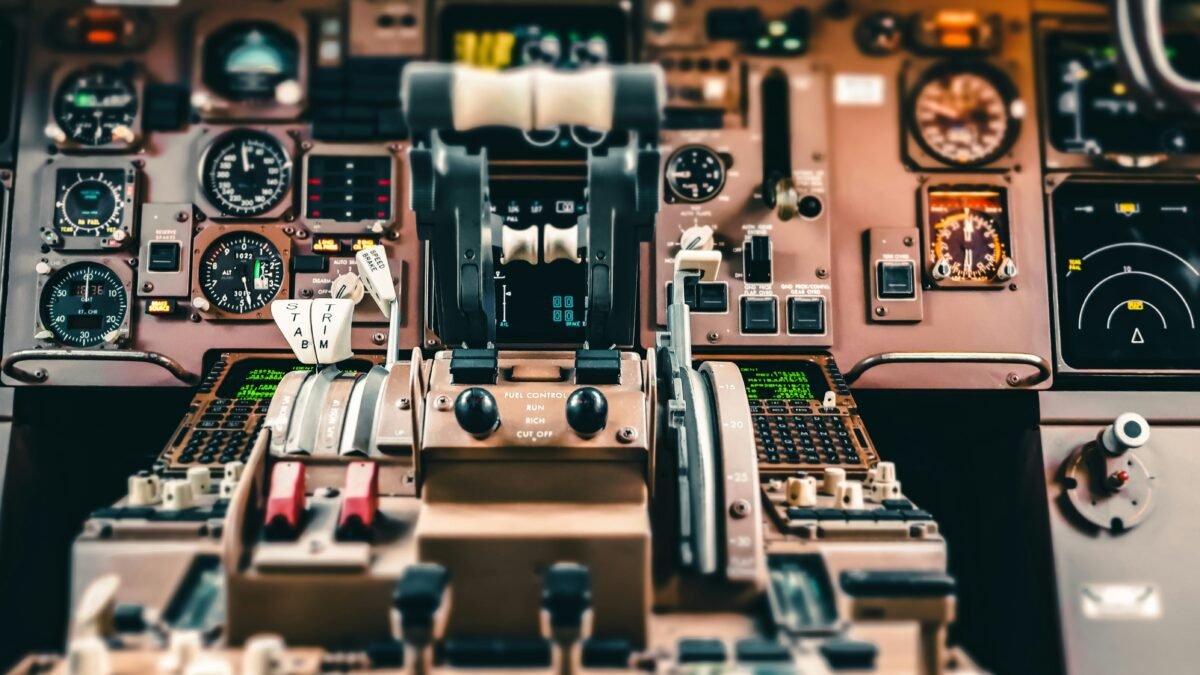
The 737 family retains control yokes and manual-reversion capabilities. Boeing believes pilots must retain ultimate authority, with automation as an aid — not a governor.
Sidestick vs Yoke: Ergonomic and control trade-offs
| Feature | Airbus A320 Sidestick | Boeing 737 Yoke |
|---|---|---|
| Location | Left side of captain, right side of first officer | Center-mounted, moving column |
| Movement | Non-moving, spring-loaded to center | Full mechanical movement, artificial feel |
| Interconnection | Not linked; independent sidesticks; priority button | Linked mechanically; both move together |
| Advantages | Unobstructed view, more legroom, lighter, reduces pilot fatigue | Tactile feedback, clear control position awareness |
| Disadvantages | No tactile feedback, potential for dual input conflicts | Obstructs instrument panel, heavier, more fatigue on long sectors |
Airbus fly-by-wire flight control laws explained
🟢 Normal Law
Default mode. Provides: pitch attitude protection (±30°), load factor limitation, high-AOA (stall) protection, high-speed protection, bank angle protection. Pilots cannot stall the aircraft.
🟡 Alternate Law
Engages after certain failures. Stall protection remains but may degrade. Bank angle protection removed. Requires more careful handling.
🔴 Direct Law
After severe failures. Sidestick directly commands control surfaces. No protections — conventional controls. Pilots must manage stall/overspeed manually.
Boeing 737 control systems: Hydro-mechanical with artificial feel
⚙️ Hydro-mechanical controls
Control columns connect via cables to hydraulic actuators. No fly-by-wire for primary pitch/roll. Provides direct tactile feedback.
🎛️ Artificial feel unit
Provides increasing column force as airspeed increases, simulating aerodynamic feedback.
📈 Speed trim system
Automatically trims stabilizer to maintain trim speed during thrust changes.
Maneuvering Characteristics Augmentation System (MCAS): Technical explanation
Lessons learned: The MCAS case became a crucial human factors and certification evolution case study. It underscores the importance of pilot awareness of automation behavior, robust sensor redundancy, and clear communication of system functionality in pilot training.
ECAM vs EICAS: Crew alerting philosophy
| System | Airbus ECAM | Boeing EICAS |
|---|---|---|
| Philosophy | Computer prescribes actions (automated checklist) | Computer informs failure; crew references QRH |
| Failure response | Displays failure message, required actions, status page | Shows failure message; crew follows QRH procedure |
| Workload during emergencies | Lower; automated checklist reduces memory items | Higher; requires manual QRH navigation |
Automation, workload, and skill retention
Why airlines choose each philosophy
📊 Airbus operators
IndiGo, easyJet, Frontier, Delta value: common type rating across A318-321, lower pilot training hours, reduced fatigue.
📊 Boeing operators
Southwest, Ryanair, United value: manual handling proficiency, fleet commonality, established maintenance networks.
Future of airline cockpits
Both manufacturers are developing touchscreen cockpits, AI-assisted flight planning, and eventually single-pilot operations. Airbus' DragonFly tests autonomous taxi and landing. Boeing's ecoDemonstrator explores similar automation. The philosophical gap may narrow, but fundamental differences will remain for decades.
Conclusion: Neither is superior — different tools for different missions
The A320 cockpit is a computer with wings; the 737 cockpit is an airplane with computers. Neither philosophy is universally superior. The best cockpit depends on airline training culture, route structure, and operational philosophy. Both designs have produced safe, efficient air travel for billions of passengers.
Frequently asked questions
Airbus prioritizes unobstructed views and fly-by-wire integration. Boeing retains yokes for tactile feedback and pilot familiarity.
In Normal Law, protections limit control inputs; pilots cannot stall. In Alternate or Direct Law, more authority is available.
On Airbus, if the aircraft approaches stall, autothrottle automatically engages TOGA power regardless of pilot thrust lever position.
787 and 777 have advanced FBW. 737 retains conventional controls. 737 MAX introduced FBW spoilers but keeps conventional pitch/roll.
Both have excellent safety records. Safety depends on training, maintenance, and crew resource management — not inherent design superiority.
Flight envelope protections, ECAM automated checklists, and auto-trim functionality reduce pilot workload significantly.
Requires full type rating (4–6 weeks). Key challenges: yoke feel, manual trim, different automation logic.
Studies suggest A320 pilots report lower fatigue on long flights due to automation handling more tasks.
ECAM prescribes actions automatically; EICAS informs failures but requires manual QRH reference.
No. Stick shaker warns of stall, but pilot can over-ride and stall aircraft. Overspeed warning exists without automatic prevention.
Normal Law provides full protections. Alternate Law degrades protections after failures. Direct Law removes all protections.
MCAS on 737 MAX improves pitch handling at high AOA. After 2018–2019 accidents, MCAS was redesigned with redundancy and limited authority.
Both. IndiGo, easyJet favor Airbus. Ryanair, Southwest favor Boeing. Choice driven by fleet commonality and training costs.
Related aviation intelligence
Need fleet consultancy?
SafeFly Aviation provides independent aircraft acquisition, fleet strategy, and operational intelligence for airlines worldwide.