Evolution of Successful Jet Engine Models in Aviation
Evolution of Successful Jet Engine Models in Aviation
From the earliest turbojets to record-setting turbofans: the powerplants that shaped modern flight, and the open-fan designs shaping what comes next.
In aviation, jet engines represent a pinnacle of engineering innovation, powering everything from commercial airliners to military fighters. At Safe Fly Aviation, we're dedicated to sharing in-depth knowledge about flight safety, technology, and history to help enthusiasts, pilots, and industry professionals stay informed. This article examines the most successful jet engine models developed worldwide, and how they shaped modern air travel.
Jet engines have revolutionised transportation since their inception in the mid-20th century, enabling faster, longer, and more efficient flights. From early turbojets to today's high-bypass turbofans, these machines have evolved to meet demands for performance, fuel economy, and environmental standards.
Contents

Types of Jet Engines: A Brief Overview
Jet engines operate on the principle of Newton's third law, expelling high-speed exhaust to generate thrust. There are several types, each suited to specific applications:
- Turbojet engines: the simplest form, consisting of a compressor, combustion chamber, turbine, and nozzle. They excel in high-speed, high-altitude flight but are less efficient at lower speeds.
- Turbofan engines: an advancement over turbojets, featuring a large fan at the front that bypasses some air around the core for better efficiency and reduced noise. Ideal for commercial aviation.
- Turboprop engines: use a gas turbine to drive a propeller, blending jet efficiency with propeller thrust for regional and low-speed flights.
- Turboshaft engines: similar to turboprops but output shaft power for helicopters and other rotary-wing aircraft.
- Ramjet and scramjet engines: no moving parts; rely on high-speed airflow for compression. Used in supersonic and hypersonic applications.
These categories have given rise to numerous successful models, with turbofans dominating modern commercial fleets owing to their balance of power and efficiency.
Iconic Turbojet Models That Paved the Way
Early jet engines were primarily turbojets, marking the dawn of the jet age.
General Electric J79
Developed in the 1950s by GE in the United States, this afterburning turbojet powered iconic military aircraft like the F-4 Phantom and F-104 Starfighter. It delivered up to 17,900 lbf of thrust with afterburner and was produced in over 17,000 units, making it one of the most prolific turbojets ever built.
Rolls-Royce Avon
A British classic dating to the late 1940s, the Avon powered aircraft such as the English Electric Canberra and Hawker Hunter, with non-afterburning variants delivering roughly 6,500-11,000 lbf. Later afterburning versions used in the English Electric Lightning reached over 17,000 lbf. It was widely exported and adapted for industrial and marine use.
These models laid the groundwork for more advanced designs, transitioning aviation from propellers to jets.

Successful Turbofan Models Dominating Commercial Aviation
Turbofans have become the gold standard for passenger jets, with billions of flight hours logged. Here are some of the most successful models based on production numbers, reliability, and widespread adoption.
CFM International CFM56
A joint venture between GE (USA) and Safran (France), the CFM56 is the most produced high-bypass turbofan in history, with over 33,000 units delivered. It powers the Boeing 737 family and the Airbus A320ceo series, delivering thrust ranging from 18,500 to 34,000 lbf. Known for its fuel efficiency and low maintenance, it has accumulated more than 1 billion flight hours.
General Electric GE90
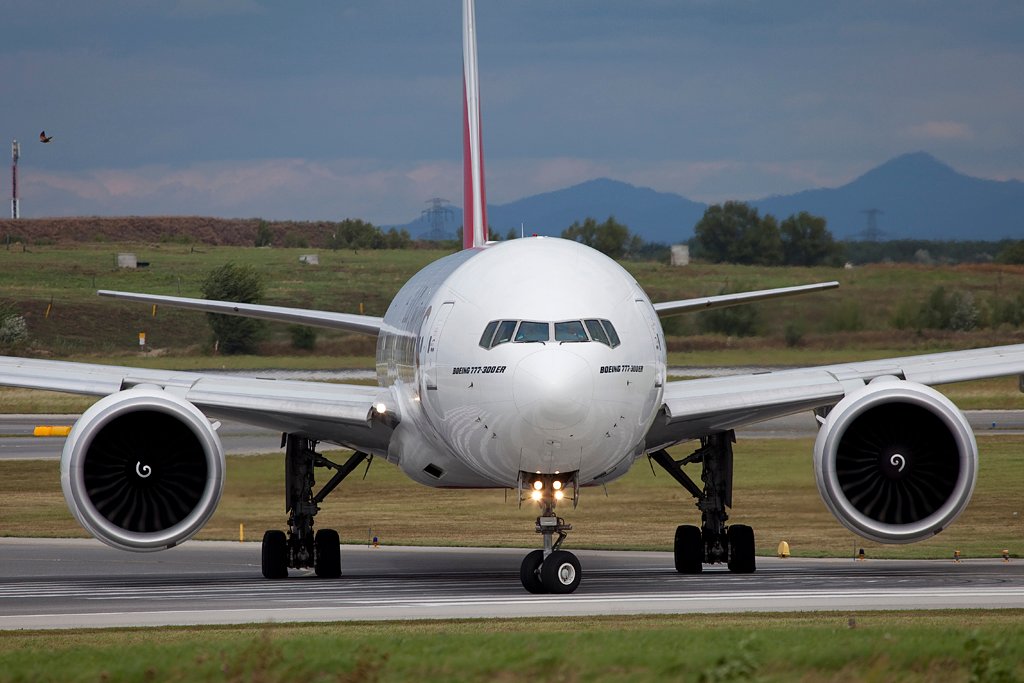
Built exclusively for the Boeing 777, the GE90-115B holds the record for the highest certified thrust of any commercial engine at 115,000 lbf — it briefly produced 127,900 lbf during 2003 certification testing, a record since surpassed by the GE9X. Introduced in 1995, more than 3,000 have now been delivered, with composite fan blades for lighter weight and improved performance.
Rolls-Royce Trent 1000
Part of the UK Trent family, this engine powers the Boeing 787 Dreamliner, with variants delivering roughly 62,000 to 81,000 lbf of thrust. Well over 1,000 units are in service, featuring advanced materials such as ceramic-matrix composites for higher temperatures and improved efficiency.
Pratt & Whitney PW4000
An American series powering widebodies like the Boeing 747, 767, and Airbus A330. With thrust from 52,000 to 99,000 lbf, over 2,500 have been produced since 1987. Its modular design facilitates upgrades, contributing to its longevity in fleet operations.
General Electric CF6
Another GE success, powering classics like the Boeing 747 and Airbus A300. Introduced in 1971, it delivers 41,500-75,000 lbf of thrust and more than 8,300 units have been delivered. Its high-bypass ratio improved fuel efficiency for widebody jets, marking a shift in long-range travel.
International Aero Engines V2500
Developed by IAE (Pratt & Whitney, Rolls-Royce, Japanese Aero Engines, MTU), the V2500 powers the Airbus A320ceo family, the McDonnell Douglas MD-90, and the Embraer C-390. With over 7,600 engines built, it offers thrust from roughly 23,000 to 31,600 lbf and is known for its reliability and fuel efficiency.
Other notable examples: the Pratt & Whitney JT8D, with more than 14,750 units produced for older jets such as the Boeing 727 and McDonnell Douglas DC-9/MD-80 — each contributing to safer, more reliable air travel.

Successful Soviet-Era Jet Engines: Military Powerhouses
The Soviet Union made significant strides in jet engine technology during the Cold War, with a focus on military applications. These engines powered some of the most-produced fighter jets in history and influenced global aviation.
Klimov VK-1
Developed in the late 1940s as a derivative of the British Rolls-Royce Nene, this was the first mass-produced Soviet turbojet engine. It delivered approximately 5,950 lbf of thrust and powered aircraft such as the MiG-15 and Il-28. Thousands were built, enabling the Soviet Air Force to enter the jet age rapidly after WWII.
Tumansky R-11
An afterburning turbojet from the 1950s, it powered the iconic MiG-21, one of the most-produced jet fighters ever (over 10,000 aircraft). Later variants delivered up to roughly 13,600 lbf in afterburner and featured a two-shaft design to improve performance at supersonic speeds. Its reliability and simplicity made it a staple in Soviet and allied forces for decades.
Lyulka AL-31
This afterburning turbofan, introduced in the 1980s, powers the Su-27 Flanker family and its derivatives, including exports to China and India. It provides 27,560 lbf of thrust in afterburner and incorporates thrust vectoring in some variants to enhance manoeuvrability. Thousands of units have been produced across the Su-27/30/35 family.
Klimov RD-33
Another 1980s afterburning turbofan, used in the MiG-29 Fulcrum. It delivers up to roughly 18,300 lbf of thrust and features a modular design for easier maintenance. Widely exported and upgraded over time, it has powered thousands of aircraft, demonstrating the Soviet Union's ability to build durable, high-thrust engines for agile fighters.
Legacy: these Soviet models, while often initially derived from Western technology, evolved into robust designs that emphasised power and mass production to achieve military self-sufficiency.

Modern Developments and Future Trends
The evolution of jet engines continues with next-generation powerplants like the GE9X (powering the Boeing 777X), Rolls-Royce UltraFan, and the CFM International RISE open-fan demonstrator program. The GE9X itself set a new test-thrust record of 134,300 lbf in 2017, surpassing the GE90-115B's earlier 127,900 lbf mark — though its certified production rating of 110,000 lbf is tuned for fuel efficiency rather than maximum output. These programs focus on:
- Open-fan architectures — CFM RISE targets up to 20% lower fuel burn and CO2 emissions versus today's CFM56/LEAP engines, for entry into service in the mid-2030s.
- Hybrid-electric propulsion for regional aircraft.
- Sustainable Aviation Fuel (SAF) compatibility, with 100% SAF capability already demonstrated on several programs.
- Advanced materials, including ceramic matrix composites and 3D-printed components.
- Hydrogen combustion research aimed at zero-carbon flight.
These innovations are shaping the next chapter of aviation history, balancing thrust, efficiency, and environmental performance.
Frequently Asked Questions
What is the most produced jet engine in aviation history?
The CFM International CFM56 is the most produced high-bypass turbofan in history, with more than 33,000 units delivered and over 1 billion flight hours logged. It powers the Boeing 737 family and the Airbus A320ceo series.
Which commercial jet engine produces the most thrust?
The General Electric GE90-115B, built exclusively for the Boeing 777-300ER and 777-200LR, has a certified rated thrust of 115,000 lbf, the highest of any engine in commercial service. During 2003 FAA certification testing it briefly produced 127,900 lbf, a record later surpassed by the GE9X's 134,300 lbf test result in 2017 — though the GE9X's certified production rating (110,000 lbf) is lower, since it is tuned for fuel efficiency on the Boeing 777X rather than maximum thrust.
What is the difference between a turbojet and a turbofan engine?
A turbojet sends all of its air through the engine core, making it efficient at high speed and altitude but noisy and fuel-hungry at lower speeds. A turbofan adds a large front fan that bypasses most of its air around the core, improving fuel efficiency and reducing noise, which is why turbofans power nearly all modern commercial airliners.
Which jet engines power the Boeing 737 and Airbus A320?
The CFM56 powers the Boeing 737 Classic/Next Generation and the original Airbus A320ceo family, while the IAE V2500 is the main alternative on the A320ceo family, with more than 7,600 units built. Newer-generation aircraft use the CFM LEAP and Pratt & Whitney GTF engines.
What were the most significant Soviet-era jet engines?
Key Soviet-era engines include the Klimov VK-1 (the first mass-produced Soviet turbojet, powering the MiG-15), the Tumansky R-11 (powering the MiG-21, one of the most-produced fighters ever), the Lyulka AL-31F (powering the Su-27 Flanker family), and the Klimov RD-33 (powering the MiG-29 Fulcrum).
What is the CFM RISE program and how much fuel could it save?
CFM RISE (Revolutionary Innovation for Sustainable Engines) is a joint GE Aerospace and Safran open-fan technology demonstrator program targeting up to 20% lower fuel burn and CO2 emissions compared to today's CFM56 and LEAP engines, alongside 100% sustainable aviation fuel and hydrogen compatibility, for entry into service in the mid-2030s.
Are older engines like the JT8D still in service today?
Yes, though in shrinking numbers. More than 14,750 Pratt & Whitney JT8D engines were produced for aircraft such as the Boeing 727 and McDonnell Douglas DC-9/MD-80, and a portion remain active on cargo conversions and legacy operators worldwide.
How can Safe Fly Aviation help with jet engine sourcing or trading?
Safe Fly Aviation provides engine trading, leasing, sourcing, and technical advisory services across CFM56, LEAP, V2500, PW4000, and other major engine families, supporting operators, lessors, and MRO facilities worldwide.
Sources and References
Related Safe Fly Aviation Services & Resources
Expert Engine Trading & Advisory Services
Safe Fly Aviation provides comprehensive engine trading, leasing, and technical advisory services for CFM56, LEAP, V2500, PW4000, and other engine families. Contact our engine trading desk today.
Discuss Engine Trading OpportunitiesConclusion
The evolution of jet engines represents one of humanity's greatest engineering achievements. From the early turbojets of the 1940s to today's ultra-efficient turbofans and tomorrow's open-fan and hydrogen-ready propulsion systems, each generation has pushed the boundaries of what's possible in aviation.
At Safe Fly Aviation, we combine deep technical knowledge with global trading capabilities to support operators, lessors, and maintenance facilities with their engine needs. Whether you're managing a CFM56-powered fleet or exploring next-generation options, our expertise ensures you stay ahead in this rapidly evolving industry.
Safe Fly Aviation's engine trading and technical advisory team brings over 15 years of combined experience in engine sales, leasing, sourcing, and MRO coordination. With a global network spanning multiple continents, the team supports operators, lessors, and maintenance facilities worldwide with expert engine trading and advisory services.
Disclaimer: Safe Fly Aviation is an aircraft charter brokerage, engine trading, and aviation advisory company. Information presented is based on manufacturer data and industry sources current as of September 2026. Specifications are subject to change.