Boeing 747-8F Guide: Specs, Range, Payload & Operators (2026) | Safe Fly Aviation
Aircraft Guide
The Ultimate Boeing 747-8F Freighter Guide: Specs, Performance & Operators

Key Takeaways — Boeing 747-8F at a Glance
- Maximum payload: 134 tonnes (134,000 kg) — the highest of any production freighter.
- Range with full payload: ~4,120 nm (7,630 km) — ideal for dense, long-haul cargo routes.
- Fuel efficiency: ~16% better per tonne-kilometre than the Boeing 747-400F.
- Main deck capacity: 46 pallet positions (39 main deck + 7 lower hold), plus nose door for outsized cargo.
- Global operators: Cargolux, UPS Airlines, Atlas Air, Cathay Pacific Cargo, Korean Air Cargo, and more.
- Next-generation successor: The Boeing 777-8F enters service in 2027, but the 747-8F will remain in demand for heavy/outsized cargo for years.
1. The Queen of the Skies, Freighter Edition
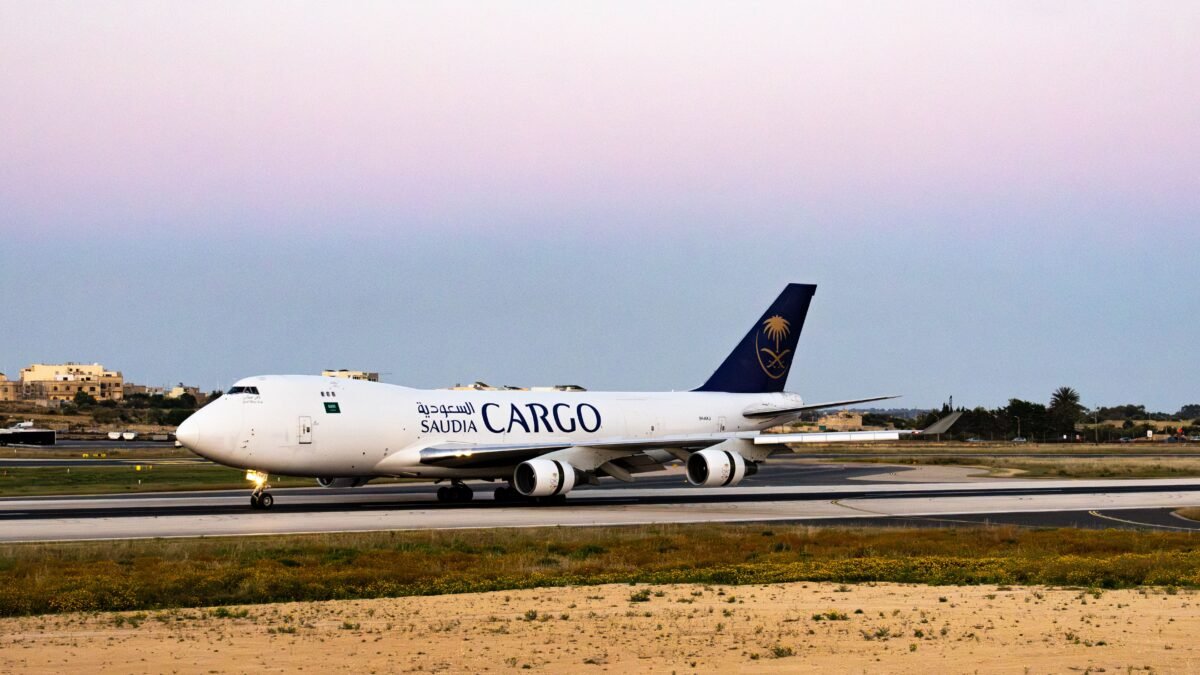
The Boeing 747-8F is the latest and most advanced version of the iconic 747 freighter family. As the largest commercial freighter in production, it offers unmatched payload capacity of 134 tonnes, the unique capability to load outsized cargo through a nose door, and a range that connects major cargo hubs across the globe. While production of the 747 programme concluded in 2023, the 747-8F remains a cornerstone of global air cargo operations and will continue serving for decades.
Designed as a direct replacement for the 747-400F, the 747-8F offers significant improvements in fuel efficiency, noise reduction, and payload capability. Its four-engine configuration provides operational flexibility on ultra-long-haul routes where ETOPS restrictions apply, and its nose-loading capability makes it irreplaceable for certain categories of oversized cargo such as oil drilling equipment, aircraft engines, and industrial machinery.
Safe Fly Aviation Insight
In our cargo charter operations, the 747-8F is the go-to aircraft for heavy and outsized cargo that simply cannot fit into a standard side-door freighter. While the 777F offers comparable range and better fuel efficiency per tonne, the 747-8F's nose door and higher payload make it the first choice for project cargo, oil & gas equipment, and humanitarian relief missions requiring maximum lift capacity.
2. Boeing 747-8F Technical Specifications
The 747-8F features a stretched fuselage (5.6 metres longer than the 747-400F), advanced GEnx-2B67 engines, and modernised cockpit systems. Below are the definitive specifications.
| Specification | Boeing 747-8F Value |
|---|---|
| Length | 76.25 metres (250 ft 2 in) |
| Wingspan | 68.45 metres (224 ft 7 in) |
| Height | 19.40 metres (63 ft 8 in) |
| Maximum Takeoff Weight (MTOW) | 447,700 kg (987,000 lb) |
| Maximum Structural Payload | 134,000 kg (134 tonnes) |
| Maximum Fuel Capacity | 227,600 litres (60,125 US gal) |
| Main Deck Cargo Volume | ~688 m³ (24,300 ft³) |
| Lower Deck Cargo Volume | ~162 m³ (5,720 ft³) |
| Total Cargo Volume | ~850 m³ (30,020 ft³) |
| Main Deck Pallet Positions | 39 × 96×125-inch pallets (plus nose door) |
| Lower Hold Pallet Positions | 7 additional pallets |
| Engines | 4 × General Electric GEnx-2B67 |
| Thrust per Engine | 66,500 lbf (296 kN) |
| Typical Cruise Speed | Mach 0.845 (~493 knots / 913 km/h) |
| Cockpit Crew | 2 pilots |

3. Performance: Range, Payload & Fuel Burn
The 747-8F offers an impressive payload-range envelope that makes it suitable for the world's most demanding cargo routes.
Payload-Range Capability
| Payload | Approximate Range | Example Route |
|---|---|---|
| 134 tonnes (max payload) | 4,120 nm (7,630 km) | Frankfurt – Chicago non-stop |
| 120 tonnes | 4,800 nm (8,890 km) | Hong Kong – Anchorage – New York |
| 100 tonnes | 5,600 nm (10,370 km) | Dubai – Sydney |
| 80 tonnes | 6,300 nm (11,670 km) | Luxembourg – São Paulo |
| Ferry (zero payload) | ~8,000 nm (14,820 km) | Delivery / positioning flights |
Fuel Consumption
The 747-8F burns approximately 9,800–10,200 kg of fuel per hour at cruise, depending on weight and flight conditions. This translates to roughly 12,300–12,800 litres per hour or about $8,400–$9,200 per hour at mid-2026 jet fuel prices. On a per-tonne-kilometre basis, it offers a substantial improvement over its predecessor:
- Boeing 747-400F: ~16% higher fuel burn per tonne-km
- Boeing 777F: Comparable fuel efficiency (777F slightly better on lower-density payloads)
- MD-11F: ~25% higher fuel burn per tonne-km
4. Runway Requirements
The 747-8F requires substantial runway length at maximum takeoff weight, but its powerful engines and advanced wing design provide good field performance relative to its size.
| Condition | Runway Length Required (Approx.) |
|---|---|
| Takeoff at MTOW, sea level, ISA | ~9,500–10,200 ft (2,895–3,110 m) |
| Takeoff at MTOW, elevation 2,000 ft | ~10,500 ft (3,200 m) |
| Takeoff at reduced weight (100 tonnes payload) | ~8,000–8,500 ft (2,440–2,590 m) |
| Landing at MLW (343,370 kg) | ~6,500–7,000 ft (1,980–2,135 m) |
For detailed runway performance data across all aircraft categories, see our Aircraft Runway Requirements Guide.
5. Major Boeing 747-8F Operators Worldwide
Despite the conclusion of 747 production, the 747-8F remains a critical asset for leading cargo airlines worldwide.
| Operator | IATA | Approx. 747-8F Fleet | Primary Hub | Notes |
|---|---|---|---|---|
| Cargolux | CV | 14 | Luxembourg (LUX) | Largest 747-8F operator; launch customer |
| UPS Airlines | 5X | 13+ | Louisville (SDF) | Major integrator; expanding 747-8F operations |
| Atlas Air | 5Y | 10+ | Miami (MIA) | ACMI and charter operations globally |
| AirBridgeCargo* | RU | 11 | Moscow (SVO) | Russian all-cargo carrier (sanctions-affected) |
| Cathay Pacific Cargo | CX | 14 | Hong Kong (HKG) | Major 747-8F operator on transpacific routes |
| Korean Air Cargo | KE | 7 | Seoul (ICN) | Post-Asiana merger combined fleet |
| Qatar Airways Cargo | QR | 2 | Doha (DOH) | Complementary to larger 777F fleet |
* AirBridgeCargo operations affected by international sanctions. Fleet counts approximate as of Q3 2026. Sources: Cirium, Cargo Facts, Safe Fly Aviation analysis.
6. 747-8F vs. Other Large Freighters
How does the 747-8F compare against other heavy freighters in service today?
| Specification | Boeing 747-8F | Boeing 777F | Boeing 747-400F | Antonov AN-124 |
|---|---|---|---|---|
| Max Payload | 134 tonnes | 102 tonnes | 110–120 tonnes | 150 tonnes |
| Range at Max Payload | 4,120 nm | 4,970 nm | 3,900 nm | 2,430 nm |
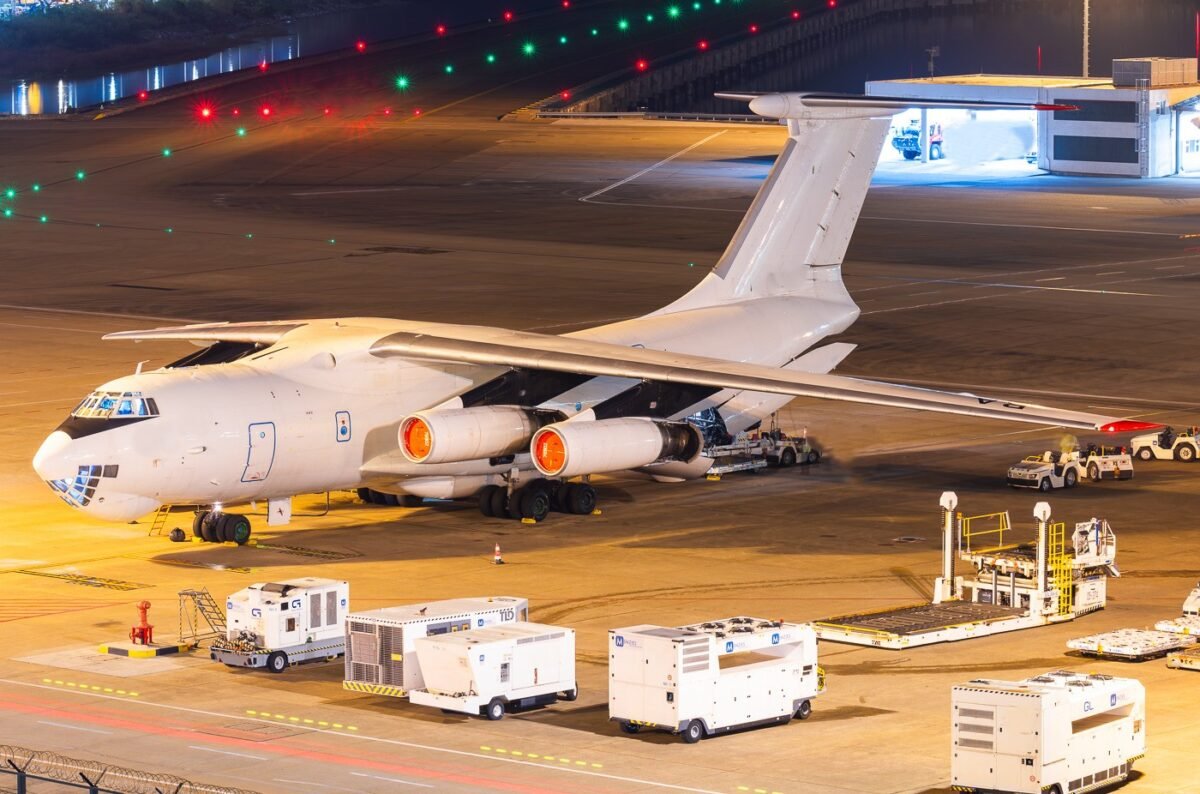
| Nose Loading | Yes | No | Yes | Yes (visor) |
| Fuel Burn (per hour) | ~10,000 kg | ~7,000 kg | ~11,500 kg | ~13,000 kg |
| Typical Charter Cost (USD/hr) | $28,000–$35,000 | $22,000–$28,000 | $24,000–$30,000 | $35,000–$45,000 |
| Best Use | Heavy/outsized cargo | Long-haul, high-density | Heavy cargo, value | Extreme outsized/strategic |
Costs are indicative Q3 2026 estimates. Actual charter rates vary by route, availability, and mission profile.
7. Chartering a Boeing 747-8F
For shipments requiring maximum payload, outsized cargo capability, or nose-loading access, the 747-8F is the premier charter option. Typical charter scenarios include:
- Oil & gas equipment: Drill heads, wellheads, and pipeline components too large for standard freighters.
- AOG aircraft engines: Transporting spare GE90, Trent, or GEnx engines using the nose door.
- Humanitarian relief: Maximum lift capacity for disaster response missions.
- Automotive production: Urgent tooling and machinery shipments for manufacturing lines.
- Government & defence: Strategic airlift for military and diplomatic cargo.
Our cargo charter team sources 747-8F capacity from vetted operators worldwide, with full operational and permit support. For loads under 100 tonnes, the 777F or A330F may offer a more cost-effective solution.
Need Heavy Lift Charter Capacity?
Contact our 24/7 cargo charter team for 747-8F availability, transparent pricing, and complete mission management.
Request Cargo Charter8. The Future of the 747 Freighter
With the last 747-8F delivered in early 2023, no new 747 freighters will be built. However, the existing fleet will continue operating for decades, supported by Boeing's ongoing parts and maintenance commitments. The 777-8F — scheduled for 2027 — will eventually take over the heavy freighter role, offering 118 tonnes payload and composite wing technology. However, the 747-8F's unique nose-loading capability and established infrastructure ensure it will remain essential for outsized cargo well into the 2030s and beyond.
9. See the 747-8F in Action
Watch a Boeing 747-8F taxi and prepare for departure. The nose door and main deck cargo door are clearly visible, along with the distinctive upper deck profile.
Click the button above to watch the full video. (Replace with your specific YouTube link.)
10. Frequently Asked Questions
What is the maximum payload of a 747-8F?
134 tonnes (134,000 kg) — the highest payload of any commercial freighter in current service.
Can the 747-8F carry cargo through the nose?
Yes. The nose door swings upward, allowing direct loading of items up to 3.4 metres wide and 40 metres long — a capability unique to the 747 freighter family.
How much does it cost to charter a 747-8F?
Typical charter rates range from $28,000–$35,000 per flight hour, depending on route, fuel costs, and mission profile. Positioning and handling are additional.
How many 747-8Fs are still in service?
Approximately 90 aircraft were delivered. As of 2026, nearly all remain in active service with cargo airlines and ACMI operators.
Will the 747-8F be replaced by the 777-8F?
Partly. The 777-8F will take over many long-haul high-density routes, but the 747-8F's nose door and higher payload ensure it will continue flying outsized and heavy cargo missions for many years.
Data Sources & References
- Boeing Commercial Airplanes — 747-8F Technical Specifications & Airport Planning Manual — boeing.com
- Cirium Fleet Analyzer — 747-8F fleet data Q3 2026 — cirium.com
- Cargo Facts — Freighter fleet analysis — cargofacts.com
- IATA — Air Cargo Market Analysis 2026
- Safe Fly Aviation internal charter operations and market data, 2024–2026.