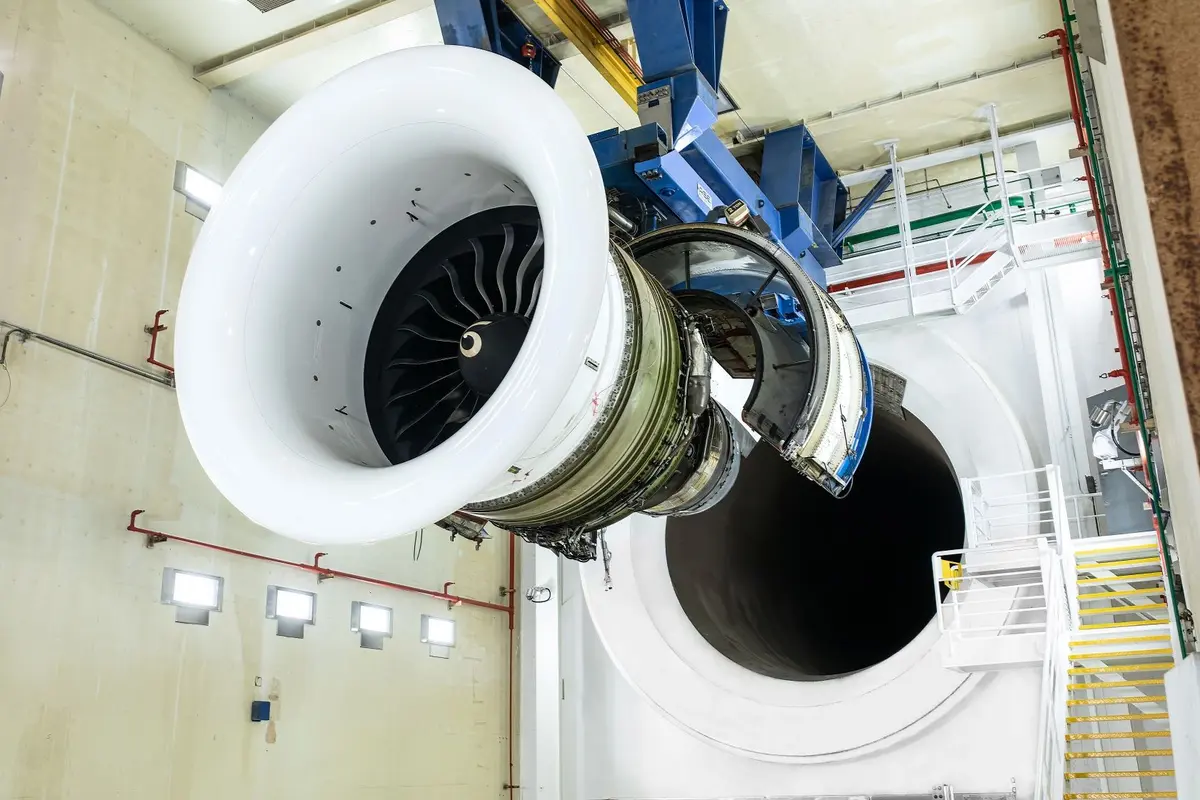
CFM56 Engine Aftermarket in China (2026) | MRO Growth, LEAP Transition & Market Outlook
CFM56 Engines in China: The Aftermarket Boom in a "More Repair Than Sales" Era
Safe Fly Aviation – Fleet maturation, supply chain realities, and the local MRO build-out reshaping the world's second-largest aviation market.

CFM56 engine aftermarket in China 2026 — MRO growth and the LEAP transition.
- 7,800+ CFM56/LEAP engines in service in China, powering ~70% of domestic flights
- "More repair than sales" era — the CFM56 installed base is now the dominant MRO driver
- Fleet average age: 8–9 years — entering the peak maintenance window for heavy overhauls
- GE Aerospace repair turnaround extended 47% in H1 2025 due to parts shortages
- Local MRO build-out — Ruihang (Chongqing) facility targets 100 overhauls/year
- USM can cut maintenance costs 30–50% vs new OEM parts
- CJ-1000A — domestic AECC engine for COMAC C919, targeting 2027–2028 entry into service
The CFM56 engine aftermarket in China is in a "more repair than sales" era in 2026, with 7,800+ CFM56/LEAP engines in service and the domestic fleet averaging 8–9 years of age — entering the peak maintenance window. Key drivers include MRO capacity expansion (Ruihang Chongqing targeting 100 overhauls/year), supply chain pressure (turnaround times +47% in H1 2025), and rising Used Serviceable Material (USM) demand that cuts costs 30–50% vs new parts. The CJ-1000A domestic engine for the COMAC C919 is targeting 2027–2028 entry into service but will not displace the CFM56 installed base through 2035.
Market Position: Unrivaled Dominance in China's Skies
The CFM56 and its successor, the LEAP, form a powerhouse duo in the world's second-largest aviation market. According to GE Aerospace disclosures, the numbers tell a story of structural leadership:
Strategic Importance
The LEAP-1C serves as the Western engine option for COMAC's C919 narrowbody. This positions CFM not only as a commercial leader but as a key partner in China's push for aviation self-reliance — even as it introduces geopolitical and supply complexities.
This dominance stems from decades of reliable performance on Boeing 737 and Airbus A320 family aircraft, which form the core of China's domestic fleet.
The Shift to Aftermarket: "More Repair Than Sales"
As China's commercial fleet matures (average age around 8–9 years), the focus has pivoted decisively. Engines are entering their peak maintenance window, where shop visits become more frequent and costly.
Fleet Lifecycle Economics
A typical commercial aircraft has a design life of 25–30 years. Over that period, engine maintenance can account for more than 50% of the aircraft's original purchase price. As cycles accumulate, module repairs, performance restorations, and full overhauls drive the majority of value in the engine ecosystem.
MRO boom in action: Local capacity is scaling rapidly to meet demand. The Ruihang (Chongqing) Aircraft Engine Maintenance facility — a joint venture — is now operational, targeting 100 engine overhauls per year. It focuses on CFM56-5B/7B and LEAP-1 series engines for southwest China operators, reducing logistics time by approximately three weeks per engine.
Navigating Global Supply Chain Pressures
The global aerospace aftermarket continues to face headwinds, directly affecting Chinese operators:
- Extended turnaround times: In the first half of 2025, GE Aerospace reported average repair turnaround times extended by 47% due to shortages of critical parts.
- Impact on new production: LEAP-1C shortages have constrained COMAC C919 deliveries, prompting COMAC teams to embed at CFM facilities to improve coordination.
- Investment response: GE Aerospace committed an additional $1 billion to its global manufacturing and supply chain in 2026. In China, the Suzhou factory has seen $8.5 million in investments (2024–2025) to boost output of components for CFM56, LEAP, and GEnx engines.
These pressures highlight the importance of robust local MRO networks and strategic parts stocking.
GE's Comprehensive Local Support Ecosystem in China
GE Aerospace has invested heavily in localization, creating one of the most robust support networks for any engine OEM in the country:
Operational Innovations
The Shanghai quick-turn facility has adopted an assembly-line style process (versus traditional fixed-bay) to optimize workflow amid parts constraints. Technology integration — including AI-powered borescope inspection — boosts report efficiency by 80%. This ecosystem ensures high dispatch reliability and positions GE/CFM as a true long-term partner.
Engine Asset Economics: What Operators & Lessors Need to Know
For airlines, lessors, and investors, the CFM56 aftermarket is not just about maintenance — it's about asset value, cash flow, and lifecycle planning. Safe Fly Aviation tracks these metrics daily.
CFM56-7B Indicative Market Ranges (2026)
| Metric | Indicative Range | Trend |
|---|---|---|
| Green-time engine (full life) | $2.8M – $3.5M | Stable / slight uptick |
| Mid-life engine (5k–8k cycles) | $1.8M – $2.4M | Moderate pressure |
| Core / LLP value (used) | $0.8M – $1.2M | Increasing USM demand |
| Full overhaul visit (workscope dependent) | $1.2M – $1.8M | Rising labor & parts |
| Module repair (e.g., fan, HPC) | $250k – $600k | Parts lead times extend |
| Spare engine lease rate (monthly) | $85k – $130k | Tight availability |
Source: Safe Fly Aviation market intelligence, 2026. Values vary significantly by cycle, time since overhaul, LLP status, documentation, and configuration. These are indicative ranges, not transaction prices.
Used Serviceable Material (USM) — The Hidden Opportunity
The USM market for CFM56 parts is one of the fastest-growing segments in China. With shop visit volumes rising and new parts lead times extending beyond 12 months, operators are increasingly turning to USM for:
- Life-limited parts (LLPs) — discs, blades, seals
- Quick engine change (QEC) kits
- Module exchanges
- Repair versus replace decisions
USM can reduce maintenance costs by 30–50% compared to new OEM parts, making it a critical lever for cost-conscious operators in China's competitive domestic market.
China's Long-Term Engine Independence Strategy
No analysis of the Chinese engine market in 2026 is complete without addressing the CJ-1000A program and COMAC's roadmap for domestic propulsion.
CJ-1000A Development Status
Aero Engine Corporation of China (AECC) continues flight testing the CJ-1000A on a Y-20 testbed and on C919 prototypes. Certification targets remain fluid, with industry consensus pointing to 2027–2028 for initial entry into service, subject to test results and regulatory approvals.
Implications for the Aftermarket
- LEAP-1C transition: As CJ-1000A matures, LEAP-1C orders for the C919 may slow, but the installed LEAP fleet will still require long-term support.
- CFM56 support demand: The CJ-1000A does not replace CFM56-powered 737 and A320ceo fleets. The CFM56 installed base will remain the dominant MRO driver through at least 2035.
- Spare engine pools: Chinese operators are building strategic spare pools to hedge against supply chain disruptions and domestic engine development timelines.
Safe Fly Aviation advises clients to monitor the CJ-1000A certification timeline closely — not as an immediate threat to the CFM56 aftermarket, but as a factor that will shape fleet planning and engine acquisition strategies over the next 5–10 years.
Recent Deals and Financial Innovations
Momentum is evident in recent transactions. At the 2025 China International Import Expo (CIIE), GE Aerospace secured deals worth nearly $2.1 billion, including:
- Spare engine orders from China Eastern Airlines (39 LEAP and CFM56-7B units).
- Service agreements with Xiamen Airlines and Zhuhai MoTianYu MRO.
Financial leasing innovations are also shaping the market: the first 2026 offshore CFM56-7B engine procurement for China Southern Airlines via Hengqin structures demonstrates the blending of finance and MRO strategies.
Safe Fly Aviation Forecast 2026–2030
Based on our proprietary market intelligence and discussions with operators, lessors, and MRO providers across Asia, we project the following trends for the CFM56 ecosystem in China:
| Forecast Area | 2026–2028 Outlook | 2029–2030 Outlook |
|---|---|---|
| CFM56 shop visit volume | +8–12% CAGR | Stabilizes at +5–7% |
| LEAP transition pace | Accelerating deliveries | Slower than OEM targets due to supply constraints |
| Engine values (CFM56-7B) | Green-time premiums rise | Gradual decline as more units exit service |
| USM demand | Strong double-digit growth | Sustained, becoming mainstream |
| LLP demand | Tight supply, rising prices | Moderate increase with new entrants |
| Local MRO capacity | Rapid expansion (8+ facilities) | Consolidation and specialization |
| CJ-1000A impact | Limited; testing phase | Initial C919 deliveries with domestic engine |
Source: Safe Fly Aviation analysis. These are directional projections, not financial advice. Actual outcomes will vary based on global supply chains, regulatory changes, and airline fleet decisions.
Safe Fly Market Observation: Real-World Experience
At Safe Fly Aviation, we don't just analyze data — we live in the engine market every day. Our team has been involved in:
- Engine acquisitions for Chinese lessors navigating the tight green-time market.
- Lease return support for CFM56-powered aircraft, helping clients optimize end-of-lease positions.
- Shop visit planning with MRO facilities across Asia to secure capacity and competitive pricing.
- LLP valuation and reserve reviews for aircraft-backed securitizations.
- USM sourcing for clients seeking cost-effective alternatives to OEM parts.
These hands-on engagements give us a practical, grounded perspective that complements the high-level market analysis in this report. When we talk about extended turnaround times, rising shop visit costs, or USM opportunities — we've seen them play out in real transactions.
Frequently Asked Questions About the CFM56 China Aftermarket
What is the market value of a CFM56-7B engine in 2026?
Indicative ranges are $2.8M–$3.5M for green-time engines, $1.8M–$2.4M for mid-life units (5k–8k cycles), and $0.8M–$1.2M for core / LLP value. Actual prices depend on cycle count, time since overhaul, LLP status, documentation, and configuration. Contact Safe Fly Aviation for current market pricing on specific serial numbers.
How much does a CFM56 overhaul cost?
A full overhaul visit typically ranges from $1.2M to $1.8M, depending on workscope, module condition, and parts availability. Module repairs (e.g., fan, HPC) range from $250k to $600k. Costs have risen due to labor inflation and parts shortages.
Why is China's engine MRO market growing so rapidly?
China's commercial fleet has an average age of 8–9 years, entering the peak maintenance window for heavy overhauls. With over 7,800 CFM56/LEAP engines in service and supply chain constraints extending turnaround times, airlines are investing heavily in local MRO capacity and USM solutions.
What is the CJ-1000A engine and when will it enter service?
The CJ-1000A is AECC's domestic turbofan engine for the COMAC C919. It is currently in flight testing on Y-20 and C919 prototypes. Industry consensus points to certification and initial entry into service around 2027–2028, subject to test results and regulatory approvals.
Will the LEAP engine replace the CFM56 in China?
LEAP is the future for new-build 737 MAX and A320neo aircraft, but the CFM56 installed base is so vast (7,800+ engines) that it will remain the dominant MRO driver for at least another decade. The two engines coexist: LEAP powers new deliveries, while CFM56 sustains the existing fleet.
What is USM in aircraft engine maintenance?
USM stands for Used Serviceable Material — serviceable parts removed from retired or disassembled engines. USM can reduce maintenance costs by 30–50% compared to new OEM parts, making it increasingly popular for CFM56 operators facing long lead times and budget pressures.
Need CFM56 Engines, LLPs, USM Components or MRO Support in China?
Safe Fly Aviation provides end-to-end engine transaction advisory, market intelligence, and strategic support for operators, lessors, and investors. Contact us for current availability, valuations, and transaction support.
Engine acquisition · Spare engine sourcing · Lease return support · Shop visit planning · LLP valuation · USM sourcing
Sources & References
- GE Aerospace — Investor & Market Disclosures (2024–2026)
- Safran / CFM International — Engine Program Updates
- Civil Aviation Administration of China (CAAC) — Fleet Data
- COMAC — C919 Program Status Reports
- Safe Fly Aviation — Internal Engine Market Intelligence (June 2026)
Disclaimer: This report is based on public sources and industry data as of June 2026. Market figures and forecasts are indicative and subject to change. Readers are advised to verify critical data with OEMs and regulatory sources before making commercial decisions. Safe Fly Aviation provides independent aviation intelligence and advisory services.