Comprehensive Guide to Helicopter Operations : Safe, Efficient, and Luxurious with Safe Fly Aviation
Comprehensive Guide to Helicopter Operations: Safe, Efficient, and Luxurious
How modern helicopter operations work — flight fundamentals, aircraft types, safety protocols, regulations, and the technology shaping charters, EMS, and VIP transport today.

What defines modern helicopter operations? Helicopters combine vertical takeoff and landing, precise hovering, and the ability to reach locations fixed-wing aircraft cannot — making them central to executive charters, medical evacuation, offshore transport, and scenic touring. Safe, efficient operation depends on trained crews, well-maintained aircraft, and strict adherence to regulatory standards set by bodies like the FAA and EASA.
At Safe Fly Aviation, we've supported premium aviation services since 2010, and our helicopter charter offering connects clients with a range of light, medium, and super-medium twin-engine aircraft for executive transport, medical evacuation, and specialised missions across India, the Middle East, and Europe.
Understanding the Basics of Helicopter Operations
Helicopters are engineering marvels capable of vertical takeoff, landing, and hovering — capabilities that fundamentally set them apart from fixed-wing aircraft. At their core, helicopter operations revolve around a rotor system that generates both lift and thrust through precisely controlled aerodynamic principles.
Flight Controls
Cyclic stick: directional control for forward, backward, and lateral movement. Collective lever: controls altitude via rotor blade pitch. Anti-torque pedals: manage yaw via the tail rotor.
Aerodynamic Principles
Ground effect: increased lift efficiency near the surface. Translational lift: enhanced rotor efficiency during the transition to forward flight. Autorotation: an emergency descent technique using rotor momentum if power is lost.
Power Management
Modern charter and VIP helicopters are almost universally turbine-powered for reliability. Pilots continuously factor weight, density altitude, and temperature into performance calculations to stay within safe operating margins.
Types of Helicopters and Their Applications
Civil helicopters are typically grouped by engine count and cabin class. Here's how the main categories break down, illustrated with aircraft types Safe Fly Aviation regularly sources for clients:
Light Single-Engine

Airbus H130
A single Safran Arriel 2D turbine and a spacious, unobstructed cabin make the H130 a favourite for sightseeing, VIP transport, and aerial survey work.

Bell 407
Powered by a single Rolls-Royce turboshaft, the IFR-capable Bell 407 is a proven platform for corporate transport, utility work, and HEMS duty worldwide.
Light-Medium Twin

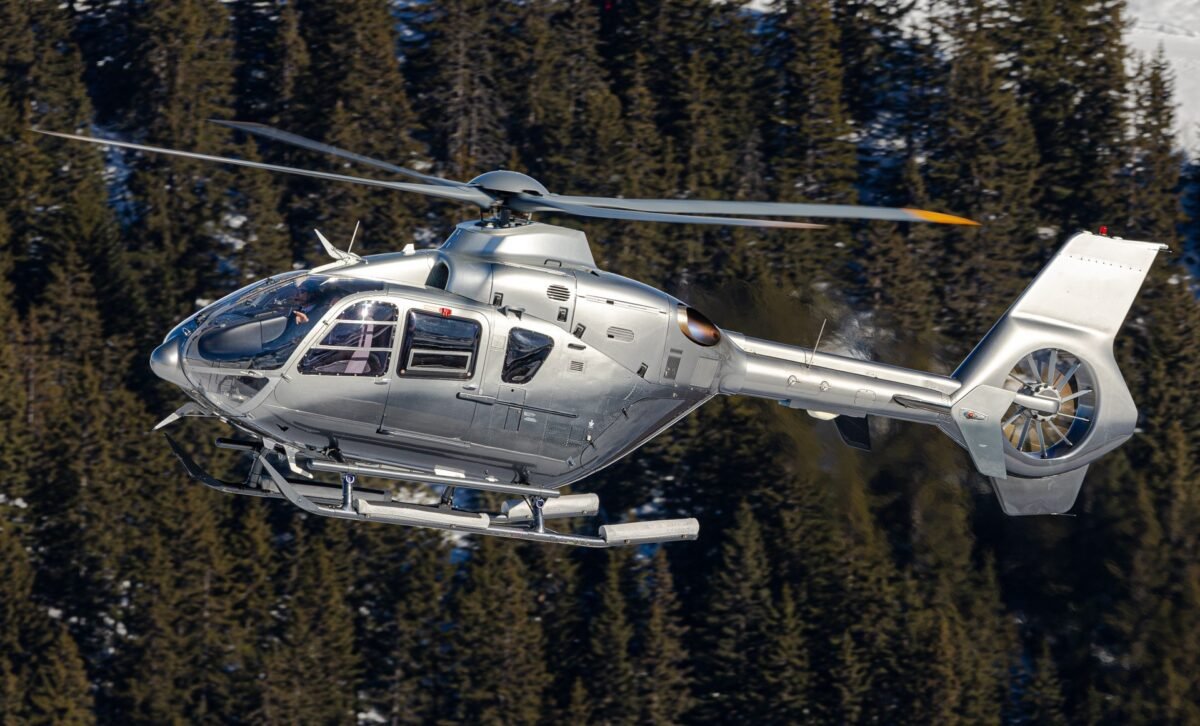
Airbus H135
One of the world's most widely flown EMS platforms, with over 700 H135s in emergency-medical service worldwide, alongside corporate and law-enforcement roles.

AgustaWestland (Leonardo) AW109
A fast, twin-engine light helicopter used for VIP transport, aeromedical work, and law enforcement, prized for its speed and cabin comfort.
Medium Twin

Airbus H145
Twin Safran Arriel 2E engines and a versatile cabin (up to 10 in high-density layout) suit EMS, offshore, VIP, and law-enforcement missions alike.

Bell 429
A single-pilot IFR-capable twin with a 411 nm very-long-range cruise, built for corporate transport, EMS, and search-and-rescue missions.
Super-Medium & VIP-Class Twin

Airbus H160
Airbus's newest medium twin, positioned between the H145 and H175, with a Fenestron tail rotor and class-leading cabin volume per passenger.
Sikorsky S-76C
A long-standing favourite for executive and head-of-state transport, offering an executive cabin layout or higher-density seating for offshore work.
Step-by-Step: Helicopter Flight Procedures
Helicopter operations follow structured procedures designed to maximise safety and efficiency. Here's a breakdown of a standard flight sequence:
- Pre-Flight Inspection & PlanningA full aircraft inspection covering the airframe, rotor systems, avionics, and fuel systems, plus weather analysis, route planning, and performance calculations.
- Engine Start & System ChecksSystematic engine start followed by avionics and flight-control checks, with rotor engagement monitored closely against engine and hydraulic parameters.
- Hover & TakeoffA stable hover is established using ground effect, before transitioning to forward flight via air-taxi or hover-taxi depending on operational requirements.
- En Route Flight ManagementMaintaining optimal altitude and airspeed while monitoring for hazards such as power lines, terrain, and weather. IFR flights use autopilot and flight-director systems for precision in low visibility.
- Approach & LandingA controlled approach using an appropriate descent profile for the landing zone, followed by rotor securing, engine shutdown, and a post-flight inspection.
- Emergency ProceduresCrews train regularly for scenarios including autorotation (engine-off landings), tail-rotor malfunctions, and hydraulic failures through recurrent simulator training.
Safety Protocols and Best Practices
Safety remains paramount in helicopter operations, with continued advances in protocols and onboard technology helping reduce operational risk.
- Risk assessment: pre-mission evaluations covering weather, terrain, crew fatigue, and aircraft condition.
- Communication: clear coordination with Air Traffic Control, especially in congested airspace.
- Onboard technology: Helicopter Terrain Awareness and Warning Systems (HTAWS) and obstacle-detection systems on modern EMS and charter aircraft.
- Maintenance discipline: inspection schedules that meet or exceed the regulatory requirements for commercial charter operations.
- Crew resource management: structured teamwork and communication protocols for effective decision-making under pressure.
- Weather monitoring: real-time meteorological data paired with conservative go/no-go decision-making.
At Safe Fly Aviation, we work only with operators and crews who hold rigorous safety standards, combined with continuous training and investment in current safety technology.
Regulations and Compliance for Helicopter Charters
Helicopter operations are governed by comprehensive regulatory frameworks designed to maintain high safety and operational standards.
FAA Part 135 Operations
Commercial charter operations in the US require certification covering pilot qualifications, aircraft maintenance standards, and Safety Management System (SMS) implementation.
EASA Guidelines
European operations follow specialised requirements including Human External Cargo (HEC) rules and HTAWS compliance for enhanced terrain awareness.
Helicopter Air Ambulance (HAA)
Medical evacuation operations mandate specialised equipment and procedures, including night-vision systems and enhanced weather minimums.
Evolving Requirements
Airspace surveillance (ADS-B) mandates, international operational standards, and sustainability-focused regulation continue to evolve — Safe Fly Aviation tracks these across every jurisdiction we operate in.
Safe Fly Aviation maintains regulatory compliance across all operational jurisdictions, with our team handling international permits and operational authorisations for cross-border charters.
Advancements in Helicopter Technology
Helicopter operations continue to benefit from innovations in propulsion, avionics, and sensor integration that improve efficiency, safety, and sustainability.
Hydrogen Propulsion Trials
In April 2026, Unither Bioélectronique flew a hydrogen fuel-cell-powered Robinson R44 through a full operational circuit — a milestone the company plans to scale toward liquid-hydrogen-fuelled variants for longer-range missions.
Advanced Flight Control Systems
Automatic Flight Control Systems (AFCS), Enhanced Flight Vision Systems (EFVS), and Helmet-Mounted Display Systems dramatically improve pilot situational awareness on complex missions.
Digital Sensor Integration
Modern digital sensor and avionics retrofits transform legacy helicopters into highly capable aircraft with improved navigation, communication, and safety capability.
Unmanned Rotorcraft
Unmanned helicopter platforms using Flettner-style co-rotating rotors, such as EDGE Group's ANAVIA HT-100, are advancing rapidly for maritime and surveillance roles — a parallel track to the manned charter and EMS aircraft this guide focuses on.
Safe Fly Aviation tracks these developments closely to help clients understand how emerging technology may shape future charter and VIP helicopter options.
Why Choose Safe Fly Aviation for Helicopter Charters
Safe Fly Aviation has supported premium aviation clients since 2010, and our helicopter charter service extends that same standard to rotorcraft transport, from VIP transfers to specialised mission support.
Global Reach
Serving clients across India, the Middle East, and Europe with tailored helicopter charter solutions.
Fleet Access
Access to a range of light, medium, and super-medium twin helicopters matched to your mission and budget.
Personalised Service
A dedicated team handling routing, permits, and ground logistics from enquiry through to landing.
Safety-First Standards
We work only with operators holding rigorous safety certifications and current maintenance records.
Whether you need an executive transfer, a scenic tour, or support for a specialised mission, Safe Fly Aviation can help you find the right helicopter for the job.
Elevate Your Journey with Safe Fly Aviation
Helicopter operations combine safety, efficiency, and luxury in ways that keep evolving. Ready to book a charter or learn more about our fleet?
Global: +91 98116 73015 · India: +91 7840 000 473
Email: info@safefly.aero
WhatsApp Our Charter TeamFrequently Asked Questions
What's the difference between a light, medium, and super-medium helicopter?
The classes generally describe engine count and cabin size: light singles like the H130 or Bell 407 carry up to 6–7 passengers with one engine, medium twins like the H145 or Bell 429 add a second engine and more cabin volume, and super-medium/VIP-class twins like the H160 or Sikorsky S-76 offer the most space and range for executive and long-mission use.
Is a twin-engine helicopter safer than a single-engine one?
A twin-engine helicopter can continue flying on one engine if the other fails, which is why many operators require twins for over-water, congested-area, or long-distance missions. Single-engine helicopters remain widely used and are certified to strict safety standards, with autorotation providing an emergency-landing capability if the engine fails.
What regulations govern commercial helicopter charters?
In the US, commercial charters operate under FAA Part 135; in Europe, EASA sets the equivalent framework. Medical evacuation flights fall under additional Helicopter Air Ambulance (HAA) requirements covering equipment and weather minimums.
How many passengers can a charter helicopter carry?
It depends on the aircraft class — light singles typically seat up to 6–7 passengers, medium twins up to 8–10, and larger super-medium twins can carry up to 12 in a high-density layout, though executive configurations usually seat fewer for comfort.
What safety technology do modern charter helicopters use?
Many current-generation helicopters carry Helicopter Terrain Awareness and Warning Systems (HTAWS), advanced flight control systems, and enhanced or synthetic vision systems, all designed to reduce pilot workload and improve safety margins in poor visibility.
Can Safe Fly Aviation arrange a helicopter charter for me?
Yes. Safe Fly Aviation arranges helicopter charters across India, the Middle East, and Europe, matching clients to the right aircraft for VIP transfers, scenic tours, or specialised missions. Contact our team to discuss your requirements.
Related Safe Fly Aviation Resources
- Airbus H160 Helicopter Guide
- Bell 407 Helicopter Guide
- Helicopter Charter in India
- Private Jet & Helicopter Charter Services
- Best Turboprops & Helicopters for Sale 2026
- Australian Business Aviation Helicopter Market Outlook
- Helicopter Business in Emerging Economies
- Delhi Private Jet & Helicopter Charters
Sources: Aircraft specifications cross-checked against Airbus, Bell, and Leonardo manufacturer data; hydrogen-helicopter trial details from public reporting on the April 2026 Unither Bioélectronique test flight. Figures are manufacturer-published performance data and may vary by equipment fit and configuration; contact us for current availability.
© 2026 Safe Fly Aviation — Informational purposes only. Contact info@safefly.aero for personalised consultation.
Updated 20 September 2026