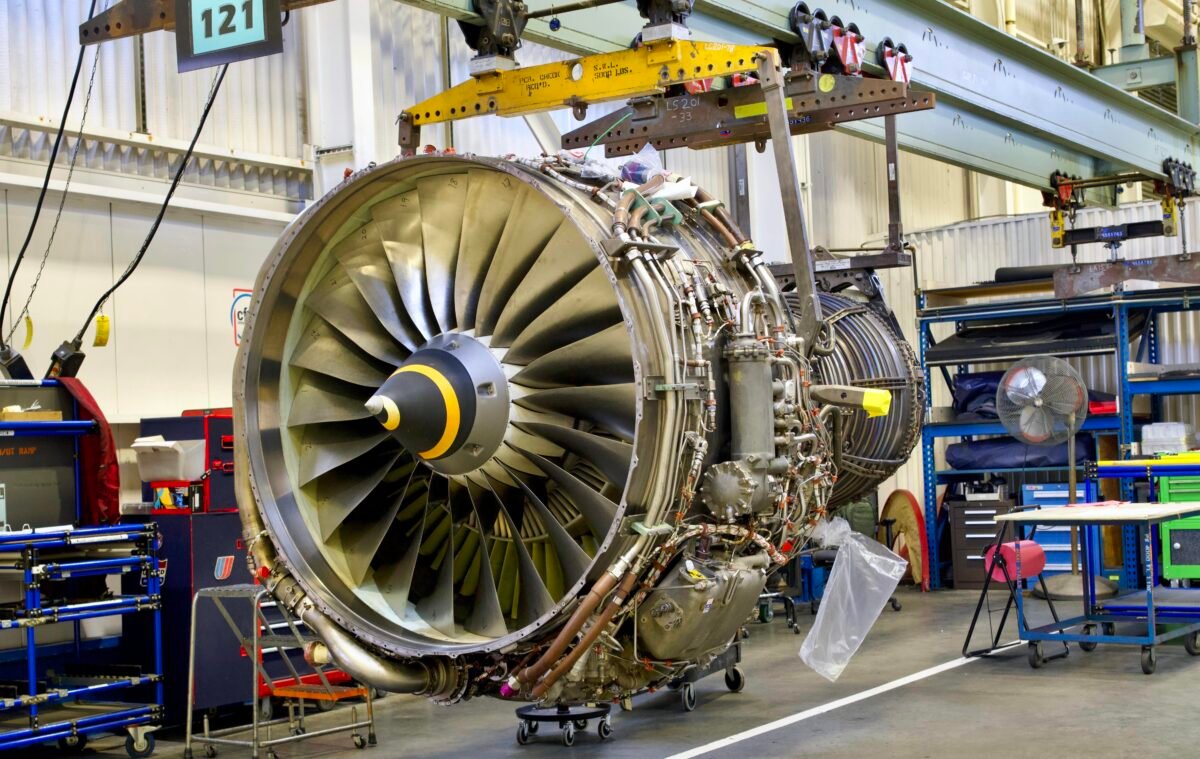
India Aviation Growth 2026–2035: MRO and Engines;
Ask most people about India’s aviation boom and you will hear about aircraft orders, new airports and crowded domestic flights. Ask an engineer, a lessor or someone buying an engine and the list changes. Are there enough technicians? Can we get a shop slot? Where do the parts come from? Who finances the next aircraft?
Those questions decide whether a bigger fleet actually flies. This article works through them using the best published numbers we could find, and it keeps two things apart: what government sources say has already happened, and what Airbus and Boeing forecast might happen. They are different kinds of number, so we have labelled each one.
A word on where we sit. Safe Fly Aviation is not an airline or an MRO. We source aircraft, engines and spares, help clients buy and sell aircraft, and arrange charter, so we look at this market from the buyer’s side of the table. That shapes what we notice.
- India’s airport network has more than doubled since 2014, and the Ministry-reported count of MRO facilities has gone from 96 to 166.
- Counting facilities is not the same as having capability. Engine work, parts access and trained people are the tighter links.
- Airbus forecasts a fleet of 2,250 aircraft by 2035, an MRO market of US$9.5 billion and a need for about 35,000 pilots and 34,000 technicians. Those are forecasts, not results.
- Financing is improving on paper, with a 2025 aircraft-objects law and GIFT City, but it is early to judge the effect.
The first four figures are reported historical data. The last two are Airbus forecasts, not government targets or confirmed counts. Sources are listed at the end.
Start with what has already happened
Cargo is a clean place to begin because the numbers are simple. India’s airports handled 3.72 million tonnes of air cargo in FY 2024–25, against 2.53 million tonnes in FY 2014–15, a rise of about 47% over the decade. In April to December 2025 alone the figure was 2.98 million tonnes. These figures were reported in May 2026 by the news agency ANI, citing an official source.
Cargo is not one market, though. Pharmaceuticals, perishables, express parcels, engineering goods and general freight each need different handling, temperature control, security checks and speed. A busy cargo year does not automatically mean the right kind of capacity exists for each of them.
Looking forward, Boeing’s February 2025 outlook expects air traffic in India and South Asia to grow by more than 7% a year through 2043. Treat that as a scenario rather than a promise. It rests on economic assumptions, and it covers the whole region, not India alone.
More traffic and more cargo push demand down the whole supply chain: maintenance slots, engines, components, technical records and financing. The opportunity is not limited to selling aircraft.
More airports. But how many are busy ones?
The Ministry of Civil Aviation says India had 74 airports in 2014 and 162 by mid-2025. That is a big change to the country’s aviation map: more regional access, more choice for business and tourism travel, and more places where a long road journey becomes a short flight.
The UDAN regional scheme is a large part of that story. By its ninth anniversary on 21 October 2025, 657 routes had been operationalised, connecting 93 underserved and unserved airports, including 15 heliports and two water aerodromes. Those routes carried more than 1.59 crore passengers (about 15.9 million) on roughly 3.34 lakh flights.
A route that has launched is not the same as a route that lasts. Regional services still need steady demand, aircraft that suit short runways and thin traffic, and an operating model that works once support ends. That is the real test, and it plays out over years rather than announcement cycles.
A runway is the easy part
Terminals and runways get the headlines. What lets an airport handle more aircraft is everything around them: air traffic services, apron space, fuel, security, line maintenance access and the road or rail link in. For service companies the openings are in ground support, line maintenance, technical services and regional connectivity. For anyone investing, the useful question is which aircraft types will actually use the place.
MRO: where fleet growth lands
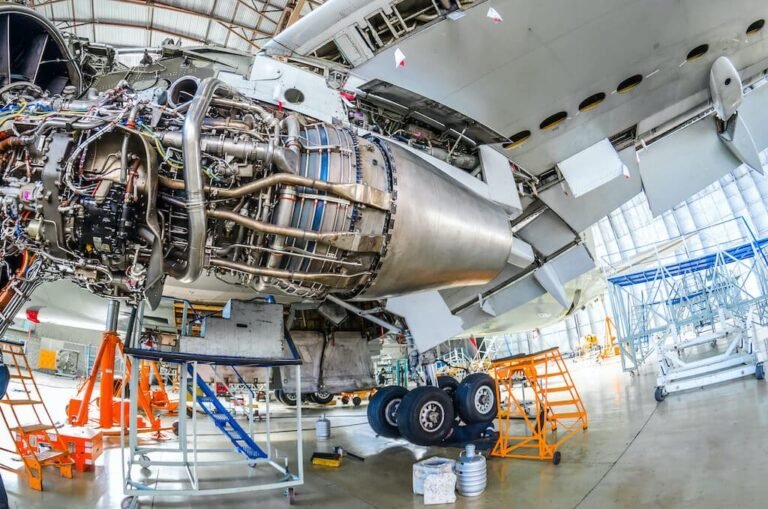
Maintenance, repair and overhaul is where extra aircraft turn into real workload. According to a May 2026 ANI report citing official sources, India’s MRO facilities grew from 96 in 2014 to 166 in 2025. That is genuine progress, but a facility count tells an airline very little about whether its own aircraft can be looked after in India.
An operator asks more specific questions:
- Does the shop hold approvals and ratings for our aircraft and engine type?
- Is the tooling there, and are the technicians trained and current on it?
- Can the shop get parts and technical data when it needs them?
- What are the induction lead time, turnaround time and warranty terms?
Airbus’s January 2026 forecast puts India’s airframe, engine and component maintenance market at US$9.5 billion by 2035, about triple today’s level. It is one company’s forecast with its own definition of the market, so we have not set it against other estimates. Publishers define this market differently.
What the government has changed
A set of measures announced in August 2024 aimed to make India a cheaper and simpler place to maintain aircraft:
- 100% foreign direct investment in MRO through the automatic route.
- A uniform 5% IGST on imported aircraft parts, components, testing equipment, tools and tool-kits, subject to stated conditions.
- The time to export goods imported for repair extended from six months to one year (Union Budget 2024–25).
- The time to re-import goods sent abroad for warranty repair extended from three years to five.
- GST on MRO services cut from 18% to 5% with full input tax credit, effective 1 April 2020.
These measures remove cost and paperwork. They do not build a hangar or train a technician. The Ministry’s January 2026 year-end review points to new capacity arriving, including a Safran LEAP engine MRO facility in Hyderabad. That is the kind of investment that changes what can be done in India. We looked at the engine-type side of this in our piece on LEAP-1A and V2500 MRO trends.
Engines are the hard part
Engine work needs specialised shops, expensive tooling, component repair capability, technical data, skilled people and access to replacement material. It also means keeping close track of life-limited parts, configuration, records and workscope. A country can have a healthy airframe maintenance base and still send particular engine types, modules or specialist repairs abroad.
So for an Indian operator the question is not only whether an engine can be overhauled at home. It is whether the whole package works: shop capacity, parts, repair capability, logistics, records and a contract that holds the shop to its numbers. Our guide to what drives engine overhaul cost and our note on engine shortages and spare-engine demand go deeper on both.
Engines and parts: price is the smallest part of the question
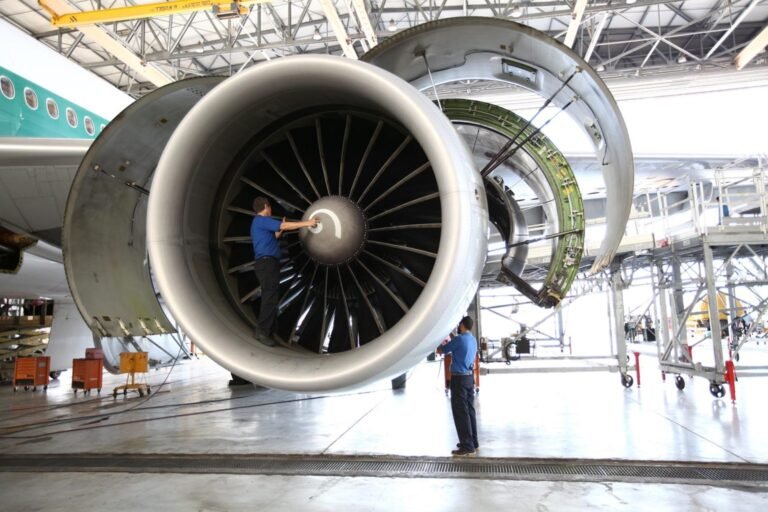
When we are asked to source an engine or a component, price is rarely the hard part. The hard part is whether the item is what it says it is, and whether the paperwork proves it. A low asking price can hide an engine that needs a costly shop visit before it can fly, or a part that cannot legally go on the intended aircraft.
Buying an engine
- Configuration, serial number and eligibility for the aircraft.
- Total time and cycles, and time and cycles since shop visit.
- Workscope and release documents from the last visit.
- Life-limited-part status, plus incident and repair history.
- Preservation, storage conditions and how complete the records are.
Buying a component
- Release certificate, and the authority that issued it.
- Part number, serial number and modification status.
- Traceability back to the source.
- Any conditions or limitations on the release.
- Whether FAA, EASA or DGCA paperwork is accepted for the intended installation. They are not interchangeable by default.
Match the depth of the review to the deal and the intended use. A spare you will hold on a shelf needs a different review from an engine going on wing next month.
As fleets grow, sourcing the right asset with the right records matters as much as sourcing it fast. Procurement, engineering and regulatory review should be in the same conversation from day one. We cover the sourcing side on our engine trading and spares page, and the surplus side in why airlines sit on unused engines.
Leasing and finance: the legal side has been the weak spot
Leasing lets an airline add aircraft without buying each one outright. The lessor, in turn, prices the airline’s credit, the aircraft type, its maintenance condition, its residual value and the legal system it would have to rely on if something went wrong. That last piece has long been India’s weak spot.
The Ministry’s January 2026 year-end review says Indian aircraft leasing costs were typically 8 to 10% higher than in other countries, and presents the Protection of Interests in Aircraft Objects Act, which became law on 16 April 2025, as a way to close the enforcement gaps behind that difference. Whether it works will show up in lease rates and in how many lessors are willing to place aircraft in India. It is early.
The government is also promoting GIFT City in Gandhinagar as an onshore base for aircraft leasing. At a leasing and financing summit there in March 2025, the aviation minister described GIFT City as comparable to global financial centres. For the mechanics behind all this, see our explainers on how aircraft leasing works and on the Cape Town Convention and India.
Why technical knowledge matters in finance
Financing is not only a question of interest rates or rentals. Condition, engine status, maintenance reserves, upcoming checks, records quality and how easy the aircraft is to re-market all affect value. A technically weak asset can carry a lower price and still need a large investment before it can operate or be placed with someone else. That is why independent technical review belongs in acquisition, leasing and remarketing, not only in the final inspection.
Business jets, helicopters and the missions airline numbers miss
Airline statistics leave out a lot. Business aviation, helicopters, air ambulance, cargo charter and special-mission flying each have their own customers, rules and economics.
Business aviation is about time-sensitive travel and places scheduled flights do not reach well. It needs more than demand: suitable aircraft, reliable maintenance, trained crews, airport access and parking, and clear permissions. Our guide to landing permissions and slots in India shows how much of the work sits in the paperwork.
Helicopters matter for regional access, offshore support, emergency response, tourism and specialist missions. UDAN counts 15 operational heliports, but lasting helicopter connectivity also depends on helipads, permissions, weather minima, maintenance arrangements and route economics. We cover the charter side in our helicopter charter guide for India.
Air ambulance and special missions add aircraft configuration, medical or mission equipment, crew capability, dispatch coordination and suitable landing sites. You cannot judge them from passenger-traffic growth.
The sensible way to build in this space is around a clearly defined mission, not around the assumption that one aircraft or one operating model suits everything.
People: the slowest thing to scale
You can order aircraft in a day. You cannot order experience. Pilots, maintenance engineers, technicians, inspectors, planners, quality and safety specialists all take years to train, qualify and settle into the job.
Airbus’s January 2026 India forecast says the country will need about 35,000 pilots and 34,000 technicians by 2035, up from roughly 12,000 pilots and 11,000 technicians today. Those are Airbus projections, not a count of today’s shortage. They still show the size of the task if the fleet grows as forecast. For one angle on pilot supply, see our piece on the proposed pilot retirement extension.
Training has to match what employers need
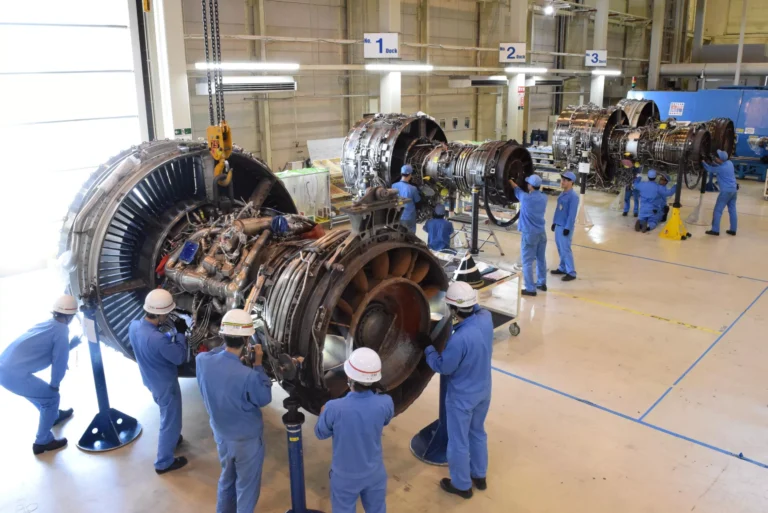
Training capacity only helps if it produces people with the skills employers actually hire for. That means practical time on aircraft and engine systems in approved maintenance environments, plus digital tools, safety management, human factors and continuing development. The same goes for specialist work such as non-destructive testing, component repair, technical records and reliability engineering. Airlines, MRO organisations, training schools and regulators all have a part to play.
Cargo: more tonnes, but on what aircraft?
Moving more tonnes is only half the job. The other half is speed, reliability and the right handling for each commodity: controlled temperatures for pharmaceuticals, quick transfers and cold chain for perishables, specialised loading for aerospace parts and industrial equipment, and dedicated lift for oversized or urgent consignments.
Boeing’s forecast is a useful reminder. Of the 2,835 aircraft it expects to be delivered to India and South Asia between 2024 and 2043, 2,445 are single-aisle jets and 370 are widebodies. Only 20 are freighters. That suggests freighter capacity will have to come from other routes as well, such as converted passenger aircraft and charter. That is our reading, not Boeing’s.
Any conversion project or freighter purchase should be tested against realistic utilisation and maintenance assumptions, not against headline demand alone.

Sustainability, briefly
Growth also raises fuel and emissions questions. The Ministry’s year-end review records indicative sustainable aviation fuel (SAF) blending targets of 1% by 2027, 2% by 2028 and 5% by 2030, in line with CORSIA. These are targets, not levels already reached. Delivering them depends on production, certification, supply logistics, cost and airline purchasing.
Fuel is only one part of it. Fleet renewal, engine efficiency, operating procedures, ground equipment, airport energy and maintenance practice all shape the sector’s footprint.
What the big forecasts say
Long-range forecasts help suppliers, investors and operators plan. Read them as scenarios built on assumptions, not as promises.
| Source | What it says | How to read it |
|---|---|---|
| Airbus, Jan 2026 | India’s fleet of aircraft over 100 seats to triple to 2,250 by 2035, from the 2025 level. | Possible demand for aircraft, maintenance, people and infrastructure. |
| Airbus, Jan 2026 | Airframe, engine and component maintenance market to triple to US$9.5 billion by 2035. | Airbus’s own definition of the market. |
| Airbus, Jan 2026 | About 35,000 pilots and 34,000 technicians needed by 2035, from roughly 12,000 and 11,000 today. | A projection of need, not a count of today’s shortage. |
| Boeing, Feb 2025 | 2,835 new aircraft for India and South Asia over 2024 to 2043: 2,445 single-aisle, 370 widebody, 20 freighter. | Covers the region, not India alone. |
| Boeing, Feb 2025 | Air traffic growth of more than 7% a year through 2043, with the regional fleet growing nearly four-fold. | Long-term outlook, sensitive to the economy. |
Airbus and Boeing differ in publication date, geography, time horizon and method. We show them side by side but do not combine them into one forecast.
Six questions we would put to the industry
- Can maintenance capability grow with the fleet? More facilities help, but the market needs depth in engines, components and specialist repair.
- Can the supply chain support higher utilisation? Parts availability, repair turnaround, logistics and documents all have to be managed as operational priorities.
- Will aircraft finance get easier? That depends on predictable rules, effective legal protection and competitive capital.
- Can people keep pace? Training has to produce practical skills that airlines and maintenance organisations can use.
- Can regional and specialist aviation pay its way? Regional routes, helicopters, business aviation and cargo need realistic route and utilisation economics.
- Will SAF targets be backed by real supply? That needs credible production, infrastructure, certification and cost pathways.
Where Safe Fly fits
India’s opportunity is bigger than any one airline or airport. It is an interlocking market where operators, lessors, MRO organisations, manufacturers, parts suppliers, airports and specialist service companies all depend on each other.
We are a broker and adviser, not an operator. Our work is aircraft and engine sourcing, aircraft sales and acquisition, aviation spares, charter, and technical consultancy. We take an interest in India where there is a defined requirement: an owner who needs an engine, an operator weighing an aircraft, a supplier looking for the right partner.
If you are a company from outside India looking at this market, a product that works elsewhere still has to clear local regulatory assessment, technical acceptance and commercial adaptation before it sells, and it needs support arrangements people can rely on. That is the kind of question we help clients map out.
Our view is simple. India’s growth will not be judged by how many aircraft are ordered or how many airports open. It will be judged by how reliably those aircraft are maintained, how well the supply chain supports them, and whether the industry can deliver operations that are safe, efficient and commercially sustainable.
Talk to us about aircraft, engines or parts
Tell us what you are looking for. A member of the team replies with options or a clear next step.
Prefer to talk? Call +91 78400 00473 or +91 98116 73015, or email info@safefly.aero.Frequently asked questions
How many airports does India have?
The Ministry of Civil Aviation says India had 74 airports in 2014 and 162 by mid-2025. Other sources quote slightly different totals, depending on the definition and the date used.
How big is India’s aircraft MRO market?
Airbus forecasts that India’s airframe, engine and component maintenance market will triple to US$9.5 billion by 2035. Separately, India’s count of MRO facilities was reported to have risen from 96 in 2014 to 166 in 2025. A facility count and a market value measure different things, and market estimates from different publishers may not use the same definition.
What is driving demand for aircraft engine support in India?
Fleet growth, higher aircraft utilisation, scheduled maintenance, engine shop visits, spare-engine needs and the need for serviceable components all add to demand. The mix depends on the fleet type, the maintenance programme and how the aircraft are flown.
What does the 2025 aircraft-objects law change for leasing in India?
The Protection of Interests in Aircraft Objects Act became law on 16 April 2025. The Ministry presents it as a way to close enforcement gaps that, in its review, made Indian aircraft leasing typically 8 to 10% costlier than in other countries. Its real effect will show in lease rates and lessor appetite over time.
How many pilots and technicians does India need by 2035?
Airbus’s January 2026 forecast says about 35,000 pilots and 34,000 technicians, up from roughly 12,000 pilots and 11,000 technicians today. These are a manufacturer’s projections, not a count of current shortages.
Is the 2,250-aircraft figure a government target?
No. It is Airbus’s forecast of India’s fleet of aircraft over 100 seats by 2035, about triple the 2025 level. Treat it as an industry scenario, not an official plan or a confirmed count.
Keep reading
Sources
- Press Information Bureau: Year End Review of the Ministry of Civil Aviation, 21 January 2026. UDAN figures, SAF targets, aircraft-objects law, leasing costs, GIFT City, Safran LEAP facility in Hyderabad.
- Ministry of Civil Aviation: “From 74 airports in 2014 to 162 today”. Airport count (post dated 6 June 2025).
- ANI via Lokmat Times: policy overhaul doubled the MRO footprint from 96 to 166, updated 15 May 2026.
- The News Mill: India’s air cargo sector reaches 3.72 million metric tonnes in 2024–25, 12 May 2026. Attributed to an official source.
- Government permits 100% FDI via automatic route for aircraft MRO, August 2024. MRO tax and procedure measures, as reported from the government announcement.
- Airbus: Indian aircraft fleet to reach 2,250 by 2035, MRO market to hit US$9.5 billion, 29 January 2026. Industry forecast.
- Boeing: India and South Asia airplane fleet to quadruple by 2043, 6 February 2025. Regional industry forecast.
Government figures are historical, as reported. Airbus and Boeing figures are company forecasts. Read the original publications for method, qualifications and later updates.
Based on public sources as of 30 October 2026. This article is general information, not investment, legal or regulatory advice. Safe Fly Aviation is a broker and adviser and does not own or operate aircraft or maintenance facilities.