What Determines Aircraft Engine Overhaul Costs?
What Determines Aircraft Engine Overhaul Costs? A Complete Breakdown for Owners & Operators
Engine overhaul costs are driven by five primary factors: Life-Limited Parts (LLPs) replacement (40-60% of total), hot section component condition, shop labor rates, scope of work (performance restoration vs. heavy maintenance), and unexpected findings during disassembly. Total costs range from $800,000 for a PT6 turboprop to over $5 million for a widebody engine like the GE90.
For aircraft owners, lessors, and operators, an engine overhaul is one of the largest single expenses in an asset's lifecycle. A seemingly routine shop visit can quickly escalate from a budgeted $1.2 million to an actual $2.1 million when unexpected findings emerge. Understanding what drives these costs is essential for budgeting, maintenance planning, and asset value preservation. This guide provides a comprehensive, data-driven analysis of aircraft engine overhaul cost determinants.
Engine overhaul costs vary dramatically by engine type, scope, and condition. For a CFM56-7B (737NG), a performance restoration shop visit typically costs $1.8-2.5 million, while a full heavy overhaul with complete LLP replacement can exceed $3.5 million. The three largest cost drivers are: Life-Limited Parts (LLPs) accounting for 40-60% of parts cost, high-pressure turbine (HPT) blades and vanes (15-25%), and labor (15-20%). Strategic planning, used-serviceable parts, and scope optimization can reduce costs by 25-40%.

The Cost Spectrum: From Turboprop to Widebody
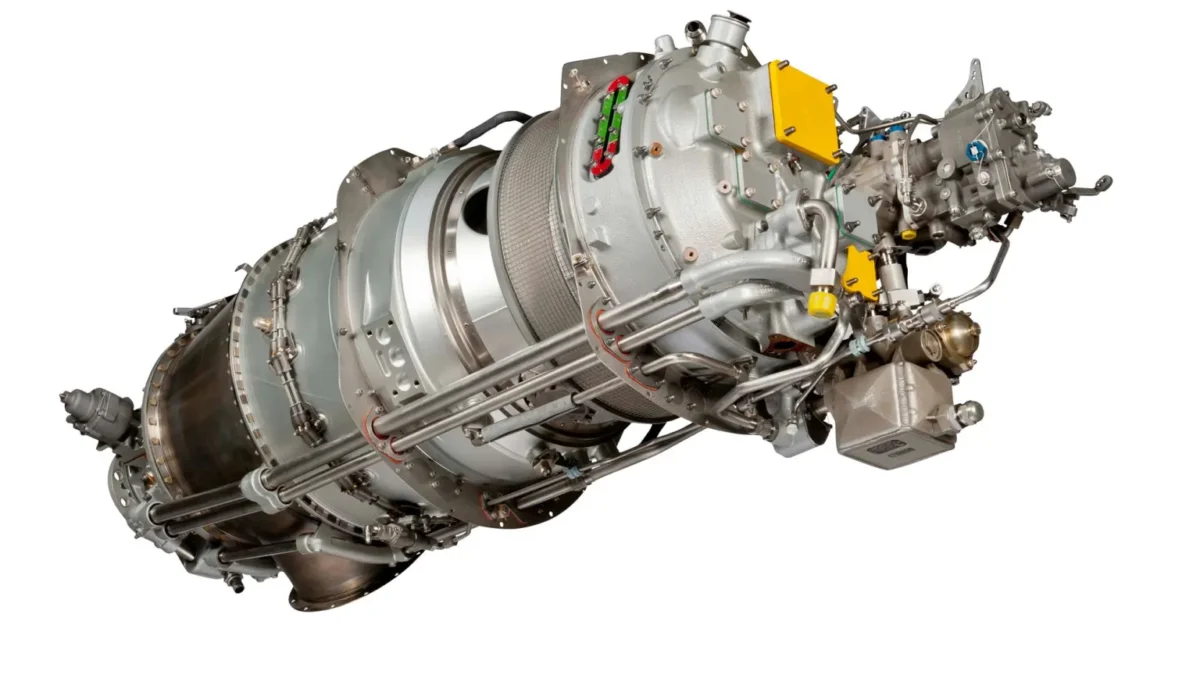
Pratt & Whitney PT6A
Turboprop. Hot section inspection: $50-80k. Full overhaul: $150-350k depending on cycle life.
CFM56-3 (737 Classic)
Aging fleet. Used parts available. Full LLP basket: $750k-950k. Labor: $400-600k.
CFM56-7B (737NG)
Most common narrowbody engine. Performance restoration: $1.8-2.5M. Heavy overhaul: $2.5-3.5M.
V2500-A5 (A320ceo)
Similar to CFM56. LLP costs slightly higher. HPT blade replacement adds $300-500k.
LEAP-1A/1B (737MAX/A320neo)
New technology. Few used parts. Higher LLP costs. Longer turnaround times.
GE90 (777)
Widebody. Massive composite fan blades. Complex HPT section. Very long lead times.
Primary Cost Drivers: Where the Money Goes
The LLP Factor: 40-60% of Your Parts Bill
Life-Limited Parts (LLPs)—turbine discs, compressor hubs, shafts, and containment cases—have mandatory retirement lives measured in cycles. When an LLP reaches its certified limit, it must be replaced regardless of condition. For a CFM56-7B, the full LLP basket (all LLPs in the engine) costs $1.1-1.6 million for new OEM parts. Used-serviceable LLPs with certified remaining life can reduce this to $660k-960k.
The single most effective way to reduce overhaul cost is to proactively manage LLP remaining life. An engine that enters a shop visit with 30-40% remaining life on most LLPs will cost significantly less than one where multiple LLPs are near or at their limit.
Hot Section & HPT Blade Replacement
The high-pressure turbine (HPT) operates at temperatures exceeding 1,500°C. Blades and vanes erode, crack, and degrade over time. A full set of HPT blades for a CFM56-7B costs $250,000-400,000 new, with refurbished sets available at 40-60% of new cost. However, refurbished blades have shorter remaining life, typically 4,000-6,000 cycles versus 12,000-15,000 for new.
During a shop visit, the MRO will recommend HPT blade replacement based on measured creep, oxidation, and cracking. Owners can choose new, refurbished, or serviceable used blades. Each has different cost and life implications.
Labor Rates & Shop Selection
Labor rates vary dramatically by geography and shop capability:
- North America / Western Europe: $75-95 per hour. High overhead, but fastest turnaround.
- Eastern Europe (Poland, Romania): $55-70 per hour. Growing capability, good value.
- China (GAMECO, HAECO): $28-35 per hour. Lowest labor rates, but ferry costs for non-Asia operators.
- Singapore / Middle East: $50-70 per hour. Excellent capability, premium for speed.
A typical CFM56-7B overhaul requires 2,500-3,500 labor hours. That means labor alone ranges from $70,000 (China) to $332,500 (North America). However, choosing the lowest labor rate without considering parts cost, shipping, and quality can be false economy.
Unexpected Findings: The Budget Killer
The most feared phrase in engine maintenance is "while we were in there..." Unexpected findings typically add 15-30% to the final invoice. Common discoveries include:
- Diffusion case cracks (CFM56) – $80,000-150,000 additional
- Fan blade shank corrosion – $50,000-120,000
- Compressor blade tip damage – $30,000-80,000
- Gearbox bearing failure – $40,000-90,000
Pre-shop borescope inspections and on-wing performance trend monitoring can identify many issues before the engine is opened. Safe Fly recommends a thorough pre-shop assessment to reduce surprise findings.

7 Strategies to Reduce Engine Overhaul Costs
Borescope, oil analysis, and performance trend data to anticipate findings.
Source certified LLPs with remaining life at 40-60% of new cost.
Performance restoration vs. full heavy overhaul—choose appropriate level.
Refurbished HPT blades save 40-60% but have shorter life.
Request quotes from 3-5 approved shops. Labor rates vary significantly.
Track remaining life and plan replacements before engine enters shop.
Fixed-price vs. time-and-materials. Fixed-price transfers risk to MRO.
Safe Fly Aviation Perspective
At Safe Fly Aviation, we have facilitated over 200 engine transactions and overhaul projects. The single biggest mistake we see is owners entering a shop visit without a clear cost strategy. They accept the MRO's first quote, do not source used parts competitively, and treat unexpected findings as unavoidable.
We advise clients to:
- Obtain fixed-price quotes from multiple MROs for the defined scope.
- Source used-serviceable LLPs and HPT blades independently—we have a global network.
- Perform a pre-shop borescope and scope the work tightly to minimize "while you're in there" additions.
- Consider part-out and replacement for high-time engines where overhaul cost exceeds 70% of replacement value.
Engine overhaul is not a commodity service. Strategic management can save 25-40% compared to an unmanaged shop visit.
We provide independent cost benchmarking, MRO selection, used parts sourcing, and contract negotiation for engine shop visits. Contact us before you send your engine to the shop.
Planning an Engine Overhaul?
Get independent cost advice, MRO comparisons, and used parts sourcing before you commit.
Request Overhaul Cost Assessment Source Used LLPs & PartsFrequently Asked Questions
Engine LLP Management Guide | Engine & APU Sourcing | Chinese MRO Analysis | MRO Audit & Selection | Aging Fleet Management
Sources: Oliver Wyman MRO Forecast 2025-2035, IBA Engine Asset Report 2026, Aviation Week MRO Prospector, Safe Fly Aviation transaction data and market analysis.