Life Limited Parts (LLP) in Aviation: Complete Guide
Technical advisory & asset management
Life Limited Parts Explained: Limits, Records and Value
A practical guide for aircraft buyers, lessors and operators: what an LLP is, who sets its life, how remaining cycles are tracked, and why they decide an engine's value, its lease return position and its next shop visit.
Last reviewed 19 October 2026. Written by Safe Fly Aviation's technical advisory team.
The basics
What Are Life Limited Parts (LLPs)?
Life Limited Parts (LLPs) are engine parts that must be taken out of service when they reach an approved life, whatever their condition. The FAA's guidance (AC 33.70-1) defines them as “engine rotor and major static structural parts whose primary failure is likely to result in a hazardous engine effect”.
Quick answer
In a turbofan, LLPs include the fan, compressor and turbine discs, spacers, hubs and shafts, plus some high-pressure casings and engine mount parts. Each has an approved life, normally counted in flight cycles, listed in the Airworthiness Limitations Section of the engine manuals. LLPs cannot be overhauled to reset that life, so the remaining cycles on the part that expires first drive an engine's value, its lease return condition and the timing of its next shop visit.
Definitions
LLPs vs Hard-Time and On-Condition Parts
Engine parts fall into three broad maintenance categories. Only LLPs are retired outright at a fixed limit. Which parts are life-limited depends on the engine model and part number, and the authoritative list is always the Airworthiness Limitations Section (ALS) of that engine's manual.
| Category | What happens at the limit | Typical examples |
|---|---|---|
| Life limited part (LLP) | Retired at the approved life. No overhaul or repair restores it. | Fan, compressor and turbine discs, spacers, hubs, shafts |
| Hard-time component | Removed at a fixed interval for overhaul or replacement. | Accessories with a set overhaul interval |
| On-condition component | Stays in service while inspection or testing shows it is serviceable. | Parts checked by borescope or functional test |
Swipe sideways to see every column.
Engine anatomy
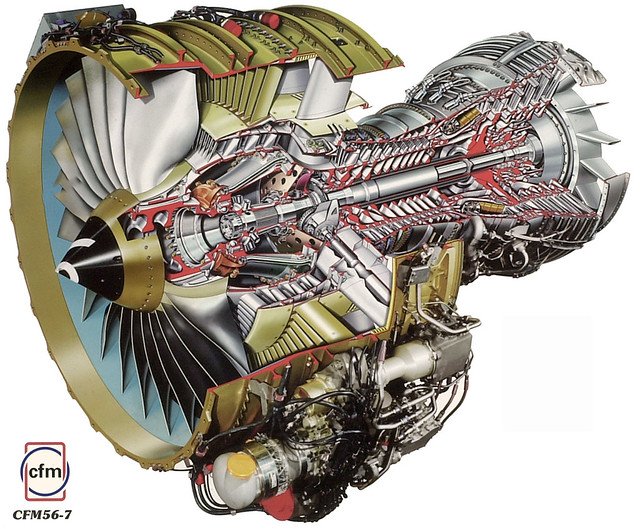
Where LLPs Sit in a Turbofan
Most LLPs are rotating parts, because they carry the highest stress and their failure is the most hazardous. The FAA also counts major static structural parts, such as high-pressure casings and non-redundant mount components, where their failure would be hazardous.
- 1. Fan disc. Front of the engine, carries the fan blades.
- 2. Low-pressure compressor (booster). Discs or drum.
- 3. High-pressure compressor. Discs and spools.
- 4. High-pressure turbine. Hottest section, usually the shortest-lived discs.
- 5. Low-pressure turbine. Discs.
- 6. Shafts. Low- and high-pressure shafts. The dashed combustor is not a rotating LLP location.
Regulation
How LLP Limits Are Set and Enforced
Each approved life is the result of a controlled engineering process, not a rule of thumb. Under the FAA's 14 CFR 33.70, the engine manufacturer must show, for every engine life-limited part, three linked plans:
- An engineering plan that removes the part before a hazardous effect can occur, supported by validated analysis, testing or service experience, including damage tolerance assessments.
- A manufacturing plan that controls production so every part has the attributes the analysis assumed.
- A service management plan that sets maintenance and repair limits so in-service parts stay consistent with the engineering assumptions.
The approved life of each part is then published in the Airworthiness Limitations Section (ALS) of the Instructions for Continued Airworthiness. In the US, 14 CFR 91.403(c) states that no person may operate an aircraft whose ALS specifies mandatory replacement times unless those times have been complied with. Under EASA rules, CS-E 515 covers Engine Critical Parts, which must be withdrawn at an Approved Life, defined as the mandatory replacement life of a part approved by the Agency.
Compliance risk. An engine with an expired LLP is not a paperwork problem. The part has to be replaced before the aircraft can lawfully fly, so confirm LLP status before any purchase, lease or charter commitment.
Real examples
Published LLP Life Limits by Engine
Limits are set per part number and vary with engine model and thrust rating, so treat published figures as examples, not as data for a specific engine. The table below uses published sources only.
| Engine | Parts | Limit |
|---|---|---|
| CFM56-7B | Fan and low-pressure compressor parts | 30,000 EFC (target lives) |
| CFM56-7B | High-pressure compressor and turbine (core) LLPs | 20,000 EFC |
| CFM56-7B | Low-pressure turbine parts | 25,000 EFC |
| CFM56-5B | 3 fan and booster LLPs; 9 core LLPs; 6 LPT LLPs | 30,000; 20,000; 25,000 EFC |
| PT6A-140 series | Power turbine disk | 12,000 raised to 16,000 cycles (2018) |
| PT6A-140 series | Compressor turbine disk | 10,000 raised to 16,000 cycles (2018) |
| PT6A-140 series | Impeller | 19,000 raised to 29,000 cycles (2018) |
Swipe sideways to see every column.
EFC means equivalent flight cycles. CFM56 figures are target lives published by Aircraft Commerce (Issue 125, 2019); PT6A-140 figures are from Pratt & Whitney Canada (3 December 2018). Always use the ALS of the specific engine.
Can LLP Limits Be Extended?
Only the engine manufacturer, with regulatory approval, can raise a limit, normally after further analysis, testing or in-service data. The 2018 PT6A-140 change shows how large the effect can be: Transport Canada approved cycle limit increases of up to 60 percent, and the power turbine disk now counts two to five abbreviated cycles as one full cycle. An operator cannot extend a limit on its own, and a revised limit applies only to the engine models and part numbers named in the manufacturer's revision.
For engines still on the older limits, nothing changes. Confirm which revision of the ALS the engine records are tracked against.
Records
Tracking LLP Life and Records
Cycles are counted for each part, not for the engine. Discs and modules move between engines at shop visits, so every LLP carries its own cycles since new and its own paperwork, from manufacture to its current installation. Operators typically track this in a maintenance-tracking system such as AMOS, TRAX or CAMP, and the LLP status list should reconcile with the engine and aircraft logs.
Complete installation and removal histories have real monetary value: parts with gaps in their records are harder to sell and are discounted. See our guides to the engine records review checklist and the value of engine documentation.
Valuation
LLP Valuation and Maintenance Reserves
The usual starting point is a pro rata calculation:
LLP value = (remaining cycles ÷ life limit) × replacement cost
For example, a disc with 12,000 of 20,000 cycles left and a replacement cost of US$ 200,000 is worth about US$ 120,000. The same inputs give a reserve rate: replacement cost divided by the life limit is US$ 10 per cycle, which is how lessors typically size LLP maintenance reserves.
| Part | Limit (cycles) | Remaining | Replacement cost | Pro rata value | Reserve per cycle |
|---|---|---|---|---|---|
| Fan disc | 30,000 | 18,600 | $150,000 | $93,000 | $5.00 |
| HPC rotor spool | 20,000 | 6,800 | $250,000 | $85,000 | $12.50 |
| HPT disc | 20,000 | 5,100 | $350,000 | $89,250 | $17.50 |
| LPT disc | 25,000 | 15,700 | $180,000 | $113,040 | $7.20 |
| Sample set | $930,000 | $380,290 | $42.20 |
Swipe sideways to see every column.
Replacement costs are round numbers chosen to show the method. Current list prices and used-part prices must come from the manufacturer or a quote.
The formula is a starting point. Market prices are not linear. Parts with a right-sized amount of life left command a premium, while full-life parts, “odd-life” parts and parts with fewer than about 5,000 cycles left are discounted or rarely realise their full value (AviTrader, April 2026). Documentation quality moves the price too.
In engine leasing, LLP reserves are typically paid per flight cycle against the cost of replacing the parts, and return conditions specify a minimum remaining life or cash compensation for the shortfall. For valuation of a whole engine, see what to look for when valuing an aircraft engine.
Planning
LLP Forecasting and Shop Visit Planning
The lowest-life LLP in the stack dictates when the engine has to be removed. Start from how long you need the engine to fly, then work out which parts will not last that long. In the sample above, the HPT disc has 5,100 cycles left. At 1,200 cycles a year that is 4.25 years, so the shop visit should be planned around that date, not around the fan disc's 18,600 cycles.

- Match life to horizon. Map remaining LLP life against your planned utilisation and the lease return or sale date.
- Replace at planned visits. Replacing an LLP during a planned shop visit avoids a stand-alone removal later.
- Consider used serviceable material. Matching part lives with used parts can lower cost and align the engine with its lease return condition, as long as traceability is complete.
- Avoid false savings. Installing very low-life parts only to defer cost usually brings the next removal forward. Aim for a balanced exit condition after the visit.
For cost benchmarks, see engine shop visit costs in 2026 and what determines engine overhaul costs.
Due diligence
LLP Due Diligence Checklist for Buyers and Lessors
- Obtain a current LLP status list showing cycles since new and the approved limit for every part, tied to the current revision of the ALS.
- Trace each LLP to its release certificate (for example FAA Form 8130-3 or EASA Form 1) and check part and serial numbers against the manufacturer's records.
- Reconcile cycles against engine logs, aircraft logs and shop visit reports, and query any gaps.
- Confirm compliance with applicable airworthiness directives and service bulletins, and whether any life-extension revision applies.
- Compare the limiting part's remaining life with your operating plan and hold period.
- Price the gap to the next shop visit using current replacement costs, not the formula alone.

Records gaps can get an engine rejected at inspection; our guide to engine pre-purchase inspection rejection reasons explains what to expect. For sourcing, see engine and APU sourcing.
Market
LLP Market Trends
Industry participants quoted by AviTrader in April 2026 put typical LLP price increases at about 6 percent a year, with some operators seeing annual catalogue list price increases well above that. CFM56 and V2500 LLP pricing has been supported by demand from A320ceo and 737 NG aircraft and by low retirement levels. Use of used serviceable material has risen steadily as buyers look to match lives and control cost.
- 3plans behind every approved life: engineering, manufacturing, service
- +60%largest cycle limit increase approved for PT6A-140 parts in 2018
- ~6%typical yearly LLP price rise cited in 2026
- <5,000cycles left: parts rarely realise full value
Sources: Pratt & Whitney Canada (2018), AviTrader (April 2026). Our own market pages cover specific engines, for example the CFM56-7B availability report and the PT6 engine family explained.
Illustration
Worked Example: Two Engines, One Decision
This scenario is illustrative, not a client engagement. A lessor compares two similar CFM56-7B engines for a lease return.
- Engine A. The limiting LLP has 14,200 cycles remaining.
- Engine B. It is offered US$ 180,000 cheaper, but its limiting LLP has only 2,400 cycles left. At 1,600 cycles a year that is about 18 months.
- The catch. Replacing the limiting parts on Engine B costs about US$ 420,000 within those 18 months.
Net of the US$ 180,000 discount, Engine B costs about US$ 240,000 more over the period, before counting the downtime of an early shop visit. The lower price only looks attractive until the remaining LLP life is priced in.
Questions
Frequently Asked Questions About LLPs
What are life limited parts (LLPs) in aviation?
Life limited parts are engine parts that must be removed from service once they reach an approved life, whatever their condition. The FAA defines them as engine rotor and major static structural parts whose primary failure is likely to result in a hazardous engine effect. In a turbofan they include fan, compressor and turbine discs, spacers, hubs and shafts. The life is normally expressed in flight cycles and is listed in the Airworthiness Limitations Section of the engine manuals.
What is the difference between an LLP and a hard-time component?
A hard-time component is removed at a fixed interval for overhaul or replacement, and an overhaul can restore its service life. An LLP is different: when it reaches its approved life it is retired, and no repair or overhaul resets that life. Every LLP has a hard limit, but not every hard-time component is an LLP.
Who sets LLP life limits?
The engine manufacturer proposes each limit as part of type certification, using analysis, testing and service experience, and the regulator approves it. In the US this is 14 CFR 33.70, which requires the approved life of each engine life-limited part to be published in the Airworthiness Limitations Section. EASA applies CS-E 515 for Engine Critical Parts, which must be withdrawn at an Approved Life before a hazardous engine effect can occur.
Can LLPs be repaired, overhauled or have their life extended?
An LLP cannot be overhauled to restore its life. Repairs such as blending or inspection are limited to what the manufacturer permits and do not add cycles. A limit can only be raised by the manufacturer with regulatory approval, after further analysis, testing or in-service evidence. For example, in 2018 Transport Canada approved higher cycle limits for several PT6A-140 parts, including the power turbine disk from 12,000 to 16,000 cycles.
How is the value of an LLP calculated?
The usual starting point is pro rata: remaining cycles divided by the total life limit, multiplied by the replacement cost of the part. A disc with 12,000 of 20,000 cycles left and a US$ 200,000 replacement cost is worth about US$ 120,000 on that basis. Market prices differ from the formula: parts with a sensible amount of life left command a premium, while parts with very few cycles left, or with incomplete records, trade at a discount.
What records prove the status of an LLP?
You need the part number and serial number, its cycles since new, the approved life limit for that part number, and the documents that trace it from manufacture to the current engine, such as release certificates and shop visit records. Each LLP is tracked on its own history because discs and modules move between engines. A current LLP status list should reconcile with the engine and aircraft logs.
Can unused LLP life be sold?
Yes. Parts removed from engines at shop visits or teardowns are traded as used serviceable material, and the price depends mainly on remaining cycles, the engine platform, availability and the quality of the documentation. Parts with very low remaining life rarely realise their full value, so planning removals matters.
Are LLPs found only in engines?
This guide focuses on engines, where the term is most common, but other safe-life items exist. Landing gear components, propellers and helicopter dynamic components can also carry life limits in their own airworthiness limitations. Always check the maintenance manual for the specific aircraft.
Free LLP review
Need to Check LLP Status or Value?
Send us the engine type and, if you have it, the serial number. We review the LLP records and remaining life and reply with what we find.
Sources and References
- FAA AC 33.70-1, Aircraft Engine Life-Limited Parts (2009)
- 14 CFR 33.70, Engine life-limited parts
- 14 CFR 91.403, General (maintenance responsibility)
- EASA CM-PROP-001, Non-Hazardous Features of Engine Critical Parts (2022)
- Aircraft Commerce, Issue 125 (2019), CFM56-5B and -7B maintenance
- Pratt & Whitney Canada, PT6A-140 cycle limit increases (3 Dec 2018)
- AviTrader, Effective Engine LLP Management (23 April 2026)
This guide is general information, not engineering, legal or financial advice. Life limits are set by the engine manufacturer and approved by the regulator; always use the current Airworthiness Limitations Section for the specific engine and part numbers. Safe Fly Aviation provides technical advisory and brokerage services and does not manufacture or repair LLPs.