Ultimate Boeing 777F freighter guide | Safe Fly Aviation
Aircraft Guide
The Ultimate Boeing 777F Freighter Guide: Specs, Performance & Operators

Key Takeaways — Boeing 777F at a Glance
- Maximum payload: 102 tonnes (102,000 kg) — the benchmark for large twin-engine freighters.
- Range with full payload: ~4,970 nm (9,200 km) — capable of non-stop transpacific and Europe–Asia routes.
- Fuel efficiency: ~10% better fuel burn per tonne-kilometre than the Boeing 747-400F.
- Main deck capacity: 37 standard 96×125-inch pallets, plus bulk cargo in lower holds.
- Total cargo volume: ~680 CBM / m³ (24,010 ft³) across main and lower decks.
- Global operators: FedEx Express, Qatar Airways Cargo, Emirates SkyCargo, Korean Air, Lufthansa Cargo, and many more.
- Charter cost: $22,000–$28,000 per flight hour (Q4 2026 estimate).
- Next-generation successor: The Boeing 777-8F, scheduled for entry into service in 2027, offers 118-tonne payload and ~10% fuel savings.
1. Why the Boeing 777F Dominates Modern Air Cargo
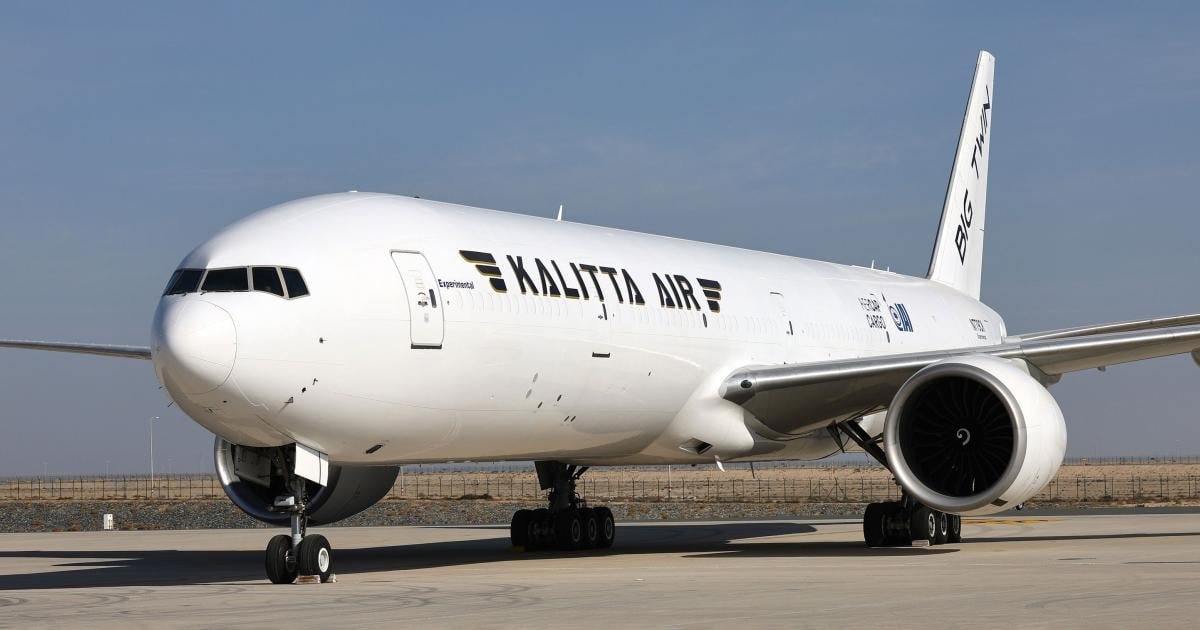
The Boeing 777F (Freighter) is the world's largest, longest-range twin-engine freighter aircraft. Since its entry into service in 2009, it has become the backbone of global air cargo networks, combining exceptional payload capacity, intercontinental range, and industry-leading fuel efficiency. With over 270 aircraft delivered to date and a strong order backlog, the 777F is the most successful large freighter programme of the 21st century.
Designed to replace ageing Boeing 747-200F and MD-11F freighters, the 777F offers operators a compelling combination of lower operating costs, modern avionics, and compatibility with existing 777 pilot pools. It can carry 102 tonnes of cargo over 4,970 nautical miles, making it ideal for long-haul express, general cargo, and e-commerce operations. For charter clients, the 777F represents the gold standard for large-volume, time-critical shipments.
Need 777F Capacity Now?
Our 24/7 cargo charter desk sources 777F availability from vetted operators worldwide.
Safe Fly Aviation Insight
In our cargo charter operations, the 777F is consistently the most requested large freighter type. Its combination of payload, range, and fuel efficiency makes it the preferred choice for long-haul charter missions — from pharmaceutical shipments between India and North America to automotive parts movements between Europe and Asia. Availability can be tight during peak seasons, so advance planning is recommended.
2. Boeing 777F Technical Specifications
The 777F is based on the Boeing 777-200LR (Long Range) passenger aircraft but features a strengthened fuselage, main deck cargo door, reinforced floor beams, and a dedicated cargo handling system. Below are the definitive specifications for the current production model.
| Specification | Boeing 777F Value |
|---|---|
| Length | 63.73 metres (209 ft 1 in) |
| Wingspan | 64.80 metres (212 ft 7 in) |
| Height | 18.60 metres (61 ft 1 in) |
| Maximum Takeoff Weight (MTOW) | 347,815 kg (766,800 lb) |
| Maximum Structural Payload | 102,000 kg (102 tonnes) |
| Maximum Fuel Capacity | 181,280 litres (47,890 US gal) |
| Main Deck Cargo Volume | ~520 CBM / m³ (18,360 ft³) |
| Lower Deck Cargo Volume | ~160 CBM / m³ (5,650 ft³) |
| Total Cargo Volume | ~680 CBM / m³ (24,010 ft³) |
| Main Deck Pallet Positions | 37 × 96×125-inch pallets |
| Engines | 2 × General Electric GE90-110B1 or GE90-115B |
| Thrust per Engine | 110,000–115,000 lbf (490–514 kN) |
| Typical Cruise Speed | Mach 0.84 (~490 knots / 907 km/h) |
| Cockpit Crew | 2 pilots |


3. Performance: Range, Payload & Fuel Burn
The 777F's performance envelope makes it suitable for virtually any long-haul cargo mission. Understanding the relationship between payload and range is critical for charter planning and operational budgeting.
Payload-Range Capability
| Payload | Approximate Range | Example Route |
|---|---|---|
| 102 tonnes (max payload) | 4,970 nm (9,200 km) | Hong Kong – London non-stop |
| 90 tonnes | 5,500 nm (10,190 km) | Shanghai – Los Angeles |
| 75 tonnes | 6,200 nm (11,480 km) | Dubai – New York |
| 60 tonnes | 6,800 nm (12,590 km) | Frankfurt – Buenos Aires |
| Ferry (zero payload) | ~9,200 nm (17,040 km) | Positioning / delivery flights |
Fuel Consumption
The 777F burns approximately 6,800–7,200 kg of fuel per hour at cruise, depending on aircraft weight, altitude, and speed. This equates to roughly 8,500–9,000 litres per hour or about $5,800–$6,500 per hour at mid-2026 jet fuel prices. On a per-tonne-kilometre basis, it is significantly more efficient than legacy freighters:
- Boeing 747-400F: ~10% higher fuel burn per tonne-km
- MD-11F: ~18–20% higher fuel burn per tonne-km
- Boeing 747-8F: Comparable fuel efficiency (slightly better on very dense payloads)
4. Runway Requirements
The 777F requires substantial runway length, particularly at maximum takeoff weight. However, it can operate from many major international airports without restriction.
| Condition | Runway Length Required (Approx.) |
|---|---|
| Takeoff at MTOW, sea level, ISA | ~8,500–9,000 ft (2,590–2,745 m) |
| Takeoff at MTOW, elevation 2,000 ft | ~9,500 ft (2,895 m) |
| Takeoff at reduced weight (80 tonnes payload) | ~7,500–8,000 ft (2,285–2,440 m) |
| Landing at MLW (260,815 kg) | ~5,500–6,000 ft (1,675–1,830 m) |
For comprehensive guidance on aircraft runway performance across multiple types, refer to our Aircraft Runway Requirements Guide.
5. Major Boeing 777F Operators Worldwide
The 777F has been adopted by leading cargo airlines and combination carriers across the globe. Below are the largest operators as of Q4 2026.
| Operator | IATA | Approx. 777F Fleet | Primary Hub | Notes |
|---|---|---|---|---|
| FedEx Express | FX | 50+ | Memphis (MEM) | Largest 777F operator; continues expanding fleet |
| Qatar Airways Cargo | QR | 27+ | Doha (DOH) | Launch customer for 777-8F; major international cargo carrier |
| China Southern Cargo | CZ | 15+ | Guangzhou (CAN) | Rapidly growing 777F fleet |
| Korean Air Cargo | KE | 12+ | Seoul (ICN) | Post-Asiana merger combined fleet |
| Emirates SkyCargo | EK | 11+ | Dubai (DWC) | Expanding freighter fleet alongside passenger belly capacity |
| Lufthansa Cargo | LH | 11+ | Frankfurt (FRA) | Core long-haul freighter type |
| Air China Cargo | CA | 10+ | Beijing (PEK) | Expanding 777F operations |
| Ethiopian Cargo | ET | 9+ | Addis Ababa (ADD) | Dominant African cargo carrier |
| Turkish Cargo | TK | 8+ | Istanbul (IST) | Rapidly expanding global network |
Fleet counts are approximate and subject to change. Data: Cirium Fleet Analyzer, Cargo Facts, Safe Fly Aviation analysis, Q4 2026.
Planning a Cargo Route?
Our logistics team helps match your cargo requirements to the optimal freighter type and routing.
6. 777F vs. Other Freighters: A Comparison
How does the 777F stack up against other large freighters in service today?
| Specification | Boeing 777F | Boeing 747-8F | Airbus A330-200F | Boeing 767-300F |
|---|---|---|---|---|
| Max Payload | 102 tonnes | 134 tonnes | 65–70 tonnes | 52–60 tonnes |
| Range at Max Payload | 4,970 nm | 4,120 nm | 3,250 nm | 3,120 nm |
| Main Deck Pallets | 37 | 39 (plus nose door) | 23–26 | 24 |
| Fuel Burn (per hour) | ~7,000 kg | ~10,000 kg | ~5,400 kg | ~5,000 kg |
| Typical Charter Cost (USD/hr) | $22,000–$28,000 | $28,000–$35,000 | $14,000–$18,000 | $12,000–$16,000 |
| Best Use | Long-haul, high-density | Heavy/outsized cargo | Medium-haul, regional | Express, medium-haul |
Costs are indicative Q4 2026 estimates. Actual charter rates vary by route, availability, and mission profile.
7. Chartering a Boeing 777F
For shippers, forwarders, and logistics companies, chartering a 777F provides dedicated, flexible capacity without the commitment of scheduled services. Typical charter scenarios include:
- Urgent pharmaceutical shipments: Temperature-controlled cargo requiring dedicated handling and direct routing.
- Automotive AOG (Aircraft on Ground) spares: Production-critical components that cannot wait for scheduled services.
- E-commerce peak surges: Seasonal volume spikes exceeding contracted scheduled capacity.
- Humanitarian relief: Rapid deployment of aid, equipment, and personnel to crisis zones.
- Project cargo: Large-scale industrial equipment requiring multiple dedicated flights.
Our cargo charter team sources 777F capacity from our global network of vetted operators, providing transparent all-inclusive quotes and full operational support. For smaller shipments, we also arrange charters on A330F, B767F, and B737F aircraft.
Need a Boeing 777F Charter?
Contact our 24/7 cargo charter team for immediate availability, tailored pricing, and full mission support on 777F and other freighter types.
Request Cargo Charter Quote8. 777F vs. 777-300ERSF (P2F): Which Is Right for You?
In addition to production 777F freighters, the Boeing 777-300ERSF — a passenger-to-freighter conversion by Israel Aerospace Industries (IAI/Bedek) — is entering the market as a lower-cost alternative. Understanding the differences is essential for operators, lessors, and investors.
| Attribute | Boeing 777F (Production) | Boeing 777-300ERSF (P2F) |
|---|---|---|
| Payload | 102 tonnes | 100+ tonnes (target) |
| Main Deck Volume | ~520 CBM | ~620 CBM (longer fuselage) |
| Acquisition Cost | $170–185 million (new) | $55–70 million (conversion + feedstock) |
| Availability | New-build, lead time 2–3 years | Conversion slot + feedstock search |
| Operators | All major cargo airlines | Early adopters; growing interest |
For clients evaluating freighter acquisition or P2F conversion options, our P2F conversion advisory service provides independent technical and commercial guidance across the entire programme lifecycle.
Considering a P2F Conversion?
Get independent advisory on 777-300ERSF, A330P2F, B767BCF and other conversion programmes.
9. The Future: Boeing 777-8F and Beyond
The Boeing 777-8F — the next-generation freighter based on the 777X platform — is scheduled to enter service in 2027. Launch customers include Qatar Airways Cargo and Cargolux. The 777-8F will offer:
- Payload: 118 tonnes (target) — a 16% increase over the 777F.
- Range: ~4,410 nm at max payload.
- Fuel efficiency: ~10% improvement over the 777F, driven by GE9X engines and composite wing technology.
- Main deck: 31 pallet positions on a slightly shorter fuselage than the 777-8 passenger variant.
The 777-8F will eventually succeed the 777F, though the current model is expected to remain in production and in high demand throughout the late 2020s, particularly as operators seek to replace ageing 747-400F fleets before the 777-8F is widely available.
10. Frequently Asked Questions
The Boeing 777F has a maximum structural payload of 102 tonnes (102,000 kg). In volumetric terms, it can accommodate approximately 90–95 tonnes of typical air cargo before cubing out. The main deck holds 37 standard 96×125-inch pallets, with additional capacity in lower-deck containers and bulk compartments.
At maximum payload (102 tonnes), the 777F has a range of approximately 4,970 nautical miles (9,200 km), sufficient for non-stop routes like Hong Kong–London. At reduced payloads, it can operate sectors exceeding 6,500 nm, covering routes such as Dubai–New York or Frankfurt–Buenos Aires.
The 777F burns approximately 6,800–7,200 kg of fuel per hour in cruise, depending on weight and flight conditions. This translates to roughly 8,500–9,000 litres per hour, or approximately $5,800–$6,500 per hour at mid-2026 jet fuel prices.
Charter rates for a 777F typically range from $22,000–$28,000 per flight hour, depending on route, availability, fuel costs, and mission profile. Positioning flights and additional services such as ground handling, customs clearance, and insurance are quoted separately. Contact our cargo charter team for a tailored quote.
The 777F is a purpose-built production freighter with a maximum payload of 102 tonnes. The 777-300ERSF is a passenger-to-freighter conversion by IAI/Bedek, offering a lower acquisition cost ($55–70M vs $170–185M for a new 777F) and approximately 100 CBM more main deck volume due to its longer fuselage. However, the P2F has limited operational history compared with the production model and may not be available in all markets.
FedEx Express operates the largest 777F fleet with 50+ aircraft, followed by Qatar Airways Cargo (27+), China Southern Cargo (15+), Korean Air Cargo (12+), Emirates SkyCargo (11+), and Lufthansa Cargo (11+). The 777F is in service with cargo operators across North America, Europe, the Middle East, Asia, and Africa.
The Boeing 777-8F is scheduled to enter service in 2027. Launch customers include Qatar Airways Cargo and Cargolux. The 777-8F will offer a 118-tonne payload (a 16% increase over the 777F), approximately 10% better fuel efficiency through GE9X engines and composite wing technology, and 31 main deck pallet positions.
At maximum takeoff weight (347,815 kg) at sea level under ISA conditions, the 777F requires approximately 8,500–9,000 feet (2,590–2,745 metres) of runway for takeoff. At maximum landing weight, it requires approximately 5,500–6,000 feet (1,675–1,830 metres). Hot-and-high airports may require significantly longer runway availability.
Partner with Safe Fly Aviation
Whether you need a 777F cargo charter, P2F conversion advisory, or engineering consultancy — our global team delivers end-to-end aviation solutions.
Data Sources & References
- Boeing Commercial Airplanes — 777F Technical Specifications & Airport Planning Manual — boeing.com
- Cirium Fleet Analyzer — 777F fleet data Q4 2026 — cirium.com
- Cargo Facts — Freighter fleet analysis — cargofacts.com
- IATA — Air Cargo Market Analysis 2026
- Safe Fly Aviation internal charter operations and P2F advisory data, 2024–2026.
Need a 777F Charter? 24/7 availability from our global cargo desk.
Get Instant Quote