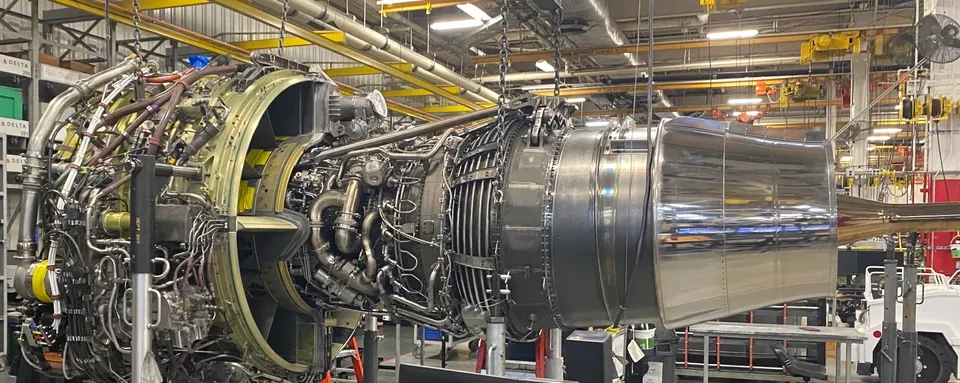
Aircraft Teardown Market Growth: USM Demand, Recycling & Forecast
Aircraft Teardown Market Growth: USM Demand, Recycling & Strategic Outlook
Analysis of the rapidly expanding aircraft teardown and recycling market, including market size projections, used serviceable material (USM) trends, engine/APU/landing-gear supply constraints, and strategic guidance for operators and lessors worldwide.
Safe Fly Aviation – international aircraft charter brokerage and aviation advisory company, sourcing and selling engines, APUs, and landing gear for clients across global markets.
The Aircraft Teardown Market: A Rapidly Expanding Sector

The aircraft teardown and recycling market has transformed from a niche end-of-life service into a core segment of the global aviation aftermarket. Driven by aging fleets, extended service lives, and surging worldwide demand for cost-effective used serviceable material (USM), teardown volumes are projected to exceed 800 aircraft annually by 2030, with material recovery rates now reaching up to 90% by weight.
The global commercial aircraft disassembly, dismantling, and recycling market is experiencing robust growth across multiple segments. According to 360iResearch, the market is valued at approximately $7.96 billion in 2025 and is projected to reach $12.78 billion by 2032 — a 7.00% CAGR.
Market Size & Growth Forecast
Multiple research sources confirm strong growth trajectories across the aircraft teardown ecosystem. Below is a summary of key market projections, each independently verified against the publisher's current published figures:
| Market Segment | Base Year Value | Forecast Value | CAGR |
|---|---|---|---|
| Commercial Aircraft Disassembly, Dismantling & Recycling | $7.96B (2025) | $12.78B (2032) | 7.00% |
| Aircraft Recycling Market | $5.39B (2025) | $7.66B (2030) | 7.2% |
| Aircraft Disassembly & Demolition | $9.19B (2025) | $15.43B (2032) | 7.60% |
| Aircraft Disassembly & Recovery Services | $1.94B (2025) | $2.88B (2032) | 5.79% |
Sources: 360iResearch, Commercial Aircraft Disassembly, Dismantling & Recycling Market · The Business Research Company, Aircraft Recycling Global Market Report 2025 · 360iResearch, Aircraft Disassembly & Demolition Market · Aircraft Disassembly & Recovery Services Market. Rows 1 and 3 are both published by 360iResearch but cover differently-scoped segments (full disassembly/dismantling/recycling vs. disassembly-and-demolition specifically), which is why the figures differ — both are current as published.
Key Drivers of Teardown Market Growth
The aircraft teardown market is being propelled by several interconnected factors that are reshaping the aviation aftermarket landscape worldwide.

✈️ Extended Fleet Life
Airlines are keeping older aircraft in service longer due to delivery delays from OEMs. This increases maintenance demand while reducing retirement volumes, creating USM scarcity across engines, APUs, and landing gear alike.
💰 Demand for Cost-Effective USM
Used Serviceable Material offers significant cost savings compared to new OEM parts, driving demand across MRO operations worldwide. Safe Fly Aviation's advisory desk helps operators weigh teardown-sourced USM against new OEM stock for engines, APUs, and landing gear.
♻️ Sustainability & Lifecycle Goals
Recycling rates reaching 90% by weight support the industry's growing lifecycle-sustainability push. IATA's sustainability programs increasingly frame end-of-life asset recovery as part of aviation's broader environmental agenda.
📈 Growing Aircraft Retirement Pipeline
Thousands of aircraft built in the 2000s and 2010s are approaching retirement age over the coming decade, providing a growing feedstock for teardown and recycling operations as they reach end of economic life.
Used Serviceable Material (USM) Market Dynamics
The USM market has become increasingly constrained as fleet life extension reduces retirement volumes. This scarcity is affecting availability across all primary fleet types, with particular pressure on narrowbody components, engines, APUs, and landing gear.

USM Supply Constraints
- Fewer retirements: Operators deferring retirements reduce the volume of USM entering the market
- Younger asset teardowns: Part-out companies are targeting younger A320neos due to high-tech component shortages
- Repair over replacement: With USM scarcer, operators are pushed toward repairing existing components
Price & Availability Impact
- High search intensity for CFM56 components including fan disks, HMUs, and structural engine parts
- Landing gear and ERJ components showing predictable overhaul cycle pressure
- Even low-value consumables appearing on hard-to-find lists
The Broader Aftermarket Parts Ecosystem
The aircraft teardown market exists within a larger aftermarket parts ecosystem that, per GM Insights, was valued at $49.3 billion in 2024, projected to reach $108.8 billion by 2034 at 8.3% CAGR.
| Segment | 2024 Value | Share / CAGR |
|---|---|---|
| Repairable Parts | $19.2 billion | Largest segment |
| Airlines End-User | $20.3 billion | Dominant buyer |
| OEM Parts | $37.9 billion | Largest supply source |
| PMA Parts | — | 11.2% CAGR (fastest growing) |
CFM56 Aftermarket: The Epicenter of USM Demand
The CFM56 engine family remains one of the most widely deployed globally, with CFM56-5B powering nearly 60% of all Airbus A320ceo-family aircraft and CFM56-7B having more than 15,000 delivered engines. This installed base creates massive aftermarket demand worldwide — see Safe Fly Aviation's own CFM56-5B Engine Availability Report for current market conditions.

Most-Searched Components
- Valve Transient Bleeds (8910-277, 8910-272, 8910-344)
- Valve HPTACC (8910-253, 8910-255)
- LPT clearance control valves (8910-275)
- VBV actuators (8100-0083)
- VSV actuators (8100-0051, 8100-0091)
Core Hardware in Demand
- HPT rear shafts (1864M90P04)
- HPC spools (2048M20G03)
- Fuel pumps (6970-125, 6970-126)
- Hydromechanical units (442653, 442369)
- Bearings and seal systems
APU and Landing Gear: The Other Side of the Scarcity Story
Engines get most of the attention in USM coverage, but the same scarcity dynamics are hitting auxiliary power units (APUs) and landing gear just as hard. Locatory.com's April 2026 report lists the APU panel assembly (PN: 601R51226-23) for regional aircraft among the hardest-to-source components in the entire dataset, alongside ERJ-190 landing gear parts — including side stays, locking stays, and nose landing gear components — which were among the most highly searched items that month.
Both systems follow predictable overhaul cycles, which means the coming demand is forecastable — but only for operators who plan sourcing ahead of the cycle rather than reacting to an AOG. Safe Fly Aviation's advisory team sources and sells APUs and landing gear assemblies worldwide alongside engines, drawing on the same teardown and USM channels covered throughout this report.

Related reading:
APU Strategic Analysis
What an APU does, why it matters operationally, and how to plan around its lifecycle. Read the analysis →
APU Availability Report 2026
Current market conditions for APU units and parts. Read the report →
Landing Gear Overhaul Capacity Crisis
Why overhaul slots are the real bottleneck, not just parts. Read the report →
Landing Gear: Complete Guide
Components, types, and engineering fundamentals. Read the guide →
Strategic Recommendations for Operators & Lessors
Given current market conditions — extended fleet life, USM scarcity, and supply chain constraints — aviation stakeholders worldwide should consider the following strategies:
📊 Monitor Real-Time Data
Use digital marketplace data to identify emerging scarcity before it impacts operations. Search intensity and transaction velocity are leading indicators.
🔄 Diversify Sourcing Channels
Implement multi-sourcing models that include teardown-derived USM, repair services, and OEM support across engines, APUs, and landing gear. Single-channel dependence increases risk.
📅 Plan Maintenance Earlier
Initiate procurement earlier in maintenance cycles to reduce exposure to lead-time uncertainty. Lead times have become too unpredictable for reactive sourcing.
🤝 Partner With a Sourcing Specialist
Work with an advisory desk that tracks engine, APU, and landing gear scarcity together — Safe Fly Aviation's sourcing team does this for operators and lessors worldwide.
Frequently Asked Questions
How big is the aircraft teardown and USM market in 2026?
Estimates vary by scope. 360iResearch values the commercial aircraft disassembly, dismantling and recycling market at $7.96 billion in 2025, growing to $12.78 billion by 2032 (7.00% CAGR). The Business Research Company puts the aircraft recycling market at $5.39 billion in 2025, reaching $7.66 billion by 2030 (7.2% CAGR). The broader aftermarket parts ecosystem these teardown operations feed is worth $49.3 billion (2024), per GM Insights, heading toward $108.8 billion by 2034.
Why is used serviceable material (USM) becoming harder to find?
Airlines are keeping older aircraft flying longer because new-aircraft deliveries are delayed, which reduces the number of aircraft retired and torn down for parts each year. Fewer teardowns mean less USM entering the market just as demand for cost-effective used parts is rising, so part-out companies are increasingly targeting younger aircraft than before to meet demand.
Which aircraft parts are hardest to source right now?
Locatory.com's April 2026 parts-search data shows CFM56 air-management and control components (valve transient bleeds, HPTACC valves, actuators) as the most searched and hardest to find, alongside ERJ-190 landing gear components and APU panel assemblies for regional aircraft.
How can operators and lessors secure engines, APUs, and landing gear reliably?
Diversify sourcing across teardown-derived USM, repair, and OEM channels; start procurement earlier in the maintenance cycle; and work with an advisory partner who tracks scarcity signals across engines, APUs, and landing gear rather than sourcing each component reactively and separately.
Does Safe Fly Aviation source and sell aircraft engines, APUs, and landing gear?
Yes. Safe Fly Aviation's aviation advisory team sources and sells engines, auxiliary power units (APUs), and landing gear assemblies for operators, lessors, and MRO providers worldwide, including teardown-sourced USM, exchanges, and full acquisitions. Start with our engine and APU sourcing page →
🔗 Related Safe Fly Aviation Services & Resources
- Engine & APU Sourcing
- CFM56-5B Engine Availability Report 2026
- Aircraft APU: Strategic Analysis
- APU Availability Report 2026
- Landing Gear Overhaul Capacity Crisis
- Landing Gear: Complete Guide
- Rotables vs. Consumables Trading Guide
- Premium Aircraft Engines for Sale Worldwide
- Aircraft Parts Traceability Guide
- Aircraft Acquisition & Brokerage
📚 Sources & Further Reading
- 360iResearch – Commercial Aircraft Disassembly, Dismantling & Recycling Market
- The Business Research Company – Aircraft Recycling Global Market Report 2025
- 360iResearch – Aircraft Disassembly & Demolition Market
- Aircraft Disassembly & Recovery Services Market – Global Forecast 2026-2032
- GM Insights – Aircraft Aftermarket Parts Market
- Locatory.com – Most Searched and Hardest-to-Find Aircraft Parts, April 2026
- Aircraft Fleet Recycling Association (AFRA) – Best Management Practices
- IATA – Supply Chain Challenges Could Cost Airlines More Than $11 Billion in 2025
- Aviation Week Network – Commercial Fleet and MRO Market Summary Report
Need Engines, APUs, or Landing Gear — or Help With a Teardown Program?
Safe Fly Aviation's aviation advisory team sources and sells engines, APUs, and landing gear for operators, lessors, and MRO providers worldwide — from CFM56 core hardware to APU panel assemblies and landing-gear overhaul exchanges. Whether you need teardown-sourced USM, a full component acquisition, or help navigating today's scarcity-driven aftermarket, our team is available 24/7.
📞 Call / WhatsApp: +91 7840000473
📧 Email: info@safefly.aero
🌐 Website: www.safefly.aero