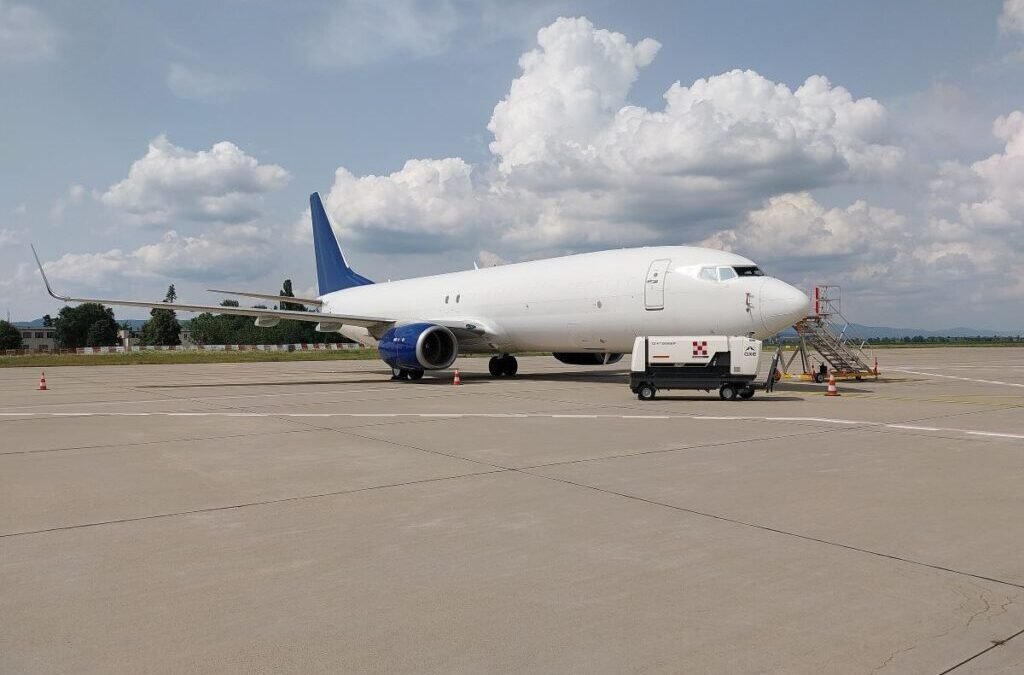
Central Asia Aviation Market Report 2026: Airlines, Airports, Cargo, MRO & Investment
Safe Fly Aviation – Comprehensive analysis of the Central Asia aviation market, the fastest-growing aviation sub-region globally. Airline growth, airport infrastructure, cargo expansion, aircraft leasing, MRO opportunities, business aviation, and investment opportunities in Uzbekistan, Kazakhstan, Kyrgyzstan, Tajikistan, and Turkmenistan.

Central Asia aviation market 2026 — the fastest-growing aviation sub-region globally.
- Fastest-growing aviation sub-region globally — overtook South Asia in 2025
- ~60 million passengers carried in 2025 Source: TIIF 2026 / bne IntelliNews
- Passenger traffic doubled since 2019; air cargo up 70% Source: TIIF 2026 / Uzbekistan Government
- Uzbekistan & Kazakhstan drive ~80% of regional capacity Source: OAG / TravelDaily
- Uzbekistan 2026 capacity growth: 24% year-on-year Source: OAG / TravelDaily
- Uzbekistan airport traffic: 15.5 million passengers in 2025 — up 3.5x from 2021 Source: Incheon International Airport / Korea Herald
- New Tashkent Airport: $2.5 billion PPP project — capacity 20m passengers / 300,000 tonnes cargo Source: Uzbekistan Airports / Trend
- Airlines serving region: 15 → 44 (2019–2026) Source: TIIF 2026 / Uzbekistan Government
- FDI in Uzbekistan: $4bn (2017) → $40bn (2025) — tenfold increase Source: TIIF 2026 / Daryo
Central Asia is the fastest-growing aviation sub-region in the world in 2026, carrying approximately 60 million passengers in 2025 — a doubling since 2019. Uzbekistan leads with 24% capacity growth forecast for 2026 and 15.5 million airport passengers in 2025 (up 3.5x from 2021), while Kazakhstan's Air Astana Group operates 63 aircraft as the largest regional carrier. The $2.5 billion New Tashkent International Airport PPP is scheduled to open in 2030 with 20 million passenger capacity. The region's cargo volumes have grown 70% since 2019, positioning Central Asia as an intercontinental cargo bridge between China and Europe.
Market Overview: Central Asia's Aviation Boom
Central Asia has emerged as the fastest-growing aviation sub-region in the world, overtaking South Asia in 2025. The region carried approximately 60 million passengers in 2025, a milestone that has surprised even the most optimistic forecasters.
The aviation boom is driven by converging trends:
- Passenger traffic has doubled since 2019, while air cargo volumes have increased by 70%.
- Regional airline competition has intensified — the number of airlines serving the region grew from 15 to 44, with foreign carriers increasing from 14 to 36.
- Geopolitical factors, including airspace restrictions, have redirected traffic through Central Asia, creating new intercontinental corridors.
- Economic growth and market liberalisation have unlocked aviation potential, with Uzbekistan's FDI surging from $4bn in 2017 to over $40bn in 2025.
The region's strategic location at the crossroads of Asia, Europe, and the Middle East positions it as a future global transit hub. Industry leaders compare Central Asia's trajectory to that of South Korea in 1990 — a country with similar demographics that built one of the world's leading aviation hubs at Incheon.
Kazakhstan Aviation Market: Regional Leader & Hub Builder
Kazakhstan is Central Asia's largest aviation market by domestic capacity, with a well-developed domestic network serving its vast geography. The country accounts for approximately 40% of regional capacity.
Air Astana Group — The Regional Champion
Air Astana Group, comprising Air Astana (full-service) and FlyArystan (low-cost), is the largest airline group in Central Asia and the Caucasus by revenue and fleet size.
- Fleet: 63 aircraft
- Transit growth: International transit passenger traffic via Kazakhstan increased 65% in Q1 2026
- Network expansion: New routes to Shanghai (2026), Guangzhou, Larnaca, and Dalaman
- Together, Air Astana and FlyArystan operate 47% of Central Asia's domestic capacity
Uzbekistan Aviation Market: Fastest-Growing in Central Asia
Uzbekistan is the fastest-growing aviation market in Central Asia, with capacity growth of 24% forecast for 2026. The country has emerged as a regional powerhouse, attracting unprecedented levels of foreign investment.
- Airport passenger traffic: 15.5 million in 2025 — up 3.5-fold from 2021
- Average annual growth: 36.5% since 2021
- Foreign visitors: 11.7 million in 2025
- Uzbekistan Airways IPO set to launch mid-2026 with 125 transformation initiatives underway
- Low-cost carrier share: rose from 0.4% in 2010 to 21% in 2025
Emerging Aviation Markets: Kyrgyzstan, Tajikistan, Turkmenistan
Kyrgyzstan
- Tourism growth to Issyk-Kul and mountain destinations
- Manas International Airport modernisation
- Growing Chinese connectivity via Xinjiang
Tajikistan
- Mountain aviation and helicopter demand
- Regional turboprop demand (ATR, Dash 8)
- Dushanbe airport modernisation
Turkmenistan
- State-controlled aviation with modern Boeing/Airbus fleet
- Cargo transit potential between Asia and Europe
- Potential for future market liberalisation
Airlines & Fleet Growth: Competition Intensifies
| Metric | 2019 | 2026 | Growth |
|---|---|---|---|
| Total Airlines Serving Region | 15 | 44 | +193% |
| Foreign Carriers | 14 | 36 | +157% |
| Uzbekistan Airport Passengers | ~4.4M | 15.5M | +252% |
| Low-Cost Carrier Market Share | 0.4% | 21% | +5,150% |
| Air Astana Group Fleet | ~40 | 63 | +58% |
Fleet Demand Forecast 2026–2035
| Segment | Expected Demand | Key Drivers |
|---|---|---|
| A320neo Family | 120–150 | Domestic & regional growth |
| B737 MAX | 90–120 | Kazakhstan & regional carriers |
| ATR72 / Dash 8 | 40–60 | Regional connectivity; short-runway ops |
| Embraer E190-E2 / E195-E2 | 30–50 | Regional jet replacement |
| Freighters (B737-800F, ATR72F) | 20–40 | Cargo corridor growth |
| Business Jets | 15–25 | Corporate; oil & gas; government |
| Helicopters | 10–20 | Mountain ops; mining; tourism |
Airport Infrastructure: Building for the Future
| Airport | Country | IATA | Role |
|---|---|---|---|
| New Tashkent International | Uzbekistan | — | Future regional hub (20m capacity) |
| Tashkent International | Uzbekistan | TAS | Current primary hub |
| Astana International | Kazakhstan | NQZ | Government and northern hub |
| Almaty International | Kazakhstan | ALA | Largest in Kazakhstan |
| Manas International | Kyrgyzstan | FRU | Bishkek gateway |
| Dushanbe International | Tajikistan | DYU | Main gateway |
| Ashgabat International | Turkmenistan | ASB | Modern hub |
New Tashkent Airport: Central Asia's Future Hub
The New Tashkent International Airport is the most significant aviation infrastructure project in Central Asia. A $2.5 billion Public-Private Partnership was signed at TIIF 2026.
- Location: Urta Chirchiq and Quyi Chirchiq districts — 1,310 hectares
- Investment: $2.5 billion
- Capacity (Phase 1): 20 million passengers and 300,000 tonnes cargo annually
- Full capacity: Expandable to 47 million passengers
- Opening: End of 2030
- Runways: Two 4-kilometre runways; 98 aircraft parking stands
- Consortium partners: Vision Invest (Saudi Arabia), Incheon International Airport Corporation, Sojitz (Japan), with senior loans from EBRD, US DFC, and JBIC
- Economic impact: $5.3bn production inducement, $2bn added value, 30,000+ new jobs
Air Cargo Growth: Central Asia as an Intercontinental Bridge
Central Asia is transitioning into a major intercontinental air cargo bridge, with regional volumes more than doubling since 2019.
- Central Asia air cargo volumes +70% since 2019
- Kazakhstan: Total volumes rose 149% from 2019 to 2024
- Uzbekistan: Expanded by 182% over the same period
- Direct transit share: Surged from 59% to ~65% of regional air cargo
Air freight represents approximately 1% of global cargo volumes yet accounts for 35% of the total value of goods transported worldwide.
Central Asia Cargo Aircraft Demand Forecast 2026–2035
| Aircraft Type | Opportunity Level | Key Drivers |
|---|---|---|
| B737-800BCF | Very High | Primary narrow-body freighter; e-commerce demand |
| B737-800SF | Very High | Cost-effective conversion |
| ATR72F | High | Regional cargo; short-runway ops |
| A321P2F | High | Larger narrow-body capacity |
| B767-300F | Moderate | Wide-body cargo; international routes |
| A330P2F | Emerging | Next-generation wide-body freighter |
China–Central Asia Aviation Corridor: The Next Frontier
The China–Central Asia aviation corridor represents one of the most significant growth opportunities in the region's aviation market. Driven by the Belt and Road Initiative (BRI), expanding trade, and e-commerce logistics, this corridor is reshaping air connectivity between Asia and Europe.
- Belt and Road Initiative: Infrastructure investments and trade facilitation across Central Asia
- Xinjiang gateways: Urumqi is emerging as a key connecting point
- E-commerce growth: Cross-border e-commerce accelerating air cargo demand
- Logistics expansion: Alibaba Logistics and JD Logistics expanding regional presence
Aircraft Leasing in Central Asia: Growing Demand
- Dry Lease Demand: Strong for narrow-body aircraft and regional jets
- Wet Lease / ACMI: Growing seasonal and route expansion demand
- Sale-Leaseback Activity: Increasing as airlines unlock capital
- Lessor Interest: International lessors increasingly active in the market
| Aircraft Type | Lease Type | Demand Level |
|---|---|---|
| A320neo / B737 MAX | Dry Lease | Strong |
| A320ceo / B737NG | Dry / Wet Lease | High |
| Embraer E-Jets | Dry / Wet Lease | Growing |
| ATR 72 / 42 | Dry / Wet Lease | Growing |
| B737-800 Freighter | Dry / Wet Lease | Strong |
| Business Jets | Dry / Wet Lease | Growing |
MRO & Engine Services Opportunity in Central Asia
Central Asia has a significant MRO capacity gap, with most airlines sending their aircraft to Turkey, Europe, or the Middle East for heavy maintenance and engine overhauls.
- Limited heavy maintenance capability — most regional carriers rely on foreign MRO providers
- No local engine overhaul capability — CFM56, V2500, and LEAP support requires overseas repair
- Component repair capacity — limited; most components sent overseas
- Technical training — limited infrastructure for aviation technical training
Opportunities include CFM56/V2500 line and heavy maintenance, LEAP support, landing gear overhaul, component repair and pooling, and a regional training academy.
Engine Market Outlook: Central Asia's Growing Fleet
| Engine Type | Demand Level | Key Operators |
|---|---|---|
| CFM56-7B | High | B737NG operators |
| CFM56-5B | High | A320ceo operators |
| V2500 | Growing | A320ceo operators |
| LEAP-1A | Strong | A320neo operators |
| LEAP-1B | Growing | B737 MAX operators |
| PW100 Series | Growing | ATR operators |
| Arriel Family | Growing | Helicopter operators |
Business Aviation Growth in Central Asia
Central Asia's business aviation market is expanding, driven by mining and resource sectors, the oil & gas industry, government and diplomatic travel, and cross-border corporate mobility.
- Bombardier Challenger 350 — versatile, mid-size
- Embraer Legacy 650 — large-cabin, long-range
- Gulfstream G450 / G550 — long-range capability
- Dassault Falcon 2000 — popular for regional missions
- Bombardier Global 6000 — ultra-long-range
Regulatory Environment & IATA's Regional Presence
The International Air Transport Association (IATA) is expanding its presence in Central Asia, recognising the region's growth potential.
- Office in Astana coordinating regional work
- Operational activities expanding in Uzbekistan
- BSP to launch in Uzbekistan by end of 2026
- 14 IATA-accredited agents in Uzbekistan — 12 passenger and 2 cargo
- BSP already operating in Kazakhstan and Azerbaijan
Investment Opportunities in Central Asian Aviation
- Airline Investment — Uzbekistan Airways IPO (2026); regional airline expansion
- Airport Infrastructure — New Tashkent Airport ($2.5bn PPP); Urgench development; Astana expansion
- Aircraft Leasing — Growing demand for dry and wet leases
- Cargo Aviation — Expanding intercontinental cargo corridors
- Low-Cost Carrier Growth — LCC market share up from 0.4% to 21% (2010–2025)
- MRO Services — Limited local capacity creates opportunities
- SAF Production — Kazakhstan and Uzbekistan exploring domestic SAF
- China–Central Asia Corridor — Cargo and passenger connectivity growth
Uzbekistan's FDI surge from $4bn (2017) to over $40bn (2025) reflects the region's investment momentum, driven by foreign exchange liberalisation, privatisation programmes, and PPP mechanisms.
Aircraft Available for Central Asian Operators
| Aircraft Type | Typical Mission | Demand Level |
|---|---|---|
| A320ceo | Domestic & Regional | Strong |
| A321ceo | Regional & International | Strong |
| B737-800 | Domestic & Regional | Strong |
| ATR72-500 | Regional Turboprop | Growing |
| ATR72-600 | Regional Turboprop | Strong |
| Embraer E190 | Regional Jet | Strong |
| B737-800BCF | Cargo Freighter | Very High |
| Challenger 350 / Legacy 650 | Business Aviation | Growing |
Need to acquire aircraft? Contact Safe Fly Aviation for professional aircraft sourcing and acquisition support in Central Asia.
Frequently Asked Questions About Central Asia's Aviation Market
How big is the Central Asia aviation market in 2026?
Central Asia carried approximately 60 million passengers in 2025, overtaking South Asia as the fastest-growing aviation sub-region globally. Uzbekistan's airport passenger traffic reached 15.5 million in 2025, up 3.5-fold from 2021.
Which countries are driving aviation growth in Central Asia?
Uzbekistan and Kazakhstan are the primary growth drivers, accounting for approximately 80% of regional capacity. Uzbekistan is the fastest-growing market, with 2026 capacity growth forecast at 24% year-on-year.
What are the emerging aviation markets in Central Asia?
Kyrgyzstan, Tajikistan, and Turkmenistan represent emerging markets with growing aviation potential. Kyrgyzstan benefits from tourism and Chinese connectivity, Tajikistan has mountain aviation and helicopter opportunities, while Turkmenistan is investing in airport infrastructure and cargo.
What is the cargo aircraft demand in Central Asia?
Cargo aircraft demand in Central Asia is growing rapidly, with B737-800BCF and B737-800SF representing the highest opportunity. ATR72F, A321P2F, and wide-body freighters are also in increasing demand as the region becomes an intercontinental cargo bridge.
What is the MRO opportunity in Central Asia?
Central Asia has a significant MRO capacity gap, with most airlines sending their aircraft overseas for heavy maintenance. Opportunities include engine overhaul (CFM56, V2500, LEAP), line maintenance, component repair, and regional MRO hub development.
What aircraft are most in demand in Central Asia?
A320ceo/A321ceo, B737-800, ATR72-500/600, and Embraer E190 are in high demand for passenger operations. For cargo, B737-800BCF and ATR72F are the most sought-after types.
How can Safe Fly Aviation support entry into Central Asian markets?
Safe Fly Aviation provides aircraft acquisition, leasing advisory, cargo aircraft sourcing, airline startup consulting, fleet planning, MRO advisory, business aviation support, engine advisory, and transaction assistance for operators and investors entering Central Asia's aviation market. Contact us for tailored support.
Ready to Enter or Expand in Central Asia's Aviation Market?
Safe Fly Aviation provides expert advisory, aircraft acquisition, leasing, and transaction support for operators, investors, and lessors across the world's fastest-growing aviation sub-region.
Aircraft Acquisition · Leasing · Cargo · MRO Advisory · Business Aviation · Market Intelligence
Sources & References
- IATA — Air Cargo Chart of the Week; Central Asia Regional Analysis
- OAG — Central Asia Capacity Data 2025–2026
- Air Astana — Fleet & Network Announcements
- Uzbekistan Airports — New Tashkent International Airport PPP
- Incheon International Airport Corporation — Tashkent Airport Development Partnership
- bne IntelliNews — TIIF 2026 Coverage
- Safe Fly Aviation — Internal market intelligence (June 2026)
Disclaimer: This report is based on public sources and industry data as of June 2026. Market figures and forecasts are indicative and subject to change. Safe Fly Aviation provides independent aviation intelligence and advisory services.
Safe Fly Aviation – Comprehensive analysis of the Central Asia aviation market, the fastest-growing aviation sub-region globally. Airline growth, airport infrastructure, cargo expansion, aircraft leasing, MRO opportunities, business aviation, and investment opportunities in Uzbekistan, Kazakhstan, Kyrgyzstan, Tajikistan, and Turkmenistan.
Central Asia aviation market 2026 — the fastest-growing aviation sub-region globally.
- Fastest-growing aviation sub-region globally — overtook South Asia in 2025
- ~60 million passengers carried in 2025 Source: TIIF 2026 / bne IntelliNews
- Passenger traffic doubled since 2019; air cargo up 70% Source: TIIF 2026 / Uzbekistan Government
- Uzbekistan & Kazakhstan drive ~80% of regional capacity Source: OAG / TravelDaily
- Uzbekistan 2026 capacity growth: 24% year-on-year Source: OAG / TravelDaily
- Uzbekistan airport traffic: 15.5 million passengers in 2025 — up 3.5x from 2021 Source: Incheon International Airport / Korea Herald
- New Tashkent Airport: $2.5 billion PPP project — capacity 20m passengers / 300,000 tonnes cargo Source: Uzbekistan Airports / Trend
- Airlines serving region: 15 → 44 (2019–2026) Source: TIIF 2026 / Uzbekistan Government
- FDI in Uzbekistan: $4bn (2017) → $40bn (2025) — tenfold increase Source: TIIF 2026 / Daryo
Central Asia is the fastest-growing aviation sub-region in the world in 2026, carrying approximately 60 million passengers in 2025 — a doubling since 2019. Uzbekistan leads with 24% capacity growth forecast for 2026 and 15.5 million airport passengers in 2025 (up 3.5x from 2021), while Kazakhstan's Air Astana Group operates 63 aircraft as the largest regional carrier. The $2.5 billion New Tashkent International Airport PPP is scheduled to open in 2030 with 20 million passenger capacity. The region's cargo volumes have grown 70% since 2019, positioning Central Asia as an intercontinental cargo bridge between China and Europe.
Market Overview: Central Asia's Aviation Boom
Central Asia has emerged as the fastest-growing aviation sub-region in the world, overtaking South Asia in 2025. The region carried approximately 60 million passengers in 2025, a milestone that has surprised even the most optimistic forecasters.
The aviation boom is driven by converging trends:
- Passenger traffic has doubled since 2019, while air cargo volumes have increased by 70%.
- Regional airline competition has intensified — the number of airlines serving the region grew from 15 to 44, with foreign carriers increasing from 14 to 36.
- Geopolitical factors, including airspace restrictions, have redirected traffic through Central Asia, creating new intercontinental corridors.
- Economic growth and market liberalisation have unlocked aviation potential, with Uzbekistan's FDI surging from $4bn in 2017 to over $40bn in 2025.
The region's strategic location at the crossroads of Asia, Europe, and the Middle East positions it as a future global transit hub. Industry leaders compare Central Asia's trajectory to that of South Korea in 1990 — a country with similar demographics that built one of the world's leading aviation hubs at Incheon.
Kazakhstan Aviation Market: Regional Leader & Hub Builder
Kazakhstan is Central Asia's largest aviation market by domestic capacity, with a well-developed domestic network serving its vast geography. The country accounts for approximately 40% of regional capacity.
Air Astana Group — The Regional Champion
Air Astana Group, comprising Air Astana (full-service) and FlyArystan (low-cost), is the largest airline group in Central Asia and the Caucasus by revenue and fleet size.
- Fleet: 63 aircraft
- Transit growth: International transit passenger traffic via Kazakhstan increased 65% in Q1 2026
- Network expansion: New routes to Shanghai (2026), Guangzhou, Larnaca, and Dalaman
- Together, Air Astana and FlyArystan operate 47% of Central Asia's domestic capacity
Uzbekistan Aviation Market: Fastest-Growing in Central Asia
Uzbekistan is the fastest-growing aviation market in Central Asia, with capacity growth of 24% forecast for 2026. The country has emerged as a regional powerhouse, attracting unprecedented levels of foreign investment.
- Airport passenger traffic: 15.5 million in 2025 — up 3.5-fold from 2021
- Average annual growth: 36.5% since 2021
- Foreign visitors: 11.7 million in 2025
- Uzbekistan Airways IPO set to launch mid-2026 with 125 transformation initiatives underway
- Low-cost carrier share: rose from 0.4% in 2010 to 21% in 2025
Emerging Aviation Markets: Kyrgyzstan, Tajikistan, Turkmenistan
Kyrgyzstan
- Tourism growth to Issyk-Kul and mountain destinations
- Manas International Airport modernisation
- Growing Chinese connectivity via Xinjiang
Tajikistan
- Mountain aviation and helicopter demand
- Regional turboprop demand (ATR, Dash 8)
- Dushanbe airport modernisation
Turkmenistan
- State-controlled aviation with modern Boeing/Airbus fleet
- Cargo transit potential between Asia and Europe
- Potential for future market liberalisation
Airlines & Fleet Growth: Competition Intensifies
| Metric | 2019 | 2026 | Growth |
|---|---|---|---|
| Total Airlines Serving Region | 15 | 44 | +193% |
| Foreign Carriers | 14 | 36 | +157% |
| Uzbekistan Airport Passengers | ~4.4M | 15.5M | +252% |
| Low-Cost Carrier Market Share | 0.4% | 21% | +5,150% |
| Air Astana Group Fleet | ~40 | 63 | +58% |
Fleet Demand Forecast 2026–2035
| Segment | Expected Demand | Key Drivers |
|---|---|---|
| A320neo Family | 120–150 | Domestic & regional growth |
| B737 MAX | 90–120 | Kazakhstan & regional carriers |
| ATR72 / Dash 8 | 40–60 | Regional connectivity; short-runway ops |
| Embraer E190-E2 / E195-E2 | 30–50 | Regional jet replacement |
| Freighters (B737-800F, ATR72F) | 20–40 | Cargo corridor growth |
| Business Jets | 15–25 | Corporate; oil & gas; government |
| Helicopters | 10–20 | Mountain ops; mining; tourism |
Airport Infrastructure: Building for the Future
| Airport | Country | IATA | Role |
|---|---|---|---|
| New Tashkent International | Uzbekistan | — | Future regional hub (20m capacity) |
| Tashkent International | Uzbekistan | TAS | Current primary hub |
| Astana International | Kazakhstan | NQZ | Government and northern hub |
| Almaty International | Kazakhstan | ALA | Largest in Kazakhstan |
| Manas International | Kyrgyzstan | FRU | Bishkek gateway |
| Dushanbe International | Tajikistan | DYU | Main gateway |
| Ashgabat International | Turkmenistan | ASB | Modern hub |
New Tashkent Airport: Central Asia's Future Hub
The New Tashkent International Airport is the most significant aviation infrastructure project in Central Asia. A $2.5 billion Public-Private Partnership was signed at TIIF 2026.
- Location: Urta Chirchiq and Quyi Chirchiq districts — 1,310 hectares
- Investment: $2.5 billion
- Capacity (Phase 1): 20 million passengers and 300,000 tonnes cargo annually
- Full capacity: Expandable to 47 million passengers
- Opening: End of 2030
- Runways: Two 4-kilometre runways; 98 aircraft parking stands
- Consortium partners: Vision Invest (Saudi Arabia), Incheon International Airport Corporation, Sojitz (Japan), with senior loans from EBRD, US DFC, and JBIC
- Economic impact: $5.3bn production inducement, $2bn added value, 30,000+ new jobs
Air Cargo Growth: Central Asia as an Intercontinental Bridge
Central Asia is transitioning into a major intercontinental air cargo bridge, with regional volumes more than doubling since 2019.
- Central Asia air cargo volumes +70% since 2019
- Kazakhstan: Total volumes rose 149% from 2019 to 2024
- Uzbekistan: Expanded by 182% over the same period
- Direct transit share: Surged from 59% to ~65% of regional air cargo
Air freight represents approximately 1% of global cargo volumes yet accounts for 35% of the total value of goods transported worldwide.
Central Asia Cargo Aircraft Demand Forecast 2026–2035
| Aircraft Type | Opportunity Level | Key Drivers |
|---|---|---|
| B737-800BCF | Very High | Primary narrow-body freighter; e-commerce demand |
| B737-800SF | Very High | Cost-effective conversion |
| ATR72F | High | Regional cargo; short-runway ops |
| A321P2F | High | Larger narrow-body capacity |
| B767-300F | Moderate | Wide-body cargo; international routes |
| A330P2F | Emerging | Next-generation wide-body freighter |
China–Central Asia Aviation Corridor: The Next Frontier
The China–Central Asia aviation corridor represents one of the most significant growth opportunities in the region's aviation market. Driven by the Belt and Road Initiative (BRI), expanding trade, and e-commerce logistics, this corridor is reshaping air connectivity between Asia and Europe.
- Belt and Road Initiative: Infrastructure investments and trade facilitation across Central Asia
- Xinjiang gateways: Urumqi is emerging as a key connecting point
- E-commerce growth: Cross-border e-commerce accelerating air cargo demand
- Logistics expansion: Alibaba Logistics and JD Logistics expanding regional presence
Aircraft Leasing in Central Asia: Growing Demand
- Dry Lease Demand: Strong for narrow-body aircraft and regional jets
- Wet Lease / ACMI: Growing seasonal and route expansion demand
- Sale-Leaseback Activity: Increasing as airlines unlock capital
- Lessor Interest: International lessors increasingly active in the market
| Aircraft Type | Lease Type | Demand Level |
|---|---|---|
| A320neo / B737 MAX | Dry Lease | Strong |
| A320ceo / B737NG | Dry / Wet Lease | High |
| Embraer E-Jets | Dry / Wet Lease | Growing |
| ATR 72 / 42 | Dry / Wet Lease | Growing |
| B737-800 Freighter | Dry / Wet Lease | Strong |
| Business Jets | Dry / Wet Lease | Growing |
MRO & Engine Services Opportunity in Central Asia
Central Asia has a significant MRO capacity gap, with most airlines sending their aircraft to Turkey, Europe, or the Middle East for heavy maintenance and engine overhauls.
- Limited heavy maintenance capability — most regional carriers rely on foreign MRO providers
- No local engine overhaul capability — CFM56, V2500, and LEAP support requires overseas repair
- Component repair capacity — limited; most components sent overseas
- Technical training — limited infrastructure for aviation technical training
Opportunities include CFM56/V2500 line and heavy maintenance, LEAP support, landing gear overhaul, component repair and pooling, and a regional training academy.
Engine Market Outlook: Central Asia's Growing Fleet
| Engine Type | Demand Level | Key Operators |
|---|---|---|
| CFM56-7B | High | B737NG operators |
| CFM56-5B | High | A320ceo operators |
| V2500 | Growing | A320ceo operators |
| LEAP-1A | Strong | A320neo operators |
| LEAP-1B | Growing | B737 MAX operators |
| PW100 Series | Growing | ATR operators |
| Arriel Family | Growing | Helicopter operators |
Business Aviation Growth in Central Asia
Central Asia's business aviation market is expanding, driven by mining and resource sectors, the oil & gas industry, government and diplomatic travel, and cross-border corporate mobility.
- Bombardier Challenger 350 — versatile, mid-size
- Embraer Legacy 650 — large-cabin, long-range
- Gulfstream G450 / G550 — long-range capability
- Dassault Falcon 2000 — popular for regional missions
- Bombardier Global 6000 — ultra-long-range
Regulatory Environment & IATA's Regional Presence
The International Air Transport Association (IATA) is expanding its presence in Central Asia, recognising the region's growth potential.
- Office in Astana coordinating regional work
- Operational activities expanding in Uzbekistan
- BSP to launch in Uzbekistan by end of 2026
- 14 IATA-accredited agents in Uzbekistan — 12 passenger and 2 cargo
- BSP already operating in Kazakhstan and Azerbaijan
Investment Opportunities in Central Asian Aviation
- Airline Investment — Uzbekistan Airways IPO (2026); regional airline expansion
- Airport Infrastructure — New Tashkent Airport ($2.5bn PPP); Urgench development; Astana expansion
- Aircraft Leasing — Growing demand for dry and wet leases
- Cargo Aviation — Expanding intercontinental cargo corridors
- Low-Cost Carrier Growth — LCC market share up from 0.4% to 21% (2010–2025)
- MRO Services — Limited local capacity creates opportunities
- SAF Production — Kazakhstan and Uzbekistan exploring domestic SAF
- China–Central Asia Corridor — Cargo and passenger connectivity growth
Uzbekistan's FDI surge from $4bn (2017) to over $40bn (2025) reflects the region's investment momentum, driven by foreign exchange liberalisation, privatisation programmes, and PPP mechanisms.
Aircraft Available for Central Asian Operators
| Aircraft Type | Typical Mission | Demand Level |
|---|---|---|
| A320ceo | Domestic & Regional | Strong |
| A321ceo | Regional & International | Strong |
| B737-800 | Domestic & Regional | Strong |
| ATR72-500 | Regional Turboprop | Growing |
| ATR72-600 | Regional Turboprop | Strong |
| Embraer E190 | Regional Jet | Strong |
| B737-800BCF | Cargo Freighter | Very High |
| Challenger 350 / Legacy 650 | Business Aviation | Growing |
Need to acquire aircraft? Contact Safe Fly Aviation for professional aircraft sourcing and acquisition support in Central Asia.
Frequently Asked Questions About Central Asia's Aviation Market
How big is the Central Asia aviation market in 2026?
Central Asia carried approximately 60 million passengers in 2025, overtaking South Asia as the fastest-growing aviation sub-region globally. Uzbekistan's airport passenger traffic reached 15.5 million in 2025, up 3.5-fold from 2021.
Which countries are driving aviation growth in Central Asia?
Uzbekistan and Kazakhstan are the primary growth drivers, accounting for approximately 80% of regional capacity. Uzbekistan is the fastest-growing market, with 2026 capacity growth forecast at 24% year-on-year.
What are the emerging aviation markets in Central Asia?
Kyrgyzstan, Tajikistan, and Turkmenistan represent emerging markets with growing aviation potential. Kyrgyzstan benefits from tourism and Chinese connectivity, Tajikistan has mountain aviation and helicopter opportunities, while Turkmenistan is investing in airport infrastructure and cargo.
What is the cargo aircraft demand in Central Asia?
Cargo aircraft demand in Central Asia is growing rapidly, with B737-800BCF and B737-800SF representing the highest opportunity. ATR72F, A321P2F, and wide-body freighters are also in increasing demand as the region becomes an intercontinental cargo bridge.
What is the MRO opportunity in Central Asia?
Central Asia has a significant MRO capacity gap, with most airlines sending their aircraft overseas for heavy maintenance. Opportunities include engine overhaul (CFM56, V2500, LEAP), line maintenance, component repair, and regional MRO hub development.
What aircraft are most in demand in Central Asia?
A320ceo/A321ceo, B737-800, ATR72-500/600, and Embraer E190 are in high demand for passenger operations. For cargo, B737-800BCF and ATR72F are the most sought-after types.
How can Safe Fly Aviation support entry into Central Asian markets?
Safe Fly Aviation provides aircraft acquisition, leasing advisory, cargo aircraft sourcing, airline startup consulting, fleet planning, MRO advisory, business aviation support, engine advisory, and transaction assistance for operators and investors entering Central Asia's aviation market. Contact us for tailored support.
Ready to Enter or Expand in Central Asia's Aviation Market?
Safe Fly Aviation provides expert advisory, aircraft acquisition, leasing, and transaction support for operators, investors, and lessors across the world's fastest-growing aviation sub-region.
Aircraft Acquisition · Leasing · Cargo · MRO Advisory · Business Aviation · Market Intelligence
Sources & References
- IATA — Air Cargo Chart of the Week; Central Asia Regional Analysis
- OAG — Central Asia Capacity Data 2025–2026
- Air Astana — Fleet & Network Announcements
- Uzbekistan Airports — New Tashkent International Airport PPP
- Incheon International Airport Corporation — Tashkent Airport Development Partnership
- bne IntelliNews — TIIF 2026 Coverage
- Safe Fly Aviation — Internal market intelligence (June 2026)
Disclaimer: This report is based on public sources and industry data as of June 2026. Market figures and forecasts are indicative and subject to change. Safe Fly Aviation provides independent aviation intelligence and advisory services.