VC-25B Bridge Aircraft: Air Force One Replacement Guide 2026
VC-25B Bridge Aircraft: Inside the New Air Force One and the Future of Presidential Aviation (2026)
 VC-25B Bridge Aircraft — Boeing 747-8 Presidential Airlift
Air Force One is more than a plane — it is a global symbol of American leadership, a flying White House equipped with advanced defense systems, secure communications, and the ability to operate as a mobile command center. As of June 2026, the United States has taken delivery of a new interim presidential aircraft — the VC-25B Bridge — while the long-term replacement program for the iconic VC-25A fleet continues.
This comprehensive guide explores the evolution of Air Force One, the current bridge aircraft, the delayed VC-25B program, technical capabilities, geopolitical context, and what it means for presidential airlift. At Safe Fly Aviation, we specialize in high-value aircraft transactions, VIP modifications, and global aviation insights — helping clients navigate complex programs like these.
Air Force One Fleet Comparison
Understanding the differences between the current, interim, and future presidential aircraft is essential for anyone following this program. Here is how the three variants compare:
| Feature | VC-25A | VC-25B Bridge | VC-25B |
|---|---|---|---|
| Aircraft Base | Boeing 747-200B | Boeing 747-8i | Boeing 747-8i |
| Entry Into Service | 1990 | 2026 | 2027–2028 (projected) |
| Range | ~7,800 nm | ~7,730 nm | ~7,730 nm |
| Passenger Capacity | ~70+ (including staff) | ~70+ (including staff) | ~70+ (including staff) |
| Aerial Refueling | Yes | TBD | Yes |
| Self-Protection Systems | Yes | Yes | Yes (enhanced) |
| Engine Type | GE CF6 | GE GEnx | GE GEnx |
Specifications based on public data. Some details remain classified.
Evolution of Air Force One: A Historical Timeline
The "Air Force One" call sign dates back to the 1950s when President Dwight D. Eisenhower used a modified Lockheed Constellation. The modern era began with Boeing VC-25As (modified 747-200s) entering service in 1990. These aircraft have served every U.S. president since George H.W. Bush, logging millions of miles with unmatched reliability.
- 1943: First presidential aircraft — FDR's "Sacred Cow" (Douglas C-54)
- 1947: Truman's "Independence" (Douglas C-118)
- 1953: Eisenhower's "Columbine II" (Lockheed C-121 Constellation) — propeller aircraft
- 1959: Eisenhower's Boeing 707 SAM 970 — first jet-powered presidential aircraft
- 1962: JFK's Boeing 707 SAM 26000 — the first aircraft specifically designed for presidential use
- 1972: Nixon's Boeing 707 (SAM 26000) — used for historic China and Soviet visits
- 1990: George H.W. Bush — VC-25A (Boeing 747-200B) enters service
- 1990–2026: VC-25A serves every president for 35+ years
- 2026: VC-25B Bridge (Boeing 747-8i) arrives at Joint Base Andrews
- 2027–2028: VC-25B (purpose-built) expected to enter service
The two VC-25As are now over 35 years old and face increasing maintenance demands. This necessitated the VC-25B replacement program and, more recently, the interim bridge solution.
The VC-25B Program: Ambition Meets Reality
In 2018, the U.S. Air Force contracted Boeing to deliver two new VC-25Bs based on the 747-8 platform. The goal: a modern, efficient presidential aircraft with enhanced range, self-protection systems, and updated interiors.
Delays and Challenges
- Original delivery target: 2024.
- Current projections: First aircraft around 2027–2028, with the second following.
- Factors: Supply chain issues, security clearances for workforce, technical complexities, and production hurdles.
The program remains one of the most scrutinized and costly in military aviation, reflecting the extraordinary requirements for a head-of-state aircraft.
The VC-25B Bridge Aircraft: Interim Solution Arrives in 2026
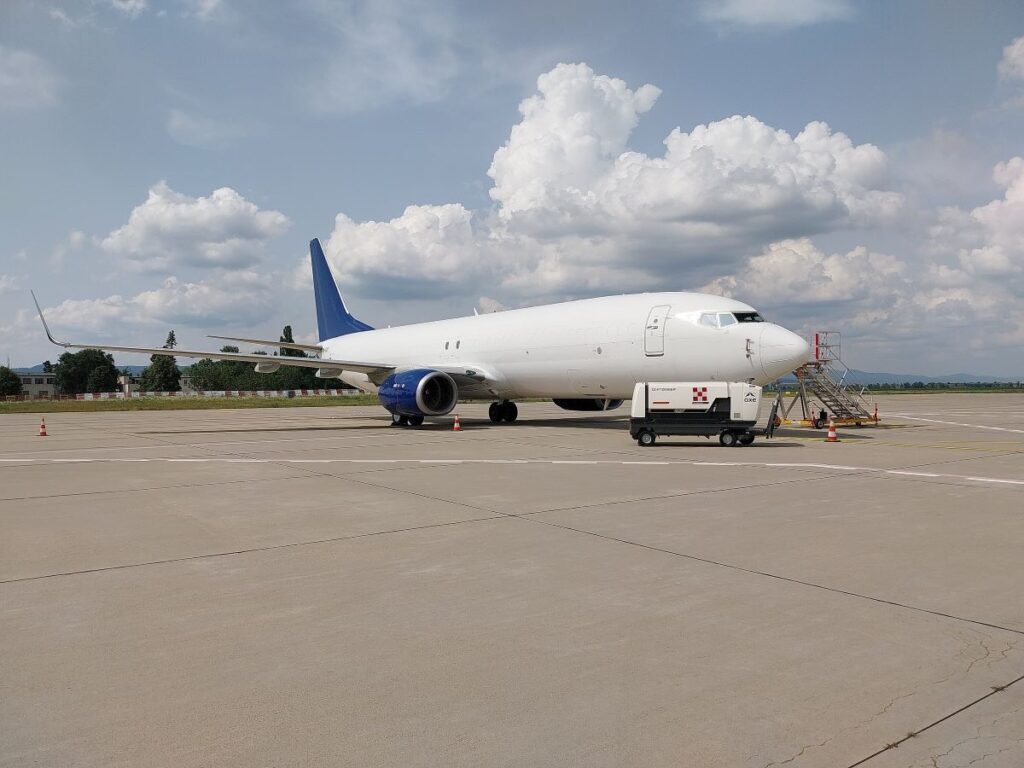
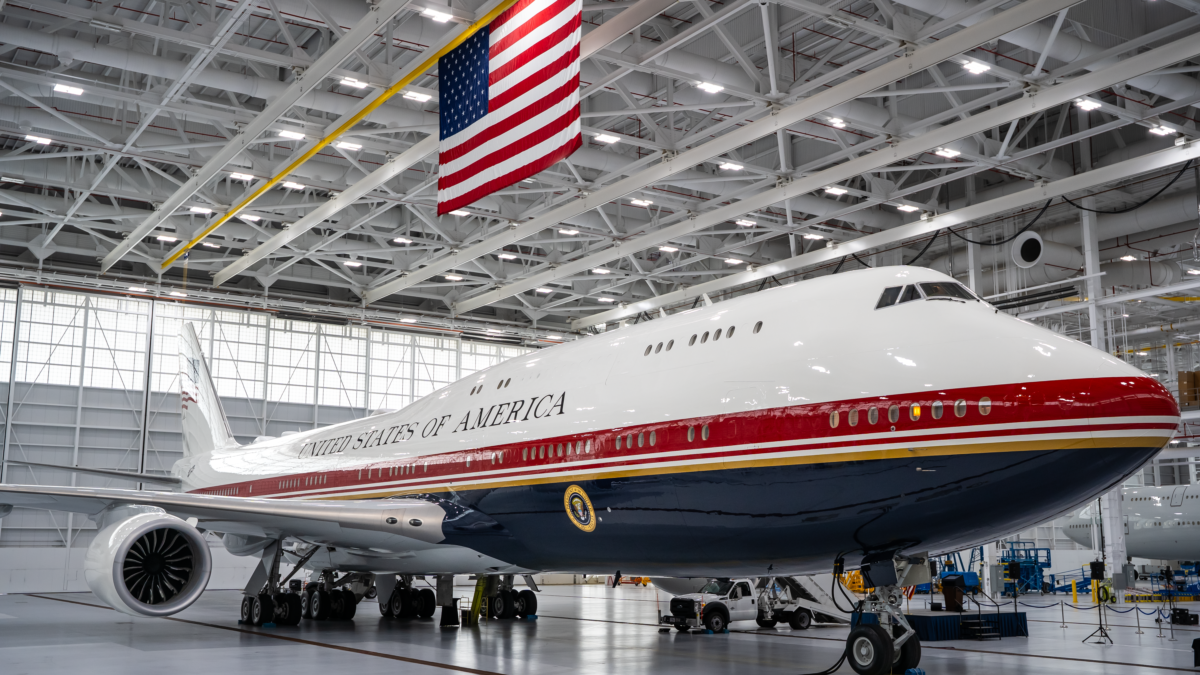
To bridge the gap and reduce strain on the aging VC-25A fleet, the U.S. accepted a Boeing 747-8 originally built for Qatar and donated to the United States. Extensively modified for presidential use, this "Bridge" aircraft arrived at Joint Base Andrews in mid-June 2026 and has begun commissioning flights.
Key Milestones (June 2026)
- Mid-June 2026: Delivery and arrival at the Presidential Airlift Group, Joint Base Andrews
- June 2026: Initial commissioning flights validating communications, mission systems, safety, and operational readiness
- Ongoing: Expected to support presidential missions while the full VC-25B fleet is completed
This aircraft provides a luxury, high-capacity platform with proven 747-8 reliability while awaiting the purpose-built replacements.
Why the Boeing 747 Was Chosen for Air Force One
The decision to use the Boeing 747 platform for presidential aircraft is not arbitrary. The 747 offers unique advantages that no other commercial aircraft can match:
Why Not a Boeing 777 or Airbus A350?
- Internal Volume: The 747's upper deck provides dedicated command and staff areas without compromising passenger space.
- Command Centre Requirements: The 747's spacious cabin accommodates the full suite of secure communications, briefing rooms, and medical facilities.
- Survivability: The 747's four-engine configuration provides redundancy that twin-engine aircraft cannot match — critical for long-haul overwater and remote operations.
- Aerial Refueling Integration: The 747's structural design is proven for aerial refueling, a capability that requires significant airframe modifications.
- Proven Track Record: The VC-25A has operated reliably for 35+ years, demonstrating the platform's suitability for presidential missions.
While twin-engine aircraft like the Boeing 777 and Airbus A350 offer efficiency advantages, the four-engine 747 remains the preferred choice for head-of-state operations due to its unique combination of volume, redundancy, and range.
Technical Features and Capabilities of the New Presidential Aircraft
While full classified details remain restricted, presidential aircraft typically include:
- Secure Communications: Multiple redundant systems for global voice, data, and video links — enabling the President to command U.S. forces from anywhere.
- Self-Defense Systems: Advanced electronic countermeasures, missile defense, and evasion capabilities.
- Aerial Refueling: Extended range for non-stop intercontinental travel.
- Medical Facilities: Fully equipped onboard medical suite with surgical capabilities.
- Interior Configuration: Private quarters, conference rooms, staff areas, and press facilities — functioning as a true flying White House.
- Range and Performance: Exceptional payload and long-range capabilities suited to global diplomacy.
The Bridge aircraft leverages the commercial 747-8's efficiency and spacious upper deck, customized with mission-specific modifications.
What Does Air Force One Cost?
This is where Safe Fly Aviation's aircraft valuation expertise provides unique insight.
Air Force One Cost Breakdown
- Commercial 747-8i: ~$150–250 million (depending on age and configuration)
- Presidential Modifications: Multi-billion-dollar investment
- Communications Systems: Hundreds of millions — fully secure, jam-proof, and survivable
- Self-Protection Systems: Advanced electronic warfare, missile countermeasures, and EMP protection
- Interior & Mission Systems: Custom medical, conference, and command facilities
- Total Strategic Value: A multi-billion-dollar national asset
Key Insight: Although a standard Boeing 747-8i may be valued around $150–250 million depending on age and condition, a presidential aircraft becomes a multi-billion-dollar strategic asset once communications, security, EMP protection, and mission systems are installed.
This demonstrates the dramatic value transformation that VIP and special-mission modifications can achieve — a core area of expertise for Safe Fly Aviation.
How Presidential Aircraft Differ from VIP Airliners
At Safe Fly Aviation, we specialize in VIP airliner conversions — including Boeing Business Jets (BBJ) and Airbus Corporate Jets (ACJ). Understanding how presidential aircraft differ from commercial VIP platforms provides valuable context for high-value aviation buyers.
| Feature | Standard VIP (BBJ / ACJ) | Presidential (VC-25B) |
|---|---|---|
| Communications | Commercial secure | Military-grade, EMP-hardened, jam-proof |
| Self-Protection | Optional (typically limited) | Advanced electronic warfare, missile defense, countermeasures |
| Aerial Refueling | Rarely installed | Standard (VC-25A, VC-25B) |
| Medical Facilities | Basic first aid | Full surgical suite with specialist medical staff |
| Interior Configuration | Luxury passenger focus | Command centre, conference, staff, press, and private quarters |
| Cost | $50M–$250M+ | Multi-billion-dollar strategic asset |
Air Force One vs Air India One
India operates two modified Boeing 777-300ER aircraft as Air India One for the President and Prime Minister. Here is how they compare:
| Feature | Air Force One (VC-25B) | Air India One (Boeing 777-300ER) |
|---|---|---|
| Aircraft Base | Boeing 747-8i | Boeing 777-300ER |
| Entry Into Service | 2026 (Bridge), 2027-28 (full) | 2021 |
| Range | ~7,730 nm | ~7,370 nm |
| Engines | 4 × GE GEnx | 2 × GE90 |
| Aerial Refueling | Yes | No |
| Self-Protection | Advanced EW, countermeasures | Limited self-defense systems |
Head-of-State Aircraft Around the World
The United States is not alone in operating specialized presidential aircraft. Here is how other nations handle head-of-state transport:
| Country | Aircraft Type | Notes |
|---|---|---|
| United States | Boeing 747 (VC-25) | Two VC-25A, VC-25B Bridge, VC-25B (future) |
| Saudi Arabia | Boeing 747-400, 747-8 | Royal Flight fleet |
| UAE | Boeing 747-8, Boeing 777 | Presidential Flight Authority |
| Qatar | Boeing 747-8 | Qatar Amiri Flight |
| India | Boeing 777 (Air India One) | Two 777-300ER for VVIP transport |
| Turkey | Boeing 747-8, Airbus A330 | Turkish Government Fleet |
| United Kingdom | Airbus Voyager, RAF | Prime Ministerial transport |
| France | Airbus A330 | Presidential fleet |
This global perspective demonstrates the continued preference for large, long-range aircraft for head-of-state missions — a trend Safe Fly Aviation monitors closely for our VIP and government clients.
What Can Corporate Operators Learn from Presidential Aviation?
While few organizations operate at the scale of Air Force One, the principles behind presidential aviation apply to high-value corporate and VIP flight departments:
- Systems Redundancy: Presidential aircraft feature multiple backup systems for every critical function. Corporate operators should prioritize redundancy in avionics, communications, and power systems.
- Cabin Planning: The Air Force One cabin is designed for productivity — private workspaces, conferencing, and secure communications. High-end VIP cabins follow similar principles.
- Communication Security: Corporate leaders increasingly need secure voice and data links. Presidential standards set the benchmark.
- Maintenance Strategy: Presidential aircraft are maintained to the highest reliability standards. Corporate operators benefit from similar rigor in MRO planning.
- Lifecycle Planning: The VC-25 program demonstrates the importance of long-term fleet planning — understanding when to upgrade, replace, or bridge gaps in capability.
At Safe Fly Aviation, we apply these same principles to our VIP aircraft advisory services — helping clients build resilient, secure, and efficient flight operations.
Market Outlook: The Future of Government and VVIP Aircraft (2026–2040+)
The VC-25B program represents just one chapter in the broader evolution of government and VVIP aviation. Several key trends will shape the market over the next 15 years:
Aging 747 Fleets
Many of the world's head-of-state 747s are aging. Saudi Arabia, Qatar, UAE, and other operators will need to make decisions about replacement, refurbishment, or retirement over the next decade.
Emerging VVIP Platforms
- Airbus A330 MRTT VVIP: The multi-role tanker transport offers government operators a flexible platform for both VIP transport and strategic missions.
- Boeing 777-9 / BBJ 777X: The next-generation BBJ offers exceptional range, efficiency, and cabin volume — increasingly attractive for VVIP operators.
- Airbus ACJ TwoTwenty: A new entrant in the large-cabin VIP market, offering a modern alternative to traditional widebodies.
- Boeing 787 VIP / BBJ 787: Composite airframe, exceptional range, and modern systems make this a compelling option for VVIP transport.
Market Size and Growth
The global market for VIP and government aircraft is valued at approximately $12–15 billion annually, with steady growth projected through 2035. Key drivers include:
- Rising UHNWI population globally.
- Increasing government travel requirements.
- Growing demand for secure, reliable executive transport.
- Fleet renewal cycles across aging government and VIP fleets.
What This Means for Safe Fly Aviation Clients
For buyers considering BBJ charter, ACJ charter, or VIP aircraft acquisition, understanding the trends shaping the broader VVIP market is essential. Safe Fly Aviation provides expert guidance on platform selection, valuation, modification strategies, and lifecycle planning.
Why This Matters on the Global Stage
The new Air Force One (and its bridge predecessor) symbolizes American power projection and technological prowess. For international audiences, it underscores the U.S. commitment to secure, reliable executive transport amid geopolitical tensions.
Delays in the program have sparked debate about costs, timelines, and alternative acquisition strategies — including the innovative use of the Qatari-donated jet as a cost-effective interim solution.
Challenges Facing the Program
- Cost Overruns and Scrutiny: Multi-billion-dollar investments draw congressional and public attention.
- Supply Chain and Workforce Issues: Persistent in the aerospace sector.
- Geopolitical Sensitivities: Reliance on commercial derivatives and international partnerships (e.g., the Qatari aircraft).
- Sustainability Pressures: Future aircraft may incorporate more efficient engines and sustainable practices.
Despite challenges, the program is progressing, with commissioning flights marking a key step forward.
Safe Fly Aviation: Expertise in High-Profile and VIP Aviation
At Safe Fly Aviation, we bring deep knowledge of VIP, government, and special-mission aircraft transactions to clients worldwide. Whether advising on large-cabin modifications, executive transport solutions, or navigating complex government-related aviation programs, our team ensures seamless outcomes.
From sourcing pre-owned VIP jets to supporting MRO strategies and regulatory compliance, we help global clients access the same level of excellence seen in presidential aviation platforms.
Interested in VIP or Special-Mission Aircraft?
Safe Fly Aviation provides expert advisory for high-value aircraft acquisitions, modifications, and fleet strategies worldwide.
Speak with an Aviation ExpertConclusion: A New Chapter for Presidential Airlift
The arrival and commissioning of the VC-25B Bridge aircraft in 2026 represents a pragmatic step forward in modernizing U.S. presidential aviation. As the full VC-25B fleet approaches, the world watches how America maintains its leadership in executive air transport.
For aviation enthusiasts, operators, and decision-makers interested in VIP or special-mission aircraft, this program offers valuable lessons in engineering, logistics, and strategic procurement.
Stay informed with Safe Fly Aviation for the latest on high-profile aviation developments, aircraft valuations, and global opportunities. Contact our team today to discuss how we can support your aviation needs — from executive jets to complex fleet strategies.
Sources and References
- U.S. Air Force — Presidential Airlift Group, Official Statements (2026)
- Boeing — VC-25B Program Overview and 747-8 Specifications
- Congressional Research Service — Air Force One Replacement Program Reports (2023–2026)
- Government Accountability Office (GAO) — VC-25B Program Assessment (2024)
- Defense News — VC-25B Bridge Aircraft Coverage (June 2026)
- Aviation Week — Presidential Aviation Program Updates (2026)
- Reuters — Air Force One Cost and Program Analysis (2025–2026)
- National Security Agency (NSA) — Public Communications Security Overview
- Safe Fly Aviation — Proprietary Aircraft Valuation and Market Intelligence
Disclaimer: This article is based on public reports and official announcements as of June 2026. Details on classified systems are not included. Sources include U.S. Air Force releases, industry analyses, and Safe Fly Aviation proprietary research.
Frequently Asked Questions
How much does Air Force One cost?
A standard Boeing 747-8i may be valued at $150–250 million, but the VC-25B presidential variant becomes a multi-billion-dollar strategic asset once communications, security, EMP protection, and mission systems are installed.
What is the VC-25B Bridge aircraft?
The VC-25B Bridge is an interim presidential aircraft — a Boeing 747-8 originally built for Qatar, modified for presidential use. It arrived at Joint Base Andrews in June 2026 and is undergoing commissioning flights.
Why was the VC-25B program delayed?
Delays stem from supply chain issues, security clearance requirements for the workforce, technical complexities, and production challenges. Original delivery target was 2024; current projections are 2027–2028.
Can Air Force One refuel in flight?
Yes, presidential aircraft are equipped with aerial refueling capability, enabling extended range for non-stop intercontinental travel and continuous airborne command operations.
What aircraft will replace the VC-25A?
The VC-25B (based on the Boeing 747-8) is the designated replacement for the aging VC-25A fleet. Two aircraft are under development, with first delivery expected around 2027–2028.
Why was a Qatar 747 selected as the Bridge aircraft?
The aircraft was originally built for Qatar and donated to the United States. It provided a cost-effective, readily available 747-8 platform that could be modified for presidential use while the full VC-25B fleet is completed.
How does presidential aviation differ from VIP airliners?
Presidential aircraft incorporate advanced secure communications, self-defense systems, EMP protection, aerial refueling, and medical facilities — far beyond standard VIP configurations found on BBJ and ACJ platforms.
What can corporate operators learn from presidential aviation?
Key lessons include systems redundancy, cabin planning for extended missions, communication security, maintenance strategy, and lifecycle planning — all applicable to VIP and corporate flight departments.
What is Air India One?
Air India One is the call sign for the Indian President and Prime Minister's aircraft. India operates two modified Boeing 777-300ER aircraft for VVIP transport, equipped with secure communications, self-defense systems, and custom interiors.
What will replace the VC-25B in the long term?
While the VC-25B will serve for decades, future platforms being evaluated include the Boeing 777X and potentially the Airbus A350 for next-generation head-of-state transport beyond the 2040s.