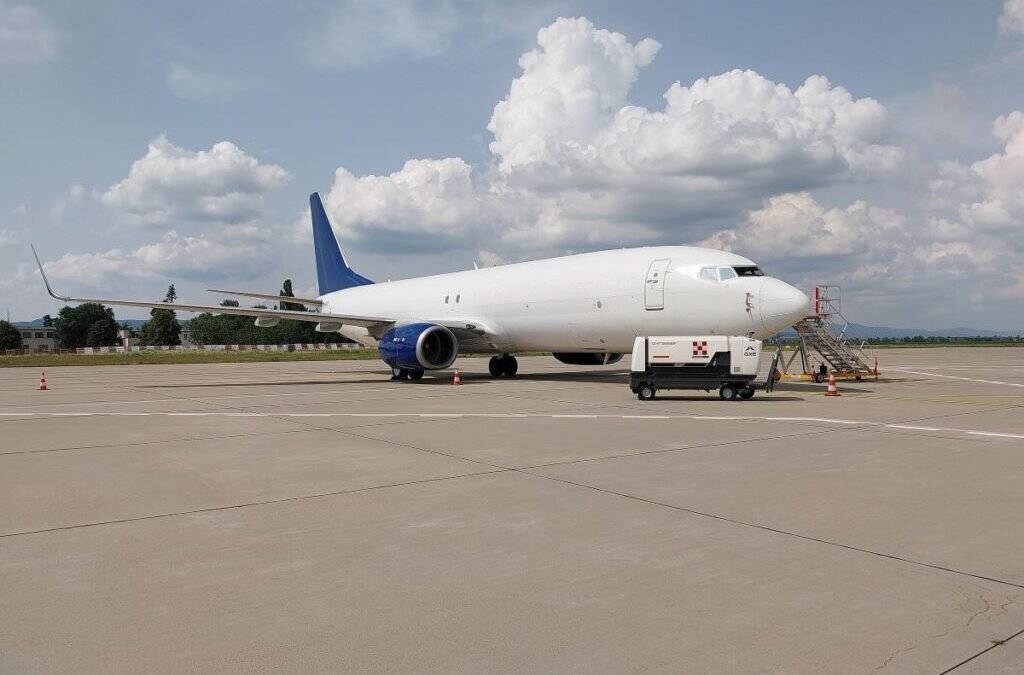
Central Asia Aviation Market Report 2026: Airlines, Airports, Cargo, MRO & Investment
Central Asia Aviation Market Report 2026: Airlines, Airports, Cargo, MRO & Investment Opportunities
Comprehensive analysis of the Central Asia aviation market — the fastest-growing aviation sub-region globally. Airline growth, airport infrastructure, cargo expansion, aircraft leasing, MRO opportunities, business aviation, and investment opportunities in Uzbekistan, Kazakhstan, Kyrgyzstan, Tajikistan, Turkmenistan, and the region.
Last Updated: June 2026
Central Asia Aviation Market at a Glance
- Fastest-growing aviation sub-region globally — overtook South Asia in 2025
- ~60 million passengers carried in 2025 Source: TIIF 2026 / bne IntelliNews
- Passenger traffic doubled since 2019; air cargo up 70% Source: TIIF 2026 / Uzbekistan Government
- Uzbekistan & Kazakhstan drive ~80% of regional capacity Source: OAG / TravelDaily
- Uzbekistan 2026 capacity growth: 24% year-on-year Source: OAG / TravelDaily
- Uzbekistan airport traffic: 15.5 million passengers in 2025 — up 3.5x from 2021 Source: Incheon International Airport / Korea Herald
- New Tashkent Airport: $2.5 billion PPP project — capacity 20m passengers / 300,000 tonnes cargo Source: Uzbekistan Airports / Trend
- Airlines serving region: 15 → 44 (2019–2026) Source: TIIF 2026 / Uzbekistan Government
- FDI in Uzbekistan: $4bn (2017) → $40bn (2025) — tenfold increase Source: TIIF 2026 / Daryo
- Aircraft leasing market: Strong growth in narrow-body, regional jets, and cargo demand
- MRO opportunity: Significant capacity gap — most airlines send aircraft overseas for heavy maintenance
- Business aviation: Growing corporate, oil & gas, and government demand
- Emerging markets: Kyrgyzstan, Tajikistan, Turkmenistan showing growing aviation potential
Central Asia Aviation Market — Quick Facts (2026)
| Global Ranking | Fastest-growing aviation sub-region (overtook South Asia in 2025) Source: IATA / bne IntelliNews |
| Annual Passengers (2025) | ~60 million Source: TIIF 2026 / bne IntelliNews |
| Passenger Growth (2019–2026) | Doubled since 2019 Source: TIIF 2026 / Uzbekistan Government |
| Air Cargo Growth (2019–2026) | +70% Source: TIIF 2026 / Uzbekistan Government |
| Regional Capacity Growth (2025 vs 2024) | +11.3% Source: OAG / TravelDaily |
| Uzbekistan 2026 Capacity Growth | +24% year-on-year Source: OAG / TravelDaily |
| Airlines Serving Region | 15 (2019) → 44 (2026) — nearly tripled Source: TIIF 2026 |
| Foreign Carriers in Region | 14 (2019) → 36 (2026) Source: TIIF 2026 |
| Uzbekistan FDI (2017–2025) | $4bn → $40bn — tenfold increase Source: TIIF 2026 / Daryo |
| New Tashkent Airport Capacity | 20m passengers / 300,000 tonnes cargo (2030) Source: Uzbekistan Airports / Trend |
| Air Astana Group Fleet | 63 aircraft — largest in Central Asia Source: Air Astana |
Sources: IATA, OAG, TIIF 2026, Uzbekistan Government, Air Astana, Safe Fly Aviation Market Intelligence
Contents
- Market Overview
- Kazakhstan Aviation Market
- Uzbekistan Aviation Market
- Emerging Aviation Markets: Kyrgyzstan, Tajikistan, Turkmenistan
- Airlines & Fleet Growth
- Fleet Demand Forecast 2026–2035
- Airport Infrastructure
- New Tashkent Airport Project
- Air Cargo Growth
- Central Asia Cargo Aircraft Demand Forecast 2026–2035
- China–Central Asia Aviation Corridor
- Aircraft Leasing in Central Asia
- MRO & Engine Services Opportunity
- Engine Market Outlook
- Business Aviation Growth
- Regulatory Environment & IATA
- Investment Opportunities
- Aircraft Available for Central Asian Operators
- How Safe Fly Supports Central Asia
- Frequently Asked Questions
Market Overview: Central Asia's Aviation Boom
Central Asia has emerged as the fastest-growing aviation sub-region in the world, overtaking South Asia in 2025. The region carried approximately 60 million passengers in 2025, a milestone that has surprised even the most optimistic forecasters Source: TIIF 2026 / bne IntelliNews.
The aviation boom is driven by converging trends:
- Passenger traffic has doubled since 2019, while air cargo volumes have increased by 70% Source: TIIF 2026 / Uzbekistan Government.
- Regional airline competition has intensified — the number of airlines serving the region grew from 15 to 44, with foreign carriers increasing from 14 to 36 Source: TIIF 2026.
- Geopolitical factors, including airspace restrictions, have redirected traffic through Central Asia, creating new intercontinental corridors Source: IATA / Kursiv.
- Economic growth and market liberalisation have unlocked aviation potential, with Uzbekistan's FDI surging from $4bn in 2017 to over $40bn in 2025 Source: TIIF 2026 / Daryo.
The region's strategic location at the crossroads of Asia, Europe, and the Middle East positions it as a future global transit hub. Industry leaders compare Central Asia's trajectory to that of South Korea in 1990 — a country with similar demographics (43 million people, ~$6,000 GDP per capita) that built one of the world's leading aviation hubs at Incheon Source: TIIF 2026 / bne IntelliNews.
Key growth markets:
- Uzbekistan — the fastest-growing market, with 2026 capacity growth forecast at 24% year-on-year Source: OAG / TravelDaily
- Kazakhstan — the largest market by domestic capacity, with Air Astana building a regional hub Source: Air Astana / TTR Weekly
- Kyrgyzstan, Tajikistan, and Turkmenistan — emerging markets with growing potential Source: Safe Fly Aviation Market Intelligence
Kazakhstan Aviation Market: Regional Leader & Hub Builder
Kazakhstan is Central Asia's largest aviation market by domestic capacity, with a well-developed domestic network serving its vast geography. The country accounts for approximately 40% of regional capacity Source: OAG / TravelDaily.
Air Astana Group — The Regional Champion
Air Astana Group, comprising Air Astana (full-service) and FlyArystan (low-cost), is the largest airline group in Central Asia and the Caucasus by revenue and fleet size Source: Air Astana / TTR Weekly.
- Fleet: 63 aircraft Source: Air Astana
- Transit growth: International transit passenger traffic via Kazakhstan increased 65% in Q1 2026 Source: Air Astana / TTR Weekly
- Network expansion: New routes to Shanghai (2026), Guangzhou, Larnaca, and Dalaman Source: Air Astana / TTR Weekly
- Together, Air Astana and FlyArystan operate 47% of Central Asia's domestic capacity Source: OAG / TravelDaily
Infrastructure Development
Kazakhstan is expanding its airport infrastructure to support growing demand:
- Astana airport expansion or a new second airport is under discussion Source: IATA / Media.az
- Almaty remains the primary hub for international connections
- Jet A-1 fuel transition is a key priority for the market Source: IATA / Media.az
Uzbekistan Aviation Market: Fastest-Growing in Central Asia
Uzbekistan is the fastest-growing aviation market in Central Asia, with capacity growth of 24% forecast for 2026 Source: OAG / TravelDaily. The country has emerged as a regional powerhouse, attracting unprecedented levels of foreign investment.
Market Growth Highlights
- Airport passenger traffic: 15.5 million in 2025 — up 3.5-fold from 2021 Source: Incheon International Airport / Korea Herald
- Average annual growth: 36.5% since 2021 Source: Incheon International Airport / Korea Herald
- Foreign visitors: 11.7 million in 2025 — 34% average annual growth since 2020 Source: Incheon International Airport / Korea Herald
- Domestic and international capacity: Uzbekistan is the fastest-growing in both segments Source: OAG / TravelDaily
Uzbekistan Airways — The National Carrier
Uzbekistan Airways is undergoing significant transformation ahead of a planned IPO:
- The airline is the largest single asset inside the Uzbekistan National Investment Fund (UzNIF) Source: TIIF 2026 / bne IntelliNews
- IPO process set to launch at the end of June or start of July 2026 Source: TIIF 2026 / bne IntelliNews
- 125 separate transformation initiatives covering ancillary revenue, fleet expansion, loyalty programmes, and cost discipline Source: TIIF 2026 / bne IntelliNews
- Exploring expansion into Southeast Asia, India, and Pakistan Source: TIIF 2026 / Daryo
Key Drivers of Growth
- Young population: More than 60% of the population is under 30 Source: TIIF 2026 / Daryo
- Geographic advantage: Tashkent sits at the crossroads of Asia, Europe, and the Middle East Source: TIIF 2026 / Daryo
- Economic reforms: Foreign exchange liberalisation, privatisation, and PPP frameworks Source: TIIF 2026 / Uzbekistan Government
- Low-cost carrier growth: LCC market share rose from 0.4% in 2010 to 21% in 2025 Source: OAG / TravelDaily
- Transit potential: Currently <7% of Tashkent traffic is transit — compared to 40–70% at established hubs like Dubai or Istanbul Source: TIIF 2026 / bne IntelliNews
Emerging Aviation Markets: Kyrgyzstan, Tajikistan, Turkmenistan
While Uzbekistan and Kazakhstan dominate the region, Kyrgyzstan, Tajikistan, and Turkmenistan represent emerging aviation markets with significant growth potential.
Kyrgyzstan
- Tourism growth: Increasing international arrivals to the Issyk-Kul region and mountain destinations
- Bishkek development: Manas International Airport (FRU) is undergoing modernisation to handle growing traffic
- Chinese connectivity: Growing air links with Xinjiang and Chinese cities, supporting Belt and Road trade
- Domestic aviation: Regional turboprop demand for connecting mountain communities
- Low-cost potential: Growing demand for affordable domestic and regional connectivity
Tajikistan
- Mountain aviation: Turboprop and helicopter demand for serving remote mountain communities and tourism
- Regional turboprop demand: ATR and Dash 8 aircraft are ideal for Tajikistan's challenging terrain and short runways
- Helicopter opportunities: Growing demand for helicopter services in mining, infrastructure, and tourism
- Dushanbe airport: Modernisation of the main international gateway
- Cross-border connectivity: Growing links with Uzbekistan, Kyrgyzstan, and Afghanistan
Turkmenistan
- State-controlled aviation: Turkmenistan Airlines operates a modern fleet of Boeing and Airbus aircraft
- Cargo opportunities: Growing transit cargo potential between Asia and Europe
- Airport investments: New international airports at Ashgabat and regional centres
- Fleet modernisation: Potential for acquisition and leasing of modern passenger and cargo aircraft
- Future liberalisation: Potential for market opening and foreign investment in aviation
Airlines & Fleet Growth: Competition Intensifies
The Central Asia aviation market has become significantly more competitive:
| Metric | 2019 | 2026 | Growth |
|---|---|---|---|
| Total Airlines Serving Region | 15 | 44 | +193% |
| Foreign Carriers | 14 | 36 | +157% |
| Uzbekistan Airport Passengers | ~4.4M | 15.5M | +252% |
| Low-Cost Carrier Market Share | 0.4% | 21% | +5,150% |
| Air Astana Group Fleet | ~40 | 63 | +58% |
Sources: TIIF 2026, OAG / TravelDaily, Air Astana, Safe Fly Aviation Market Intelligence
Major Airlines in Central Asia
- Air Astana (Kazakhstan) — Full-service carrier, 63 aircraft, regional hub builder Source: Air Astana
- FlyArystan (Kazakhstan) — Low-cost carrier, part of Air Astana Group
- Uzbekistan Airways — National carrier, undergoing transformation and IPO Source: TIIF 2026
- Silk Avia (Uzbekistan) — Growing low-cost carrier
- Qazaq Air (Kazakhstan) — Regional carrier
- Kyrgyzstan airlines — Multiple carriers serving domestic and regional routes
- Turkmenistan Airlines — State carrier operating modern Boeing and Airbus fleets
Fleet Demand Forecast 2026–2035: Central Asia's Aircraft Needs
Based on regional airline expansion plans, fleet modernisation requirements, and projected passenger growth, Safe Fly Aviation estimates the following aircraft demand for Central Asia:
| Segment | Expected Demand | Key Drivers |
|---|---|---|
| A320neo Family | 120–150 | Domestic & regional growth; fuel efficiency |
| B737 MAX | 90–120 | Kazakhstan & regional carriers |
| ATR72 / Dash 8 | 40–60 | Regional connectivity; short-runway operations; emerging markets |
| Embraer E190-E2 / E195-E2 | 30–50 | Regional jet replacement; network optimisation |
| Freighters (B737-800F, ATR72F) | 20–40 | Cargo corridor growth; e-commerce; logistics |
| Business Jets | 15–25 | Corporate; oil & gas; government |
| Helicopters | 10–20 | Mountain operations; mining; tourism |
Source: Safe Fly Aviation Market Intelligence, 2026
Strategic implications: Central Asia presents a significant market for both new and pre-owned aircraft, with financing, leasing, and direct acquisition opportunities for airlines, lessors, and investors.
Airport Infrastructure: Building for the Future
Central Asia's airport infrastructure is undergoing rapid expansion to keep pace with surging passenger and cargo demand.
Key Airports in the Region
| Airport | Country | IATA | Role |
|---|---|---|---|
| New Tashkent International | Uzbekistan | — | Future regional hub (20m capacity) |
| Tashkent International | Uzbekistan | TAS | Current primary hub (10m passengers in 2025) |
| Astana International | Kazakhstan | NQZ | Government and northern hub |
| Almaty International | Kazakhstan | ALA | Largest in Kazakhstan, Air Astana hub |
| Manas International | Kyrgyzstan | FRU | Bishkek — gateway to Kyrgyzstan |
| Dushanbe International | Tajikistan | DYU | Main gateway to Tajikistan |
| Ashgabat International | Turkmenistan | ASB | Modern hub for Turkmenistan Airlines |
| Urgench International | Uzbekistan | UGC | Incheon International Airport development project |
Sources: Uzbekistan Airports, Incheon International Airport, Safe Fly Aviation Market Intelligence
Infrastructure Challenges
- IATA recognises the need for modernisation — regulatory frameworks and infrastructure development are key priorities Source: IATA / Media.az
- Kazakhstan: Discussing Astana airport expansion or new airport Source: IATA / Media.az
- Uzbekistan: Significant domestic market potential remains untapped Source: IATA / Media.az
- Sustainable Aviation Fuel (SAF): Kazakhstan and Uzbekistan are exploring domestic SAF production Source: IATA / Media.az
New Tashkent Airport: Central Asia's Future Hub
The New Tashkent International Airport is the most significant aviation infrastructure project in Central Asia. A $2.5 billion Public-Private Partnership was signed at TIIF 2026 Source: Uzbekistan Airports / Trend.
Project Overview
- Location: Urta Chirchiq and Quyi Chirchiq districts, Tashkent region — 1,310 hectares Source: Uzbekistan Airports / Trend
- Investment: $2.5 billion Source: Incheon International Airport / Korea Herald
- Capacity (Phase 1): 20 million passengers and 300,000 tonnes of cargo annually Source: Uzbekistan Airports / Trend
- Full capacity: Expandable to 47 million passengers Source: Incheon International Airport / Korea Herald
- Opening: End of 2030 Source: Uzbekistan Airports / Trend
- Runways: Two 4-kilometre runways Source: Uzbekistan Airports / Trend
- Terminal: 208,000 square metres Source: Uzbekistan Airports / Trend
- Parking stands: 98 aircraft positions Source: Uzbekistan Airports / Trend
Consortium Partners
- Vision Invest (Saudi Arabia) — Lead consortium partner Source: Uzbekistan Airports / Trend
- Incheon International Airport Corporation (South Korea) — World-class airport operator Source: Incheon International Airport / Korea Herald
- Sojitz Corporation (Japan) — Trading and investment firm Source: Uzbekistan Airports / Trend
- Korea Overseas Infrastructure and Urban Development Corp. — Equity investor Source: Incheon International Airport / Korea Herald
- EBRD, US DFC, JBIC — Senior secured loans Source: Incheon International Airport / Korea Herald
Economic Impact
The Tashkent airport project is expected to generate:
- $5.3 billion in production inducement effects across construction, manufacturing, and logistics Source: Incheon International Airport / Korea Herald
- $2 billion in added value Source: Incheon International Airport / Korea Herald
- 30,000+ new jobs Source: Incheon International Airport / Korea Herald
Air Cargo Growth: Central Asia as an Intercontinental Bridge
Central Asia is transitioning into a major intercontinental air cargo bridge, with regional volumes more than doubling since 2019 Source: IATA / Chart of the Week.
Key Cargo Statistics
- Central Asia air cargo volumes +70% since 2019 Source: TIIF 2026 / Uzbekistan Government
- Kazakhstan: Primary gateway — total volumes rose 149% from 2019 to 2024 Source: IATA / Chart of the Week
- Uzbekistan: Fastest-growing — expanded by 182% over the same period Source: IATA / Chart of the Week
- Direct transit share: Surged from 59% to ~65% of regional air cargo Source: IATA / Chart of the Week
Strategic Importance
While air freight represents approximately 1% of global cargo volumes, it accounts for 35% of the total value of goods transported worldwide Source: TIIF 2026 / Daryo.
Central Asia's rise highlights how airspace constraints and network optimisation are redistributing traffic toward new intermediary corridors, linking Europe and China Source: IATA / Chart of the Week.
Regional dimension: Uzbekistan's share of regional cargo is growing rapidly, partly driven by the country's emergence as a hub for e-commerce and express freight as Central Asia increasingly bypasses traditional Middle Eastern hubs Source: OAG / TravelDaily.
Central Asia Cargo Aircraft Demand Forecast 2026–2035
As Central Asia emerges as an intercontinental cargo bridge, demand for freighter aircraft is accelerating. The following aircraft types present the most significant opportunities:
| Aircraft Type | Opportunity Level | Key Drivers |
|---|---|---|
| B737-800BCF | ⬆ Very High | Primary narrow-body freighter; strong e-commerce demand |
| B737-800SF | ⬆ Very High | Cost-effective conversion; growing regional cargo |
| ATR72F | ⬆ High | Regional cargo; short-runway operations; emerging markets |
| A321P2F | ⬆ High | Larger narrow-body capacity; growing demand |
| B767-300F | ↕ Moderate | Wide-body cargo; international routes |
| A330P2F | ↗ Emerging | Next-generation wide-body freighter; future demand |
Source: Safe Fly Aviation Market Intelligence, 2026
Safe Fly Aviation can assist with cargo aircraft acquisition, conversion evaluation, and leasing. Explore cargo aircraft available.
China–Central Asia Aviation Corridor: The Next Frontier
The China–Central Asia aviation corridor represents one of the most significant growth opportunities in the region's aviation market. Driven by the Belt and Road Initiative (BRI), expanding trade, and e-commerce logistics, this corridor is reshaping air connectivity between Asia and Europe.
Key Drivers
- Belt and Road Initiative (BRI): Infrastructure investments and trade facilitation across Central Asia Source: TIIF 2026
- Xinjiang gateways: Urumqi (URC) is emerging as a key connecting point between China and Central Asia Source: OAG / TravelDaily
- E-commerce growth: Cross-border e-commerce between China and Central Asian countries is accelerating air cargo demand Source: TIIF 2026 / Daryo
- Logistics expansion: Alibaba Logistics and JD Logistics are expanding their presence in the region Source: TIIF 2026
Strategic Implications
- Increased passenger connectivity — new routes from Chinese cities to Tashkent, Astana, and Almaty
- Cargo corridor development — express freight and general cargo volumes are expected to grow significantly
- Investment in logistics infrastructure — cargo terminals, cold chain facilities, and customs optimisation
Opportunity: The China–Central Asia corridor is still in its early stages of development, presenting a first-mover advantage for airlines, cargo operators, and logistics providers. Safe Fly Aviation can assist with aircraft sourcing, leasing, and operational setup for operators entering this corridor.
Aircraft Leasing in Central Asia: Growing Demand
Central Asia's aircraft leasing market is growing rapidly, driven by airline expansion, fleet modernisation, and the region's strategic location. Airlines in Kazakhstan and Uzbekistan are increasingly turning to leasing to manage fleet flexibility and reduce capital expenditure.
Leasing Market Overview
- Dry Lease Demand: Strong for narrow-body aircraft (A320, B737) and regional jets (E-Jets, ATR)
- Wet Lease / ACMI: Growing seasonal demand and route expansion for cargo and passenger operations
- Sale-Leaseback Activity: Increasing as airlines seek to unlock capital tied to owned assets
- Lessor Interest: International lessors are increasingly active in the Central Asian market, recognising the region's growth potential
Leasing Demand by Aircraft Type
| Aircraft Type | Lease Type | Demand Level |
|---|---|---|
| A320neo / B737 MAX | Dry Lease | ⬆ Strong |
| A320ceo / B737NG | Dry / Wet Lease | ⬆ High |
| Embraer E-Jets | Dry / Wet Lease | ⬆ Growing |
| ATR 72 / 42 | Dry / Wet Lease | ⬆ Growing |
| B737-800 Freighter | Dry / Wet Lease | ⬆ Strong |
| Business Jets | Dry / Wet Lease | ⬆ Growing |
Source: Safe Fly Aviation Market Intelligence, 2026
Safe Fly Aviation provides aircraft leasing advisory and placement services for operators in Central Asia. Explore leasing solutions.
MRO & Engine Services Opportunity in Central Asia
Central Asia has a significant MRO capacity gap, with most airlines sending their aircraft to Turkey, Europe, or the Middle East for heavy maintenance and engine overhauls. This presents a major opportunity for investment.
Current MRO Landscape
- Limited heavy maintenance capability — most regional carriers rely on foreign MRO providers
- No local engine overhaul capability — CFM56, V2500, and LEAP support requires overseas repair
- Component repair capacity — limited; most components sent overseas
- Technical training — limited infrastructure for aviation technical training
MRO Opportunities
- CFM56 / V2500 Line & Heavy Maintenance — establish capability in Tashkent or Astana
- LEAP Support — future demand from A320neo and B737 MAX fleets
- Landing Gear Overhaul — regional hub opportunity
- Component Repair & Pooling — support for regional airlines
- Training Academy — address the skilled labour shortage
Why Central Asia?
- Growing regional fleet — increasing demand for local support
- Strategic location — between Europe, Asia, and the Middle East
- Lower labour costs — competitive compared to Western markets
- Government support — Uzbekistan and Kazakhstan are actively seeking FDI in aviation
Safe Fly Aviation provides MRO advisory and investment planning services for Central Asia. Contact us for expert guidance.
Engine Market Outlook: Central Asia's Growing Fleet
As Central Asia's fleet expands and modernises, engine maintenance and support demand is growing significantly. Safe Fly Aviation tracks engine market trends across the region.
Narrow-body Engine Demand
| Engine Type | Demand Level | Key Operators |
|---|---|---|
| CFM56-7B | ⬆ High | B737NG operators (Air Astana, Uzbek Airways) |
| CFM56-5B | ⬆ High | A320ceo operators |
| V2500 | ⬆ Growing | A320ceo operators |
| LEAP-1A | ⬆ Strong | A320neo operators (Uzbekistan Airways, Air Astana) |
| LEAP-1B | ⬆ Growing | B737 MAX operators (Air Astana, FlyArystan) |
Regional & Turboprop Engine Demand
| Engine Type | Demand Level | Key Operators |
|---|---|---|
| PW100 Series | ⬆ Growing | ATR operators (Green Africa, regional carriers) |
| PW150 Series | ↕ Moderate | Dash 8 operators |
Helicopter Engine Demand
| Engine Type | Demand Level | Key Operators |
|---|---|---|
| Arriel Family | ⬆ Growing | Helicopter operators (mining, tourism, EMS) |
| PT6 Family | ⬆ Growing | Various operators |
Source: Safe Fly Aviation Market Intelligence, 2026
Engine support services: Safe Fly Aviation provides engine acquisition, leasing, and valuation support across all major engine types. Explore engine advisory.
Business Aviation Growth in Central Asia
Central Asia's business aviation market is expanding, driven by:
- Mining and resource sectors — executives requiring rapid mobility across remote regions
- Oil & gas industry — frequent travel to energy production sites
- Government and diplomatic travel — VIP transport across the region
- Cross-border corporate mobility — companies operating across multiple Central Asian countries
Popular Business Jet Types in Central Asia
- Bombardier Challenger 350 — versatile, mid-size
- Embraer Legacy 650 — large-cabin, long-range
- Gulfstream G450 / G550 — long-range capability
- Dassault Falcon 2000 — popular for regional missions
- Bombardier Global 6000 — ultra-long-range
Business Aviation Market Outlook
- Fleet growth: Moderate but steady expansion expected
- Charter demand: Growing for corporate and government missions
- FBO development: Private terminal opportunities at Tashkent and Astana
Safe Fly Aviation provides business jet charter and acquisition support in Central Asia. Explore private jet solutions.
Regulatory Environment & IATA's Regional Presence
The International Air Transport Association (IATA) is expanding its presence in Central Asia, recognising the region's growth potential Source: IATA / Kursiv.
IATA Regional Activities
- Office in Astana — coordinating regional work Source: IATA / Media.az
- Operational activities expanding in Uzbekistan Source: IATA / Media.az
- BSP (Billing and Settlement Plan) to launch in Uzbekistan by end of 2026 Source: IATA / Kursiv
- 14 IATA-accredited agents in Uzbekistan — 12 passenger and 2 cargo Source: IATA / Media.az
- BSP already operating in Kazakhstan and Azerbaijan Source: IATA / Media.az
Regulatory Priorities
- Regulatory modernisation — need for updated legal frameworks Source: IATA / Media.az
- Open skies — Tashkent's main airport remains excluded from open skies liberalisation, a protection for the national carrier that limits broader market growth Source: TIIF 2026 / bne IntelliNews
- SAF development — Kazakhstan and Uzbekistan exploring domestic production Source: IATA / Media.az
- Jet A-1 fuel — Kazakhstan focusing on Jet A-1 transition Source: IATA / Media.az
Investment Opportunities in Central Asian Aviation
Central Asia offers unprecedented investment opportunities in aviation, driven by rapid market growth, regulatory reforms, and large-scale infrastructure projects.
Key Investment Areas
- Airline Investment — Uzbekistan Airways IPO (2026); regional airline expansion Source: TIIF 2026
- Airport Infrastructure — New Tashkent Airport ($2.5bn PPP); Urgench development; Astana expansion Source: Incheon International Airport / Korea Herald
- Aircraft Leasing — Growing demand for dry and wet leases Source: Safe Fly Aviation Market Intelligence
- Cargo Aviation — Expanding intercontinental cargo corridors Source: IATA / Chart of the Week
- Low-Cost Carrier Growth — LCC market share up from 0.4% to 21% (2010–2025) Source: OAG / TravelDaily
- MRO Services — Limited local capacity creates opportunities Source: Safe Fly Aviation Market Intelligence
- SAF Production — Kazakhstan and Uzbekistan exploring domestic SAF Source: IATA / Media.az
- China–Central Asia Corridor — Cargo and passenger connectivity growth Source: TIIF 2026
- Emerging Markets — Kyrgyzstan, Tajikistan, Turkmenistan aviation potential Source: Safe Fly Aviation Market Intelligence
FDI Surge in Uzbekistan
- FDI inflow: $4bn (2017) → over $40bn (2025) — tenfold increase Source: TIIF 2026 / Daryo
- Drivers: Foreign exchange liberalisation, privatisation programmes, PPP mechanisms Source: TIIF 2026 / Uzbekistan Government
- UzNIF London listing: Achieved within a year of the fund's creation, requiring 17 changes to Uzbek law Source: TIIF 2026 / bne IntelliNews
Competition and Cooperation Balance
Industry leaders identified four strategic priorities for the region's aviation sector Source: TIIF 2026 / Uzbekistan Government:
- Balancing intensifying competition with interstate cooperation
- Transforming Tashkent into a major regional aviation hub
- Enhancing the value of local airlines ahead of potential IPOs
- Fully unlocking the region's air cargo potential
Aircraft Available for Central Asian Operators
Safe Fly Aviation has access to a global inventory of aircraft suitable for Central Asian operators. The following types are in high demand:
| Aircraft Type | Typical Mission | Demand Level |
|---|---|---|
| A320ceo | Domestic & Regional | ⬆ Strong |
| A321ceo | Regional & International | ⬆ Strong |
| B737-800 | Domestic & Regional | ⬆ Strong |
| ATR72-500 | Regional Turboprop | ⬆ Growing |
| ATR72-600 | Regional Turboprop | ⬆ Strong |
| Embraer E190 | Regional Jet | ⬆ Strong |
| B737-800BCF | Cargo Freighter | ⬆ Very High |
| Challenger 350 / Legacy 650 | Business Aviation | ⬆ Growing |
Source: Safe Fly Aviation Market Intelligence, 2026
Need to acquire aircraft? Contact Safe Fly Aviation for professional aircraft sourcing and acquisition support in Central Asia.
✈️ How Safe Fly Aviation Supports the Central Asian Market
Safe Fly Aviation provides comprehensive aviation advisory and transaction services for operators, investors, and lessors in Central Asia.
- Aircraft Acquisition — Sourcing and procurement of commercial, cargo, and business aircraft
- Aircraft Leasing — Dry and wet lease advisory and placement
- Cargo Aircraft Sourcing — Freighter acquisition and conversion support
- Airline Startup Advisory — Fleet planning, AOC support, and operational setup
- Aircraft Valuation — Independent valuation for financing and transactions
- Fleet Planning — Strategic fleet development and optimisation
- Regulatory Support — National aviation authority liaison and compliance advisory
- Aircraft Sale Mandate — We help sell aircraft in the Central Asian market
- IPO Support — Advisory for airline and aviation asset IPOs
- MRO Advisory — Investment evaluation and planning for MRO facilities
- Business Aviation Support — Charter and acquisition advisory
- China–Central Asia Corridor — Cargo and passenger connectivity advisory
- Engine Advisory — Engine acquisition, leasing, and valuation support
- Asset Management — Portfolio optimisation and asset management
Ready to Enter or Expand in Central Asia's Aviation Market?
Safe Fly Aviation provides expert advisory, aircraft acquisition, leasing, and transaction support for operators, investors, and lessors. Our team delivers practical, market-driven solutions tailored to your needs in the world's fastest-growing aviation sub-region.
Speak with an Aviation SpecialistFrequently Asked Questions About Central Asia's Aviation Market
Central Asia carried approximately 60 million passengers in 2025, overtaking South Asia as the fastest-growing aviation sub-region globally. Uzbekistan's airport passenger traffic reached 15.5 million in 2025, up 3.5-fold from 2021. Source: TIIF 2026 / bne IntelliNews; Incheon International Airport / Korea Herald
Uzbekistan and Kazakhstan are the primary growth drivers, accounting for approximately 80% of regional capacity. Uzbekistan is the fastest-growing market, with 2026 capacity growth forecast at 24% year-on-year. Source: OAG / TravelDaily
Kyrgyzstan, Tajikistan, and Turkmenistan represent emerging markets with growing aviation potential. Kyrgyzstan benefits from tourism and Chinese connectivity, Tajikistan has mountain aviation and helicopter opportunities, while Turkmenistan is investing in airport infrastructure and cargo. Source: Safe Fly Aviation Market Intelligence
Cargo aircraft demand in Central Asia is growing rapidly, with B737-800BCF and B737-800SF representing the highest opportunity. ATR72F, A321P2F, and wide-body freighters (B767-300F, A330P2F) are also in increasing demand as the region becomes an intercontinental cargo bridge. Source: Safe Fly Aviation Market Intelligence
Central Asia has a significant MRO capacity gap, with most airlines sending their aircraft overseas for heavy maintenance. Opportunities include engine overhaul (CFM56, V2500, LEAP), line maintenance, component repair, and regional MRO hub development. Source: Safe Fly Aviation Market Intelligence
A320ceo/A321ceo, B737-800, ATR72-500/600, and Embraer E190 are in high demand for passenger operations. For cargo, B737-800BCF and ATR72F are the most sought-after types. Source: Safe Fly Aviation Market Intelligence
The China–Central Asia aviation corridor represents a significant growth opportunity driven by the Belt and Road Initiative, expanding trade, and e-commerce logistics. Urumqi is emerging as a key connecting point, and cargo volumes between China and Central Asia are expected to grow substantially. Source: TIIF 2026
Safe Fly Aviation provides aircraft acquisition, leasing advisory, cargo aircraft sourcing, airline startup consulting, fleet planning, MRO advisory, business aviation support, engine advisory, and transaction assistance for operators and investors entering Central Asia's aviation market. Contact us for tailored support.