
The Airbus A220: Look At History,Performance and Innovation
The Airbus A220: Market Analysis, Performance & Future Outlook (2026)
Fleet intelligence, airline economics, residual values, and strategic positioning of the fastest-growing 100–150 seat jet
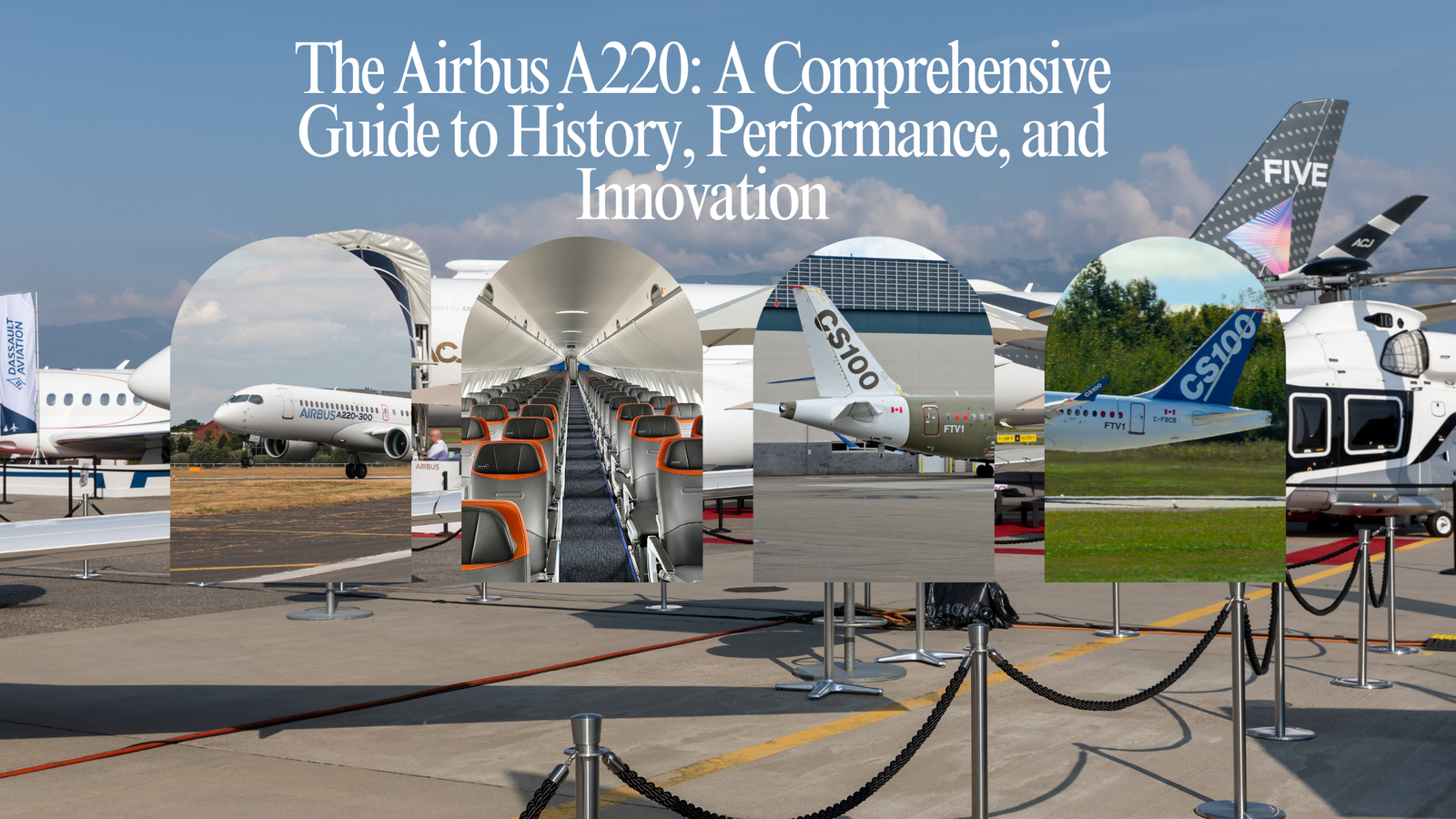 Airbus A220 — Market Intelligence Report 2026
Executive Summary
- 430+ aircraft delivered — with over 900 in the order backlog as of mid-2026
- Fastest-growing 100–150 seat jet — 25% lower fuel burn per seat than previous-generation aircraft
- Powered by the Pratt & Whitney PW1500G GTF engine — delivering 16% better fuel efficiency and 75% lower noise
- Major operators include Delta (65+), airBaltic (48), SWISS (30), and Air France (40+ delivered)
- Airbus production increasing to 14 aircraft per month — with a stretched A220-500 under consideration
- Strong residual value retention — 5-year-old A220-300 valued at $35–45 million
The Airbus A220 has emerged as one of the most successful aircraft programs in modern commercial aviation. With over 430 aircraft delivered and a backlog exceeding 900 units, the A220 has proven its market fit in the competitive 100–150 seat segment. Its combination of fuel efficiency, passenger comfort, and operational flexibility has made it the aircraft of choice for airlines seeking to replace ageing regional jets and optimise their short-to-medium-haul networks.
This market intelligence report examines the A220's fleet growth, airline economics, residual values, competitive positioning, and future outlook. It is designed for airlines, lessors, investors, and aviation professionals seeking a data-driven understanding of the A220's market trajectory.
History and Development
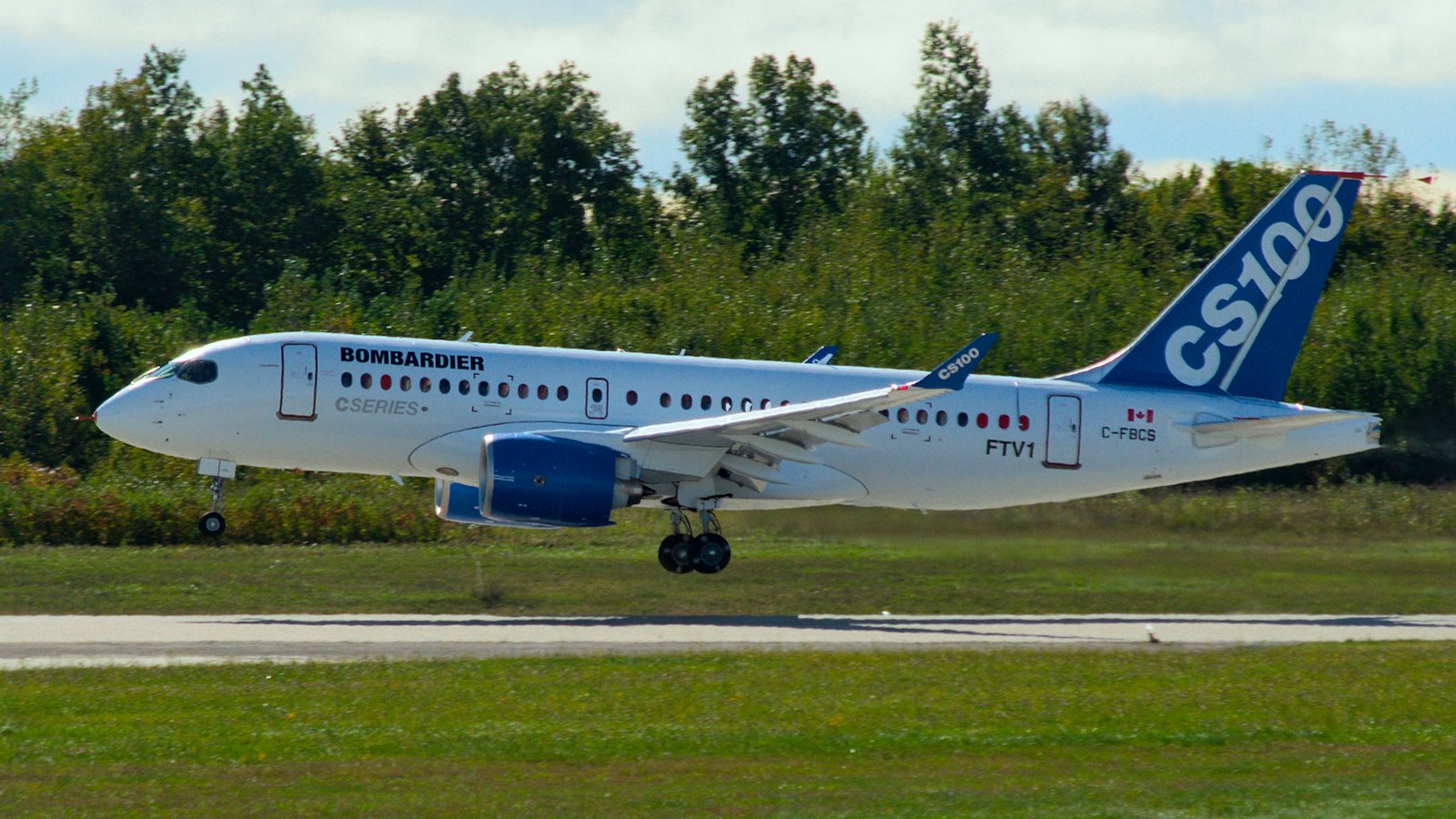
The A220's journey began with Bombardier's CSeries program in 2008, aiming to fill the 100-150 seat market with a fuel-efficient jet. The CS100 (now A220-100) first flew on September 16, 2013, and entered service with Swiss International Air Lines in July 2016, followed by the CS300 (now A220-300) in December 2016 with airBaltic. Financial struggles and trade disputes with Boeing, particularly over U.S. market access, led to Airbus's acquisition of a 50.01% stake in 2018, increasing to 75% by 2020, with production expanding to Mobile, Alabama, in 2020.
Specifications and Variants
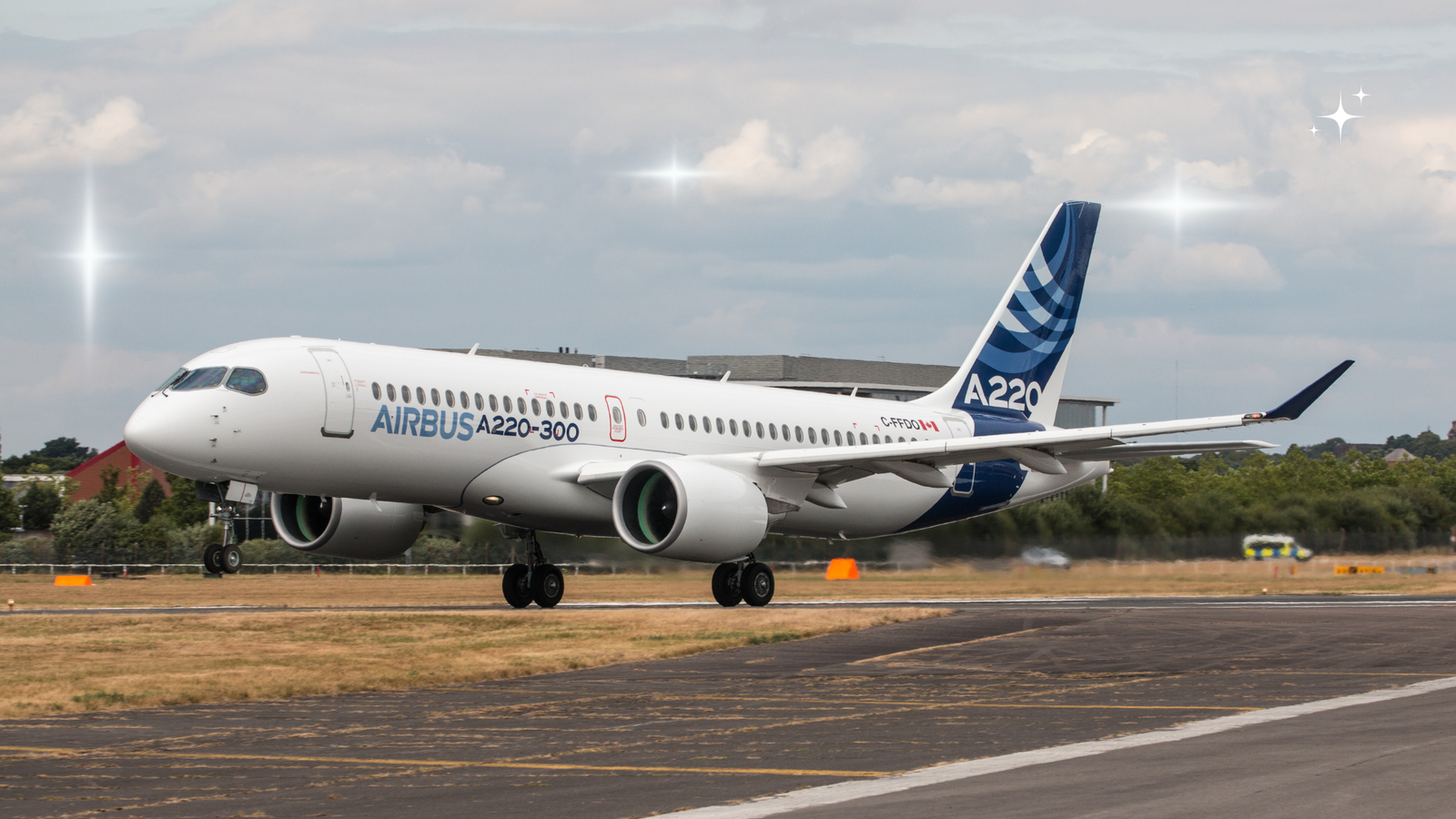
The A220 family includes two variants, both optimized for efficiency:
| Specification | A220-100 (Former CS100) | A220-300 (Former CS300) |
|---|---|---|
| Length | 35.0 m (114 ft 11 in) | 38.7 m (127 ft 0 in) |
| Wingspan | 35.1 m (115 ft 1 in) | 35.1 m (115 ft 1 in) |
| Max Takeoff Weight | 63.1 tonnes (139,000 lbs) | 69.9 tonnes (154,000 lbs) |
| Range | 5,740 km (3,100 NM) | 6,297 km (3,400 NM) |
| Passenger Capacity | 108–133 | 130–160 |
| Engines | 2 × Pratt & Whitney PW1500G | 2 × Pratt & Whitney PW1500G |
| Cabin Width | 3.28 m (10 ft 9 in) | 3.28 m (10 ft 9 in) |
| Fuel Capacity | 20,863 liters | 21,508 liters |
| Maximum Payload | 13,600 kg (29,983 lbs) | 16,100 kg (35,494 lbs) |
Both variants share 99% commonality, reducing training and maintenance costs for operators. The cabin features larger windows, wider seats, and the largest overhead bins in its class, enhancing passenger comfort.
Fleet Forecast: A220 Deliveries Through 2035
Airbus is ramping up production to meet growing demand for the A220. The current production rate is approximately 10 aircraft per month, with plans to increase to 14 per month by 2027.
| Year | Deliveries (Projected) | Fleet Total (Projected) | Growth |
|---|---|---|---|
| 2026 | ~80 | ~510 | +19% |
| 2028 | ~140 | ~780 | +22% |
| 2030 | ~168 | ~1,100 | +18% |
| 2035 | ~168 | ~1,800 | +15% |
Airline Economics: Why Airlines Choose the A220
The A220's operating economics are a key driver of its success. Compared to previous-generation aircraft, the A220 delivers:
Cost Advantages
- Fuel Burn: 25% lower per seat than older narrow-body jets
- Direct Operating Cost: Approximately $6,500–8,500 per hour
- Cost per Seat (100 NM): $6.50–7.50, lower than A319neo and 737 MAX 7
- Break-even Load Factor: 65–70% on typical routes
- Maintenance Cost: 15% lower than previous-generation aircraft
- Lease Rates: Approximately $250,000–320,000 per month for A220-300
Fuel Burn Comparison (kg/seat/100 NM)
Source: Industry data. Lower is better.
Aircraft Values: Residual Value and Lease Rates
The A220 has demonstrated strong residual value retention, making it an attractive asset for lessors and investors.
| Variant | Age | Approx. Market Value (USD) | Monthly Lease Rate (USD) | Demand Trend |
|---|---|---|---|---|
| A220-300 | New | $45–55M | $280,000–350,000 | Very High |
| A220-300 | 5 Years | $35–45M | $250,000–320,000 | High |
| A220-300 | 10 Years | $22–32M | $180,000–250,000 | Medium-High |
| A220-100 | New | $38–48M | $230,000–290,000 | Medium-High |
Source: Industry data. Values are indicative.
A220 vs Competitors: A Head-to-Head Comparison
The A220 competes primarily with the Embraer E195-E2, Airbus A319neo, and Boeing 737 MAX 7.
| Aircraft | Seats (Typical) | Range (NM) | Fuel Burn (kg/seat/100 NM) | Catalog Price (USD) | Key Advantage |
|---|---|---|---|---|---|
| A220-300 | 149 | 3,400 | 6.5 | $95M | Range, cabin width |
| E195-E2 | 146 | 2,450 | 7.0 | $90M | Short-haul economics |
| A319neo | 140 | 3,750 | 8.4 | $105M | Fleet commonality |
| 737 MAX 7 | 138 | 3,800 | 8.6 | $100M | Fleet commonality |
Source: Manufacturer data, industry analysis.
Market Share: A220's Position in the 100–150 Seat Segment
The 100–150 seat market is increasingly competitive. The A220 has captured approximately 35% of new orders in this segment over the past three years, positioning it as the market leader ahead of the E195-E2 (25%), A319neo (10%), and 737 MAX 7 (15%).
100–150 Seat Market Share (2023–2026 Orders)
Source: Industry order data.
Engine Technology: The PW1500G Advantage
Powered by Pratt & Whitney PW1500G geared turbofan engines, the A220 benefits from 16% better fuel efficiency than previous engines, with a thrust rating of up to 23,300 lbf and a bypass ratio of 12:1, significantly reducing emissions and noise. The engine's design allows the fan to rotate slower while the compressor and turbine run faster, optimizing performance.
PW1500G Engine Highlights
- Thrust: Up to 23,300 lbf
- Bypass Ratio: 12:1
- Fuel Efficiency: 16% better than previous engines
- CO₂ Reduction: 20% lower emissions
- Noise Reduction: 75% lower compared to prior generations
- Predictive Maintenance: Advanced analytics reduce downtime
PW1500G Aftermarket: MRO and Support
As the A220 fleet grows, the PW1500G aftermarket is becoming increasingly important. Key developments include:
- MRO Providers: Pratt & Whitney, MTU Maintenance, and Lufthansa Technik have established PW1500G overhaul capabilities
- Overhaul Intervals: Typical shop visit interval is 15,000–20,000 cycles
- Reliability: The GTF engine family has accumulated over 10 million flight hours
- Spare Engine Leasing: Growing demand for PW1500G spare engines
- USM Availability: Used Serviceable Material market developing for mature engines
Airlines Operating the A220
Over 30 airlines worldwide operate the A220, with significant fleets including:
| Airline | Region | Fleet Size | Typical Routes | Key Reason for Choosing A220 |
|---|---|---|---|---|
| Delta Air Lines | North America | 65+ | Domestic, Transcontinental | Replacing MD-88/717 |
| airBaltic | Europe | 48 | All-A220 fleet | Fleet simplification |
| SWISS | Europe | 30 | Zurich to European cities | Fuel efficiency |
| Air France | Europe | 40+ (60 on order) | European, Medium-haul | Replacing A318/A319 |
| EgyptAir | Africa/Middle East | 12 | Regional, European | Operational flexibility |
Future Prospects: A220-500 and Beyond
Airbus is exploring a stretched A220-500 variant, potentially seating 180+ passengers, to compete with the A320neo. While not officially confirmed, industry speculation suggests the A220-500 could enter service in the early 2030s, further expanding the A220's market reach.
The A220 is also compatible with sustainable aviation fuel (SAF), and Airbus is exploring hybrid-electric and hydrogen technologies for future variants. These developments position the A220 as a key player in sustainable aviation.
Decision Matrix: When to Choose the A220
| Requirement | Best Choice | Why |
|---|---|---|
| Regional airline | A220 | Fuel efficiency, passenger comfort |
| Low-cost carrier (LCC) | A220-300 | Seat-mile cost, range flexibility |
| High-frequency routes | A220 | Lower operating costs, quick turnarounds |
| Thin long-distance routes | A220-300 | 3,400 NM range, efficient economics |
| Fleet simplification | A220 | 99% commonality across variants |
| Premium passenger experience | A220 | Wider cabin, larger windows, quiet interior |
Maintenance and Support
The A220's maintenance program is designed for efficiency and cost-effectiveness:
- Line Maintenance: Standard A checks at 750 flight hours
- Heavy Checks: C checks every 6,000 flight hours
- Engine Overhaul: PW1500G shop visit interval of 15,000–20,000 cycles
- Spare Parts: Growing USM market for A220 components
- GTF Support Network: Pratt & Whitney has established global overhaul capacity
Conclusion: The A220's Market Trajectory
The Airbus A220 has established itself as one of the most successful aircraft programs of the past decade. With over 430 aircraft delivered, a backlog of 900+ units, and a growing operator base, the A220 is well-positioned for continued growth through 2035 and beyond.
Its combination of fuel efficiency, passenger comfort, operational flexibility, and strong residual value retention makes it a compelling choice for airlines, lessors, and investors. As Airbus continues to ramp up production and explore new variants, the A220 is likely to remain a dominant force in the 100–150 seat market for decades to come.
Planning an A220 Acquisition or Fleet Strategy?
Safe Fly Aviation provides independent advisory on aircraft sourcing, valuation, pre-purchase inspections, technical due diligence, and fleet strategy. Our team has deep expertise in the A220 market.
Speak with Our Aviation Intelligence TeamSources & References
- A220 Family | Airbus
- Airbus A220 — Wikipedia
- Airbus — Orders and Deliveries Reports (2026)
- A220-100 | Airbus
- A220-300 | Airbus
- Pratt & Whitney GTF Engine | Pratt & Whitney
- Oliver Wyman — MRO Spending Forecast 2025
- IBA Group — Aircraft Value and Lease Rate Data
- Cirium — Fleet Database
- Aviation Week — Commercial Aircraft Market Report 2026
- IATA — Industry Performance Reports
- Safe Fly Aviation — Market Intelligence Database 2026
Disclaimer: This report is based on public sources and industry data as of June 2026. Prices, values, and forecasts are indicative and subject to change. Safe Fly Aviation provides independent aviation intelligence and advisory services.
Frequently Asked Questions
What is the Airbus A220?
The Airbus A220 is a narrow-body, twin-engine jet airliner designed for the 100-150 seat market. It was originally developed by Bombardier as the CSeries and rebranded after Airbus acquired a majority stake in 2018.
Why is the A220 so efficient?
The A220 achieves 25% lower fuel burn per seat through advanced aerodynamics, lightweight composite materials, and the Pratt & Whitney PW1500G geared turbofan engines with a 12:1 bypass ratio.
Is the A220 better than the E195-E2?
Both aircraft are highly efficient, but the A220 offers longer range (3,400 NM vs 2,450 NM) and a wider cabin (3.28 m vs 2.74 m), while the E195-E2 has slightly lower operating costs on shorter routes.
What is the residual value of the A220?
The A220 has demonstrated strong residual value retention. A 5-year-old A220-300 is valued at approximately $35-45 million, with lease rates around $250,000–320,000 per month.
Which airlines operate the A220?
Over 30 airlines operate the A220, including Delta Air Lines (65+), airBaltic (48), SWISS (30), Air France (40+ delivered, 60 on order), and EgyptAir (12).