Aircraft Brake & Wheel Assembly Guide | Carbon Brakes, MRO & Thermal Analysis
Aircraft Brake & Wheel Assembly Guide 2026
Carbon Brakes, MRO & Thermal Analysis

The aircraft brake and wheel assembly represents one of the most critical safety systems in modern aviation. With the industry-wide transition from steel to carbon-carbon composite brakes, operators have realized significant weight savings, improved thermal performance, and extended component lifecycles. This guide provides technical intelligence on aircraft brake assembly and wheel assembly systems for aviation engineers, fleet managers, and MRO professionals.
1. Carbon-Carbon Brake Technology: Architecture & Performance
Modern carbon-carbon (C/C) composite brakes have revolutionized aircraft stopping capability. Leading OEM manufacturers including Safran Landing Systems, Honeywell Aerospace, and Collins Aerospace have developed proprietary carbon brake solutions delivering exceptional thermal stability, high friction coefficient across a wide temperature range, and a 40-50% weight reduction compared to equivalent steel systems.

2. Thermal Dynamics & Energy Dissipation
During a maximum-energy rejected takeoff (RTO), a modern widebody aircraft's brake system must absorb approximately 200-300 megajoules of kinetic energy per brake assembly. Carbon-carbon composites excel due to high specific heat capacity (approximately 1.5 J/g·K) and thermal conductivity, which distributes heat evenly across the disc stack.
3. Wheel Assembly Architecture: Hub, Bolts & Bearings
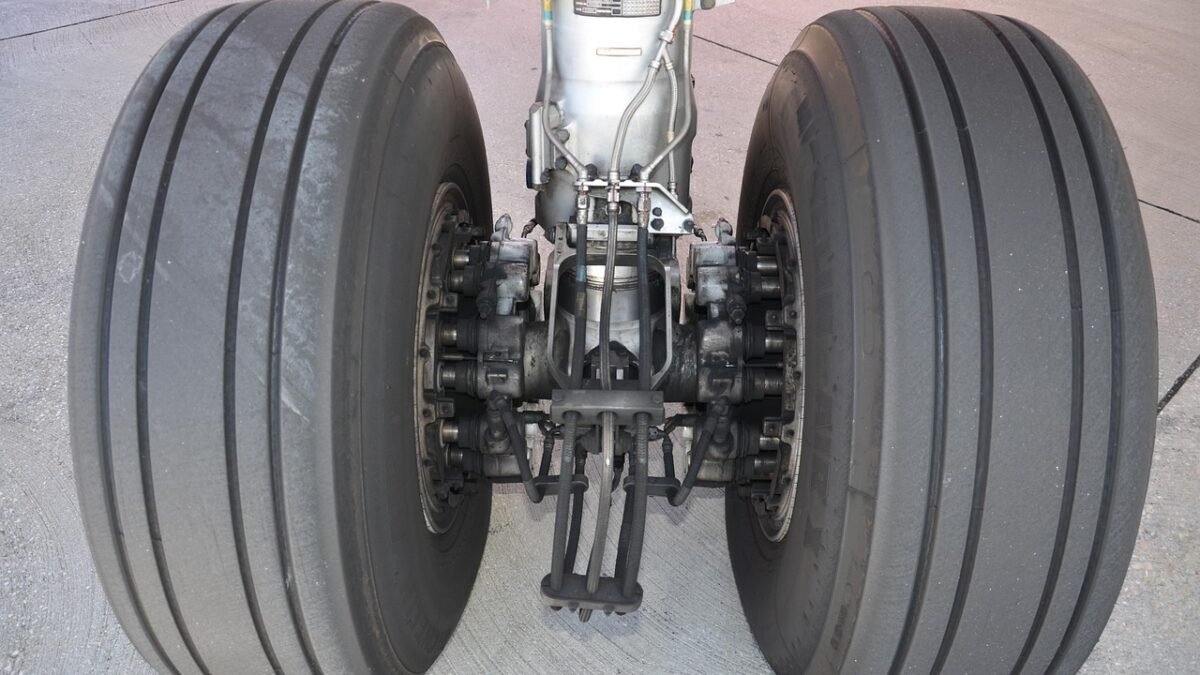
The modern aircraft wheel assembly consists of a two-piece aluminum or magnesium alloy hub, secured by high-strength tie bolts. Key components include wheel hubs (forged aluminum 7075-T73), tie bolts (12-20 per wheel with 400-600 ft-lbs torque), main bearings (tapered roller bearings with 1,500-2,000 hour intervals), fusible plugs (thermal relief melting at 300-350°F), and wheel speed transducers for brake control units.

| Component | Typical Material | Inspection Interval | Replacement Cycle |
|---|---|---|---|
| Wheel hub (main) | Aluminum 7075-T73 | Each tire change (NDT) | 15,000-25,000 cycles |
| Tie bolts | Alloy steel (cadmium plated) | Every wheel overhaul | 5 overhauls or 10 years |
| Wheel bearings | 52100 steel / ceramic hybrid | 1,500 flight hours | 3,000-5,000 hours |
| Fusible plugs | Eutectic alloy (tin-based) | Each tire change | Replace if melted |
4. Brake Wear Prediction & MRO Optimization
Predictive maintenance for carbon brakes relies on measuring disc thickness, weight loss, and oxidation penetration. Advanced algorithms used by major operators combine landing energy data from Flight Data Recorders (FDR) with visual inspections. Honeywell and Safran offer proprietary wear prediction software that reduces unscheduled brake maintenance by 30-40%.
Frequently Asked Questions (Aircraft Brake & Wheel Systems)
References & Industry Sources
- FAA Advisory Circular AC 25.735-1A - Brake and Braking Systems
- EASA Certification Specifications CS-25 - Brake System Requirements
- Safran Landing Systems - Carbon Brake Technical Data Sheets (2025)
- Honeywell Aerospace - Carbon Brake Wear Prediction Algorithms
- Collins Aerospace - Wheel & Brake Maintenance Manuals
- Boeing 737 / 787 Aircraft Maintenance Manual (AMM) Chapter 32
- Airbus A320 / A350 AMM - Brake and Wheel Assembly Procedures
- Carbon-Carbon Composite Materials in Aerospace Applications (SAE International)
Aircraft Components & Aviation Technical Support
Safe Fly Aviation supports operators worldwide with component sourcing, brake and wheel assembly technical consulting, MRO advisory, and fleet optimization solutions.
Contact Technical Team Call +91 7840000473Conclusion & Strategic Outlook
The transition from steel to carbon-carbon composite brakes represents one of the most successful material technology adoptions in modern aviation history. With weight savings directly translating to fuel efficiency, extended brake life reducing MRO frequency, and emerging smart technologies enabling predictive maintenance, operators who optimize their brake management strategies will realize 20-30% lower total landing gear maintenance costs by 2030.
Key Takeaways for Aviation Professionals
- Carbon brakes offer 2.5-3x longer life with 40% weight reduction
- Predictive wear models reduce unscheduled brake maintenance by 30-40%
- Refurbishment programs cut carbon brake lifecycle costs by 35-45%
- Electric actuation and embedded sensors represent the next frontier
- Regular oxidation inspection prevents premature carbon disc failure