IndiGo Crisis 2025 vs Southwest Meltdown 2022: Airline Disruption Analysis | Safe Fly Aviatio
IndiGo Crisis 2025 vs Southwest Meltdown 2022: What the Two Airline Disruptions Reveal About Systemic Risks
When efficiency collides with resilience: a comparative analysis of two major low-cost carrier disruptions that exposed critical vulnerabilities in modern aviation operations
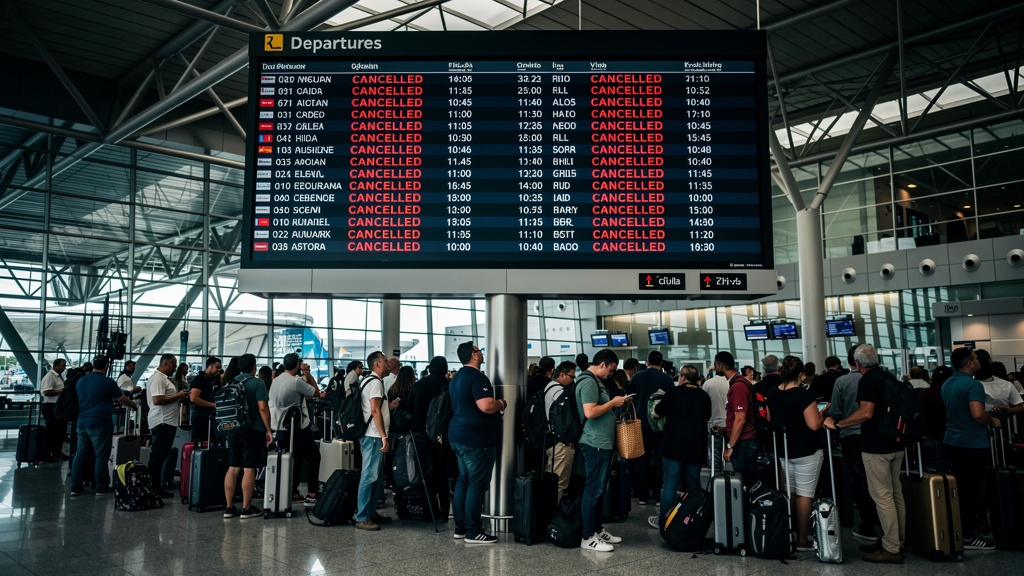
Airport Operations During Crisis
Air travel disruptions can unfold with remarkable speed when complex operations face unexpected stress. India's IndiGo and the United States' Southwest Airlines — two of the world's largest low-cost carriers — have experienced major breakdowns within just three years of each other. The parallels are striking, even though the triggers were completely different.
While Southwest's crisis began with a winter storm battering North America, IndiGo's troubles stemmed from new regulatory requirements on pilot duty times. Yet both incidents exposed the same fundamental vulnerability: large-scale aviation networks that operate on thin buffers and heavily rely on technology to keep their schedules intact can collapse quickly when a single stress point overwhelms the system.
These weren't just operational hiccups. They were system-wide failures that revealed how fragile even the largest airline networks can be when efficiency is prioritised over resilience.
Timeline Comparison
Understanding what happened requires looking at both crises side by side. The numbers tell part of the story, but the patterns beneath them reveal even more.
Southwest Airlines — December 2022
The trouble started predictably enough: a severe winter storm swept across the United States just before the Christmas holiday. Airlines cancelled thousands of flights. But while other carriers recovered within days, Southwest's operations spiralled into chaos that lasted more than a week.
The disruption lasted from 21 December through the New Year holiday period, with residual effects continuing into January. In 2023, the U.S. Department of Transportation imposed a record US $140 million fine — the largest civil penalty ever assessed against an airline for consumer protection violations.
Underlying issue: Outdated crew-scheduling software couldn't handle the complexity of reassigning thousands of pilots and flight attendants after the initial weather disruption. Once operations fell out of sync, the airline had no effective way to recover.
IndiGo — December 2025
IndiGo's crisis unfolded differently. There was no storm, no technical outage. Instead, the disruption followed the implementation of new pilot duty-time regulations (FDTL — Flight Duty Time Limitations) by India's aviation regulator, the DGCA.
The new rules were designed to reduce pilot fatigue and improve safety. But IndiGo, which operates more than 60% of India's domestic flights, was not fully prepared for the operational constraints the regulations imposed.
- Hundreds of cancellations reported across major airports including Delhi, Mumbai, and Bengaluru in early December
- Operational stabilisation expected by mid-December as the airline adjusted crew rosters
- DGCA issued a show-cause notice to the airline and directed immediate passenger-relief measures
- Limited alternatives for passengers due to IndiGo's market dominance on many routes
Underlying issue: A lack of full preparation for the new crew-rostering requirements led to pilot shortages across the network. The airline had not built sufficient buffers into its schedules to accommodate the stricter duty-time limits.
Root Causes: Different Triggers, Familiar Patterns
On the surface, these disruptions appear unrelated. One was caused by weather, the other by regulation. But when you examine the underlying structural weaknesses, the similarities become impossible to ignore.
| Category | Southwest 2022 | IndiGo 2025 |
|---|---|---|
| What sparked the crisis | Severe winter weather across United States | New regulator-mandated pilot duty-time rules (FDTL) |
| Main structural weakness | Legacy scheduling & dispatch tools unable to handle recovery | Insufficient roster planning and crew buffers for rule implementation |
| Operational philosophy | High efficiency, minimal redundancy, outdated infrastructure | Tight scheduling, thin margins, rapid expansion priorities |
| Consequence | Network collapse across the entire U.S. market | Large-scale disruption in India's domestic aviation sector |
| Regulatory stance | Record financial penalties imposed after investigation | Immediate show-cause notice and passenger protection directives |
| Recovery timeline | More than 10 days to return to normal operations | Mid-December stabilisation expected with ongoing adjustments |
The Common Thread
Across both cases, a common theme emerges: systems built primarily for efficiency may struggle catastrophically with resilience. When airlines operate with minimal margins — whether in crew availability, aircraft turnaround times, or technological infrastructure — any unexpected stress can trigger a cascading failure that's difficult to contain.
Scale & Passenger Impact
Southwest's meltdown remains far larger in absolute numbers. The timing — during the busiest travel period of the year in the United States — amplified the impact. Stranded passengers scrambled for alternatives during Christmas week, with limited options as other airlines were also operating at capacity.
IndiGo's situation, although smaller in total cancellations, had a disproportionate domestic impact. The airline's market dominance means that on many Indian routes, there simply aren't viable alternatives. When IndiGo cancels flights between smaller cities, passengers may have no other commercial aviation option that day.
The ripple effects extended beyond aviation. In India, cancelled flights pushed demand onto already-strained rail networks and intercity buses. In the United States, families rented cars for thousand-mile drives or missed holiday gatherings entirely.
Both incidents highlight how quickly a disruption can ripple through an interconnected network — and how challenging recovery can be once the system destabilises. It's not just about fixing the immediate problem; it's about getting thousands of aircraft, crew members, and passengers back to where they're supposed to be.
Operational & Regulatory Lessons
These crises offer valuable lessons for airlines, regulators, and travellers. The good news is that most of these lessons are actionable. The challenge is whether the industry will prioritise resilience alongside efficiency.
For Airlines
- Modernise operational technology: Legacy systems may work fine during normal operations but can fail catastrophically during recovery scenarios. Regular stress-testing and simulation exercises should be mandatory.
- Maintain reserve crew buffers: Especially during regulatory changes, peak travel seasons, and periods of rapid growth. Thin margins save money until they don't.
- Build real-time communication infrastructure: Stranded passengers need accurate information and rebooking options. Social media and app-based communication should be seamlessly integrated with operations.
- Invest in redundancy and resilience: This includes backup systems, alternative scheduling pathways, and contingency plans for various failure scenarios.
- Conduct comprehensive readiness assessments: Before major regulatory changes take effect, airlines should test their compliance under various operational conditions.
For Regulators
- Consider phased implementation: Major rule changes can be introduced gradually, allowing airlines time to adjust systems and staffing without operational shock.
- Conduct readiness audits: Before new regulations take effect, assess whether airlines have the operational capacity to comply without service disruptions.
- Strengthen passenger-rights enforcement: Clear standards for compensation, communication, and care during large-scale disruptions should be established and enforced.
- Establish crisis communication protocols: Regular dialogue between airlines and regulatory bodies during disruptions can help coordinate recovery efforts.
- Monitor compliance continuously: Rather than reactive enforcement after failures, regulators should proactively assess airline preparedness.
For Travellers
- Stay informed using airline apps and flight-tracking tools: Real-time notifications can give you hours of advance warning to adjust plans.
- Consider flexible bookings and travel insurance: Particularly during peak periods, weather-sensitive seasons, or when flying with airlines undergoing major changes.
- Know your entitled support: Depending on jurisdiction, you may be entitled to meals, accommodation, rebooking, or refunds during disruptions.
- Keep alternative contact methods: Phone lines get overwhelmed during crises. Mobile apps, social media, and email may provide faster responses.
- Document all disruptions: Keep records of cancelled flights, expenses incurred, and communications with the airline for potential compensation claims.
Why These Incidents Matter Beyond India and the U.S.
These disruptions aren't isolated incidents. They're symptoms of broader trends reshaping global aviation.
Modern air travel is increasingly driven by several interconnected factors:
- Technology-dependent scheduling systems that optimise efficiency but can fail catastrophically when stressed beyond design parameters
- High utilisation of aircraft and crews that leaves minimal margin for error or recovery time when disruptions occur
- Seasonal demand spikes that exceed normal capacity, concentrating risk during peak travel periods
- Market consolidation around dominant carriers in many regions, reducing alternatives and increasing systemic risk
- Globalised supply chains for parts and maintenance that can introduce new vulnerabilities
This combination means even a single stress event — whether a storm, a regulation, a technical failure, or a labour dispute — can create network-wide disruption if large carriers are not fully prepared.
As national aviation markets consolidate around a few dominant operators, the resilience of those carriers becomes a public-interest issue, not just a business concern. When IndiGo controls more than 60% of India's domestic market, or when Southwest is the dominant carrier on certain U.S. routes, their operational stability directly affects economic activity, emergency travel, and regional connectivity.
The question isn't whether future disruptions will occur — they're inevitable. The question is whether airlines and regulators will learn from these crises and build systems that can withstand them.
The Bigger Picture
The 2022 and 2025 disruptions reflect the same fundamental warning: high efficiency without robust contingency leaves airlines vulnerable.
Whether caused by extreme weather, regulatory change, technical failures, or other operational shocks, a failure to anticipate and adapt can lead to widespread passenger inconvenience, regulatory penalties, and lasting reputational damage.
The aviation industry has demonstrated remarkable resilience over decades, recovering from fuel crises, volcanic eruptions, pandemics, and countless other challenges. But as operations become more complex and margins become thinner, the buffer that allows recovery is shrinking.
Strengthening infrastructure, planning, and communication can ensure that future disruptions — inevitable as they may be — do not escalate into full-blown crises. This requires investment, not just in technology, but in operational philosophy: a recognition that resilience, redundancy, and passenger care are not luxuries to be minimised, but essential components of sustainable airline operations.
The airlines that thrive in the coming years will be those that find the balance between efficiency and resilience — that can operate profitably while maintaining the buffers needed to weather inevitable storms, both literal and regulatory.
Frequently Asked Questions
Stay Informed About Aviation Safety and Operations
Get the latest insights, analysis, and updates on aviation safety, operational resilience, and industry developments delivered directly to your inbox.
Subscribe to Safe Fly Aviation