Embraer C-390 Millennium for India: Strategic Fit, Capabilities & Challenges | Safe Fly
Embraer C‑390 Millennium for India: Strategic Fit, Capabilities & Challenges


India’s Medium Transport Aircraft (MTA) requirement is one of the most closely watched procurement programmes in the region. With the IAF seeking to replace its ageing transport fleet, multiple global manufacturers are vying for a deal that could reshape India’s tactical and strategic airlift capability. Among them, the Embraer C‑390 Millennium (originally designated KC‑390) has emerged as a strong contender, offering a compelling mix of payload, speed, and multi‑role versatility.
But rather than presenting the C‑390 as a foregone conclusion, this article examines where the aircraft fits in India’s MTA competition, its key capabilities, the industrial proposition, and the questions that India must answer before making a selection. For wider context on the country's aviation sector, see our India Aviation Intelligence hub.
⚡ Context: In August 2026, India issued an RFP for 60 transport aircraft, with Indian companies expected to partner with OEMs for local assembly and MRO. The C‑390 is among the platforms being evaluated in the programme.
1. Why India needs a new medium transport aircraft
India’s geography — from the high Himalayas to the island territories — demands an airlift capability that combines tactical agility with strategic reach. The IAF currently operates a mix of C‑17 Globemaster IIIs, C‑130J Super Hercules, and An‑32s, but the medium‑lift segment is due for renewal. A new platform must offer:
- Operational versatility: troop transport, cargo, airdrop, medical evacuation, and aerial refuelling.
- Performance at high-altitude airfields: an important consideration for India's operating environment.
- Cost-effectiveness: acquisition and lifecycle costs will be important factors in a large fleet procurement.
- Industrial participation: alignment with India’s Atmanirbhar Bharat (self‑reliant India) policy.
2. Where the C‑390 fits
The Embraer C‑390 sits between the C‑130J and A400M in payload and mission capability, offering a different balance of payload, speed and range — for a look at the larger end of that spectrum, see our guide to the Antonov An‑124 heavy‑lift aircraft. With a maximum payload of 26 tonnes, it can carry a wide range of military equipment, including light armoured vehicles, helicopters (partially dismantled), and standard ISO containers. Its cruise speed of Mach 0.80 is faster than many turboprop transports, enabling quicker response times.
3. Hot‑and‑high operations: what India should examine
India’s northern airfields, such as Leh (3,256 m) and Daulat Beg Oldi (approx. 5,100 m, among the highest airstrips in the world), present extreme operational challenges. The C‑390 incorporates fly‑by‑wire flight controls, turbofan engines and landing gear designed for military and austere‑field operations. However, actual suitability for individual high‑altitude airfields must be assessed against aircraft weight, temperature, runway length, payload, fuel, and obstacle clearance.
Manufacturer data suggests strong performance, but India should demand validation through demonstration flights under local conditions — a common practice in major defence procurements.
4. Transport and aerial refuelling capability
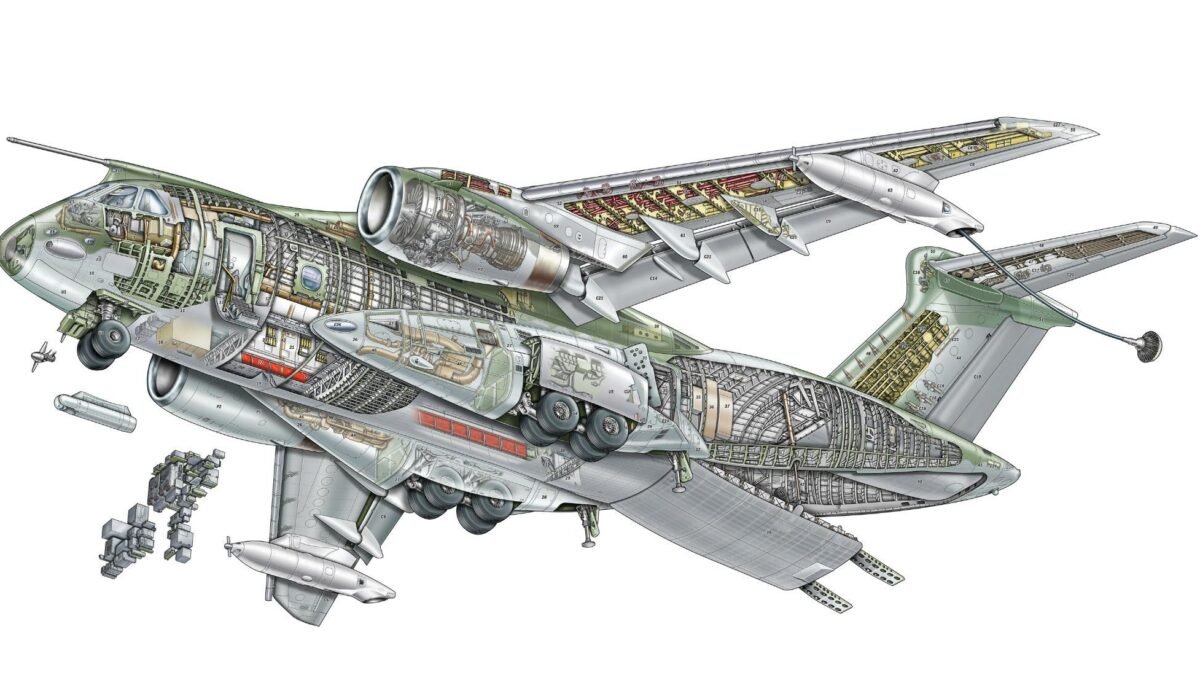
One of the C‑390’s most attractive features is its integrated aerial refuelling capability. The aircraft can be configured as a tanker using hose‑and‑drogue pods, allowing it to refuel fighter jets and other transports. This transforms the C‑390 into a force multiplier, giving the IAF additional tanker capacity without acquiring dedicated platforms.
Does an integrated tanker capability materially change the C‑390's value proposition for India? It provides flexibility, but the IAF would need to assess tanker demand, refuelling standards, fleet compatibility, training, and whether dedicated tanker capacity is preferable. The platform is designed for rapid role reconfiguration — Embraer states that transition between transport and other mission configurations can be achieved in under three hours.
5. Humanitarian assistance and disaster relief (HADR)
India is frequently called upon to respond to natural disasters, from cyclones to floods and earthquakes. The C‑390’s large cargo door (3.45 m wide × 2.9 m high) and capacity for up to seven ISO pallets or two 20‑ft containers make it ideal for delivering heavy relief supplies. Its ability to operate from semi‑prepared runways ensures access to remote or damaged airstrips. Safe Fly Aviation supports comparable time-critical logistics through its own cargo charter and special mission aircraft charter services.
6. Make in India: Embraer–Mahindra proposition
Embraer has signed a strategic cooperation agreement with Mahindra, one of India’s leading industrial groups. The proposed collaboration for the C‑390 covers:
- Local manufacturing and assembly, subject to selection
- MRO (Maintenance, Repair, and Overhaul) capability in India
- Integration of Indian‑sourced components and systems
This aligns with India’s push for indigenous defence production and could create a local aerospace ecosystem. However, the exact scope of technology transfer and indigenous content remains to be finalised and should be a key evaluation criterion.
7. C‑390 vs C‑130J vs A400M: a strategic trade‑off
The Indian MTA competition involves multiple contenders. The table below provides a high‑level qualitative comparison — figures are approximate and based on manufacturer data under varying conditions.
| Factor | C‑390 Millennium | C‑130J Super Hercules | A400M Atlas |
|---|---|---|---|
| Payload class | ~26 t | ~19 t | ~37 t |
| Cruise speed | Mach 0.80 | ~Mach 0.59 | ~Mach 0.72 |
| Illustrative range | ~2,720 km (23 t) | ~4,400 km (low payload) | ~6,400 km (tactical) |
| Tanker capability | Integrated (hose‑and‑drogue) | Variant‑dependent / podded | Integrated |
| Indian industrial partner | Mahindra (proposed) | Proposed Indian JV | Depends on final offer |
| Key advantage | Balance of speed, payload, and cost | Existing IAF fleet, proven tactical airlift | Higher payload and strategic range |
| ⓘ Range figures are not directly comparable; manufacturers publish performance at different payloads, configurations and mission conditions. | |||
8. What India should evaluate before selecting the C‑390
A thorough assessment should go beyond headline specifications. Key evaluation areas include:
- High‑altitude performance: validated under Indian conditions
- Payload/range trade‑offs: for typical IAF missions
- Runway requirements: length, surface type, and load‑bearing capacity
- Dispatch reliability and maintenance footprint
- Engine and airframe support: spares availability, MRO
- Local manufacturing & indigenous content
- Training infrastructure: simulators, pilot conversion
- Lifecycle cost: acquisition, fuel, maintenance, upgrades
- Interoperability with existing IAF assets
- Delivery schedule and production capacity
- Procurement and industrial commitments: final value of local manufacturing, MRO, technology transfer and indigenous content will depend on contractual terms ultimately agreed.
9. Key advantages of the C‑390
- Multi‑role design: transport, tanker, Medevac, firefighting (with MAFFS kit)
- Speed: faster than many turboprop competitors, reducing transit times
- Modern avionics: fully digital cockpit, fly‑by‑wire, open architecture
- Industrial partnership: strong Indian collaboration proposal
- Competitive operating economics: Embraer claims lower cost per flying hour than some rivals
10. Key challenges and open questions
- Operational proof in high‑altitude Indian conditions: needs validation
- Fleet commonality: India already operates C‑130J and C‑17; a new type adds complexity
- Support infrastructure: building a new MRO and supply chain takes time and investment
- Political and strategic factors: defence procurements are influenced by diplomatic relations
- Total cost of ownership: independently verified, not just vendor claims
✈️ Safe Fly Aviation Assessment
- Payload/speed combination
- Multi‑role capability
- Tanker option
- Proposed Indian industrial participation
- Modern aircraft architecture
- High‑altitude validation
- Lifecycle cost
- Fleet integration
- Local MRO & final industrial commitments
- Delivery schedule
11. Conclusion
The Embraer C‑390 Millennium brings a modern, versatile, and cost‑conscious option to India’s MTA competition. Its payload, speed, tanker capability, and proposed industrial partnership with Mahindra make it a serious candidate. However, the Indian Air Force must weigh these strengths against operational realities, fleet integration, lifecycle costs, and the specific demands of its unique geography.
Whether the C‑390 ultimately becomes India’s choice will depend on the outcome of detailed evaluations, competitive pricing, final industrial commitments, and strategic alignment with India’s long‑term defence and aerospace goals.
What is clear is that the C‑390 deserves a close look — the outcome will have important implications for India's medium-airlift capability, defence industrial base and long-term transport fleet.
Related reading: Antonov An‑124: the world's heavy-lift benchmark · Special mission aircraft explained · India Aviation Intelligence hub · ThePrint: India seeks 60 transport aircraft · Embraer & Mahindra cooperation
Independent analysis: This article is an independent assessment produced by Safe Fly Aviation for informational and analytical purposes. It does not constitute procurement advice, endorsement, or a recommendation to select any specific aircraft.
Information sources: The content is based on publicly available information, manufacturer disclosures, and media reports as of the date of publication. Aircraft specifications, performance figures, and industrial proposals are approximate and may be subject to change.
No affiliation: Safe Fly Aviation is not affiliated with Embraer, Mahindra, or any other OEM or government entity mentioned in this article. The analysis reflects the views of the author and is intended to support informed discussion.
Procurement decisions: The final selection of any aircraft for India's Medium Transport Aircraft requirement rests with the Indian government and its duly constituted evaluation and procurement authorities.
- Data verification: Readers should verify all technical data and procurement status with official sources before making any decisions.
- Updates: This article may be updated as the procurement programme evolves.