Why Jet Engine Prices Are Skyrocketing in 2026: The Aviation Cost Crisis Explained
Why Jet Engine Prices Are Skyrocketing in 2026: The Aviation Cost Crisis Explained
Safe Fly Aviation – A single widebody engine like the GE9X now lists near $45 million — more than many midsize private jets. This comprehensive guide reveals the real reasons and actionable solutions.
- GE9X list price: $40–45M per unit — exceeds many midsize private jets
- CFM LEAP price increase: 45–70% effective cost rise since 2020
- Engine MRO spending: Exceeded $62 billion globally in 2025
- Development costs: $2B+ per new engine family
- Operator impact: Engine reserve requirements up 30–55% for business jets

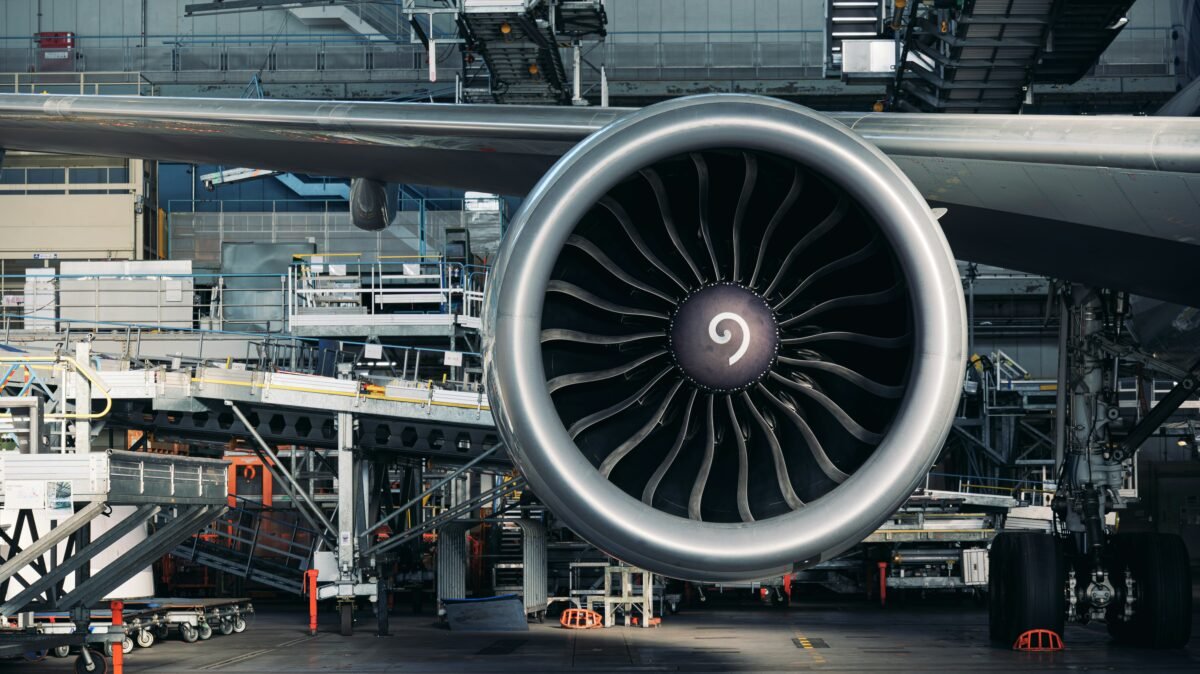
CFM LEAP jet engine — one of the most in-demand next-generation powerplants (Credit: Safran)
The Scale of the Jet Engine Price Problem
Jet engine prices have reached levels that many describe as unreasonably expensive. In 2026, operators are facing a perfect storm of advanced technology, material shortages, manufacturing issues, and regulatory demands that has pushed jet engine prices to historic highs.
According to industry reports from IBA and Aviation Week, narrowbody next-generation engine pair prices have risen significantly since 2015, with effective cost increases estimated at 45–70% when accounting for inflation, supply chain premiums, and MRO cost escalation. Widebody engines such as the GE9X now command list prices in the $40–45 million range per unit — a figure that exceeds the purchase price of many midsize private jets.
Engine MRO spending alone exceeded $62 billion globally in 2025, with continued upward pressure expected through 2027 as aging fleets require overhaul and new engine durability issues drive unscheduled shop visits. For business jet operators, engine reserve requirements have increased 30–55% depending on platform, directly impacting operating budgets and residual values.
Market Snapshot — 2026 Jet Engine Price Indices
- CFM LEAP-1A/1B: $15–18M (up ~50% since 2020)
- PW1000G (GTF): $12–16M (affected by durability campaigns)
- GE9X: $40–45M (flagship widebody engine)
- Rolls-Royce Pearl 700: $18–22M (business jet application)
- Engine MRO spend forecast: $70B+ by 2028

GE9X — the most powerful commercial jet engine in production (Safe Fly Aviation archive)
1. Revolutionary Technology at Premium Jet Engine Prices
Next-generation jet engines incorporate advanced technologies that deliver exceptional performance but come at significant cost. According to OEM data, development programs routinely exceed $2 billion per engine family. Key technologies driving jet engine prices higher include:
- Ceramic Matrix Composites (CMCs): Lightweight, heat-resistant materials that cost significantly more than conventional alloys
- Advanced single-crystal superalloys: Complex manufacturing processes with low production yields
- Geared turbofan architecture (PW1000G): Revolutionary design with extensive testing requirements
- Additive manufacturing (3D printing): Reduces part count but requires expensive equipment and certification
These innovations deliver 15–20% better fuel efficiency and lower emissions, but the cost premium is passed directly to operators through higher purchase prices and more expensive spare parts.
2. Critical Raw Material Shortages Driving Jet Engine Prices
A single large engine requires thousands of pounds of titanium, nickel superalloys, and rare metals like rhenium — a critical alloying element in single-crystal turbine blades. According to materials market data, prices have increased dramatically, directly affecting jet engine prices:
- Titanium: Up 40% since 2022 due to aerospace demand and geopolitical tensions
- Nickel superalloys: Up 35% with limited refining capacity
- Rhenium: Up 60% — supply concentrated in few regions
- Cobalt-chrome: Up 25% with electric vehicle competition
Material Cost Impact
OEM analysis indicates that raw materials now represent 30–40% of total engine manufacturing cost, up from 15–20% a decade ago — a key contributor to rising jet engine prices.

Modern engine overhaul workshop — capacity constraints are driving MRO price increases (Credit: IAI Bedek MRO)
3. Manufacturing & Quality Control Challenges
The industry has faced unprecedented manufacturing challenges in recent years. According to OEM disclosures and regulatory reports, these challenges have directly contributed to higher jet engine prices:
- Pratt & Whitney's powder-metal issues: Affected hundreds of PW1000G engines, requiring accelerated shop visits and creating parts shortages
- Boeing/Airbus delivery delays: Reduced new aircraft production, pushing operators to extend older aircraft service life — increasing spare engine demand
- Skilled labor shortages: Aerospace manufacturing lost experienced workers during the pandemic; retraining takes 3–5 years
- Quality escapes: Increased inspection requirements slow production and raise costs
These challenges have created unprecedented demand for spare engines and overhaul slots, pushing lease rates to record highs. According to industry data, lease rates for CFM56-7B have increased 40% since 2021, while GE90-115B rates are up 25%.
4. Labor Shortages, Inflation & Regulatory Demands
Wage inflation in aerospace engineering and manufacturing, combined with stricter emissions and noise regulations, continues to add cost layers that push jet engine prices upward. IATA estimates that regulatory compliance adds 5–10% to engine operating costs annually. Additionally:
- CORSIA carbon offset requirements: Indirectly increase operating costs
- Noise Stage 5 standards: Require hush kit modifications or early retirement
- SAF compatibility testing: Adds certification and monitoring costs
Impact of Rising Jet Engine Prices on Private Jet Operators
Private owners of Gulfstream, Bombardier Global, Dassault, and Embraer aircraft are seeing direct financial impact from higher jet engine prices. According to operator surveys:
- Engine reserve requirements: Up 30–55% across major business jet platforms
- Unscheduled maintenance: Parts availability delays average 4–8 weeks for certain components
- AOG events: Unexpected downtime can cost $50,000–150,000 per day in lost revenue or charter fees
- Residual values: Aircraft with high-time engines are seeing steeper depreciation
Strategic Solutions for Managing Rising Jet Engine Prices
Safe Fly Aviation provides comprehensive engine asset management solutions to help clients navigate the current cost environment driven by higher jet engine prices:
Long-Term Engine Leasing
Preserve capital and manage budget predictability with fixed-rate engine leases from 3–10 years.
Predictive Maintenance Programs
Reduce AOG events through data-driven maintenance planning and engine health monitoring.
Global Parts Sourcing
Access our international network of OEM-approved suppliers for scarce components.
Engine Reserve Studies
Accurate, current reserve calculations to avoid underfunding or over-reserving.
2026 Jet Engine Price Comparison Table
| Engine | Aircraft Application | Approx. Price (2026) | Key Cost Drivers |
|---|---|---|---|
| CFM LEAP-1A/1B | A320neo / 737 MAX | $15–18M | High demand, production ramp-up costs |
| PW1000G (GTF) | A320neo family | $12–16M | Durability campaigns, powder-metal recall |
| GE9X | Boeing 777X | $40–45M | Premium widebody, 3D-printed parts |
| Rolls-Royce Pearl 700 | Gulfstream G700 | $18–22M | Business jet certification, low volume |
| GE90-115B | Boeing 777-300ER | $5–8M (green-time) | LLP scarcity, cargo conversion demand |
| CFM56-7B | Boeing 737NG | $2.5–3.5M (mid-life) | Aging fleet, parts availability |
Note: Prices are representative of recent market activity. Actual values depend on LLP remaining life, overhaul status, and market conditions.
Future Outlook 2027–2030
Industry analysts predict jet engine prices will remain elevated through 2027–2030 as the industry transitions toward SAF compatibility and next-generation propulsion (hydrogen/electric). Key trends to watch:
- LEAP and GTF production: Gradually increasing but remaining below pre-2020 targets
- MRO capacity expansion: New overhaul facilities coming online in 2027–2028
- Material price stabilization: Expected as mining and refining capacity expands
- Electric/hydrogen propulsion: Long-term threat to conventional engines, but not before 2035 for commercial applications
While some pressure may ease, the trend suggests long-term jet engine prices above historical averages. Operators who proactively manage engine assets through leasing, reserves, and predictive maintenance will be best positioned.
Frequently Asked Questions About Jet Engine Prices
How much have jet engine prices increased since 2020?
Industry estimates show effective cost increases of 45–70% since 2020, driven by raw material shortages, advanced technology costs, and supply chain disruptions. A CFM LEAP engine that was $10–12M in 2020 now commands $15–18M, while the GE9X has reached $40–45M per unit.
Why are jet engines so expensive in 2026?
Jet engine prices have skyrocketed due to five key factors: revolutionary technology (ceramic matrix composites, geared turbofans), critical raw material shortages (titanium, nickel superalloys, rhenium), manufacturing quality crises, skilled labor shortages, and stricter emissions regulations.
How does the GE9X price compare to other engines?
The GE9X, powering the Boeing 777X, lists at approximately $40–45 million per unit — making it one of the most expensive commercial jet engines in production. By comparison, the CFM LEAP ranges $15–18M, PW1000G $12–16M, and Pearl 700 $18–22M.
What can private jet operators do to manage rising engine costs?
Operators can mitigate rising costs through long-term engine leasing, predictive maintenance programs, global parts sourcing, engine reserve studies, and full lifecycle cost analysis. Safe Fly Aviation provides all these solutions.
Will jet engine prices decrease in the future?
Industry analysts predict prices will remain elevated through 2027–2030 as the industry transitions toward SAF compatibility, next-generation propulsion, and supply chain stabilization. While some pressure may ease, the trend suggests long-term price levels above historical averages.
Need Help Managing Rising Jet Engine Prices?
Contact Safe Fly Aviation for engine leasing, predictive maintenance, parts sourcing, and cost consulting tailored to your fleet.
Engine Leasing · Predictive Maintenance · Parts Sourcing · Engine Reserve Studies
Sources & Industry References
- IBA Group — Engine market values and lease rate benchmarks (2026)
- Aviation Week Network — Engine MRO forecast 2025–2030
- IATA — Industry cost index and economic performance data
- OEM disclosures — GE Aerospace, Rolls-Royce, Pratt & Whitney, CFM International
- FAA / EASA — Regulatory compliance and safety directives
- Safe Fly Aviation — Internal engine trading database and market intelligence
Disclaimer: This report is based on public sources and industry data as of May 2026. Jet engine prices and market conditions vary. Contact Safe Fly Aviation for current intelligence specific to your requirements.
Conclusion: Jet Engine Prices Remain Elevated Through 2030
Jet engine prices have reached historic highs in 2026, driven by a combination of advanced technology, raw material shortages, manufacturing challenges, labor constraints, and regulatory pressure. The GE9X at $40–45 million per unit now costs more than many midsize private jets, while effective increases on engines like the CFM LEAP have reached 45–70% since 2020.
For private jet operators, business aviation fleets, and airlines, the strategic response is clear: manage engine assets proactively. Long-term leasing, predictive maintenance, global parts sourcing, and accurate reserve studies all reduce exposure to volatile jet engine prices and protect residual values.
Safe Fly Aviation's engine desk provides the market intelligence, leasing structures, and MRO advisory that operators need to navigate this environment. Whether you are acquiring, leasing, or overhauling engines, our team is ready to support your strategy.
Safe Fly Aviation – Your Partner in Aviation Intelligence.