
The Obsession with Off-Market Aircraft: Are They Really Off-Market?
The Obsession with Off-Market Aircraft: Are They Really Off-Market?
"Off-market" has become one of the most powerful words in aircraft sales. It isn't always what it sounds like — and buyers who understand the difference make better decisions.
There is a phrase that seems to have acquired almost mythical status in the aircraft sales business: "off-market aircraft."
Mention it to an aircraft buyer and the conversation often changes immediately. An aircraft that is not advertised publicly. An owner who supposedly wants complete confidentiality. A "quiet sale" that only a handful of people know about. A pristine aircraft that is allegedly available before it reaches the market.
For some buyers, finding an off-market aircraft feels like finding a hidden opportunity. And there is some truth to that. But there is also a lot of marketing wrapped around the term.
The reality is that "off-market" does not necessarily mean secret, exclusive, cheaper, or even genuinely unavailable elsewhere. In many cases, it simply describes how an aircraft is being marketed at a particular moment.
So what exactly is an off-market aircraft? And are there really as many "off-market" aircraft as brokers and buyers sometimes suggest?
Yes, genuinely off-market aircraft exist. But "off-market" describes how an aircraft is being marketed, not whether it is better, cheaper or unknown to the market. Buyers should verify availability, seller authority, condition, records and market value before treating exclusivity as an advantage.

What Does "Off-Market Aircraft" Actually Mean?
An off-market aircraft is an aircraft being offered for sale privately rather than through public aircraft-for-sale listings. It may be known to selected brokers or buyers, but it is not necessarily a secret aircraft or a cheaper aircraft. There is no universally accepted legal definition of the term — in practical terms, it's generally used for an aircraft that is not being openly marketed to the general public through conventional aircraft-for-sale channels.
The aircraft may still be known to:
- the owner
- the operator
- a manufacturer or MRO
- one or more brokers
- aircraft dealers
- previous buyers
- lenders or lessors
- aviation consultants
- other industry contacts
It may also be available for sale, but only to selected parties. For example, an owner of a business jet may not want photographs, registration details, or a "For Sale" advertisement appearing on the internet. Instead, the owner may tell two or three trusted brokers: "If you have a qualified buyer, we would consider an offer." That is a genuine form of off-market selling.
But there is another scenario. An aircraft may already be known throughout the brokerage community, with its specifications, history and asking price circulating privately. It may not appear on a public website, but that does not make it particularly secret.
This distinction is important. Private marketing and truly unknown aircraft are not the same thing.
An aircraft may not appear on a public marketplace while being known to multiple brokers, operators, MROs, family offices or prospective buyers. In other words, "off-market" describes the marketing channel, not necessarily the aircraft's level of market awareness.
Example: a buyer looking for a 10–15-year-old long-range business jet may hear that a particular aircraft is "off-market." It may never have appeared on a public listing, but three brokers may already know about it, and the owner may have quietly approached several potential buyers. It is privately marketed — but not necessarily unknown to the market. (Illustrative example, not a real transaction.)
Why Are Buyers So Obsessed With Off-Market Aircraft?
Part of the attraction is psychological. Aircraft buyers are often looking for something very specific. Perhaps they want:
- a particular aircraft type
- a specific manufacturing year
- low utilisation
- a particular engine configuration
- a certain cabin layout
- a specific registration jurisdiction
- a clean maintenance history
- known ownership
- particular avionics
- low cycles
- immediate availability
- or an aircraft that has never been publicly advertised
The buyer may spend months searching. Then a broker says: "I have an off-market aircraft that may be exactly what you're looking for." Suddenly the aircraft sounds more valuable.
There is also an element of exclusivity. People naturally assume that if something is difficult to access, it must be better. In aircraft transactions, however, scarcity and quality are two different things. An aircraft can be genuinely scarce and still be a poor acquisition. Conversely, an aircraft that is openly advertised may be an excellent aircraft at the right price.
The Genuine Advantages of Buying Off-Market
There are legitimate reasons why experienced buyers pursue private transactions.
1. Confidentiality
This is probably the strongest reason. Some aircraft owners simply do not want the market to know that they are considering a sale. The owner could be a high-net-worth individual, a family office, a corporation, a government-related entity, an operator, a leasing company, or an owner whose aircraft is closely associated with their business or personal profile. Publicly advertising the aircraft may create unnecessary attention. A private sale can reduce that exposure.
2. Early Access
An aircraft can sometimes be introduced privately before the owner decides whether to launch a full marketing campaign. That can give a serious buyer an opportunity to inspect the aircraft and negotiate before it becomes widely circulated. This is particularly useful when the buyer already knows exactly what they want — if you have been looking for a specific aircraft for six months and a suitable example quietly becomes available, getting access early can matter.
3. Less Competition
A public aircraft listing can attract enquiries from dozens of brokers and potential buyers. A private transaction may involve only a small number of qualified parties, which can make the process more controlled. However, there is an important caveat: less competition does not automatically mean a lower price. An owner who knows the aircraft is highly desirable may actually expect a premium precisely because access is restricted.
4. Access to Aircraft That May Never Be Publicly Advertised
Some owners genuinely never advertise. Their aircraft may move through trusted relationships rather than public listings. A broker who has spent years building relationships with owners, operators, family offices and leasing companies may hear about these opportunities before they reach the wider market. This is where a broker's network can genuinely create value — not necessarily in having a magical database of secret aircraft, but in knowing who to call.
How Do Brokers Find Off-Market Aircraft?
"Knowing who to call" isn't one thing — it's a set of channels a broker builds over years. The most common ones:
- Existing owner relationships, built over multiple transactions
- Previous transaction history — knowing who bought what, and when they might sell again
- Operator relationships, where day-to-day operations surface a fleet change before it's announced
- Fleet-renewal conversations with corporate flight departments and charter operators
- Lessors, whose portfolios turn over on a schedule
- Family offices managing an aircraft as one asset among many
- Manufacturers, who often know before anyone else when an owner is considering an upgrade
- MRO relationships — maintenance providers see ownership and usage patterns up close
- Aircraft owners approaching a trusted broker directly, without any public step
- Direct owner outreach initiated by the broker on a buyer's specific requirement
- Broker-to-broker networks, where an aircraft circulates privately among a small group before ever reaching a listing
None of these channels replace verification. They only change how an aircraft is found — not whether it still needs to be checked once it is.
But There Are Downsides
The off-market label can also create problems for buyers.
1. You May Not Be Seeing the Whole Market
If a buyer becomes obsessed with finding an off-market aircraft, they can make the mistake of ignoring publicly marketed aircraft. That is dangerous. The best aircraft for a buyer is not necessarily the one with the most exclusive sales story — it is the aircraft that offers the right combination of condition, maintenance status, configuration, history, price, availability and future value. A publicly marketed aircraft can sometimes beat an off-market aircraft on every one of those factors.
2. "Off-Market" Can Be Used as a Sales Tactic
This is where buyers need to be careful. Sometimes "off-market" simply sounds more sophisticated than "the aircraft isn't publicly listed yet." Those are not necessarily the same thing. An aircraft can be circulated privately to 20 brokers and still be called "off-market." Another aircraft might be sitting in a broker's database for six months without a public advertisement. Calling it "exclusive" does not change the aircraft itself.
The buyer should therefore ask a simple question: what exactly makes this aircraft off-market? Is the owner genuinely selling confidentially? Has the owner authorised a private approach? Is there a firm price? Is there a signed mandate? Is the aircraft actually available? Or is the broker simply testing the market? Those questions matter.
3. The Price May Not Be Better
There is a persistent assumption that buying privately means buying cheaper. Not necessarily. Aircraft owners are usually aware of the value of their asset, and if an aircraft is genuinely desirable, the owner may have little reason to discount it simply because the transaction is private. In some cases, the opposite can happen — a seller may say, "if you want the aircraft without us publicly marketing it, make your best offer." The resulting price could be perfectly reasonable, or significantly above market. The only way to know is through proper market analysis.
4. Less Competition Can Also Mean Less Price Discovery
Public marketing has one useful function: it provides market feedback. If an aircraft is offered at $X and receives no serious interest, that tells you something. If ten qualified buyers immediately enquire, that also tells you something. A completely private transaction may provide much less information about where the aircraft actually sits in the market — particularly important with older business jets, turboprops and commercial aircraft, where condition can have a huge effect on value.
5. The Aircraft May Not Actually Be Available
This is one of the biggest problems with "off-market" hunting. There is a difference between "the owner might sell" and "the aircraft is available for sale." The first is an opportunity. The second is an aircraft transaction. Experienced buyers learn to distinguish between the two very quickly. A broker may have spoken to an owner who said, "I would consider selling for the right price" — that does not mean the aircraft is actually on the market. The owner may ultimately reject every offer.
How Can a Buyer Tell if an Off-Market Aircraft Is Actually Available?
The signals are usually visible early, before any offer is made:
Green flags
- Direct seller authority — the broker holds, or can produce, an actual mandate
- An identifiable owner, not just a vague reference to "the seller"
- A confirmed sale mandate, in writing
- Current aircraft information — records, status and location that are up to date, not years old
- Inspection access, offered rather than resisted
- Clear commercial terms — a price, or an honest statement that offers are being sought
Warning signs
- "The owner may consider" — with nothing firmer behind it
- No identifiable seller
- No mandate or seller authority the broker can point to
- No current records — or reluctance to share them
- No price guidance of any kind
- Pressure to make an immediate offer
- Refusal to permit independent due diligence
If more than one warning sign shows up early, that's usually the answer — regardless of how the aircraft was introduced.
So, Are There Really Such Things as Off-Market Aircraft?
Yes. Absolutely. But the term needs to be used carefully.
There are aircraft whose owners genuinely do not want public exposure. There are aircraft being quietly offered to a limited group of buyers. There are owners who will only transact through trusted relationships. There are also aircraft that become available unexpectedly and are sold before they ever appear on a public marketplace. Those are genuinely private opportunities.
But there is another category: aircraft that are "off-market" only in a marketing sense. They may be known to a large part of the aviation community. Their details may already be circulating between brokers. Their owner may have spoken to multiple parties. They may even have been publicly advertised previously. Calling them "off-market" today does not erase their previous market history.
The Aircraft Market Is Smaller Than It Looks
This is something buyers sometimes discover only after entering the industry. The global aircraft sales market can look enormous from the outside. But individual segments can be surprisingly small.
Take a particular aircraft type and narrow it down by:
- age
- engine
- configuration
- maintenance status
- cycles
- location
- ownership
- regulatory status
- price
- availability
Suddenly the pool becomes very small, and many of the same aircraft will be known to the same people. That is why genuine aircraft sourcing is often less about searching the internet and more about relationships, market intelligence and verification.
The Broker's Network Matters — But Verification Matters More
A good aviation broker can sometimes uncover aircraft that a buyer would never find through a public search. That is valuable. But access is only the beginning. Once an aircraft is identified, the real work starts. The buyer still needs to establish:
Ownership
Who actually owns the aircraft? Is the seller authorised to sell it? Are there liens, mortgages or other encumbrances?
Technical Status
What is the current maintenance condition? What inspections are coming due? Are there major components approaching life limits?
Records
Are complete maintenance records available? Can the aircraft's history be independently verified?
Configuration
Does the aircraft actually match the buyer's requirements?
Market Value
Is the asking price consistent with comparable aircraft and the aircraft's actual condition?
Transaction Structure
Who is representing the seller? Who represents the buyer? Is there a brokerage mandate? Who is entitled to a commission? Are there confidentiality or non-circumvention provisions, and how is any aircraft financing arrangement structured against the deal?
Pre-Purchase Inspection
Can the aircraft undergo a proper independent pre-purchase inspection?
This is where the glamour of an "off-market aircraft" quickly disappears and the reality of aircraft acquisition begins.

The Biggest Mistake: Buying the Story Instead of the Aircraft
Aircraft transactions can become emotional. A buyer hears: "This aircraft has never been publicly offered." Then: "The owner doesn't want it advertised." Then: "We are showing it only to you." Then: "There are two other buyers interested." Suddenly the buyer feels pressure.
The aircraft does not become better because it is secret. It does not become cheaper because it is private. And it does not become more valuable because somebody calls it "exclusive." The aircraft's technical condition, maintenance history, configuration, provenance and market value are what ultimately matter.
The Smart Way to Approach Off-Market Aircraft
There is nothing wrong with actively looking for off-market opportunities. In fact, serious buyers should have access to both markets. A good acquisition strategy should include: public market, private market, direct owner relationships, broker network, and technical due diligence.
Don't ask only: "What off-market aircraft do you have?"
Ask instead: "What aircraft are genuinely available that meet my requirements?"
That small change in wording can completely change the sourcing process. It forces the conversation away from the marketing label and towards the actual requirement.
In aircraft acquisition, "off-market" should be treated as a sourcing description rather than a valuation category. Before progressing, buyers should establish that the aircraft is genuinely available, confirm seller authority, understand the aircraft's maintenance position, and compare the opportunity with comparable aircraft in the wider market.
10 Questions to Ask Before Buying an Off-Market Aircraft
Before getting excited about an "off-market" aircraft, ask a few straightforward questions:
- Is the aircraft formally available for sale?
- Does the broker have a mandate or direct seller authority?
- Has the aircraft previously been publicly marketed?
- How many parties have been approached?
- Is there an asking price or is the seller seeking offers?
- Where is the aircraft currently located?
- Are complete maintenance records available?
- What major maintenance events are upcoming?
- Are there any known liens, financing arrangements or title issues?
- Can the buyer conduct an independent pre-purchase inspection?
If straightforward answers are not forthcoming, the buyer should slow down.
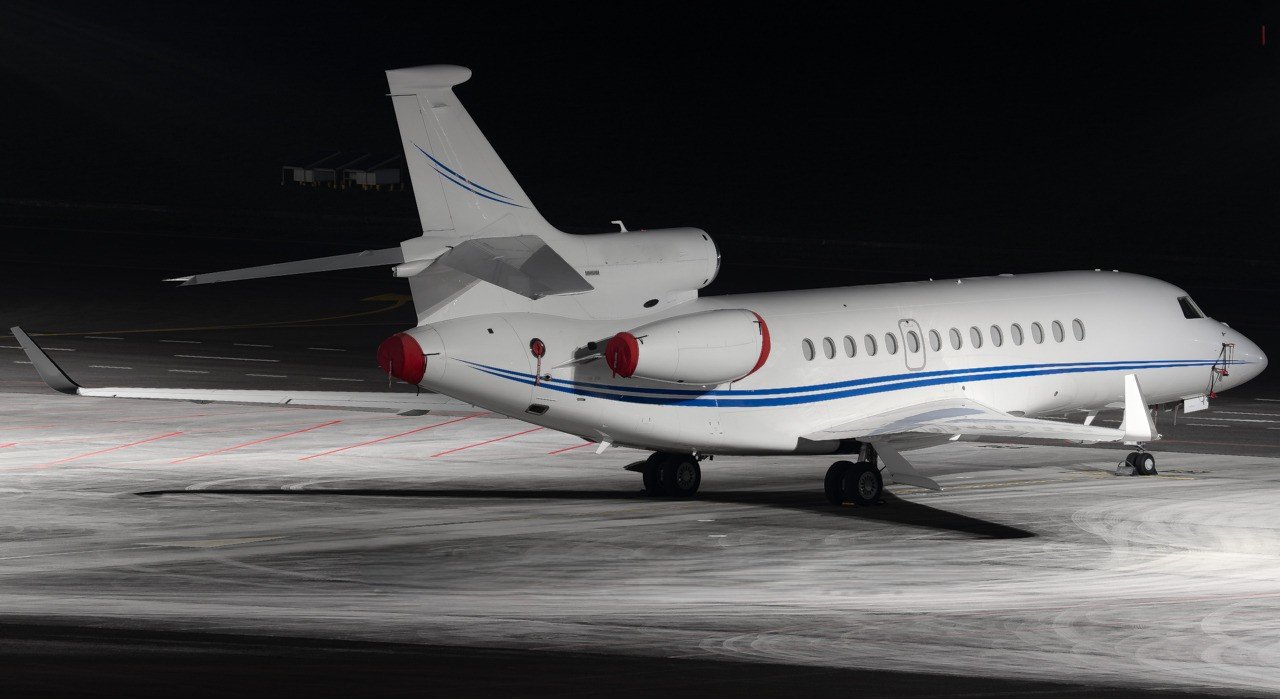
The Reality: "Off-Market" Is Often a Spectrum
Perhaps the most accurate way to think about the term is not as a simple market / off-market division. There is a spectrum — and these situations are very different, even though they can all be described casually as "off-market."
| Category | What It Means | Typical Buyer Access |
|---|---|---|
| Publicly Listed | The aircraft is openly advertised and available for general enquiries. | Open to any enquiry |
| Quietly Marketed | The aircraft is available but is being shown selectively. | Through a broker relationship |
| Broker-to-Broker | The aircraft is being circulated within a professional network. | Via a broker already in that network |
| Direct Owner Sale | The owner is considering a transaction without public advertising. | Usually through a trusted introduction |
| Confidential Sale | The owner specifically wants to maintain confidentiality and only entertain carefully qualified buyers. | Qualified buyers only, by referral |
| "Potential Sale" | The owner is not actively selling but may consider an offer. | Speculative — no formal access yet |
That is why buyers should always ask what the term actually means in a particular transaction.
Is an Off-Market Aircraft Better?
Not necessarily. Is it worse? Not necessarily.
The off-market status itself tells you very little about the quality of the aircraft. It tells you something about the seller's preferred method of marketing. That's all.
A beautifully maintained aircraft sold privately can be an outstanding acquisition. A poorly maintained aircraft sold privately can be an expensive mistake. And a publicly listed aircraft with excellent records, strong maintenance status and a realistic price can be exactly what a buyer should be looking for.
The Real Advantage Is Information
Perhaps the greatest value of an off-market network is not exclusivity. It is information. Knowing which owners may sell, which aircraft are coming to market, which aircraft have changed ownership plans, which operators are renewing fleets, which aircraft are approaching major maintenance, which sellers are realistic on price, which aircraft have been sitting unsold, and which aircraft are genuinely scarce, can be far more valuable than simply having access to a list of "secret" aircraft.
The best brokers are therefore not necessarily the ones who claim to have the most off-market aircraft. They are the ones who can explain why a particular aircraft makes sense for a particular buyer.
Final Thought
The obsession with off-market aircraft is understandable. Buyers want access to aircraft that others cannot easily find. Sellers want confidentiality. Brokers want relationships. And everyone wants to believe they have discovered something before everyone else.
But aircraft transactions are highly relationship-driven, particularly when sellers prefer confidentiality. There are genuinely private aircraft transactions that never appear on public marketplaces, with owners who will only sell through trusted relationships. But there are also plenty of aircraft labelled "off-market" simply because they are not currently advertised publicly.
So the next time someone says, "I have a very special off-market aircraft for you," the right response isn't necessarily excitement. It is a question: "Tell me about the aircraft."
Because the real opportunity isn't whether the aircraft is off-market. The real opportunity is whether the aircraft is right. And that distinction can save a buyer considerably more money than the word "off-market" ever will.
Frequently Asked Questions
What does "off-market aircraft" actually mean?
There is no universally accepted legal definition. In practical terms, it describes an aircraft that is not being openly marketed to the general public through conventional for-sale channels — though it may still be known to the owner, operator, brokers, dealers, lenders, and other industry contacts, and may be available for sale to selected parties only. Private marketing and a truly unknown aircraft are not the same thing.
Are off-market aircraft always cheaper than publicly listed ones?
Not necessarily. Aircraft owners are usually aware of the value of their asset, and if an aircraft is genuinely desirable, the owner may have little reason to discount it simply because the transaction is private. In some cases, restricted access lets an owner expect a premium rather than a discount. The only way to know is through proper market analysis.
How do you find an off-market aircraft?
Genuinely off-market aircraft are usually found through relationships rather than search: existing owner relationships, previous transaction history, operator and lessor contacts, fleet-renewal conversations, family offices, manufacturers, MRO relationships, and broker-to-broker networks. A broker's value isn't a secret database — it's knowing who to call, and then independently verifying what they're told.
Are there really such things as off-market aircraft?
Yes, absolutely — but the term needs to be used carefully. There are aircraft whose owners genuinely want confidentiality and will only transact through trusted relationships. There is also another category: aircraft that are "off-market" only in a marketing sense, already known throughout the brokerage community even though they are not publicly advertised.
What should I ask a broker before pursuing an off-market aircraft?
Ask whether the aircraft is formally available for sale, whether the broker holds a mandate or direct seller authority, whether it has previously been publicly marketed, how many parties have been approached, whether there is a firm asking price, where the aircraft is located, whether complete maintenance records are available, what major maintenance is upcoming, whether there are any liens or title issues, and whether an independent pre-purchase inspection can be conducted. If straightforward answers aren't forthcoming, slow down.
Safe Fly Aviation is an aviation services and aircraft acquisition company providing aircraft sourcing, sales and acquisition advisory services for private and commercial aircraft. See our Aircraft Acquisition & Brokerage Services.
This article reflects general industry practice and is provided for informational purposes only. It is not a substitute for independent legal, tax or technical advice on any specific transaction. Terms such as "off-market" are used as commonly understood in the aircraft brokerage industry and carry no fixed legal definition.