ATR Landing Gear Market Trends: Supply, MRO & Digital Innovation
ATR Landing Gear Market Trends: Supply Chain, MRO Demand & Digital Innovation
Analysis of the current state of the ATR landing gear market, including production bottlenecks, aftermarket growth forecasts, Smart Lander digital diagnostics, and strategic guidance for operators, lessors, and MRO providers.
Safe Fly Aviation – international aircraft charter brokerage and aviation advisory company.
The ATR Landing Gear Market: A Critical Component Under Pressure
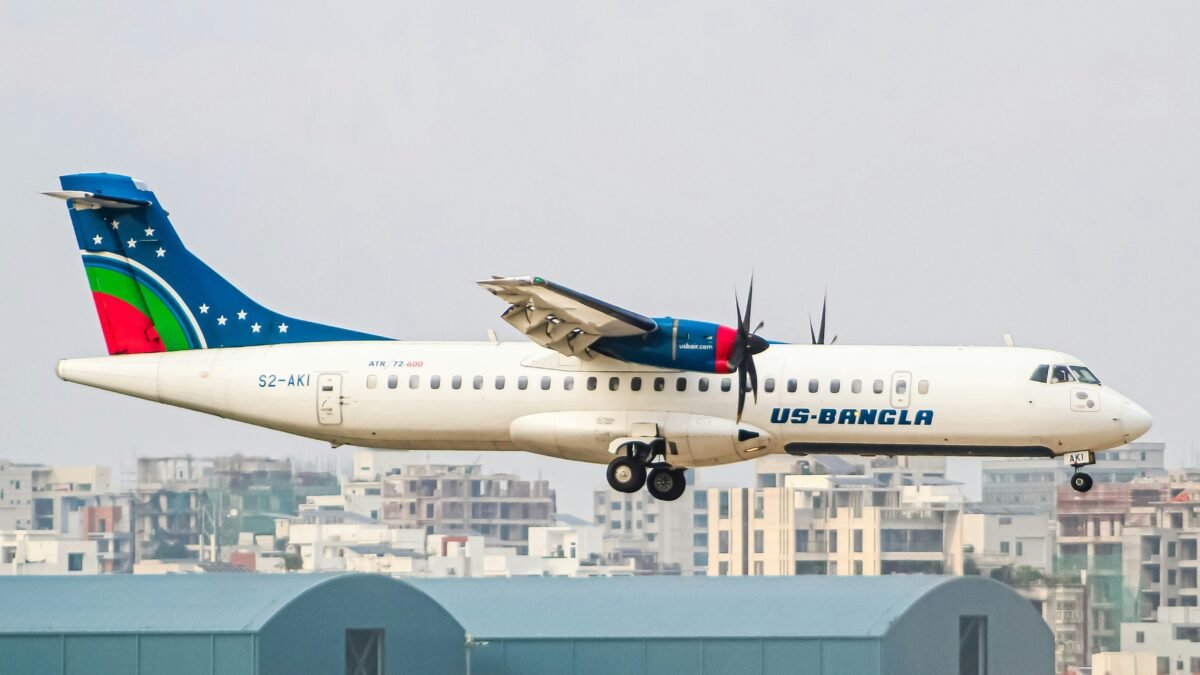
The ATR turboprop family—comprising the ATR 42 and ATR 72—remains the only Western turboprop programme still in active production. With over 1,700 aircraft delivered and a significant in-service fleet, the aftermarket for ATR components, particularly landing gear, represents a substantial and growing market segment.
However, the landing gear segment has emerged as a specific bottleneck in the ATR supply chain. According to TrueNoord, a specialist regional aircraft lessor, ATR is "struggling with keeping up the deliveries as they would like to" primarily due to landing gear supply issues, with delays of several months to half a year. These constraints have downstream effects on lease extensions, MRO scheduling, and aircraft availability.
Supply Chain Challenges: The Landing Gear Bottleneck
The post-pandemic recovery has exposed specific vulnerabilities in the aerospace supply chain. While narrowbody production faces engine-related delays, the regional turboprop segment has encountered a distinct challenge: landing gear availability.
Current Situation
- Production Delays: ATR deliveries are delayed by "several months to half a year" primarily due to landing gear supply constraints.
- Supply Chain Legacy: The supply chain reduced or halted production during the pandemic and has struggled to catch up with renewed demand.
- Material Sourcing: High-strength steel forgings for landing gear components face potential disruptions from tariff-related uncertainties and geopolitical factors.
Market Impact
- Lease Extensions: Airlines are extending existing leases due to new aircraft delivery delays, affecting lease rental negotiations.
- MRO Backlog: Overhaul demand continues to grow as operators retain older aircraft longer.
- Used Aircraft Values: Strong demand for available ATR aircraft as supply tightens.
ATR Aftermarket & Landing Gear MRO Forecast
The ATR 72 aftermarket—of which landing gear is a key component—is experiencing robust growth. According to market research, the ATR 72 aftermarket was valued at $1.2 billion in 2024 and is forecast to reach $2.1 billion by 2033, representing a 6.3% CAGR.
| Component Segment | Annual Demand (2021) | Share of MRO Spend | Growth Outlook |
|---|---|---|---|
| Landing Gear (ATA 32) | $25.2 million | ~2% | Steady growth, driven by mandatory overhaul cycles |
| Wheels & Brakes (ATA 32) | $73.1 million | ~5.7% | Strong, high-wear components |
| Engine | Largest share | 35-40% | High-value, complex maintenance |
| Airframe | Second largest | ~25% | Structural repairs, corrosion control |
The global landing gear MRO market is projected to grow from $4.64 billion in 2025 to $9.06 billion by 2032, at a CAGR of 10.2%. Typical overhaul cycles for landing gear occur every 8 years, providing predictable demand for specialised MRO providers.
Specialised ATR Landing Gear MRO Providers
ATR landing gear maintenance requires specialised capabilities. Key approved providers in this segment include:
Aviatechnik Corporation
TCCA, EASA, CAAC, ANAC, CAAB approved Landing Gear MRO based in Toronto, Canada. Specialises in Landing Gear Repair/Overhaul, Lease and Exchange for ATR, Bombardier, De Havilland, and Embraer aircraft.
Safran Landing Systems
OEM for ATR landing gear. Provides design, manufacture, and support. Partnered with ATR on the Smart Lander digital diagnostic tool.
Heroux-Devtek
Major independent landing gear MRO provider with global capabilities across regional and commercial aircraft.
Liebherr-Aerospace
Landing gear systems and MRO services for regional and business aviation platforms.
Digital Innovation: ATR & Safran's Smart Lander
ATR and Safran Landing Systems have collaborated on a groundbreaking digital diagnostic service called Smart Lander, which uses machine learning to analyze maintenance needs following hard landings.
How It Works
- Uses flight recorder data (vertical/horizontal speeds, attitude angles, accelerations) captured during landing
- Calculates the effort supported by the landing gear based on aircraft dynamics
- Converts data from aircraft level to landing gear level
- Applies Safran's engineering expertise to determine airworthiness and maintenance requirements
Operational Benefits
- Response Time Reduction: From 10–20 working days to less than 1 hour
- Aircraft Availability: Faster return to service after hard landing events
- Cost Reduction: Eliminates unnecessary inspections while ensuring safety
- Data-Driven Decisions: Objective analysis based on 10 years of hard landing case data
Strategic Recommendations for ATR Operators & Lessors
Given the current landing gear supply constraints and growing aftermarket demand, ATR operators should consider the following strategies:
📅 Plan MRO Events Early
Schedule landing gear overhaul 12–18 months in advance. Current lead times for component availability and shop capacity are extended.
🔄 Consider Exchange Programs
Lease/exchange programmes offered by providers like Aviatechnik can reduce aircraft downtime compared to sending components for repair.
📊 Adopt Smart Lander
Utilise ATR's Smart Lander service after hard landings to minimise unnecessary inspections and accelerate return to service.
🏗️ Build Spares Inventory
Given supply chain uncertainty, consider strategic spares holding for high-demand landing gear components.
Broader Landing Gear Technology Trends
Beyond ATR-specific developments, the global landing gear market is being shaped by several technological and structural trends:
Material Innovation
- Composites Growth: Lightweight composite materials are the fastest-growing segment, offering weight reduction and enhanced corrosion resistance.
- Steel Remains Dominant: Steel still commands the largest market share for high-strength applications.
- Titanium: Used in specialised applications for its superior strength-to-weight ratio.
Manufacturing Advances
- 3D Printing: Wuhan Tianyu unveiled the world's first 3D-printed aircraft landing gear in March 2024 (150cm length, 240kg weight).
- Electric Actuation: Safran introduced an electric nose landing gear actuator at Farnborough 2022, replacing hydraulic systems with electro-hydrostatic actuators.
🔗 Related Safe Fly Aviation Services & Resources
📚 Sources & Further Reading
- Market Research Future – Landing Gear/Undercarriage Market Report 2025-2035
- Aviatechnik Corporation – MRO Europe 2026 Exhibitor Profile
- MarketIntelo – ATR 72 Aftermarket Market Research Report 2033
- TrueNoord – "Answering when opportunity knocks" (Interview with Carst Lindeboom)
- The Business Research Company – Aircraft Landing Gear Global Market Report 2025
- Aviation Week – ATR 42 Term Page / Smart Lander Article
- Skylink – 2021 ATR 42/72 Aircraft Maintenance And Material Forecast
- QYResearch – Global Landing Gear MRO Market Report to 2032
Need Support with ATR Aircraft or Landing Gear?
Safe Fly Aviation provides advisory services for regional aircraft operations, including parts sourcing, MRO coordination, and technical guidance. Whether you're planning a landing gear overhaul, need assistance with aircraft acquisition, or require charter solutions, our team is available 24/7.
📞 Call / WhatsApp: +91 7840000473
📧 Email: info@safefly.aero
🌐 Website: www.safefly.aero