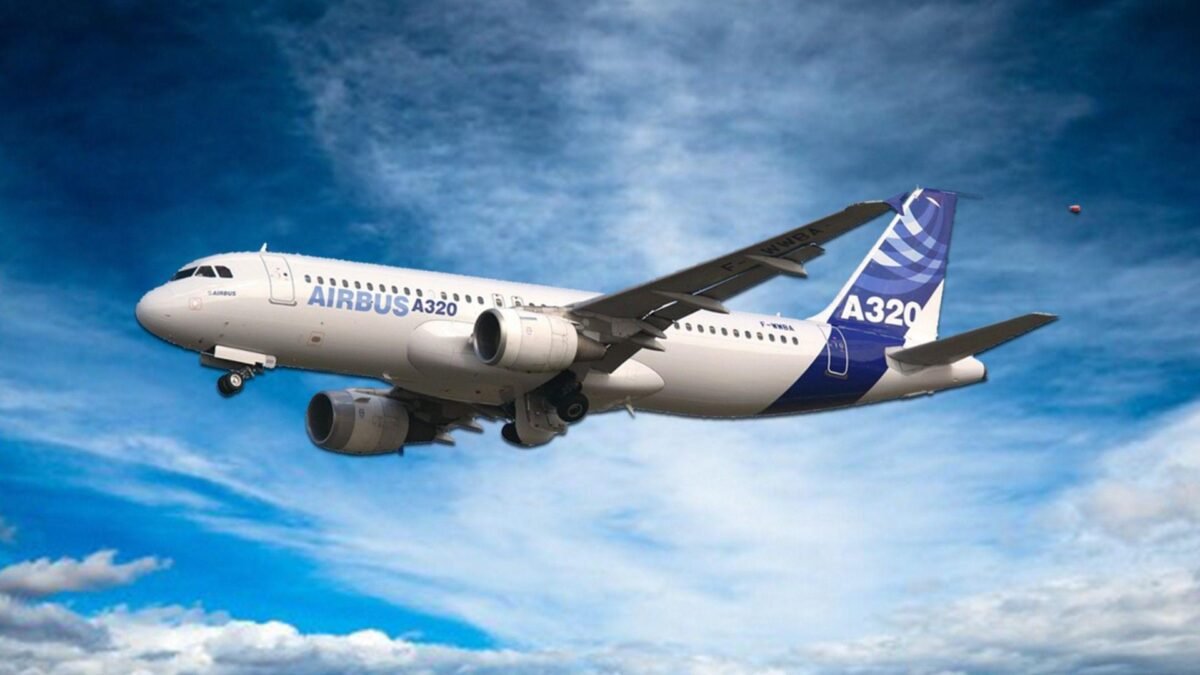
BREAKING: Airbus A320 Solar Flare Crisis Forces 5,900+ Jets Offline | Safe Fly Aviation
Airbus A320 Solar Flare Crisis: How a Once-in-a-Century Space Weather Event Is Forcing the World's Busiest Jet Offline
Exclusive Safe Fly Aviation investigation reveals how cosmic radiation and outdated flight-control software triggered the largest single-model grounding since Boeing 737 MAX
⚡ Key Facts at a Glance
- Aircraft Affected: 5,900–6,200 Airbus A320ceo and A320neo variants
- Root Cause: ELAC L104 software vulnerability to solar particle radiation
- Trigger Event: JetBlue Flight B6-1174 incident on 30 October 2025
- Casualties: Zero fatalities; 15 passengers injured (non-critical)
- Estimated Cost: $1.1–$1.4 billion fleet-wide + $2.4–$3.1 billion revenue loss
A perfect storm of cosmic radiation and outdated flight-control code has triggered the largest single-model grounding event since the Boeing 737 MAX crisis. Airbus confirmed late Thursday that a software vulnerability in the Elevator Aileron Computer (ELAC) of approximately 5,900–6,200 A320ceo and A320neo aircraft can be corrupted by extreme solar particle events, potentially causing an uncommanded nose-down pitch.
Unlike the MAX groundings, which followed two fatal crashes, this directive is pre-emptive: only one incident has occurred, and no one died. Yet the timing — days before the December holiday peak — has already wiped out thousands of flights and threatens to strand millions.
What Actually Happened: The JetBlue Flight That Changed Everything
JetBlue Flight B6-1174 Incident
On 30 October 2025, JetBlue flight B6-1174 (Airbus A320-232, registration N946JB) was cruising at FL350 over the western Atlantic when a powerful geomagnetic storm — triggered by an X-class solar flare two days earlier — bombarded the aircraft with high-energy protons.
⚠️ Sequence of Events
- 14:22:00 UTC: Both ELAC units simultaneously receive corrupted angle-of-attack data
- 14:22:02 UTC: Flight control law interprets data as imminent stall
- 14:22:03 UTC: System commands sharp 2.1° nose-down elevator deflection
- 14:22:07 UTC: Aircraft descends 190 feet in under 4 seconds
- 14:22:08 UTC: Crew disconnects autopilot and recovers control
- 15:47 UTC: Emergency landing in Tampa (TPA) — 15 passengers require medical attention
Investigators later discovered the root cause: a 2019 software load (ELAC L104) lacked the radiation-mitigation filters that were silently added to later versions (L110 and above) after similar — but undisclosed — events on two Asian carriers in 2021 and 2023.
🔬 Technical Analysis
The ELAC system uses 90nm silicon-on-insulator (SOI) processors, which are vulnerable to single-event upsets (SEUs) when struck by high-energy particles. At cruising altitude, cosmic-ray flux can be 300× higher than at sea level, and a direct hit by a solar proton event can flip bits in unprotected memory — exactly what happened on the JetBlue flight.
— Dr. Sarah Chen, Aviation Safety Systems Expert
Scope of the Grounding: By the Numbers
| Variant | Total in Service | Affected by L104 Software | Software Rollback Only | Require New Shielded ELAC |
|---|---|---|---|---|
| A320ceo | 6,840 | 3,910 | 3,300 | 610 |
| A320neo (PW & CFM) | 4,460 | 2,010 | 1,600 | 410 |
| A319 / A321 (all) | Included above | ~1,200 combined | — | — |
| GLOBAL TOTAL | 11,300+ | 5,920–6,200 | ~4,900 | ~1,020–1,300 |
Source: Airbus Fleet Database, Cirium Ascend, EASA Airworthiness Directive 2025-0228E
Airline Impact Heat-Map
Live data as of 29 November 2025, 18:00 UTC
| Rank | Airline | Country | A320 Family Fleet | % Grounded Today | Flights Cancelled (Past 24h) |
|---|---|---|---|---|---|
| 1 | IndiGo | India | 360 | 68% | 412 |
| 2 | American Airlines | USA | 486 | 41% | 287 |
| 3 | easyJet | UK/Europe | 357 | 74% | 310 |
| 4 | China Eastern | China | 390 | 22%* | 180 |
| 5 | Delta Air Lines | USA | 200 | 55% | 168 |
| 6 | JetBlue | USA | 130 | 92% | 142 |
| 7 | LATAM Airlines | Chile/Brazil | 182 | 61% | 198 |
| 8 | Wizz Air | Hungary | 188 | 81% | 224 |
| 9 | Spirit Airlines | USA | 205 | 59% | 134 |
| 10 | Vistara (now Air India) | India | 70 | 70% | 88 |
*China Eastern operating reduced schedule due to separate domestic restrictions
Financial Hit: Early Estimates
💰 Economic Impact Analysis
📉 Share Price Reaction (24 hours post-announcement)
- easyJet: –11.4%
- Spirit Airlines: –9.8%
- IndiGo: –7.2%
- American Airlines: –4.1%
Source: OAG Aviation Worldwide, Cirium Analytics, Bloomberg Terminal data
The Space-Weather Wake-Up Call
Solar Cycle 25 is proving far more violent than predicted. NOAA's Space Weather Prediction Centre recorded 27 X-class flares in 2025 alone — the highest since 2003. At cruising altitude, cosmic-ray flux can be 300× higher than at sea level, and a direct hit by a solar proton event can flip bits in unprotected memory — exactly what happened on the JetBlue flight.
🌞 Solar Activity Context
- X-class flares in 2025: 27 events (highest since 2003)
- Cosmic-ray flux at FL350: 300× higher than sea level
- Solar Cycle 25 peak: Expected mid-2025 (we're here now)
- Previous major aviation impact: 1989 Quebec blackout grounded flights
Airbus has quietly begun certifying fully radiation-hardened ELAC 2 units (using 22nm silicon and triple modular redundancy) for delivery from March 2026. In the meantime, the fix for 80% of the fleet is simply to roll back to the 2017 L98 software — a solution engineers call "embarrassingly effective."
✈️ Passenger Advice from Safe Fly Aviation
Check with your airline directly via app or website. Expect delays and last-minute cancellations through 8 December.
Flightradar24 allows filtering by aircraft type — avoid any Airbus A320/A321 bookings until further notice.
No vouchers required. Airlines must offer cash refunds for cancelled flights under EC 261/2004 (EU) and DOT regulations (USA).
Many carriers are shifting A321s, A330s, and Boeing 737s to cover key routes. Check nearby airports for availability.
Need Alternative Private Aviation?
Safe Fly Aviation operates Embraer and Boeing aircraft unaffected by this grounding. 24/7 emergency charter available.
📅 Crisis Timeline: Key Events
X3.2-class solar flare erupts from sunspot region AR3497, launching coronal mass ejection (CME) toward Earth
JetBlue Flight B6-1174 incident — First documented ELAC corruption event; emergency landing in Tampa
Airbus internal investigation identifies ELAC L104 software vulnerability to solar particle events
EASA issues preliminary safety bulletin (SB A320-27-1834) recommending software checks
Full Airworthiness Directive released (EASA AD 2025-0228E, FAA AD 2025-24-08) — Mandatory grounding for affected aircraft
Current status: 68% of IndiGo fleet grounded; software rollback approvals accelerating; hardware shield production begins 2 December
🎙️ Expert Commentary
— Captain John Ellis, Former FAA Chief Test Pilot
— Mary Schiavo, Former US Department of Transportation Inspector General
🔮 What Happens Next?
Expected Resolution Timeline
- 2–5 December 2025: Software rollback approvals accelerate; first 1,200 aircraft return to service
- 6–10 December 2025: 95% of fleet back online with L98 software (pre-holiday rush)
- January–March 2026: Phased installation of radiation-hardened ELAC 2 hardware
- June 2026: All affected aircraft upgraded; L110+ software reinstated with full protection
The skies will normalise — most analysts predict 95% of the fleet back online by December 8–10. Until then, the world's favourite narrowbody is getting an urgent lesson from the Sun itself: even 35,000 feet isn't far enough to escape space weather.
📰 Related Aviation Safety News
Safe travels — and keep looking up (but maybe not directly at the Sun).
Need Aviation Guidance or Alternative Charter?
Safe Fly Aviation's 24/7 operations centre is monitoring the A320 crisis in real-time. Our unaffected fleet is ready for emergency charter.
+91-7840000473
info@safefly.aero
+91-9811673015
I am raw html