Heavy & Oversize Cargo Charter: Complete Client Guide | Safe Fly Aviation
Heavy & Oversize Cargo Charter by Air: What Clients Must Know Before Requesting a Quote (Global Guide)

Heavy-lift cargo operations require specialized aircraft, planning, and handling equipment
Quick Summary: How to Get the Right Cargo Charter Quote
- Measure accurately: exact length/width/height, weight, and lifting points—small errors can change aircraft selection and pricing.
- Know the cargo type: general, temperature-sensitive, time-critical, or dangerous goods (DG). DG must follow IATA DGR / ICAO rules.
- Ask what's included: positioning/ferry legs, permits, handling equipment, ground transport, customs support, and airport charges.
- Confirm loading feasibility: door dimensions, ramp angle, floor loading limits, centre of gravity (CG), lashing requirements.
Booking a heavy cargo charter or oversize air freight flight isn't like booking standard air cargo. When you're moving a turbine, industrial generator, oil & gas skids, aerospace components, relief equipment, telecom shelters, drilling tools, transformers, vehicles, or mission-critical spares, the smallest detail can decide whether your shipment flies smoothly—or turns into delays, rework, and unexpected costs.
This guide is written for clients, procurement teams, EPC contractors, logistics managers, and first-time charter customers who want clarity: what heavy & outsize cargo charter involves, how quotes are built, what information you must provide, and what you should confirm before paying a deposit. Along the way, we'll translate industry language like payload, volumetric weight, ULDs, main-deck loading, nose-door/ramp operations, lashing, centre of gravity, permits, slots, handling, DG documentation—into practical steps.
15+
Years of Experience
150K
kg Max Payload Capability
24/7
Global Operations Support
100%
Compliance Focus
What Counts as Heavy or Oversize Cargo?
Typical heavy cargo: industrial turbines, generators, and modular skids for oil & gas operations
In practical charter terms, "heavy" and "oversize" usually means your shipment cannot move on scheduled cargo services without special handling, or it breaks normal limits for dimensions, weight, floor loading, or loading method.
Typical heavy & outsize cargo examples
- Industrial: turbines, compressors, generators, pumps, valves, pressure vessels, factory machinery.
- Energy & infrastructure: drilling tools, subsea parts, power transformers, wind/solar components, modular skids.
- Aerospace & defence: aircraft engines, ground support equipment (GSE), rotor blades, avionics racks (DG-aware).
- Humanitarian & relief: field hospitals, shelters, water purification units, emergency vehicles.
- Automotive & mining: vehicles, tyres, excavator parts, mining spares.
What makes it "charter-only" cargo?
The most common triggers are: one-piece weight (too heavy to split), oversize footprint (too long/tall/wide), urgent timelines, sensitive cargo, or special compliance such as dangerous goods and batteries.
Aircraft Types Used for Heavy & Oversize Cargo Charter
Aircraft selection is not based on "biggest available". It's based on the mission profile: payload, door size, loading method, runway performance, route permits, handling capability at origin/destination, and total landed cost.
| Aircraft Category | Best For | Key Features |
|---|---|---|
| Narrow-body Freighters | Regional/medium payloads | Fast, cost-effective, limited infrastructure needs |
| Wide-body Freighters | Larger volumes, long haul | Main-deck loading, higher payload/range |
| Heavy-lift Specialist (An-124, IL-76) |
Unique outsize cargo | Ramp/nose-door, up to 150,000 kg payload |
Heavy-lift reality check (availability matters)
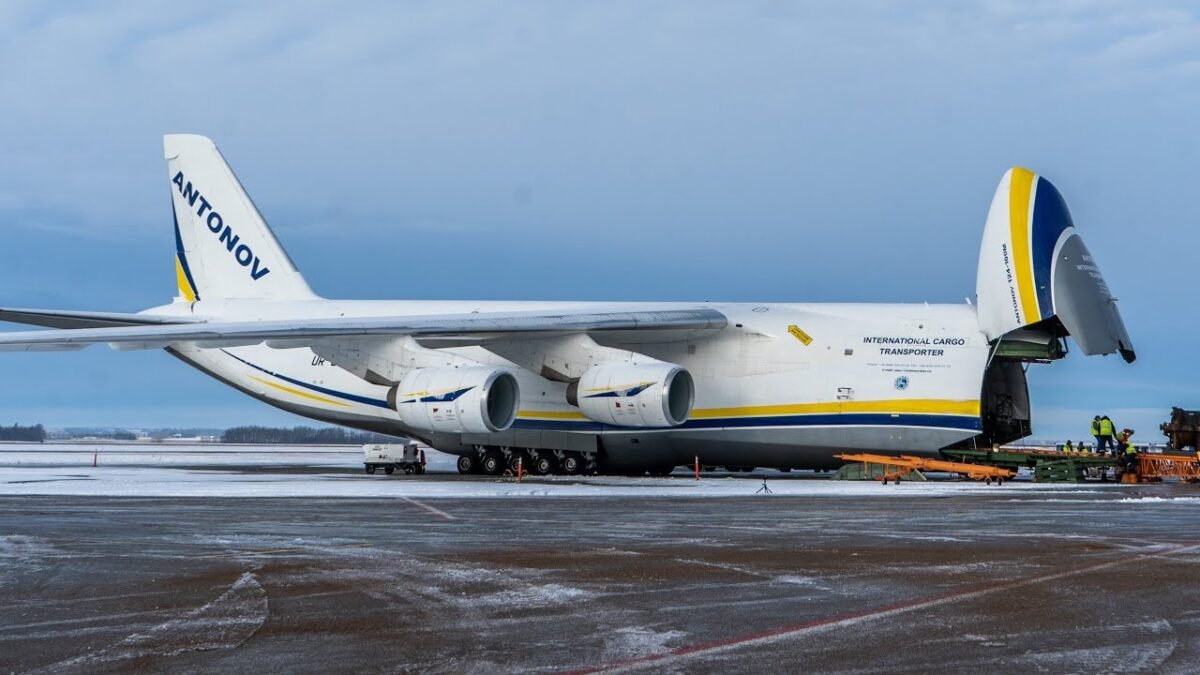
Some missions require aircraft like the Antonov An-124 because of its heavy payload capability and specialised loading approach. Antonov Airlines notes variants with payload up to 150,000 kg in certified configuration. Availability can be limited, which is why early planning and flexible dates can materially improve your quote.
How Cargo Charter Quotes Are Built (So You Can Compare Like-for-Like)
Professional cargo charter requires detailed planning, documentation, and coordination
A charter quote is a bundle of operational and commercial components. Two quotes can look similar on the surface but differ massively in what's included. Here's what typically drives pricing in heavy cargo charter and outsize air freight.
1) Aircraft availability, routing & positioning (ferry legs)
The aircraft may need to reposition (often empty) to your loading airport. That repositioning can be a major part of the cost. A good broker/charter manager will be transparent about ferry costs, rotations, and optimisation.
2) Payload vs volume: actual weight, dimensional weight & floor limits
It's not just "how heavy". It's also "how much space" and "how the weight sits on the floor". This is why accurate dimensions and weight are non-negotiable—air cargo planning is designed around safe load distribution.
3) Loading feasibility: door size, ramp angle, centre of gravity & lashing
Heavy and outsized cargo often requires a dedicated load plan. Weight distribution affects the aircraft's centre of gravity (CG), which is a critical safety variable. Many specialist teams also review lifting and lashing points for safe restraint.
4) Ground handling & equipment (the hidden cost centre)
Quotes may or may not include cranes, forklifts, high-loaders, spreader bars, slings, skates, air rollers, and specialist manpower. If your cargo needs a 100-ton crane and it's not included, your "cheap quote" becomes expensive later.
5) Permits, slots, curfews & airport restrictions
Oversize cargo can trigger airport-specific restrictions: door-height limits at cargo terminals, runway strength constraints, night curfews, or limited heavy equipment availability. These aren't "fine print"—they can decide the entire routing.
6) Customs, documentation & compliance support
The best cargo charter solutions integrate export/import documentation and coordinate with forwarders for customs clearance, especially for AOG or time-critical shipments.
Dangerous Goods (DG) & Batteries: What Clients Must Declare Upfront
Proper DG classification, labeling, and documentation are mandatory for air cargo compliance
Many heavy shipments include items that may be classified as dangerous goods—batteries, chemicals, pressurised equipment, flammables, aerosols, certain spare parts, or cargo with residue/contamination risk. DG shipment rules are governed internationally via ICAO provisions and the detailed requirements used by industry are commonly referenced through the IATA Dangerous Goods Regulations (DGR).
Who is responsible for DG classification?
In DG shipments, the shipper has key responsibilities for correct classification and declaration, including documentation such as the Shipper's Declaration where required. If a client withholds DG information "to make it easier", it can cause rejections, delays, fines, or worse—safety incidents.
What to provide to your charter partner for DG-aware quoting
- Safety Data Sheet (SDS/MSDS) if applicable
- UN number, hazard class/division, packing group (if known)
- Battery type (Li-ion / Li-metal), watt-hour rating, quantity, packing method
- Any residual fuel/oil in machinery (common for engines and equipment)
- Photos of labels and packaging
Client Checklist: Information Needed to Get a Fast, Accurate Cargo Charter Quote
A) Cargo Details (Must-Have)
- Commodity description (plain English + technical name)
- Dimensions (L × W × H) of each piece, plus overall packed dimensions
- Weight (per piece + total), including packaging and skids
- Number of pieces and whether it can be split
- Packaging type (crate, skid, rack, bare, shrink-wrapped)
- Lifting points, centre of gravity marker (if available), lashing points
- Photos (wide angle + close-ups of lifting/lashing areas)
B) Route & Timing
- Origin and destination airports (preferred and alternate)
- Required ready date and latest acceptable delivery time
- Airport constraints you know about (curfews, slots, ramp hours)
- Need for multi-stop routing (if permits or performance require it)
C) Compliance & Documents
- Commercial invoice and packing list
- Export/import requirements (if time-critical, flag in advance)
- DG status (Yes/No/Unsure) + SDS/MSDS if relevant
- Insurance preference (shipper-provided or arranged)
Questions Clients Should Ask Before Accepting a Cargo Charter Quote
Want to avoid the classic "quote shock" later? Ask these questions early. This is the difference between a professional charter plan and a rushed transaction.
1) Is this a full charter (exclusive use) or part-charter / consolidation?
Heavy and outsize shipments are typically full charter, but clarifying this prevents misunderstanding on payload limits and handling priority.
2) What is included in the price?
- Aircraft charter cost + crew
- Positioning / ferry flights
- Fuel and route charges
- Ground handling (origin/destination)
- Special equipment (cranes, forklifts, high-loaders)
- Customs support / documentation coordination
3) What assumptions were used?
A quote often assumes cargo readiness, packaging type, and equipment availability. If assumptions differ from reality, costs and timelines change.
4) Have airport and handling capabilities been confirmed?
Oversize cargo is only as easy as the weakest link: a destination airport without the right loader can stop the entire operation. Weight distribution and CG planning are fundamental to safe loading.
5) What are the cancellation and change terms?
Charter aviation is capacity-reserved aviation. The closer you get to departure, the more costs become non-recoverable. Make sure your contract terms are understood by procurement and finance teams.
6) How will you manage delays, weather, and permits?
Ask for a simple contingency approach: alternates, time buffers, permit lead times, and escalation contacts.
When Heavy & Oversize Cargo Charter Is the Best Option
Time-critical / AOG and production downtime
If a factory line is down, a rig is waiting, or an aircraft is AOG, charter speed is often cheaper than the cost of delay. Cargo charter becomes a business continuity tool.
Remote destinations and limited scheduled capacity
Many industries operate in regions where scheduled cargo capacity is thin. Charter provides direct routing and tailored ground handling.
Outsize one-piece cargo that can't be split
Certain components simply do not fit standard cargo networks. Charter allows specialist aircraft selection and custom load planning.
Why Book Heavy Cargo Charter with Safe Fly Aviation
Safe Fly Aviation is built for clients who want clarity, reliability, and global reach—not vague quotes and last-minute surprises. With 15+ years of experience, our team supports cargo charter missions across: India, UAE, Middle East, Africa, Europe, the UK, and global trade corridors.
What we do differently
- Quote accuracy-first: we ask the right technical questions upfront to reduce downstream changes.
- Aircraft fit: we match payload, door/ramp feasibility, and routing—rather than pushing a one-size aircraft.
- Compliance awareness: DG and documentation guidance aligned with IATA/ICAO frameworks.
- End-to-end coordination: from handling equipment to ground logistics integration.
- Discreet, responsive execution: clear escalation channels and real-time operational updates.
Request a Heavy & Oversize Cargo Charter Quote
Share your dimensions, weight, cargo photos, route, ready date, and DG status. Our team will respond with a practical solution and a transparent quote structure.
Conclusion
Heavy and oversize cargo air charter is where aviation meets engineering and logistics. If you approach it with the right inputs—accurate dimensions and weight, clear DG status, realistic timelines, and a proper inclusion checklist—you'll receive quotes you can trust and a shipment that moves without drama.
If you want a partner that can manage global cargo charter missions with a sharp focus on operational feasibility, compliance, and transparent pricing, Safe Fly Aviation is ready to support your next move—anywhere in the world.
FAQs: Heavy & Oversize Cargo Charter
What information do you need to quote my heavy cargo charter accurately?
Exact dimensions (L×W×H), weight per piece and total, photos, cargo description, packaging type, lifting/lashing points, origin/destination airports, ready date, and DG status (with SDS/MSDS if applicable).
Why do cargo charter quotes change after initial pricing?
Most changes happen due to incorrect dimensions/weight, late cargo readiness, DG reclassification, handling equipment constraints, permit/slot changes, or airport restrictions discovered after a technical review.
Is an Antonov An-124 always required for outsized cargo?
Not always. Many outsized shipments fit on wide-body freighters with the right door dimensions and load planning. The An-124 is valuable for specific heavy-lift and ramp-loading missions, and Antonov notes certified payload capability up to 150,000 kg in certain configurations.
What if I'm unsure whether my cargo is dangerous goods?
Tell your charter partner you're unsure and share SDS/MSDS and cargo details. DG rules are governed under international frameworks and the IATA DGR is a key industry reference for classification, packaging, labelling, and documentation.
Can Safe Fly Aviation arrange global cargo charter flights from India and worldwide?
Yes. Safe Fly Aviation supports worldwide cargo charter with solutions for heavy, oversize, time-critical, and project cargo, coordinating aircraft selection, handling, and end-to-end execution.
References: IATA Dangerous Goods Regulations and shipper declaration guidance; DG framework context; load distribution/centre of gravity considerations; heavy/outsize planning considerations; Antonov payload statement. All industry guidance aligned with ICAO Technical Instructions and IATA standards for safe air cargo operations.