

Aircraft Engine LLP Management: Complete Guide for Owners
Aircraft Engine LLP Management: Complete Guide for Owners, Lessors & Operators
A Life-Limited Part (LLP) is an aircraft engine component with a mandatory retirement life expressed in cycles or hours. Once the certified limit is reached, the component must be removed from service regardless of physical condition. LLPs include turbine discs, compressor hubs, shafts, and containment cases — they directly determine residual engine value.
If you own, lease, or operate a turbine-powered aircraft, few factors impact residual value—and overhaul costs—as much as Life-Limited Parts (LLPs). These components must be removed from service once they reach a certified number of flight cycles or hours, regardless of physical condition. This guide provides a comprehensive, data-driven framework for LLP management, reflecting the analytical rigor expected by lessors, MROs, and asset managers.
LLPs (turbine discs, compressor hubs, shafts, containment cases) represent 60–80% of a used engine's residual value. Each LLP has a fixed cycle life (e.g., 15,000–30,000 cycles for a CFM56 HPT disc). Proactive tracking and strategic replacement using the used-serviceable market can reduce overhaul costs by 40–60%. Understanding LLP valuation is essential for aircraft trading, leasing, and teardown projects. Ignoring LLP exposure leads to material value erosion.
What Are Life-Limited Parts (LLPs)?
Life-Limited Parts are engine components certificated by aviation authorities (EASA, FAA, etc.) with a mandatory retirement life expressed in flight cycles or flight hours. The limitation is based on metallurgical fatigue analysis. Once the limit is reached, no repair, inspection, or life extension can legally allow the part to remain in service.
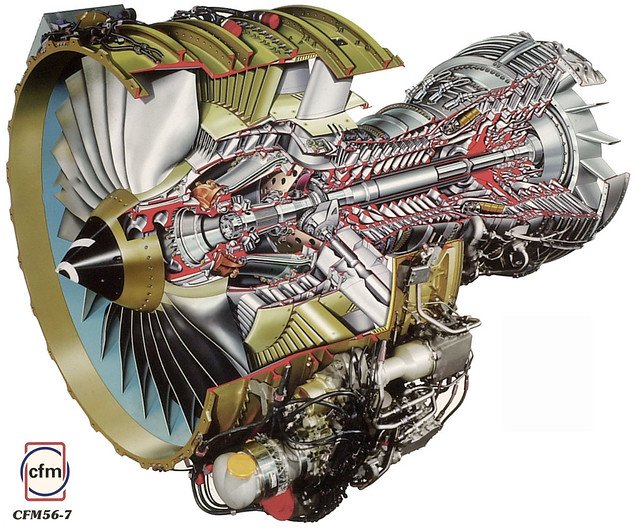
- High-pressure turbine (HPT) discs – most expensive LLPs, $200k–$500k each.
- Low-pressure turbine (LPT) discs – longer life but essential for power generation.
- Fan discs – especially on large turbofans; critical for containment.
- Compressor discs and spools – front and rear stages with varying limits.
- Containment cases and shafts – lower cost but regulated and tracked.
Non-LLP parts can be repaired indefinitely. An LLP must be scrapped at its life limit. This is why remaining life is a direct multiplier of asset value.
Why LLPs Drive Engine Value
When purchasing a used engine, 60–80% of its residual value is tied to remaining LLP life. Two identical CFM56-7B engines with 10,000 cycles since new can differ by $1.6 million based solely on LLP remaining life. LLPs act as a financial clock.
Figure 2: LLP Depreciation Curve – Cycles Remaining vs. Value
LLP Valuation Formula & Methodology
- CFM56-7B HPT disc: New $420k, 20,000 cycle limit, 8,000 remaining → $168k residual value.
- V2500-A5 HPT disc: New $380k, 18,000 limit, 4,500 remaining → $95k.
- LEAP-1A HPT disc: New $580k, 25,000 limit, 15,000 remaining → $348k.
| Engine Model | # of LLPs | Full Basket Cost (New) | Used Basket (60% life) |
|---|---|---|---|
| CFM56-3 | 12–15 | $750k–$950k | $450k–$570k |
| CFM56-7B | 14–18 | $1.1M–$1.6M | $660k–$960k |
| V2500-A5 | 16–20 | $1.2M–$1.8M | $720k–$1.08M |
| PW127G (ATR) | 10–12 | $500k–$750k | $300k–$450k |
Figure 3: LLP Tracking Dashboard – Remaining Life Analysis
5 Key LLP Management Strategies
- Proactive Replacement – during scheduled maintenance, avoiding unplanned AOG.
- LLP Trading / USM – used-serviceable parts at 40–60% of new OEM cost.
- Life Extension – rare, requires OEM/regulatory approval.
- Part-Out / Harvesting – maximize recovery when multiple LLPs near limit.
- Green-Time Trading – engines with significant remaining LLP life command premium prices.
LLPs in Engine Leasing & PBH Agreements
Most lease contracts now require minimum 50% remaining life on all LLPs at return or pro-rata compensation. Lessors have claimed $400,000+ at redelivery when HPT discs had 1,800 cycles left instead of 2,000. Pre-return LLP planning is non-negotiable.
Figure 4: Aircraft Purchase Decision Flow – LLP Evaluation Stage
Subject to technical review
Remaining cycles on all discs
Physical condition check
Remaining life × market rate
Based on LLP remaining life
LLP risk allocation
LLP documentation verified
LLPs and Engine Teardowns (USM Market)
When an engine reaches economic overhaul limit, teardown and part-out often yield higher returns. Typical teardown value breakdown for a CFM56-7B: LLPs = 55–65%, non-LLP rotating = 15–20%, static structure = remainder.
Set aside $18–$25 per cycle per engine as an LLP reserve. For an aircraft flying 1,500 cycles/year, that is $27k–$37k per engine annually.
How Safe Fly Aviation Helps
- LLP sourcing – certified used-serviceable LLPs for all major engine types
- LLP valuation – independent residual life assessments for transactions and lease returns
- Engine acquisitions – LLP status evaluation before purchase
- Lease return support – negotiate LLP redelivery conditions
- Engine teardown projects – maximize recovery by harvesting LLPs
Need an Independent LLP Valuation?
Receive a residual life assessment for your engine LLPs.
Request LLP Valuation Source LLPs & EnginesFrequently Asked Questions
Aircraft Sales | Engine & APU Sourcing | Fleet Planning | Asset Management | Lease Return
References: FAA AC 33.70-1, EASA Part-M.A.305, CFM International CMM, IBA Engine Asset Report 2025.