PT6 Engine Family Explained | Why It Dominates Turboprop Aviation
PT6 Engine Family Explained:
Why It Dominates Turboprop Aviation

Key Technical Insights
The Pratt & Whitney Canada PT6 is unquestionably the most successful gas turbine engine family in aviation history. Since its introduction in 1963, over 65,000 PT6 engines have been produced, accumulating more than 450 million flight hours across 130 countries. From regional airliners and agricultural aircraft to military trainers and helicopters, the PT6's dominance across turboprop aviation is unparalleled. This analysis examines the engineering brilliance, variant evolution, and operational characteristics that explain the PT6's enduring market leadership.Source: Pratt & Whitney Canada | UTC Aerospace
1. Reverse-Flow Architecture: The Design That Changed Aviation
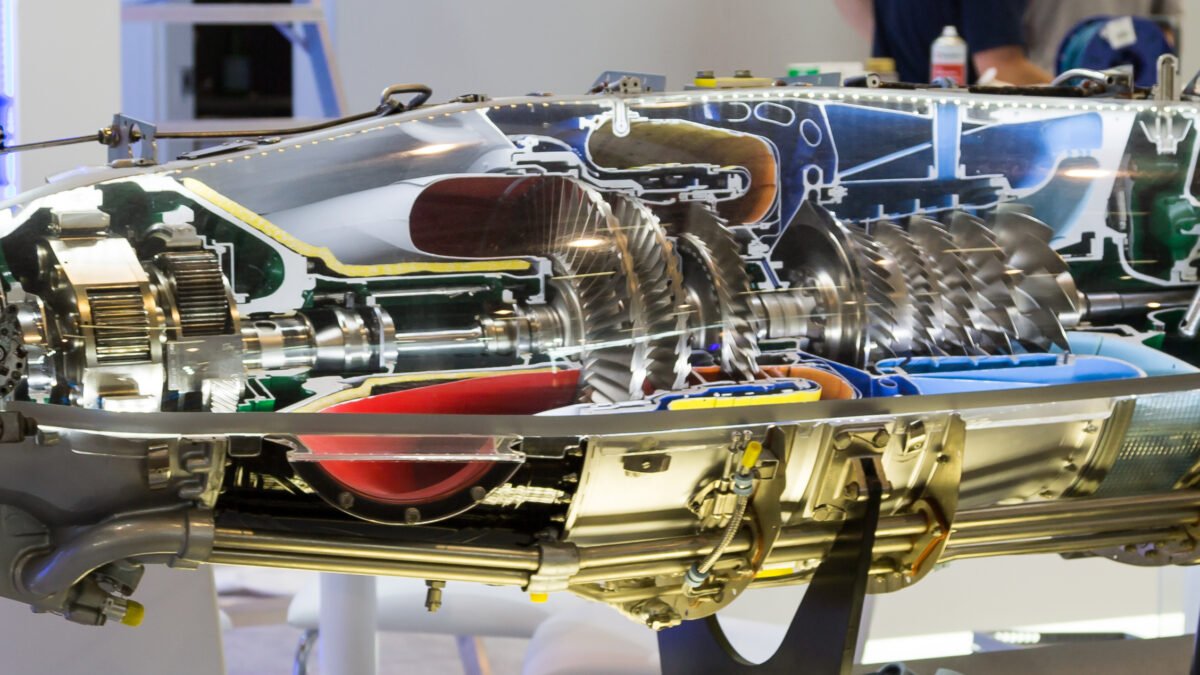
The PT6's defining characteristic is its reverse-flow combustion chamber. Air enters through an annular intake, flows rearward through the compressor stages, then reverses direction 180 degrees into the combustion chamber before expanding forward through the turbine stages. This arrangement creates a natural "hot section" separation — the gas generator turbine and power turbine are physically isolated, reducing thermal stress and simplifying maintenance. The free turbine design allows the gas generator and propeller to operate at their respective optimal speeds independently, a critical advantage over single-shaft turboprop designs.Source: PT6 Engineering Design Review - SAE International

Engineering Milestone
The PT6 was the first free turbine engine certified for general aviation. Its modular design — five removable modules (compressor, gas generator turbine, power turbine, accessory gearbox, reduction gearbox) — revolutionized field maintenance, enabling hot section inspections and repairs without engine removal in many installations.
2. Key Variants: PT6A, PT6B, PT6C, PT6E, and Beyond
The PT6 family encompasses over 200 type-certified variants across five primary series. The PT6A (turboprop) remains the most prolific, powering thousands of King Airs, Caravans, Twin Otters, and Pilatus aircraft. The PT6B (helicopter) and PT6C (helicopter with reduction gearbox) serve rotary-wing applications. The PT6E — the latest generation — introduced dual-channel full authority digital engine control (FADEC), electronic propeller control, and condition-based maintenance monitoring, extending TBO to 6,000 hours.Source: Transport Canada Type Certificate E-19 | Pratt & Whitney Canada Product Catalog
| Variant Series | Application | Power Range (shp) | Key Aircraft | TBO (hours) |
|---|---|---|---|---|
| PT6A | Turboprop | 350 - 2,000+ | King Air, Caravan, Twin Otter, PC-12, Epic | 3,600-6,000 |
| PT6B | Helicopter | 500 - 1,200 | Bell 212, 412, S-76 | 3,500 |
| PT6C | Helicopter (geared) | 800 - 1,800 | AW139, EC175 | 4,000 |
| PT6E | Turboprop (FADEC) | 500 - 1,100 | PC-12 NGX, Cessna Denali | 6,000 |
3. Performance Characteristics: Why the PT6 Excels
The PT6's performance envelope is exceptional. Power-specific fuel consumption ranges from 0.50 to 0.60 lb/shp-hr, competitive with modern turboprops. Altitude capability exceeds 31,000 feet with automatic power management. Reliability metrics are industry-leading: Mean Time Between Unplanned Removal (MTBUR) exceeds 10,000 hours for mature variants. The PT6E variant introduces 40% fewer parts than previous generations, reducing maintenance burden and improving dispatch reliability.Source: NBAA PT6 Operational Performance Survey 2025

Hot & High Performance
The PT6's reverse-flow design maintains power output at high altitude and elevated ambient temperatures better than direct-flow competitors. This "hot and high" capability is critical for operators based in mountainous regions (Rockies, Andes, Himalayas) and tropical environments, further expanding the PT6's addressable market.
4. MRO Lifecycle: Maintenance & Overhaul Strategy
PT6 overhaul intervals vary by variant and operating environment. Standard TBO (time between overhauls) ranges from 3,600 to 5,000 hours for PT6A models, extending to 6,000 hours for PT6E engines with condition-based monitoring (CBM). Hot section inspections are typically performed at 1,800-2,500 hour intervals. Major overhaul includes full disassembly, NDT inspection, replacement of life-limited parts (turbine blades, nozzles, bearings), and reassembly. Pratt & Whitney Canada's authorized service facility network spans 300+ locations globally, supported by exchange engine programs that minimize downtime.Source: Pratt & Whitney Canada Engine Maintenance Manual | P&WC Service Network
5. Aircraft Applications: The PT6 Ecosystem
The PT6 powers more than 135 different aircraft types, making it the most widely installed turboprop engine globally. Prominent platforms include Beechcraft King Air series (all variants), Cessna Caravan (208/208B), de Havilland DHC-6 Twin Otter, Pilatus PC-12/PC-21, Daher TBM series, and Epic E1000. Military applications include the Beechcraft T-6 Texan II (primary trainer), AT-6 Wolverine, and various surveillance platforms. The PT6's commonality across fleets provides operators with significant advantages in pilot training, maintenance staffing, and parts pooling.Source: Jane's All the World's Aircraft | P&WC Customer Fleet Database

| Aircraft Type | Common PT6 Variant | Power (shp) | Fleet Count (approx.) |
|---|---|---|---|
| Beechcraft King Air 350i | PT6A-60A | 1,050 | 2,500+ |
| Cessna Caravan 208B | PT6A-114A | 675 | 2,600+ |
| Pilatus PC-12 NGX | PT6E-67XP | 1,100 | 1,800+ |
| de Havilland DHC-6 Twin Otter | PT6A-34/27 | 620-750 | 600+ |
| Daher TBM 960 | PT6A-66D | 850 | 1,100+ |
6. Future Evolution: The PT6E and Beyond
The PT6E series represents the most significant advancement in the engine's history. With dual-channel FADEC, electronic propeller control, and integrated engine monitoring, the PT6E reduces pilot workload, improves fuel efficiency by 5-8%, and enables condition-based maintenance. P&WC has announced continued investment in the PT6 platform, including hybrid-electric integration studies and advanced materials for turbine section life extension. The PT6's modular architecture ensures it will remain competitive against clean-sheet competitors for decades.Source: Pratt & Whitney Canada - PT6 Technology Roadmap 2026
Frequently Asked Questions (PT6 Engine)
References & Data Sources
- Pratt & Whitney Canada - PT6 Engine Product Catalog
- Transport Canada Type Certificate E-19 (PT6 Series)
- FAA Type Data Sheet E1EA (PT6A Series)
- P&WC Engine Maintenance Manual (EMM) - PT6 Series
- Jane's All the World's Aircraft - Turboprop Survey
- NBAA PT6 Operational Performance Survey 2025
- SAE International - PT6 Engineering Design Review
- Aviation Week Network - Turboprop Engine Census 2026
- Aircraft Bluebook - PT6 Overhaul Cost Index
PT6 Engine Advisory & MRO Support
Safe Fly Aviation provides independent advisory on PT6 engine acquisition, maintenance planning, reserve structures, and fleet optimization for operators and lessors.
Request Engine Advisory → PT6 MRO Consulting Schedule Technical ConsultationStrategic Summary
The PT6 engine family's dominance is not accidental — it is the result of brilliant engineering (reverse-flow, free turbine, modular design), continuous investment (200+ variants, PT6E FADEC), and an unparalleled support ecosystem. For operators, the PT6 delivers reliability, performance, and total cost of ownership that competitors cannot match. As hybrid-electric and advanced turboprop technologies emerge, the PT6 platform's modular architecture ensures it will evolve while preserving its legendary reliability. The PT6 is not just an engine — it is the backbone of global turboprop aviation.