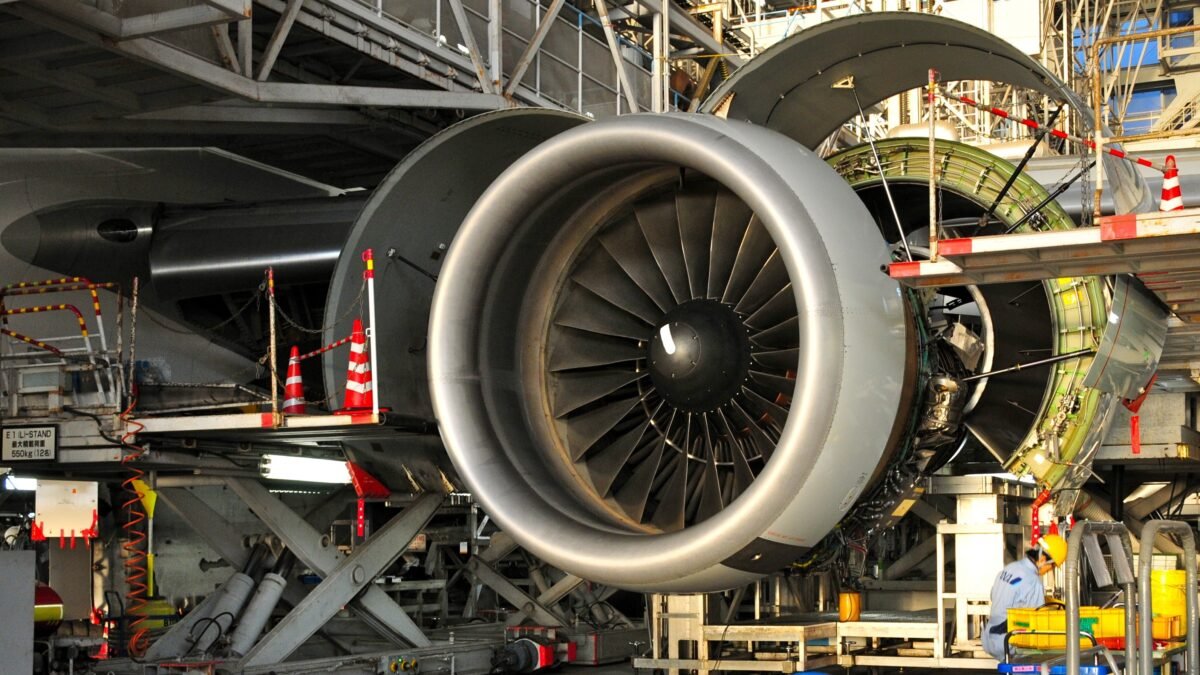
PW4000 Engine Market Analysis 2026 | Supply Shortage & Trading
PW4000 Engine Market Analysis: Supply Shortage, Parts Scarcity & Trading Outlook 2026
Comprehensive analysis of the Pratt & Whitney PW4000 engine family, including supply constraints, MRO capacity limitations, parts scarcity for the 112-inch fan variant, USM dynamics, lifecycle economics, and strategic outlook for operators, lessors, and engine traders.
Safe Fly Aviation – engine trading, leasing, technical advisory, and aircraft charter brokerage.
PW4000 Engines, Modules & USM – Available Now
Looking for PW4000-112 engines, serviceable modules, life-limited parts, or teardown inventory? Contact Safe Fly Aviation for current market availability and competitive pricing.
Call/WhatsApp: +91 7840000473 | Email: info@safefly.aero
The PW4000 Supply Crisis: A Structural Aftermarket Challenge
The Pratt & Whitney PW4000 engine family—produced in three fan diameter variants (94-inch, 100-inch, and 112-inch)—has powered a wide range of widebody aircraft including the Boeing 747, 767, 777, Airbus A300, A310, A330, and MD-11. With production ceased and the global fleet aging, the PW4000 has emerged as a major pressure point in the widebody aftermarket, particularly the 112-inch fan variant powering early Boeing 777s.
Industry estimates indicate over 70 PW4000-112-powered 777s remain active globally, with United Airlines operating the largest fleet of 47 aircraft. These aircraft, many exceeding 25-30 years in age, face an acute mismatch: the fleet is too large for operators to retire without significant capacity impact, yet too small for Pratt & Whitney or third-party suppliers to justify major long-term investment. This structural imbalance has created severe parts scarcity, extended MRO lead times, and reduced aircraft utilization.
PW4000 Engine Family: Variants and Applications
The PW4000 is a flexible widebody engine family offering thrust ratings from 55,000 to 99,000 lbs, divided by fan diameter. The aftermarket dynamics differ significantly across variants:
PW4000-94 (94-inch fan)
Thrust: 52,000-62,000 lbs
Aircraft: A300, A310, 747-400, 767, MD-11
Status: Declining fleet; USM-dependent
PW4000-100 (100-inch fan)
Thrust: 64,000-70,000 lbs
Aircraft: A330-200, A330-300
Status: Limited fleet; niche aftermarket
PW4000-112 (112-inch fan)
Thrust: 74,000-98,000 lbs
Aircraft: 777-200, 777-200ER, 777-300 (not -300ER)
Status: Acute parts scarcity; highest pressure

Legacy Widebody Engine Comparison: PW4000 vs CF6 vs RB211
For operators managing 767, 747, A330, and early 777 fleets, understanding support availability across competing legacy engine platforms is critical:
| Engine | Status | Parts Availability | MRO Support Level | Outlook |
|---|---|---|---|---|
| PW4000-112 | Out of production | Low / Constrained | Moderate (declining) | Increasing scarcity; teardown-dependent |
| GE CF6-80C2 | Out of production | Moderate | Good (larger installed base) | Better USM availability; more MRO options |
| Rolls-Royce RB211-524/535 | Out of production | Moderate | Moderate (specialized) | Niche support; limited growth |
Economics of a Mature PW4000 Asset: Lifecycle Value Analysis
For lessors, investors, and operators, understanding the economics of PW4000 asset ownership is essential for strategic planning:
Asset Value Drivers
- Low-time, good LLP status: Engine with 80%+ life remaining commands significant premium
- Recent overhaul: Fresh shop visit can add $2-4 million in value
- Complete documentation: Full traceability and AD/SB compliance critical
- Module configuration: Modular design allows partial teardown value extraction
Cost Considerations
- Overhaul cost: $5-8 million per shop visit depending on work scope
- LLP replacement cycles: High-value life-limited parts (turbine discs, shafts)
- Parts scarcity premium: Serviceable components may command 30-50% premiums
- Teardown recovery: Mature engines may yield 40-60% of value through USM extraction
Parts Scarcity: The 112-Inch Fan Crisis
Since late 2025, United Airlines has expressed significant challenges in finding available shop capacity and spare parts for its fleet of PW4000-powered 777 aircraft. The disruption has been severe enough to reduce utilization on PW4000-powered aircraft, with United prioritizing lift from other fleets to backfill expected capacity.
Core Challenge Factors
- Fleet Size Mismatch: The PW4000-112 fleet (70+ aircraft) is too large for operators to ground, but too small for OEM to justify major investment
- No Production: Out-of-production status means no new parts are being manufactured at scale
- Limited USM: Fewer teardowns as operators retain aircraft, constraining used parts supply
- MRO Bottlenecks: Shop capacity strained, particularly at facilities supporting multiple engine types
Operational Impacts
- Reduced utilization on PW4000-powered aircraft
- Grounding risk for some aircraft due to parts unavailability
- Shifted capacity from other fleets to compensate
- Pressure on widebody availability for cargo and passenger operations
PW4000 Fleet Opportunities in Africa & Cargo Operations
While major passenger carriers are transitioning away from PW4000-powered 777s, opportunities remain in secondary markets:
African Cargo Carriers
Freighter operators in Africa and the Middle East continue to utilize 767, MD-11, and early 777 platforms. Parts and engine support for PW4000 remains critical for these markets.
ACMI & Charter Operators
Specialized ACMI and wet-lease operators serving humanitarian, relief, and ad-hoc cargo markets may find value in lower-acquisition-cost PW4000-powered aircraft.
Cargo Conversion Candidates
777-200 and 777-200ER freighter conversions remain viable for express cargo operators, though engine support availability must be verified before investment.
USM Supply Chain
Strategic teardowns of retired passenger PW4000-777s supply critical parts to African and cargo operators who plan to fly these platforms for years to come.
MRO Capacity: Declining Demand Meeting Supply Constraints
Pratt & Whitney projects a softening in PW4000 overhaul demand as retirements of older 777s accelerate. However, the overlap between MRO capacity for newer engine programs and legacy engines creates competing demands.
| MRO Provider | PW4000 Support Status | Key Dynamics |
|---|---|---|
| Pratt & Whitney Eagle Services Asia | Limited capacity | Primary focus on PW1100G GTF; PW4000 maintenance secondary |
| SR Technics | Declining market | PW4000 MRO market described as "declining – like that for other large legacy powerplants" |
| Third-party MROs | Limited specialization | Few independent shops with significant PW4000-112 capability |
Global Operators Affected by PW4000 Scarcity
Beyond United Airlines, several other carriers operate significant PW4000-112-powered 777 fleets:
| Airline | PW4000-112 Aircraft Count | Region | Primary Impact |
|---|---|---|---|
| United Airlines | 47 | North America | Reduced utilization; parts shortages |
| ANA (All Nippon Airways) | 14 | Asia-Pacific | MRO slot competition; parts availability |
| Korean Air | 8 | Asia-Pacific | Spare parts sourcing challenges |
| Asiana Airlines | 8 | Asia-Pacific | MRO network strain |
| Jin Air | Several | Asia-Pacific | Operational constraints |
Safe Fly Aviation: Active PW4000 Engine Traders & Advisory Partners
Safe Fly Aviation operates as an active engine trader and advisor in the PW4000 market. Our engine trading desk supports airlines, lessors, and financial institutions with PW4000-94, -100, and -112 assets:
PW4000 Sale & Leaseback
Unlock capital from PW4000 engine assets while maintaining operational control.
Spare Parts & Module Sourcing
Locating scarce PW4000-112 parts, modules, and whole engines for AOG support and MRO coverage.
Asset Valuation & Trading
Market intelligence and execution for PW4000 engine acquisition, divestiture, and teardown analysis.
Technical Due Diligence
Records review, LLP analysis, and maintenance status assessment for PW4000 assets.
Strategic Recommendations for PW4000 Operators & Lessors
Given current PW4000 market dynamics, stakeholders should consider the following strategies:
Accelerate Transition Planning
With projected declining overhaul demand, operators should accelerate retirement and replacement planning for PW4000-powered 777s.
Secure USM and Spare Coverage
Establish relationships with USM specialists and engine traders to ensure parts availability for remaining service life.
Evaluate Teardown Timing
For aircraft approaching retirement, evaluate part-out value vs. whole-aircraft sale. USM demand for PW4000-112 components remains strong but may soften with accelerated retirements.
Monitor Widebody Market Trends
Delivery delays for new widebody aircraft may temporarily sustain PW4000-777 demand, but the long-term trend remains retirement and replacement.
Frequently Asked Questions: PW4000 Engine Market
What is causing the PW4000 engine supply shortage?
The PW4000 112-inch fan variant is out of production, with a fleet size too small to justify major OEM investment but too large for operators to retire. Parts scarcity, limited MRO capacity, and extended 777 service lives have created acute supply pressures.
Which airlines operate PW4000-powered Boeing 777s?
United Airlines operates the largest fleet (47 aircraft), with other operators including ANA (14), Korean Air (8), Asiana (8), and Jin Air. Many of these aircraft exceed 25-30 years in age.
What are the different PW4000 variants?
The PW4000 family includes three fan diameters: 94-inch (A300, A310, 747-400, 767, MD-11), 100-inch (A330-200/300), and 112-inch (Boeing 777-200, -200ER, -300). The 112-inch variant faces the most severe parts scarcity.
Is the PW4000 still in production?
No. The PW4000 is an out-of-production engine family. Pratt & Whitney has shifted focus to newer programs like the PW1000G GTF, leaving the legacy PW4000 aftermarket increasingly reliant on USM and teardowns.
What is the PW4000 aftermarket outlook?
Pratt & Whitney projects a softening in PW4000 overhaul demand as retirements accelerate. However, shop slot scarcity and high parts prices are expected to continue into 2026, keeping availability tight and utilization conservative.
Does Safe Fly Aviation trade PW4000 engines and parts?
Yes. Safe Fly Aviation is an active engine trader and advisor in the PW4000 market, supporting sale-leaseback, spare parts sourcing, asset valuation, and teardown strategy for all three variants.
Sources & Further Reading
- Air Cargo Week – Aging 777 fleet operations threatened by PW4000 parts scarcity (January 2026)
- Air Cargo Week – PW4000 parts crunch grounds ageing 777s (April 2026)
- Air Cargo Week – The true cost of engine maintenance (March 2026)
- Aviation Week Network – Pratt & Whitney Sees High-Single-Digit MRO Growth (February 2026)
- GII Research – Aircraft Turbofan Engine Global Market Report 2026
- MRO Business Today – GA Telesis expands USM market with acquisition of PW4000 engines
- FlightGlobal – SR Technics development analysis
- FlightGlobal – Pratt's Eagle Services Asia boosts maintenance output
- Visual Approach Analytics – Aircraft Intelligence Monthly Report
Related Safe Fly Aviation Services & Resources
PW4000 Engine Trading, Parts Sourcing & Advisory Support
Safe Fly Aviation provides comprehensive engine trading and advisory services for PW4000 engines across all variants. Whether you need sale-leaseback, spare parts sourcing, asset valuation, or technical due diligence, our engine trading desk is available 24/7.
Engine Trading Desk: +91 7840000473
Email: info@safefly.aero
Website: www.safefly.aero