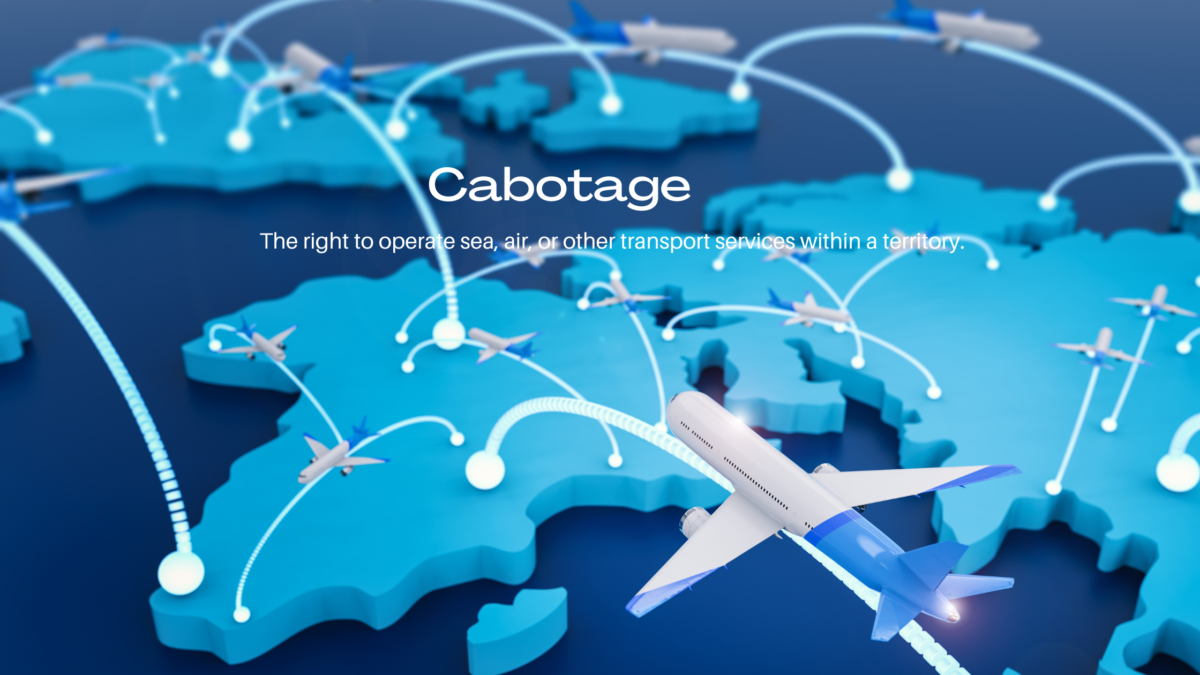
Understanding Cabotage Rules in Civil Aviation: India & Global Policy Overview
Understanding Cabotage Rules in Civil Aviation: India & Global Policy Overview
A comprehensive guide to cabotage rules, DGCA regulations in India, global aviation policy, and how they protect domestic airlines.
What Are Cabotage Rules in Aviation?
Cabotage refers to the transport of passengers or cargo between two destinations within the same country by a foreign-registered airline. In aviation, cabotage regulations determine whether foreign airlines may operate flights inside another country’s domestic network.
Because cabotage affects fair competition, employment, national security, and regulatory oversight, most countries restrict or prohibit it. In India, cabotage rules are administered by the
Directorate General of Civil Aviation (DGCA).
Cabotage Rules in India (DGCA Policy)
India operates one of the world’s strictest cabotage regimes. As a rule:
- Only Indian-registered airlines may operate domestic passenger flights.
- Foreign airlines may only operate international flights to and from India.
- Foreign airlines cannot carry passengers between two Indian airports.
Limited exemptions may apply for:
- medical evacuation / air ambulance
- approved non-scheduled charter flights
- humanitarian and relief missions
- Government-sanctioned exceptional cases
Domestic cargo carriage by foreign-registered aircraft is also restricted and subject to Government approval.
Important clarification: India’s Open Skies Policy applies to international aviation, not domestic cabotage.
Why Do Governments Restrict Cabotage?
Cabotage restrictions are designed to:
- protect domestic airlines and jobs
- support national aviation growth
- ensure economic stability
- safeguard aviation security
Who Regulates Cabotage in India?
Cabotage rules are set by sovereign governments. In India, the responsible body is:
Directorate General of Civil Aviation (DGCA)
Working alongside:
- Ministry of Civil Aviation
- Airports Authority of India (AAI)
- Bureau of Civil Aviation Security (BCAS)
The DGCA may issue exemptions only where national interest is clearly demonstrated.
ICAO’s Position on Cabotage Rules
The International Civil Aviation Organization (ICAO) develops global safety and regulatory standards, however:
- ICAO does not grant cabotage rights
- Cabotage remains a national policy decision
Rights of operation are normally defined through bilateral or multilateral air service agreements.
Countries with Strict Cabotage Restrictions
Examples include:
- India
- Japan
- Brazil
- Australia
- Canada
- Russia
Policies evolve and limited exemptions may be granted under controlled circumstances.
Why Cabotage Policy Matters
Cabotage affects:
- ticket pricing
- competition
- aviation employment
- domestic infrastructure investment
- long-term industry resilience
Safe Fly Aviation — Global Charter & Aviation Consultancy
Safe Fly Aviation Services Pvt Ltd is a trusted global aviation company providing
private jet charters, helicopter charter, medevac and cargo charter services with over 15 years’ experience.
Our team arranges compliant, safe and efficient aviation solutions across India and worldwide.
Email: info@safefly.aero
WhatsApp: +91 78400 00473
Website: safefly.aero
Written By: Team Safe Fly Aviation