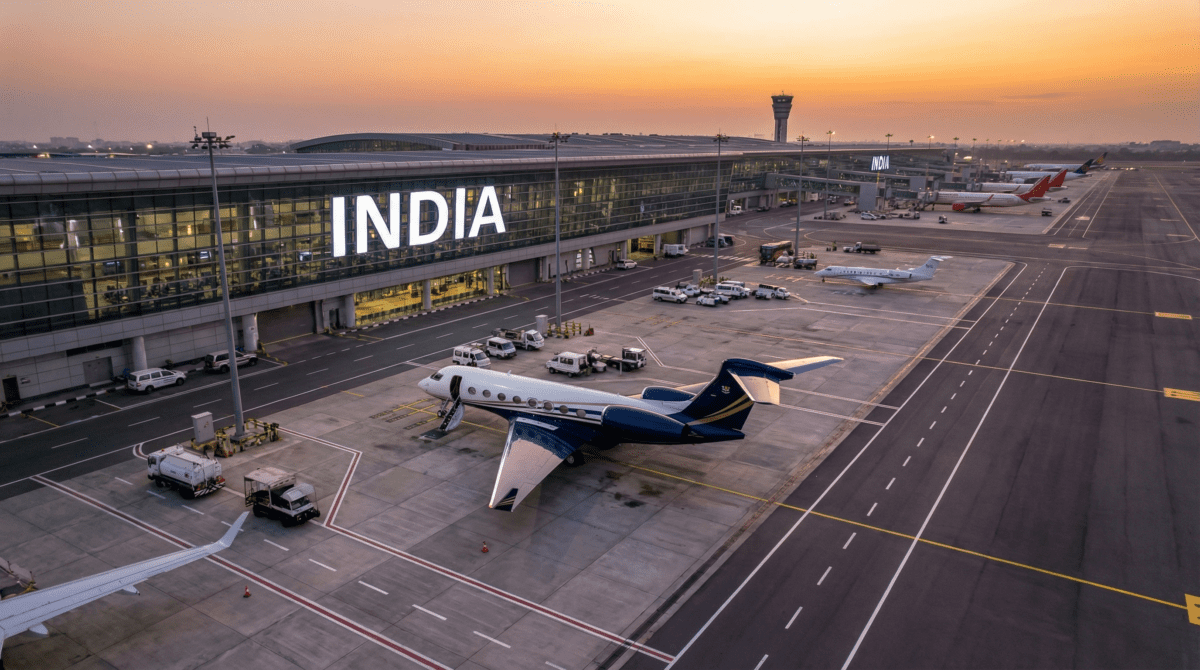
India Tightens Airport Slot & Parking Rules for Business Jets Ahead of Peak Travel Season: What Operators and Corporates Must Know
India Tightens Airport Slot & Parking Rules for Business Jets Ahead of Peak Travel Season: What Operators and Corporates Must Know
India's busiest airports are facing rising pressure from growing private jet and charter activity, leading to stricter slot allocation and parking enforcement at key metro hubs.
India's busiest airports are facing growing operational pressure from rising private jet and charter activity, prompting stricter enforcement of airport slot allocations, parking approvals, and ground-time limits for business aircraft as peak travel demand builds across the country.
While no single nationwide policy change has been announced, operators and aviation service providers report that slot availability and parking approvals for private and charter aircraft are increasingly constrained, particularly at major metro airports including Delhi (DEL), Mumbai (BOM), Bengaluru (BLR), and Hyderabad (HYD).
Rising Demand Meets Limited Airport Capacity
India has seen steady growth in non-scheduled and business aviation activity over the past several years, driven by corporate travel expansion, high-value passenger movement, time-critical executive operations, and infrastructure project oversight. However, general aviation (GA) infrastructure—especially at metro hubs—remains limited relative to overall airport utilisation and commercial airline traffic.
Many major airports operate with slot coordination systems, limited GA apron space, and strict movement constraints during peak windows. As traffic volume rises across both scheduled and non-scheduled segments, airports are enforcing existing slot and parking frameworks more rigorously than in previous years.
What Is Changing in Practice
While formal policy announcements have not been widely publicised, operators report the following operational shifts:
- Reduced slot flexibility for private jets during peak departure and arrival windows
- Limited or denied overnight parking for business aircraft at congested airports, especially during high-traffic periods
- Greater need for earlier slot requests and firmer advance scheduling (5–7 working days recommended)
- Repositioning requirements to alternate airports after passenger drop-off in some cases
- Shorter permitted ground times during high-traffic windows to maximise apron utilisation
- Increased scrutiny of mission purpose and passenger details for security and compliance verification
Why Major Airports Are Most Affected
Airports such as Delhi (DEL) and Mumbai (BOM) operate near maximum capacity due to high airline frequency, concentrated international traffic, limited runway availability, and ongoing congestion recovery after weather disruptions or operational delays. Scheduled airline operations and essential movements typically receive priority during constrained periods, reducing flexibility for non-scheduled aircraft.
Secondary metro airports like Bengaluru (BLR) and Hyderabad (HYD) are also experiencing similar patterns as business aviation demand grows in these key commercial hubs.
Impact on Corporate and Charter Travellers
For corporates planning executive travel and charter clients booking private jet services, tighter slot and parking availability can significantly affect same-day return feasibility, preferred departure timings, and overall trip planning flexibility.
In many cases, operational constraints—not aircraft availability—become the primary limiter for mission execution. This shift requires earlier planning, greater schedule flexibility, and proactive coordination with experienced aviation partners who understand airport-specific restrictions and can navigate approval workflows efficiently.
Parking Remains a Key Bottleneck
It is crucial to understand that parking approval is separate from landing clearance. Even with a confirmed landing slot, overnight parking may be restricted depending on apron capacity, timing windows, seasonal demand, and competing aircraft requirements.
Advance coordination is essential to avoid last-minute repositioning to alternate airports, which adds operational complexity, cost, and potential passenger inconvenience.
What Travellers and Operators Should Do Now
To navigate this evolving operational environment effectively, consider the following best practices:
- Plan slot and parking requests well in advance – Commonly 5–7 working days for complex itineraries, especially during peak seasons
- Maintain flexibility in departure and arrival windows where operationally possible to accommodate slot availability
- Identify alternate airports early – Have backup options and repositioning strategies ready
- Avoid last-minute schedule changes that can trigger re-approval requirements and delay operations
- Work with India-experienced aviation partners familiar with airport-specific constraints, DGCA procedures, and local coordination requirements
- Prepare documentation in advance – Ensure all passenger, crew, and aircraft documents are complete before arrival
- Communicate proactively with ground handlers, slot coordinators, and airport authorities
Editorial Note (Accuracy & Transparency): This report describes operational constraints commonly observed at high-utilisation Indian airports (slots and parking enforcement tightening) based on industry feedback and operator experiences, without attributing claims to a specific unpublished circular or formal policy announcement. If new official advisories or DGCA directives are issued, this article will be updated with dated references and source attribution. Always verify current regulations with official airport authorities and DGCA before finalising travel plans.