Top 10 Turboprop Engines Ever Produced: PT6, T56, TP100 & More | Safe Fly Aviation
Top 10 Turboprop Engines Ever Produced: PT6, T56, PW100, Catalyst & More
The definitive ranking of the most successful turboprop engines in aviation history — market analysis, reliability data, and future technology
 Top 10 Turboprop Engines — 2026
Executive Summary
- PT6 remains the world's most successful turboprop — over 64,000 produced, 500+ million flight hours, powering 155+ aircraft types
- Military turboprops continue dominating heavy transport — T56 and AE2100 power the global C-130 fleet
- Regional airlines still rely heavily on PW100 — powering ATR and Dash 8 fleets worldwide
- New engines like Catalyst are changing efficiency standards — 20% better fuel burn than legacy engines
- Hybrid-electric propulsion may reshape turboprops over the next decade — several programs under development
- Global turboprop engine market valued at $3.73B in 2026 — projected to reach $4.53B by 2030
Turboprop engines are the workhorses of regional aviation, connecting communities, powering cargo operations, and serving critical missions from firefighting to military transport. While often overshadowed by their turbofan cousins, turboprops offer unmatched efficiency at lower speeds and shorter runways, making them indispensable for regional connectivity.
The global turboprop engine market is valued at $3.73 billion in 2026, projected to reach $4.53 billion by 2030 with a steady 5% CAGR.[1] From the legendary PT6 — the most produced turboprop in history — to the powerful T56 that has accumulated over 230 million flight hours, these engines have defined regional aviation.[4]
This definitive ranking celebrates the top 10 turboprop engines ever produced, based on production volume, service longevity, versatility, and impact on aviation. Each entry includes a deep case study examining why the engine became successful, its key applications, evolution, and market position.
Turboprop Evolution: A Historical Timeline
The turboprop engine has evolved dramatically since its inception. Here is a timeline of key milestones:
The timeline reveals a clear trend: turboprops have continuously improved in efficiency, reliability, and power-to-weight ratio. The PT6, introduced in 1963, remains the benchmark, but new engines like the Catalyst and hybrid-electric concepts are pushing the boundaries further.
Key Takeaways
- PT6 is the undisputed champion — over 64,000+ produced, 500+ million flight hours, powering 155+ aircraft types[9]
- T56 is the large turboprop leader — over 18,000+ produced, 230+ million operating hours[4]
- PW100 powers regional icons — the ATR 42/72 and Dash 8 families[5]
- Catalyst is the future — 20% better fuel efficiency, advanced digital controls[1]
- Market growth is steady — $3.73B in 2026, projected to reach $4.53B by 2030[1]
The Ranking: Top 10 Turboprop Engines
Pratt & Whitney Canada PT6
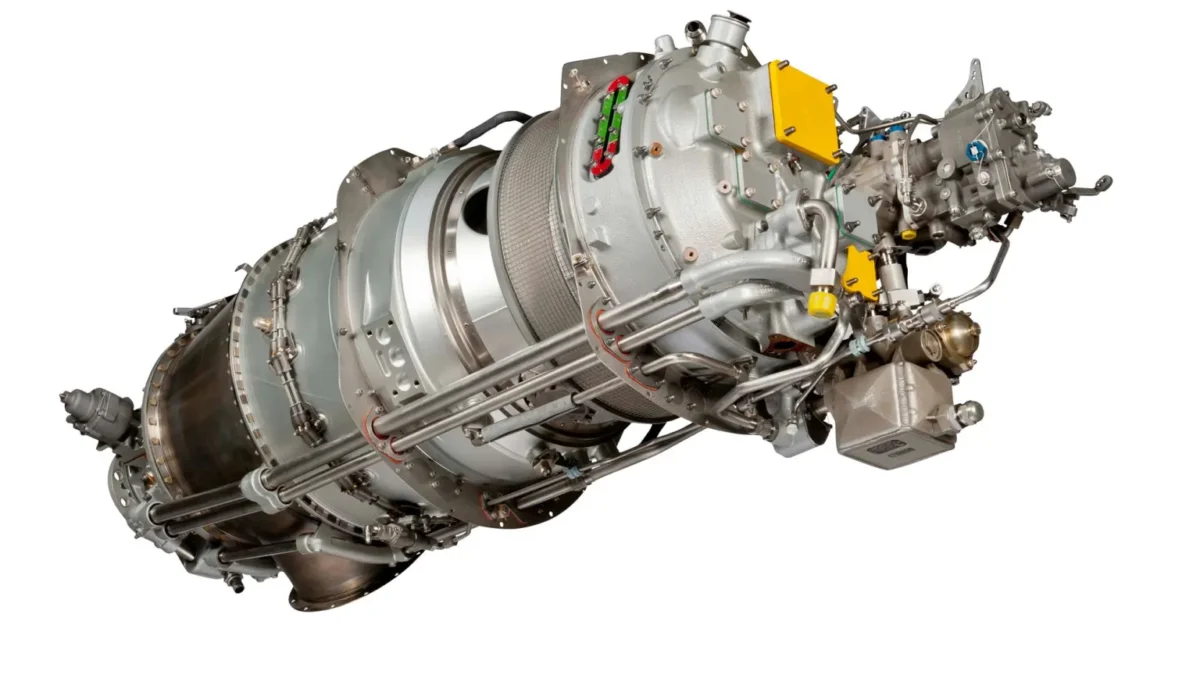
Why It Became Successful: The PT6 is the undisputed king of turboprop engines. With over 64,000 units produced since 1963, it is the most produced turboprop in aviation history.[9] Its success stems from a simple, robust design (reverse-flow combustion, modular construction) that allows for easy maintenance and exceptional reliability. The PT6 has an in-flight shutdown rate of just 1 per 651,126 hours.[8]
Key Aircraft: Pilatus PC-12, Daher TBM, Beechcraft King Air, Cessna Caravan, Viking DHC-6 Twin Otter, and over 150 other types.[8]
Evolution: From the original 500 shp PT6A-6 to the latest 1,940 shp PT6E-67 series, the PT6 has continuously evolved. The E-Series features integrated electronic propeller and engine control, delivering fuel savings and reduced pilot workload.[6] The latest PT6E-67 series powers the Daher TBM 960 and Pilatus PC-12 NGX.
Production Today: Pratt & Whitney Canada continues to produce PT6 engines at a rate of over 1,000 per year, with a backlog stretching years ahead.[9]
Rolls-Royce T56 / Allison 501-D
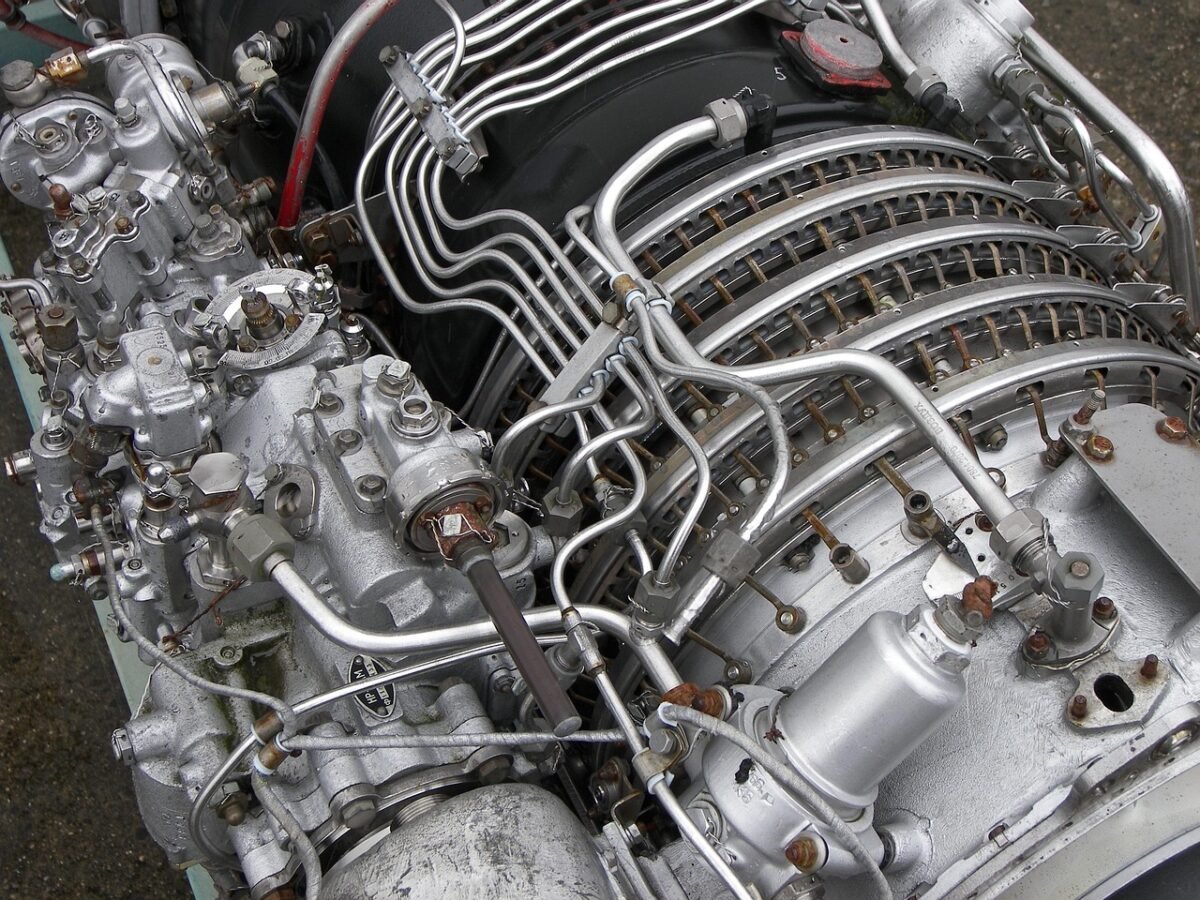
Why It Became Successful: The T56 is the world-leading large turboprop engine.[4] Its success comes from its ruggedness, simplicity, and ability to deliver high power continuously. The 14-stage axial flow compressor and two-stage gear reduction have made it one of the most robust and reliable turboprops ever built.
Key Aircraft: Lockheed C-130 Hercules, Lockheed P-3 Orion, Lockheed L-188 Electra, and numerous military derivatives.[4]
Evolution: First run in 1954, the T56 has undergone continuous improvement. The latest Series III engines feature improved hot-section components and digital engine controls. The T56 has accumulated over 230 million operating hours.
Production Today: Rolls-Royce continues to support the T56 fleet with overhauls and upgrades, with new-build engines still produced for military customers.[4]
Pratt & Whitney Canada PW100
Why It Became Successful: The PW100 family powers the world's most successful regional turboprop aircraft — the ATR 42/72 and the De Havilland Dash 8 series. Its fuel efficiency, reliability, and low operating costs have made it the preferred choice for regional airlines worldwide.[5]
Key Aircraft: ATR 42, ATR 72, De Havilland Dash 8-100/200/300, and the Bombardier Q400.[5]
Evolution: From the original PW120 (1,800 shp) to the latest PW127 (2,400 shp), the PW100 family has continuously improved. The PW127 powers the ATR 72-600 and -600F, while the PW120 series powers the Dash 8.
Production Today: P&WC continues to produce PW100 engines at a steady rate, supporting the large installed base of ATR and Dash 8 aircraft worldwide.
General Electric CT7 / T700
Why It Became Successful: The GE CT7 and its military variant, the T700, have been successful in both turboprop and turboshaft applications. Its rugged design, excellent power-to-weight ratio, and proven reliability in military applications have made it a favourite for both civil and military operators.[11]
Key Aircraft: CASA/IPTN CN-235, Sikorsky UH-60 Black Hawk, S-70, and various regional turboprops.[11]
Evolution: From the original T700 to the latest CT7-9 and -10 variants, the engine has continuously improved with better hot-section materials and digital controls.
Production Today: GE continues to produce CT7 and T700 engines for both civil and military applications.
Allison / Rolls-Royce AE2100
Why It Became Successful: The AE2100 is the modern successor to the legendary T56. Its advanced aerodynamics, digital engine controls, and modular design represent the state of the art in turboprop technology. The AE2100 delivers significantly improved fuel efficiency and reliability compared to its predecessor.
Key Aircraft: C-130J Super Hercules, Saab 2000, and various military derivatives.[11]
Evolution: First run in 1992, the AE2100 has seen continuous improvement with enhanced hot-section components and FADEC systems.
Production Today: Rolls-Royce continues to produce AE2100 engines for C-130J and other military programs.
Honeywell TPE331
Why It Became Successful: The TPE331 is a lightweight, reliable turboprop engine that has served for over 60 years. Its compact design, excellent power-to-weight ratio, and proven reliability make it a favourite for operators requiring rugged, dependable performance.[11]
Key Aircraft: Cessna Conquest, Shorts SC.7 Skyvan, and various C-130 applications.[11]
Evolution: From the original TPE331-1 to the latest -12 and -14 variants, the engine has continuously improved with better materials and controls.
Production Today: Honeywell continues to produce and support the TPE331 fleet.
PBS TP100
Why It Became Successful: The PBS TP100 is a remarkable 21st-century turboprop. Weighing just 57 kg and delivering 241 hp, it offers an exceptional power-to-weight ratio of approximately 4.2 hp/kg.[12] Its success comes from its revolutionary lightweight design, making it ideal for modernising light aircraft.
Key Aircraft: I-31T proof-of-concept, light aircraft modernization programs.[12]
Evolution: A modern design, the TP100 represents the future of lightweight turboprop propulsion.
Production Today: PBS is ramping up production for various applications.
GE Catalyst
Why It Became Successful: The GE Catalyst is a revolutionary turboprop engine designed to set a new standard for performance, efficiency, and sustainability. Its advanced three-stage axial compressor, single-crystal turbine, and new-generation FADEC system deliver 20% better fuel efficiency than legacy engines.[1]
Key Aircraft: Beechcraft Denali, future turboprop platforms.[1]
Evolution: A completely new design, the Catalyst represents the future of turboprop technology.
Production Today: GE is ramping up production for the Denali program.
Pratt & Whitney Canada PT6A Aerial Application Variants
Why It Became Successful: The PT6A aerial application variants are a testament to the versatility of the PT6 family. These PT6A models have flown over 1 million hours in demanding conditions, proving their reliability in harsh environments.[5][7]
Key Aircraft: Air Tractor, Thrush, agricultural and firefighting aircraft.[5]
Evolution: Specifically developed for agricultural and firefighting missions, these engines feature enhanced dust protection and durability.
Production Today: P&WC continues to produce these variants for the agricultural market.
Jendrassik Cs-1
Why It Became Successful: The Jendrassik Cs-1 is the engine that started it all. Designed in 1937 and first run in 1940, it was the world's first working turboprop engine.[15] Its axial-flow design with a 15-stage compressor and 7-stage turbine incorporated many features still found in modern turboprops.
Key Aircraft: The RMI-1 aircraft was never completed due to World War II.[15]
Evolution: Though it never entered production, the Cs-1's legacy is immense — it proved the turboprop concept was viable and inspired generations of engineers.
Production Today: Not produced — a historical prototype only.[15]
Why Turboprops Still Exist: The Case for Regional Turboprops
Despite decades of jet engine dominance, turboprops remain a vital part of the aviation ecosystem. Here is why airlines and operators still choose turboprops:
Why Airlines Still Buy Turboprops
- Fuel Efficiency: Turboprops burn 30–40% less fuel on short routes (under 500 nm) compared to regional jets
- Runway Performance: Turboprops can operate from 3,000–4,000 ft runways, accessing airports that jets cannot
- Operating Cost: Lower fuel burn, simpler maintenance, and longer component lives reduce overall costs
- Remote Operations: Unpaved strip capability makes turboprops essential for remote communities
- Environmental Impact: Lower emissions per passenger on regional routes
- STOL Capability: Short Takeoff and Landing capability for challenging airports
- Cargo Capacity: Excellent cargo door options for freight operations
Did You Know?
The PT6 engine has powered over 155 different aircraft types and amassed over 500 million flying hours since 1963. Today's PT6 engines are up to four times more powerful than the original model, with a 50% improved power-to-weight ratio and up to 20% better specific fuel consumption.[5]
Turboprop vs. Turbofan: A Technical Comparison
Understanding the difference between turboprop and turbofan engines helps appreciate where each excels.
| Feature | Turboprop | Turbofan |
|---|---|---|
| Fuel Burn (Short Haul) | Better (30–40% less) | Worse |
| Cruise Speed | Lower (250–350 kts) | Higher (450–550 kts) |
| Runway Requirement | Short (3,000–4,000 ft) | Long (5,000–8,000 ft) |
| Operating Cost | Lower | Higher |
| Unpaved Strip Capability | Yes | No |
| Altitude Capability | Lower (25,000–30,000 ft) | Higher (35,000–45,000 ft) |
Source: Industry data.
In a turboprop, the core engine drives a propeller through a reduction gearbox. Most thrust comes from the propeller (over 90%), with the core contributing less than 10%.[11] This design prioritises torque over thrust, making turboprops ideal for low-speed, high-efficiency operations.
Global Turboprop Engine Market
The turboprop engine market continues to demonstrate steady growth, driven by regional aviation expansion, cargo operations, and the unique capabilities of turboprop-powered aircraft.
| Year | Market Value (USD Billions) | Growth |
|---|---|---|
| 2025 | $3.55 | — |
| 2026 | $3.73 | +5.0% |
| 2030 | $4.53 | +5.0% CAGR |
Source: Research and Markets, 2026[1]
Key drivers of turboprop engine market growth include:
- Regional aviation expansion: Growing demand for fuel-efficient aircraft for short-haul routes
- Technological advancements: Innovations in single-shaft and free-turbine designs
- Commercial and military adoption: Expanding use in both sectors
- Short takeoff and landing capability: Unique turboprop advantage for remote operations
- Advanced materials: Enhanced efficiency and reduced emissions[1]
Top Aircraft Powered by Each Engine
| Engine | Primary Aircraft | Secondary Aircraft | Total Applications |
|---|---|---|---|
| PT6 | King Air, PC-12, TBM | Caravan, Twin Otter | 155+ types |
| T56 | C-130 Hercules | P-3 Orion, L-188 | 10+ types |
| PW100 | ATR 42/72 | Dash 8, Q400 | 8+ types |
| CT7 | CN-235 | UH-60, S-70 | 15+ types |
| AE2100 | C-130J | Saab 2000 | 5+ types |
| TPE331 | Cessna Conquest | Short Skyvan | 20+ types |
| Catalyst | Beechcraft Denali | Future platforms | 1+ types |
Source: Industry data.
Turboprop Reliability Comparison
| Engine | Dispatch Reliability | Typical TBO (Hours) | Major Strength |
|---|---|---|---|
| PT6 | 99.98%+ | 3,000–6,000 | Unmatched reliability |
| T56 | 99.5%+ | 3,000–5,000 | Ruggedness |
| PW100 | 99.8%+ | 3,000–5,000 | Regional efficiency |
| AE2100 | 99.7%+ | 4,000–6,000 | Modern efficiency |
| TPE331 | 99.5%+ | 3,000–4,500 | Lightweight |
Source: Industry data.
Future Technology: What's Next for Turboprops?
Several emerging technologies will shape the future of turboprop engines:
Key Future Technologies
- Hybrid-Electric: Several programs are testing hybrid-electric turboprops for regional routes, promising significant fuel savings
- Sustainable Aviation Fuel (SAF): All major turboprop engines are certified for SAF blends, with 100% SAF certification in progress
- Hydrogen Propulsion: Hydrogen fuel cell and hydrogen combustion concepts for turboprops are in development
- Open Rotor: Advanced open-rotor designs may offer further efficiency gains
- Advanced Materials: Ceramic matrix composites and additive manufacturing will reduce weight and improve durability
- Digital Twin: Predictive maintenance using digital twin technology will reduce downtime
The future of turboprops is bright. Hybrid-electric concepts promise 30–50% fuel savings on regional routes, while SAF and hydrogen will dramatically reduce carbon emissions. The GE Catalyst and Pratt & Whitney Canada PT6E-Series represent the current state of the art, but they are just the beginning.
Most Valuable Turboprop Engines (Used Market)
The used turboprop engine market is active, with prices driven by remaining life, LLP status, and demand.
| Engine | Approx. Used Value (USD) | Typical Remaining Life | Demand Level |
|---|---|---|---|
| PT6A-67 | $800,000–1.2M | 3,000+ hours | High |
| PW127 | $600,000–900,000 | 3,000+ hours | High |
| AE2100 | $1.5–2.5M | 4,000+ hours | Medium-High |
| CT7 | $400,000–700,000 | 2,500+ hours | Medium |
| TPE331 | $150,000–300,000 | 2,000+ hours | Medium |
Source: Industry data. Values are approximate.
Aviation Intelligence & Advisory
Need insight into engine values, aircraft acquisitions, or aviation market trends? Safe Fly Aviation provides data-driven intelligence for aircraft owners, lessors, and investors.
Speak with Our Aviation Intelligence TeamSources & References
- Research and Markets — Turboprop Engine Market Report 2026
- GlobeNewswire — Turboprop Engine Industry Research Report 2026
- British Columbia Institute of Technology (BCIT) — PT6 Engine Introduction
- Rolls-Royce — T56 Turboprop Engine Program Data
- Pratt & Whitney Canada — PT6A Aerial Application Engine Press Release (2025)
- Pratt & Whitney Canada — PT6 E-Series Engine Press Release (2025)
- Raytheon / PR Newswire — PT6A Aerial Application Engine Milestone
- Wikipedia — Pratt & Whitney Canada PT6
- Pratt & Whitney Canada — One Billion Flying Hours Celebration (2023)
- SAE International — The PT6 After 5 Million Hours Technical Paper
- Purdue University — Turboprop and Turboshaft Engines Overview
- Paradigm / De Gruyter — Piston-to-Turboprop Engine Modernization Study (2024)
- Elsevier — Turboprop vs. Turbofan Technical Data
- Vysoké učení technické v Brně — Modern Turboprop Engines Database
- The Free Dictionary — Jendrassik Cs-1 History
Disclaimer: This report is based on public sources and industry data as of June 2026. Production numbers and specifications are approximate and subject to change. Safe Fly Aviation provides independent aviation intelligence and advisory services.
Frequently Asked Questions
What is the most successful turboprop engine ever produced?
The Pratt & Whitney Canada PT6 is the most successful turboprop engine ever produced, with over 64,000+ units produced and 500+ million flight hours across 155+ aircraft types.
What is the most powerful turboprop engine?
The Rolls-Royce T56 / Allison AE2100 is one of the most powerful turboprop engines, delivering up to 6,000 shp in its latest variants, powering aircraft like the C-130J Super Hercules.
Why do airlines still buy turboprops?
Airlines buy turboprops for their fuel efficiency on short routes, ability to operate from short runways, lower operating costs, and suitability for remote destinations that jets cannot serve.
What is the global turboprop engine market size?
The global turboprop engine market is valued at $3.73 billion in 2026, projected to reach $4.53 billion by 2030 with a 5% CAGR.[1]
What is the difference between a turboprop and a turbofan?
A turboprop uses a gas turbine core to drive a propeller through a gearbox, while a turbofan drives a large fan that generates most of its thrust. Turboprops are more efficient at lower speeds and shorter runways.