Top 10 Most Successful Commercial Airliners Ever Built | Safe Fly Aviation
Top 10 Most Successful Commercial Airliners Ever Built
From the iconic Boeing 737 and Airbus A320 to the legendary 747 and the global 777 — the aircraft that shaped modern aviation
 Top 10 Most Successful Commercial Airliners — 2026
For over a century, commercial aviation has been defined by a handful of aircraft that fundamentally changed how the world travels. These airliners didn't just connect cities — they connected economies, cultures, and people. They became the backbone of global tourism, the enablers of international trade, and the symbols of human ingenuity.
But what makes an airliner "successful"? Is it total production numbers? Decades of service? Technological innovation? Profitability? For this ranking, we've considered all of these factors — combining production volume, longevity, market impact, and the aircraft's role in shaping commercial aviation.
From the ubiquitous Boeing 737 and Airbus A320 that dominate every airport apron, to the iconic "Queen of the Skies" and the revolutionary widebodies that opened the world, here are the top 10 most successful commercial airliners ever built.
Ranking Methodology
- Production Volume: Total number of aircraft delivered (including all variants)
- Service Longevity: Years in continuous production and active service
- Market Impact: Influence on route networks, passenger travel, and industry economics
- Technological Innovation: Introduction of new materials, systems, or efficiency gains
- Global Reach: Number of operators and regions served
- Financial Success: Program profitability and revenue generated for the manufacturer
The Ranking: Top 10 Most Successful Commercial Airliners
Boeing 737 Family
The Boeing 737 is the undisputed king of commercial aviation. With over 11,000 deliveries since 1967, it is the most produced commercial jetliner in history. Its success lies in relentless iteration — from the original -100/-200, through the Classic (-300/-400/-500), the Next Generation (-600/-700/-800/-900), to the MAX series. The 737 has become the workhorse of short-to-medium-haul routes worldwide, with over 5,000 aircraft in active service today. Its operational efficiency, reliability, and continuous upgrades have made it the preferred choice for airlines from Alaska to Australia. Program revenue is estimated in the hundreds of billions.
Airbus A320 Family
The Airbus A320 family is the only aircraft that can rival the 737 in production numbers and market dominance. Launched in 1988, the A320 introduced fly-by-wire controls and a common cockpit across the family — a revolutionary concept that Airbus has perfected. With over 10,000 deliveries and 4,800+ aircraft in service, the A320 family has redefined narrowbody efficiency. The stretched A321neo has become the undisputed champion of single-aisle capacity, carrying up to 244 passengers. The A320 family is the backbone of Airbus's success.
Douglas DC-3 / C-47
The Douglas DC-3 is the aircraft that made air travel practical. With over 16,000 built, it remains one of the most produced aircraft of any type. The DC-3 introduced sleeper berths, galleys, and other passenger comforts that we take for granted today. It was the first airliner that could operate profitably on passenger service alone, without mail subsidies. In military service as the C-47 Skytrain, it played a pivotal role in World War II. Remarkably, over 100 DC-3s remain in commercial service today — nearly 90 years after its first flight. The DC-3's impact on aviation history is arguably greater than any other aircraft on this list.
Boeing 747
The Boeing 747 is more than an aircraft — it's an icon. The "Queen of the Skies" revolutionised air travel, making long-haul flights accessible to millions. With its distinctive hump and four engines, the 747 became the symbol of commercial aviation for over 50 years. A total of 1,574 were built across all variants — the -100, -200, -300, -400, and the final -8. Production ended in 2023, but the 747 continues to serve as a cargo workhorse and VIP transport. No other aircraft has captured the public imagination quite like the 747.
Boeing 777
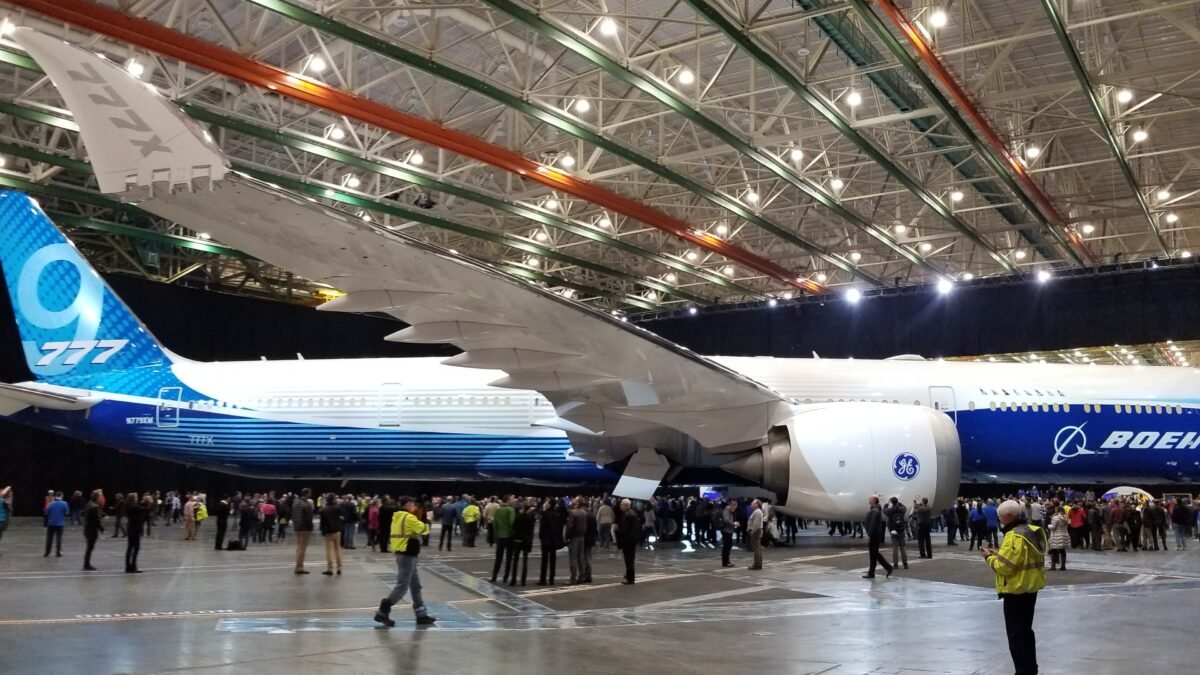
The Boeing 777 is the best-selling widebody airliner in history. With over 2,200 deliveries and 1,600+ aircraft in active service, the 777 has redefined long-haul travel. The 777-300ER became the backbone of many flag carriers' fleets, offering exceptional range, passenger comfort, and cargo capacity. The 777X, with its folding wingtips and GE9X engines, represents the next generation of widebody efficiency. From the original 777-200 to the ultra-long-range 777-200LR and the high-capacity 777-300ER, the 777 family has served every continent.
Airbus A330
The Airbus A330 has become one of the most popular widebody aircraft in commercial aviation. With over 1,500 deliveries and 1,200+ aircraft in service, the A330 has carved out a significant niche in the medium-to-long-haul market. The A330-300 remains the most successful passenger variant, while the A330neo offers improved fuel efficiency with Rolls-Royce Trent 7000 engines. The A330 is particularly popular in Asia and the Middle East, serving high-volume routes with exceptional operational economics.
Airbus A321neo
The A321neo deserves its own entry. It is the fastest-growing member of the A320 family and arguably the most profitable narrowbody in production today. With over 1,500 deliveries and a backlog exceeding 3,000 aircraft, the A321neo is reshaping airline economics. The A321LR and upcoming A321XLR are replacing 757 missions, opening new long-haul routes that were previously impossible for narrowbody aircraft. The A321neo's success has made it a cash cow for Airbus and a strategic threat to Boeing's widebody business.
Boeing 727
The Boeing 727 was the world's best-selling airliner for decades. With 1,832 deliveries, the trijet was a mainstay of domestic and short-haul international routes. Its ability to operate from short runways and its three-engine configuration made it popular with airlines around the world. The 727-200 extended the fuselage and increased capacity, making it even more popular. Although production ended in 1984, hundreds of 727s continue to fly as cargo and charter aircraft.
Boeing 767
The Boeing 767 bridged the gap between narrowbody and widebody aircraft, offering transatlantic range with twin-engine efficiency. With over 1,300 deliveries, the 767 became a favourite for airlines needing flexibility and reliability. It was one of the first twin-engine aircraft authorised for transatlantic ETOPS operations, opening up new route possibilities. The 767 continues to serve as a passenger aircraft (especially with Delta and United) and is widely used as a freighter and military tanker.
Embraer E-Jet Family
The Embraer E-Jet family has redefined regional aviation, offering jet-like speed with turboprop-like efficiency. With over 1,700 deliveries, the E170/190 series has become the backbone of regional fleets in North America, Europe, and Asia. The E175 is particularly popular in the US market, where it dominates regional carrier fleets. The E190 and E195 offer larger capacity options for longer regional routes. The E-Jet's success has made Embraer a major player in the global aviation industry.
Airliners That Changed Aviation History
Beyond the ranking, these aircraft represent pivotal moments in aviation history:
Aircraft That Transformed the Industry
- DC-3 (1936): Made passenger aviation commercially viable — the first aircraft to profit without mail subsidies
- Boeing 707 (1958): Started the jet age — shrank the world and made transatlantic travel routine
- Boeing 747 (1970): Democratized long-haul travel — made international tourism accessible to the masses
- Boeing 737 (1967): Made short-haul aviation affordable — became the backbone of global air travel
- Airbus A320 (1988): Introduced fly-by-wire to mass aviation — set new standards for efficiency and safety
- Boeing 777 (1995): Proved twin-engine widebodies could dominate long-haul — the birth of ETOPS
Production Volume Comparison
Total Deliveries by Aircraft Family (Approximate)
Source: Boeing, Airbus, Embraer. DC-3 data includes military variants.
Airliner Comparison: Key Specifications
| Aircraft | Type | First Flight | Deliveries | In Service | Typical Passengers | Range (nm) |
|---|---|---|---|---|---|---|
| B737 | Narrowbody | 1967 | 11,000+ | 5,000+ | 110–230 | 2,935–3,550 |
| A320 | Narrowbody | 1987 | 10,000+ | 4,800+ | 124–244 | 3,300–4,700 |
| B747 | Widebody | 1969 | 1,574 | 300+ | 276–467 | 4,500–7,730 |
| B777 | Widebody | 1994 | 2,200+ | 1,600+ | 301–396 | 5,240–8,555 |
| A330 | Widebody | 1992 | 1,500+ | 1,200+ | 247–440 | 6,350–8,000 |
| DC-3 | Propeller | 1935 | 16,079 | 100+ | 21–32 | 1,500 |
| A321neo | Narrowbody | 2017 | 1,500+ | 1,200+ | 180–244 | 3,500–4,700 |
| B727 | Narrowbody | 1963 | 1,832 | 300+ | 106–189 | 2,500–3,100 |
| B767 | Widebody | 1981 | 1,300+ | 800+ | 181–375 | 3,900–6,590 |
| E-Jet | Regional | 2002 | 1,700+ | 1,400+ | 70–124 | 1,800–2,700 |
Source: Boeing, Airbus, Embraer, industry data. Values are approximate.
Where These Aircraft Dominated
Different airliners have dominated different regions based on network needs, regulatory environments, and passenger preferences:
Regional Dominance by Aircraft Type
- North America: Boeing 737 (domestic), Embraer E175 (regional), Boeing 777 (transcontinental)
- Europe: Airbus A320 family, A330 (medium-haul), Boeing 737
- Middle East: Boeing 777, Airbus A330, A350 (long-haul), 747 freighters
- Asia-Pacific: Airbus A320, Boeing 737 (domestic), A330 (regional widebody), 777 (long-haul)
- Africa: Boeing 737, Airbus A320, A330 (hub routes)
- Latin America: Boeing 737, Airbus A320, A330 (international)
The Boeing 737 dominates North American domestic routes, while the Airbus A320 family is the backbone of European and Asian short-haul networks. The 777 and A330 share widebody dominance globally, with the 777 stronger on long-haul and the A330 on medium-haul regional routes.
Financial Success of Major Airliner Programs
For aircraft manufacturers, program profitability is the ultimate measure of success. Here is the estimated financial performance of key programs:
Estimated Program Revenue (USD Billions)
Source: Industry estimates. Values are approximate and include aftermarket.
The Boeing 737 and Airbus A320 programs have generated hundreds of billions in revenue, making them the most financially successful aircraft programs in history. The 777 and 747 have also generated substantial returns, though the 747's profitability was challenged in later years.
Notable Mentions: Aircraft That Almost Made the List
Several other aircraft deserve recognition for their contributions to commercial aviation:
Honourable Mentions
- McDonnell Douglas MD-80 (1,100+ delivered): Dominated US domestic routes in the 1980s and 1990s
- ATR 72 (1,200+ delivered): The world's best-selling turboprop, still in production
- Dash 8/Q400 (1,000+ delivered): Regional turboprop success, particularly in North America and Europe
- Airbus A220 (300+ delivered, 800+ backlog): Fastest-growing modern program, future success story
- Boeing 757 (1,050 delivered): The "Flying Pencil" — beloved by passengers and pilots alike
- Airbus A350 (600+ delivered, 900+ backlog): The future of long-haul efficiency
What Makes a Commercial Airliner Successful?
The aircraft on this list share common traits that have allowed them to achieve commercial success on a global scale.
Key Success Factors
- Reliability: High dispatch reliability and low maintenance costs
- Operational Efficiency: Fuel economy, range, and payload capability
- Fleet Commonality: Shared type ratings across variants reduce training costs
- Aftermarket Support: Global parts and MRO availability
- Continuous Improvement: Regular upgrades to remain competitive
- Versatility: Ability to serve multiple missions (passenger, cargo, military)
- Operator Base: Wide adoption by major airlines worldwide
What's Next? The Future of Commercial Airliners
As we look toward the future, the next generation of airliners will face new challenges and opportunities:
- Sustainability: New engines, hybrid-electric propulsion, and sustainable aviation fuels will shape aircraft design
- Efficiency: The pursuit of lower operating costs will drive continuous improvement
- Automation: Increasingly automated flight decks and operations
- Materials: Advanced composites and lightweight materials will become the norm
- Capacity: The A321neo and 737-10 will dominate narrowbody markets; widebodies will continue to evolve
The CFM RISE program, Airbus A320neo family, and Boeing 737 MAX represent the current frontier of narrowbody efficiency. The A350-1000 and 777X are pushing widebody boundaries. But the fundamental principles of success remain the same: reliability, efficiency, and operator value.
Aviation Intelligence & Advisory
Need insight into aircraft values, fleet strategy, or market trends? Safe Fly Aviation provides data-driven intelligence for airlines, lessors, and investors.
Speak with Our Aviation Intelligence TeamSources & References
- Boeing — Commercial Aircraft Delivery Data
- Airbus — Orders and Deliveries Reports
- Embraer — E-Jet Family Program Overview
- Douglas Aircraft Company — DC-3 Production Records
- ICAO — Commercial Aircraft Statistics
- FlightGlobal — Fleet Database
- Aviation Week — Commercial Aircraft Market Report 2026
- IATA — Industry Performance Reports
Disclaimer: This report is based on public sources and industry data as of June 2026. Production numbers and fleet data are approximate and subject to change. Safe Fly Aviation provides independent aviation intelligence and advisory services.
Frequently Asked Questions
What is the most successful airliner of all time?
The Boeing 737 is the most successful airliner of all time with over 11,000+ deliveries, followed by the Airbus A320 family with over 10,000+ deliveries.
How many Boeing 747s were built?
A total of 1,574 Boeing 747s were built across all variants, including the -100, -200, -300, -400, and -8 models, before production ended in 2023.
What is the best-selling widebody airliner?
The Boeing 777 is the best-selling widebody airliner with over 2,200+ deliveries, followed closely by the Airbus A330 with over 1,500+ deliveries.
Why is the Boeing 737 so successful?
The 737's success stems from its reliability, operational efficiency, continuous upgrades (Classic, NG, MAX), and its ability to serve both short and medium-haul routes profitably.
What is the most-produced airliner family?
The Boeing 737 is the most-produced airliner family with over 11,000 deliveries, followed by the Airbus A320 family with over 10,000 deliveries.