Air Canada Flight AC8646 at LaGuardia: What Happened, Aircraft Specs, Investigation Status & Safety Analysis
Air Canada Flight AC8646 at LaGuardia Airport (LGA): What Happened, What Is Confirmed, and Why the CRJ900 Accident Matters
A cleaner, evidence-led Safe Fly Aviation briefing on the runway collision involving Air Canada Express Flight AC8646 in New York, with confirmed facts, aircraft specifications, CRJ program history, runway data and the key safety questions now under investigation.
At a glance
Passenger and crew totals remain preliminary. Injury totals and sequence details may change as the investigation develops.
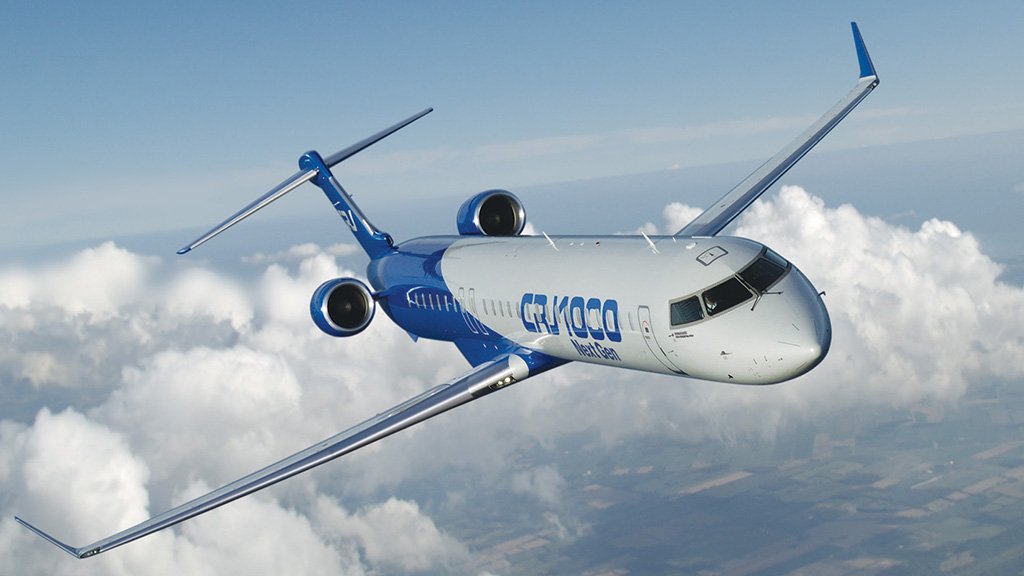
The aircraft: Mitsubishi CRJ900

The aircraft type involved was identified by official sources as a Jazz Aviation Mitsubishi CRJ900, the current branding for the regional jet family originally developed by Bombardier. It is one of the best-known regional jet models in North American short- and medium-haul service and remains a core aircraft within the Air Canada Express regional network. Source Source
CRJ900 key published specifications
| Maximum capacity | Up to 90 passengers |
|---|---|
| Typical dual-class layout | 81 passengers |
| Range | 1,550 nautical miles / 2,871 km |
| Maximum operating altitude | 41,000 ft |
| Maximum cruise speed | Mach 0.82 / 470 knots |
| Engines | Two GE CF34-8C5 turbofans |
| Length | 118 ft 11 in / 36.2 m |
| Wingspan | 81 ft 7 in / 24.9 m |
These figures are from the manufacturer’s CRJ900 factsheet and help explain why the aircraft became a staple of regional operations: it combines regional-airport flexibility with relatively high seating density, a 41,000-foot ceiling and a cruise profile that supports time-sensitive hub flying. Source
CRJ family history
MHIRJ describes the CRJ Series as the aircraft family that helped start the regional jet revolution. The company says the series has set the standard in the segment for more than 25 years, with over 1,300 regional jets in service, nearly 190 operators in 57 countries and more than 1,900 orders across the broader CRJ family. Mitsubishi Heavy Industries closed its acquisition of the CRJ Series Program from Bombardier in 2020, which is why newer official references use Mitsubishi or MHIRJ branding even though the aircraft is still widely known as the Bombardier CRJ900. Source Source
Operator and route context
Air Canada said Flight AC8646 was operated by Jazz Aviation LP under the Air Canada Express brand and originated in Montréal. Search results from Air Canada’s fleet page also identify the CRJ900 fleet as an Air Canada Express type operated by Jazz. Source Source
Airport context: LaGuardia Airport (LGA)
LaGuardia’s official airport site describes the airport as a major passenger facility serving New York City, while the FAA airport diagram shows that the airport operates two primary runways: 04/22 and 13/31. Both are listed at 7,002 feet long and 150 feet wide on the current FAA diagram. Source Source
| Airport | New York LaGuardia (LGA) |
|---|---|
| Runway identified by NTSB | Runway 4 |
| FAA runway pair | 04/22 |
| Runway 04/22 dimensions | 7,002 ft × 150 ft |
| Other main runway | 13/31 |
Preliminary timeline of what we know
Investigation focus: NTSB and cross-border coordination
The NTSB says all aspects of the accident remain under investigation. Air Canada separately said that both Air Canada and Jazz are cooperating with the U.S. NTSB and the Transportation Safety Board of Canada. That cross-border element is typical because the operator is Canadian and the accident site is in the United States. Source Source
Key safety questions likely to matter
- How the fire truck entered or remained on Runway 4 during aircraft movement.
- Whether signage, hold-short protection, stop-bar procedures or radio coordination failed.
- How surface movement situational awareness worked for controllers, vehicle crews and flight crew.
- Whether emergency-response urgency created operational compression or communication overload.
FAQ
What caused the AC8646 accident?
The final cause has not yet been determined. What is confirmed is that the aircraft collided with a fire truck on Runway 4 at LaGuardia; the NTSB says all aspects of the accident remain under investigation. Source
Which aircraft was involved?
Air Canada identified it as a Jazz Aviation Mitsubishi CRJ900, the updated branding for the CRJ900 family originally developed by Bombardier. Source Source
How many people were on board?
Air Canada said the preliminary passenger list showed approximately 72 passengers and four crew members, subject to confirmation. Source
What official investigation timeline should readers expect?
The NTSB says a preliminary factual report is expected within 30 days of the accident, while a final report with probable cause and contributing factors is expected in roughly 12 to 24 months. Source