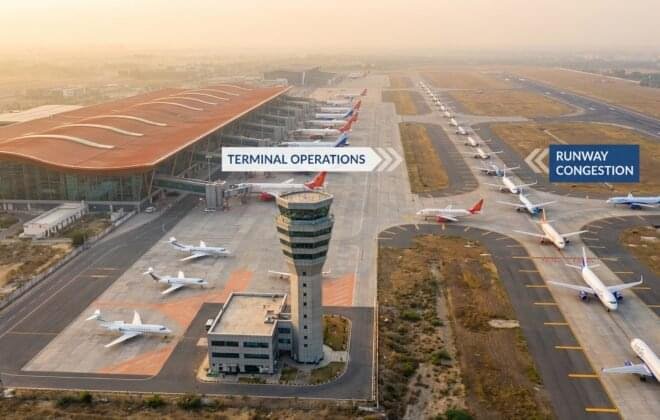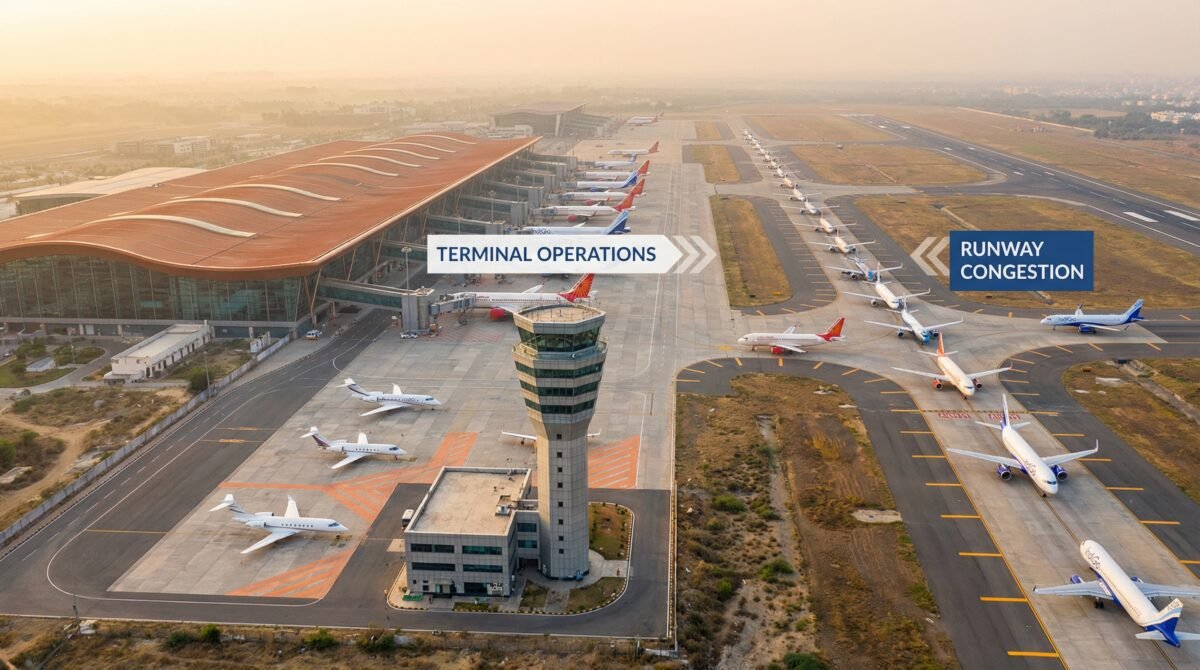

Landing Gear Overhaul Capacity Crisis 2026-2028 | MRO Shortage Analysis
Landing Gear Overhaul Capacity Crisis 2026-2028: Global MRO Shortage, Cost Benchmarks, and Strategic Solutions
Analysis of the global landing gear overhaul capacity crisis: extended lead times, cost benchmarks, exchange programs, removal intervals, and strategic solutions for airlines, lessors, and asset managers.
Contents
- Crisis Overview
- Root Causes
- Lead Time Comparison
- Cost Benchmarks by Aircraft Type
- Landing Gear Removal Interval Explained
- Industry Statistics (2019 vs 2026)
- Landing Gear Overhaul Process
- Aircraft-Specific Analysis
- OEM and MRO Capacity Analysis
- Why Overhaul Costs Are Rising
- Landing Gear Exchange and Leasing Market
- Available for Purchase or Exchange
- Lease Return Challenges
- Secondary Market and USM Components
- Strategic Solutions
- Market Outlook
- FAQ
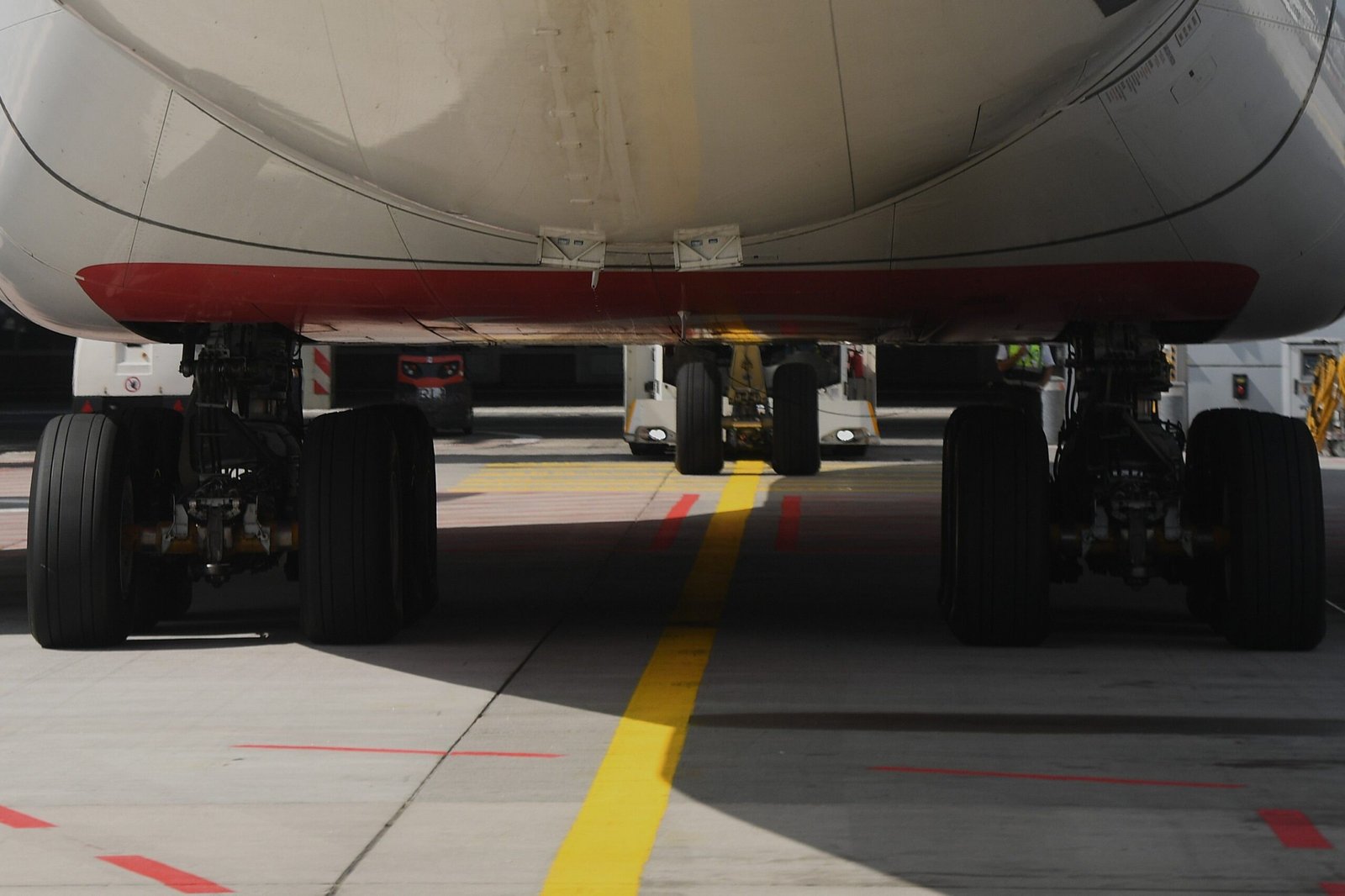
The Landing Gear Overhaul Capacity Crisis
The global landing gear overhaul market is experiencing its most severe capacity constraint in decades. Industry reports indicate that lead times for landing gear overhauls have extended significantly across most major aircraft types, with many facilities reporting wait times of approximately 6-12 months depending on aircraft type, facility capacity, and workscope requirements.
Landing gear maintenance — typically required every 8-12 years or 20,000-30,000 cycles depending on aircraft type — has become a critical bottleneck for fleet planning. Unlike engine or airframe maintenance, landing gear overhaul requires specialised tooling, certified technicians, and OEM-approved processes that cannot be easily scaled. This report examines the causes of the capacity crisis, cost benchmarks, exchange market dynamics, and strategic solutions for operators.
Root Causes of the Capacity Crisis
Several converging factors have created the current landing gear overhaul bottleneck:
Aircraft grounded during COVID-19 are now returning to service, creating a concentrated wave of scheduled maintenance events including landing gear overhauls.
Landing gear OEMs prioritise new production over aftermarket support, limiting spare component availability for overhaul facilities.
Landing gear overhaul requires highly specialised technicians certified for specific aircraft types. The workforce has not kept pace with demand.
Aircraft are flying at record utilisation rates, accelerating landing gear removal intervals and bringing forward overhaul requirements.
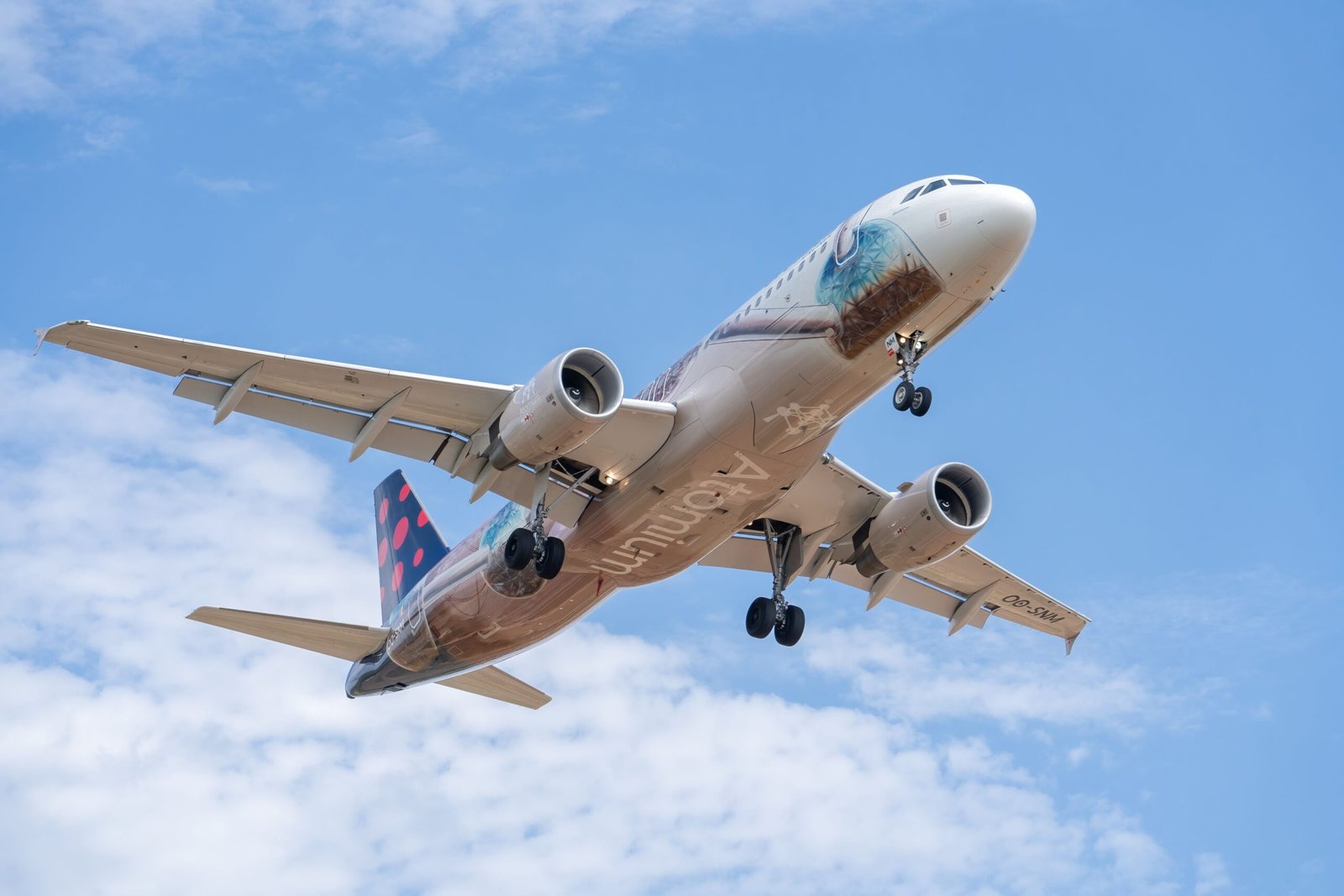
Lead Time Comparison by Aircraft Type
Current lead times for landing gear overhauls have extended significantly compared to pre-crisis levels. Based on industry reports and MRO facility communications, the following ranges are indicative:
| Aircraft Type | Pre-Crisis Lead Time (2019) | Current Lead Time (2026) | Change |
|---|---|---|---|
| A320ceo/neo family | 3-5 months | Approximately 7-12 months | Significant extension |
| B737NG/MAX family | 3-5 months | Approximately 6-10 months | Notable increase |
| A330 family | 4-6 months | Approximately 8-12 months | Severe constraint |
| B777 family | 4-7 months | Approximately 9-14 months | Severe constraint |
| B787 / A350 family | 5-8 months | Approximately 10-16 months | Most severe |
Note: Lead times vary significantly by facility, region, and workscope. Some operators report even longer delays for specific landing gear positions or component types.
Landing Gear Overhaul Cost Benchmarks by Aircraft Type
Understanding typical overhaul costs is essential for maintenance budgeting and lease return planning. Based on industry data and market reports, the following ranges represent typical benchmarks for complete landing gear overhaul (three legs) as of 2026:
| Aircraft Type | Typical Overhaul Cost (USD) | Key Cost Drivers |
|---|---|---|
| A320 Family | $250,000 – $600,000 | Actuators, shock struts, wheels/brakes |
| B737NG/MAX | $250,000 – $700,000 | Truck beams, axles, brake components |
| A330 | $500,000 – $1,200,000 | Complexity, larger components |
| A350 | $1,000,000 – $2,500,000 | Advanced materials, limited MROs |
| B777 | $800,000 – $2,000,000 | Size, specialty components |
| B787 | $1,000,000 – $3,000,000+ | Advanced materials, limited MROs |
| A321neo | $350,000 – $750,000 | Similar to A320, newer materials |
| B737 MAX | $350,000 – $800,000 | Newer materials, limited MROs |
Note: Costs vary based on workscope, component condition, and regional labor rates. Full overhaul includes NDT inspection, re-chroming, actuator overhaul, and certification.
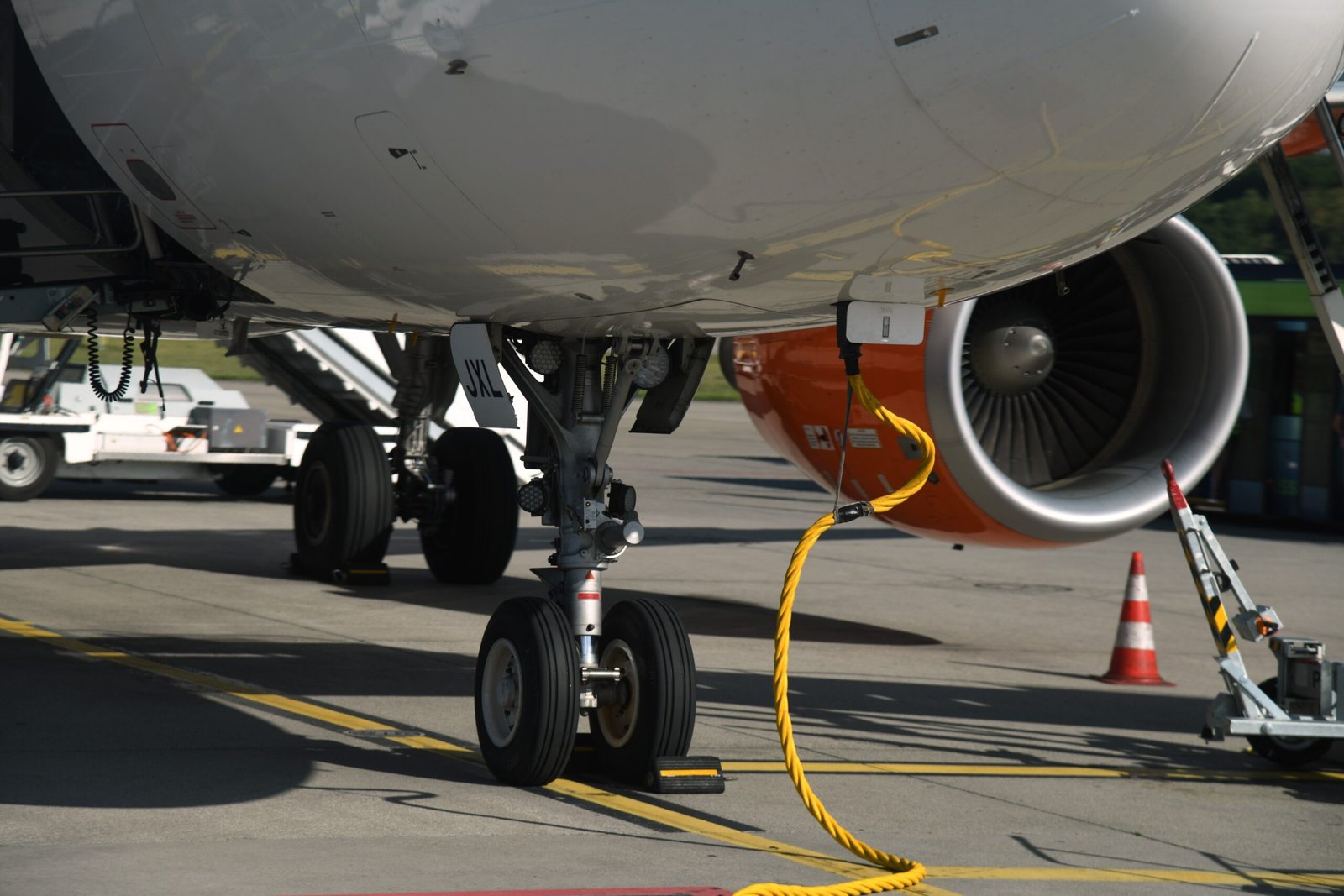
Landing Gear Removal Interval Explained
Understanding when landing gears require removal is essential for fleet planning. Removal intervals are governed by hard-time limits based on aircraft manufacturer's maintenance planning documents (MPD) and MSG-3 logic:
| Aircraft Type | Typical Removal Interval | Basis |
|---|---|---|
| A320 Family / A321neo | 8-10 years / 20,000-25,000 cycles | Hard time / calendar limit |
| B737NG/MAX | 8-10 years / 20,000-25,000 cycles | Hard time / calendar limit |
| A330 | 10-12 years / 15,000-20,000 cycles | Hard time / calendar limit |
| B777 | 10-14 years / 15,000-20,000 cyclesHard time / calendar limit | |
| B787 / A35012-14 years / 20,000-25,000 cyclesHard time / calendar limit | ||
| A2208-10 years / 18,000-22,000 cyclesHard time / calendar limit | ||
| E190/E1958-10 years / 18,000-22,000 cyclesHard time / calendar limit |
MSG-3 maintenance philosophy allows for condition-based monitoring, but landing gears remain on hard-time limits due to safety-critical nature. Operators must plan removals well in advance of limits to avoid AOG situations.
Industry Statistics: 2019 vs 2026
The magnitude of the capacity crisis is best understood through comparative metrics based on industry assessments:
| Metric | 2019 (Pre-Crisis) | 2026 (Current) | Change |
|---|---|---|---|
| Average Lead Time (narrowbody)3-5 months7-12 monthsApproximately +100-150% | |||
| Exchange Program DemandLowHigh / CriticalSignificant increase | |||
| Pool Asset AvailabilityModerateTight / LimitedSevere constraint | |||
| Overhaul Cost (A320 baseline)BaselineEstimated +25-40%Real terms increase |
Landing Gear Shop Visit Timeline
Each step requires specialised tooling and certified technicians, creating a complex supply chain that cannot be easily accelerated.
Aircraft-Specific Analysis
A320 Family and A321neo Landing Gear Overhaul
The A320ceo, A320neo, and A321neo families represent the largest narrowbody fleet globally. Industry estimates suggest a very large fleet of A320 family aircraft in service, each requiring landing gear overhaul every 8-12 years. Current lead times of approximately 7-12 months have forced many operators to extend leases or acquire exchange gears. Typical overhaul costs range from $250,000 to $600,000 for A320 and $350,000 to $750,000 for A321neo depending on workscope. Key components include main landing gear shock struts, side stay assemblies, drag braces, and nose landing gear torque links.
B737NG, B737 MAX, and B787 Landing Gear Overhaul
Similar to the A320 family, the B737 fleet's size drives significant demand. Lead times typically range from approximately 6-10 months for B737NG, 8-12 months for B737 MAX, and 10-16 months for B787, with costs between $250,000 and $700,000 for B737NG, $350,000 to $800,000 for B737 MAX, and $1,000,000 to $3,000,000 for B787. The B737 MAX and B787 introduce additional complexity with newer materials and fewer certified overhaul facilities. Truck beams, axles, and downlock assemblies are critical components requiring specialised attention.
A220 and E-Jet Landing Gear Overhaul
The A220 and Embraer E-Jet families (E170/E175/E190/E195) have growing fleets with distinct landing gear requirements. Lead times for these regional aircraft typically range from 6-10 months, with costs between $200,000 and $500,000 depending on workscope. Several MRO providers are expanding capacity for these platforms, but constraints remain.
A350 and A330 Landing Gear Overhaul
The A350 fleet is growing rapidly. Composite-intensive landing gear structures require specialised handling. Lead times of approximately 10-16 months and costs of $1,000,000-$2,500,000 reflect limited MRO capacity. The A330 fleet continues to operate heavily in cargo and passenger configurations with lead times of approximately 8-12 months and costs of $500,000-$1,200,000. Operators should plan widebody landing gear removals well in advance.
B777 Landing Gear Overhaul
Widebody landing gears are more complex and require even more specialised facilities. Lead times for B777 landing gears often exceed 12 months, with overhaul costs ranging from $800,000 to $2,000,000. The B777 remains a critical freighter and passenger aircraft, intensifying demand.
Major OEM and MRO Provider Capacity Analysis
Safran Landing Systems
Safran Landing Systems is the dominant OEM for A320, A330, A350, and B787 landing gear. The company's aftermarket capacity is significantly constrained, with lead times exceeding 12 months for some positions. Safran has announced capacity expansion plans, but new facilities will not be fully operational until 2028-2029.
Collins Aerospace
Collins Aerospace is the primary supplier for B737, B777, and B787 landing gear. Capacity is limited for non-core customers, with preference for long-term contracted operators. Lead times for B777 landing gears through Collins are particularly extended.
Lufthansa Technik
Lufthansa Technik offers comprehensive landing gear MRO services across A320, A330, A340, B737, B777, and B787 aircraft. Their Hamburg and Sofia facilities operate at or near capacity. Lead times for new customers range from 8-14 months depending on aircraft type.
Revima
Revima specialises in landing gear MRO with facilities in France, Asia, and the Americas. The company is known for exchange programs and quick-turn capabilities. Revima's exchange pool for A320 and B737 landing gears is one of the largest in the industry, but availability remains tight.
Other Providers
Additional capacity is available from AFI KLM E&M (Europe), ST Engineering (Asia-Pacific), HAECO (Hong Kong), and Héroux-Devtek (North America). Operators are advised to diversify MRO partners and consider multiple facilities for fleet requirements.
Why Landing Gear Overhaul Costs Are Rising
Multiple factors are driving the increase in landing gear overhaul costs:
| Cost Driver | Impact on Cost | Trend |
|---|---|---|
| Labor shortagesHigh (estimated +15-25%)Worsening | ||
| Chrome plating regulationsHigh (estimated +10-20%)Increasing compliance costs | ||
| Material costsModerate (estimated +5-15%)Stable but elevated | ||
| OEM parts pricingHigh (estimated +15-30%)Upward pressure | ||
| Logistics and shippingModerate (estimated +5-10%)Stabilising |
Based on market data, operators should expect continued cost pressure through 2027-2028 before any moderation occurs.
The Rise of Landing Gear Exchange and Leasing Programs
In response to extended overhaul lead times, the landing gear exchange and leasing market has expanded significantly. Exchange programs allow operators to source serviceable landing gear sets while their own units undergo overhaul, eliminating aircraft downtime.
Serviceable units provided while operator's gear is overhauled. Reduces AOG exposure.
Temporary gear sets for unplanned removals or bridge coverage during maintenance.
Pre-positioned assets available for immediate AOG response.
Shared inventory programs for multiple operators.
Safe Fly Aviation assists operators in sourcing exchange landing gears, short-term leases, and component solutions for A320, B737, A330, B777, and other aircraft types.
Available for Purchase or Exchange
Safe Fly Aviation actively sources, acquires, exchanges, leases, and trades the following landing gear assets:
Complete shipsets, exchange units, components
Serviceable units, LLP traceability, exchange gears
Overhauled units, exchange programs, advance planning
Complete sets, component support, MRO slot sourcing
Regional aircraft landing gears, components
Actuators, struts, truck beams, axles, torque links, side stays, drag braces
Life-limited parts with full traceability and remaining life certification
Immediate gear replacement while yours is overhauled
Landing Gear and Lease Return Challenges
The capacity crisis has created particular challenges for aircraft lease returns. Lessors typically require landing gears to be overhauled or have sufficient remaining life at redelivery. Current constraints have led to:
Typical Lessor Requirements
- Fresh overhaul or remaining life: Most lessors require landing gears to have been overhauled within the last 5-7 years or have minimum remaining cycles/calendar time at redelivery.
- LLP traceability: Complete documentation of life-limited parts with remaining life certification.
- Full maintenance records: Complete history of all repairs, modifications, and component changes.
- OEM documentation: Original manufacturer certification for major components.
Operational Challenges
- Lease extensions: Lessees unable to complete required overhauls negotiate extensions.
- Maintenance reserve claims: Disputes over the cost and timing of landing gear overhauls.
- Redelivery delays: Aircraft cannot be returned without compliant landing gears.
- Asset value impacts: Landing gear condition directly affects residual values.
Operators should document landing gear status early in the lease return process and consider exchange programs to facilitate timely redelivery.
Secondary Market and USM Landing Gear Components
As overhaul capacity tightens, the secondary market for serviceable landing gear and used serviceable material (USM) has become increasingly valuable. Sources include:
- Aircraft teardown programs – Landing gears recovered from retired aircraft
- Surplus inventory sales – Airlines and lessors selling excess assets
- End-of-lease returns – Gears removed during redelivery
- Exchange pool assets – Rotation of serviceable units
Serviceable landing gear components — including side stay assemblies, drag braces, torque links, truck beams, axles, uplock mechanisms, downlock assemblies, shock struts, and actuators — can be sourced at significant savings compared to OEM new prices, with immediate availability.
Strategic Solutions for Operators
Based on Safe Fly Aviation's work with global operators, the following strategies can help mitigate landing gear capacity constraints:
Schedule landing gear removals 12-18 months in advance. Early slot reservation is critical to avoid AOG situations.
Source serviceable exchange landing gears to eliminate aircraft downtime during overhaul.
Acquire serviceable landing gear components from the secondary market to bypass overhaul queues.
Negotiate lease extensions with lessors to defer landing gear overhaul until capacity improves.
Consider emerging MRO providers in Asia and the Middle East that may offer shorter lead times.
Acquire serviceable landing gear assets outright to build internal spares inventory.
Safe Fly Aviation assists operators in sourcing serviceable landing gear components, complete landing gear sets, exchange units, and lease support for A320, B737, A330, B777, A350, A220, E-Jet, and other aircraft types.
Market Outlook and Recovery Timeline
The landing gear overhaul capacity crisis is not expected to resolve quickly. Several factors will determine the recovery timeline:
- New facility openings: Several major MRO providers are expanding landing gear overhaul capacity, but new facilities require 18-24 months to become fully operational and certified.
- Workforce development: Training specialised landing gear technicians takes 2-3 years, limiting near-term capacity increases.
- OEM spare part production: Increased spare component production from OEMs could alleviate bottlenecks, but prioritisation remains on new production.
Based on industry analyses, capacity normalisation may not occur until late 2028 or 2029. Operators who act decisively today — through advance planning, strategic acquisitions, exchange programs, and diversified MRO partnerships — will be best positioned to weather the current constraints.
Sources and Market Data
- IBA – Landing Gear MRO Market Report 2025-2026
- Oliver Wyman – Global Fleet and MRO Market Assessment 2026
- Aviation Week – MRO Capacity Survey 2026
- Safran Landing Systems – Aftermarket Communications
- Collins Aerospace – Landing Gear MRO Updates
- Lufthansa Technik – Landing Gear Services
- Revima – Exchange Program Updates
- Safe Fly Aviation internal market intelligence
Related resources
Frequently Asked Questions
What is causing the landing gear overhaul capacity crisis?
The crisis stems from post-pandemic maintenance backlog, OEM capacity constraints prioritising new production, specialised skill shortages, and increased fleet utilisation accelerating landing gear removal intervals.
How long are landing gear overhaul lead times currently?
Based on industry reports, lead times have extended significantly: A320 family approximately 7-12 months, B737 family 6-10 months, A330 and B777 8-14 months, with newer types like B787 and A350 experiencing delays of 10-16 months depending on facility capacity.
What is the typical cost of a landing gear overhaul?
Based on industry data: A320 family $250,000-$600,000, A321neo $350,000-$750,000, B737NG $250,000-$700,000, B737 MAX $350,000-$800,000, A330 $500,000-$1,200,000, A350 $1,000,000-$2,500,000, B777 $800,000-$2,000,000, B787 $1,000,000-$3,000,000, and regional jets $200,000-$500,000 depending on workscope.
What is a landing gear exchange program?
Exchange programs allow operators to source serviceable landing gear sets while their own units undergo overhaul, eliminating aircraft downtime. Safe Fly Aviation can assist with exchange gear sourcing.
What is the typical landing gear removal interval?
Landing gear removal intervals are typically governed by hard-time limits: 8-10 years for narrowbody aircraft (A320, B737, A220) and 10-14 years for widebody aircraft (B777, A330, A350, B787), or 18,000-30,000 cycles depending on aircraft type and MSG-3 maintenance program.
Which MRO providers offer landing gear overhaul?
Major providers include OEMs (Safran, Collins, Liebherr, Héroux-Devtek) and independent specialists (Lufthansa Technik, AFI KLM E&M, ST Engineering, Revima, HAECO).
Can Safe Fly Aviation help source landing gear components?
Yes. Safe Fly Aviation actively sources, acquires, exchanges, leases, and trades landing gear assets for A320, B737, A330, B777, A350, A321neo, B787, A220, E-Jet, and other aircraft types. Contact us for current availability.
Need Landing Gear, Exchange Units, or MRO Slots?
Safe Fly Aviation actively sources, acquires, exchanges, leases, and trades:
A320, B737, A330, B777, A350, A321neo, B787
Short-term and long-term programs
Priority access to overhaul facilities
24/7 emergency component sourcing
Redelivery support and compliance
Serviceable parts at competitive pricing
Full sets with LLP traceability
Actuators, struts, truck beams, axles, torque links, side stays, drag braces