African Airlines & Aging Engine Fleets: Survival Strategies
Heat, Cycles, and Hard Choices: How African Airlines Manage Aging Engine Fleets
In the engine shop queues of Miami, London, and Dubai, there is a quiet hierarchy. Tier one: European and Gulf carriers with pristine records. Tier two: lessors reclaiming assets. Tier three: the African operator trying to justify one more extension on a CFM56-3 that has seen more dust than any fan blade should.
Managing aging engine fleets in Africa is not a theoretical exercise in reliability engineering. It is a weekly fight against AOGs, a monthly scramble for bridge finance, and a constant negotiation with OEMs who would rather sell new PowerByTheHour agreements than support 1990s metallurgy. Yet, across the continent—from Nairobi to Johannesburg to Accra—technical directors are keeping these engines turning. Here is how they do it, and what the rest of the world can learn from their pragmatism.
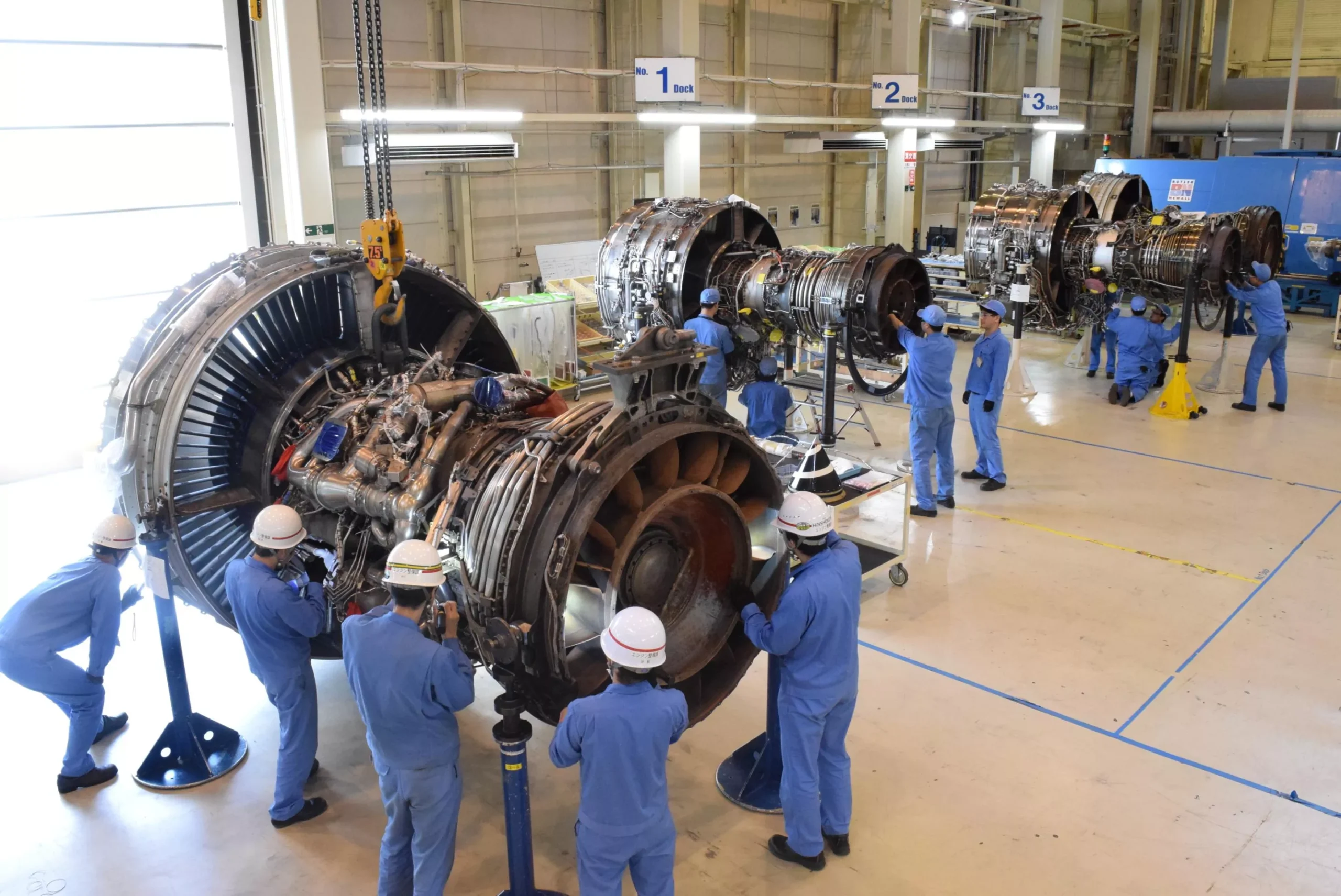
African airlines operate one of the oldest average fleet ages globally, with narrowbody workhorses frequently exceeding 18–25 years. Engine management in this context diverges sharply from typical fleet-renewal practice elsewhere. Due to capital constraints, sanctions affecting Russian-linked support channels, and demanding operating conditions (heat, dust, short sectors), carriers rely on a hybrid model: aggressive on-wing extension, opportunistic part-outs, regional MROs, and cross-border engine pooling. The retirement of the CFM56-3/-5B and early PW1000G variants is tightening the used-serviceable material market industry-wide — a trend that disproportionately affects African lessors and charter operators, who have fewer alternative sourcing channels than carriers in wealthier markets. (Note: figures in this article vary by source and are flagged individually below where a specific dataset couldn't be independently confirmed.)
Market Reality: The Average Age Problem
While global low-cost carriers refresh fleets every six to eight years, the African domestic and regional market operates differently. A 2002-vintage Boeing 737-400 is still a prized asset in Kinshasa. The engine attached to it—likely a CFM56-3C1—was designed with a service life that assumed retirement well before now. Today, that life is being stretched through creative LLP (life-limited part) management.
Industry observers have noted that a meaningful share of the continent's active turbine fleet operates beyond the original equipment manufacturer's recommended retirement guidance for hot-section components. This is not necessarily negligence — it can be a calculated risk, supported by enhanced borescope intervals and regional MRO partners that have developed approved repair schemes for turbine shrouds and combustor liners.
Regional Engine Stress Index (Heat Map Equivalent)
The Sanctions Side-Effect
Until 2022, a grey channel existed: Russian-linked workarounds and third-party part support for aging western engines. The invasion of Ukraine and the sanctions that followed disrupted that pipeline. African operators who had relied on cheaper, less-traceable parts from Eastern European brokers have shifted back toward the legitimate — and typically more expensive — used-serviceable market. This has accelerated the shift toward verifiable parts traceability, and operators generally report higher costs for routine heavy maintenance visits as a result.
Technical Analysis: Where Aging Engines Fail First in African Conditions
Engine reliability in tropical and high-altitude environments (think Addis Ababa at 7,700ft or Johannesburg at 5,500ft) follows different failure modes than the temperate north.
Hot Section Corrosion & Sulfidation
High dust loads (silica) combined with humidity during the rainy season create a glassy deposit on turbine blades. This accelerates sulfidation, a form of accelerated oxidation that eats nickel-based superalloys. Operators in these conditions often wash compressors more frequently than the maintenance planning document's baseline interval calls for, to manage this buildup.
For operators struggling with recurring hot-section degradation, Safe Fly's engine sourcing team can help source used-serviceable high-pressure turbine modules with certified remaining life as an alternative to a full overhaul.
High Cycle Count, Low Flight Hours
A short hop from Lagos to Accra imposes high cycle fatigue without the benefit of long cruise periods to thermally stabilize the engine. For a CFM56-7B, this means life-limited parts reach their cycle limit long before their hour limit. The result: premature part-outs. One Accra-based operator we worked with recently had a -7B with only 12,000 hours but 28,000 cycles—making it worthless for a long-haul operator but invaluable for regional feeder fleets.
Foreign Object Damage from Runway Conditions
Not all African airports have sealed shoulders. FOD ingestion from taxiways—stones, broken concrete, debris—remains a primary cause of premature blade replacement. The most successful operators have implemented mandatory engine inspection upon every night-stop, a discipline borrowed from military aviation.
Operational Importance: AOG and the Cost of Grounding
When an aging engine goes unserviceable in Lilongwe or Douala, the logistics chain fails. There is often no pool of leased engines in-country. The cost of a lease engine flown in from Europe, installed, and returned can easily exceed $250,000 before a single repair is done. Therefore, African technical directors often prioritize predictive part replacement over reactive maintenance. They have also become masters of the engine roll—removing a high-time engine from a parked airframe and swapping it onto a revenue-generating asset. This cannibalization, frowned upon in wealthier markets with deeper spare-engine pools, is a rational survival strategy in sub-Saharan Africa. For emergency AOG support across the continent, Safe Fly's operational desk has provided rapid engine change assistance in multiple African countries.
Commercial and Financial Perspective: The Economics of Keeping Old Engines Alive
Let us talk money. A full overhaul of a CFM56-7B at a major OEM-affiliated shop can run several million dollars depending on the LLP basket replaced. That sum might represent six months of operating profit for a smaller African airline. So they avoid it.
Instead, they use a combination of: performance restoration at regional shops (including SAA Technical in Johannesburg) — typically $1.2M to $1.8M; used-serviceable LLP trading; engine leasing with return conditions negotiated case-by-case; and, in some cases, cross-border pooling arrangements between operators. Some regional operators reportedly pool engine capacity across airlines to spread the cost of maintaining a shared contingency asset — a form of co-opetition that would have been unthinkable among direct competitors a decade ago.
Engine Management Cost Comparison (USD)
| Strategy | Typical Cost (USD) | Risk Level | African Suitability |
|---|---|---|---|
| Full OEM Overhaul | $3.5M – $5.0M | Low | Rarely affordable |
| Regional Performance Restoration | $1.2M – $2.0M | Medium | Sweet spot |
| Used-Serviceable Part Replacement | $400k – $1.2M | Medium-High | Very common |
| Lease Engine (wet) | $45k – $90k/month | Low (if lessor reliable) | Crisis management only |
| Cannibalization / Part-out | Variable ($0 upfront) | High (stranding risk) | Widespread but declining |
Industry Trends: The End of the CFM56 Era and What Comes Next
We are in the twilight of the CFM56. Over 20,000 units were built, and the retirement wave has begun. For African airlines, this is a double-edged sword. On one hand, part-out inventory in Europe and North America means used-serviceable material remains available — for now. On the other hand, MRO capacity is shifting toward LEAP and GTF, and experienced CFM56 technicians are a shrinking pool. Analysts broadly expect CFM56 overhaul slot availability to tighten as the shift to newer engine families accelerates. African airlines will either need to invest in their own MRO capabilities — Ethiopian Airlines has done exactly this with a $150 million expansion of its Addis Ababa MRO facilities, including a new engine test cell — or face forced fleet renewal. Meanwhile, cargo charter operators are aggressively acquiring high-time CFM56 engines as feedstock for freighter conversions.
Geographic Relevance: Regional Hubs and Their Specializations
- North Africa (Morocco, Tunisia): Regional shops in Casablanca offer CFM56 maintenance capability, typically priced below European shops.
- East Africa (Ethiopia, Kenya): Ethiopian's heavy maintenance hangar at ADD includes an engine test cell, supporting third-party African operators in addition to its own fleet.
- Southern Africa (South Africa): SAA Technical holds capability on older engine types including the RB211 and CF6-80, relevant to the few African A330 operators.
- West Africa (Nigeria, Ghana): Comparatively little heavy MRO capacity. Airlines commonly rely on fly-away teams from Europe or the Middle East. Safe Fly has assisted Nigerian operators with 737 Classic part-out arrangements to help keep fleets active.

Future Outlook: 2026–2030
We expect a bifurcation. Larger African carriers will continue fleet modernization, but many smaller charter, cargo, and domestic operators will fly their CFM56-3/-5Bs until parts availability genuinely runs out. Real innovation is likely in digital engine monitoring: low-cost satellite-connected sensors that transmit exceedances and trends, allowing African operators to manage aging engines with more precision than before, without first-world MRO pricing. Also watch for alternative support emerging from MROs in the Middle East; Safe Fly's consulting team tracks alternative repair-shop capacity as part of its advisory work.
Safe Fly Aviation Perspective
At Safe Fly, we do not pretend that every African operator can afford a full OEM overhaul-and-support agreement. Our clients range from Accra-based cargo operators with 737 Classics to Lusaka-based charter companies flying King Airs with PT6As that have seen better decades. Our approach is consultative. We help technical directors model three scenarios: part-out-and-replace, lease-and-return, or overhaul-with-extension. We also source engines and APUs from our global network—not always zero-time units, but units with reliable cycle life and verifiable paperwork. The African market does not need lectures on OEM compliance. It needs practical partners who understand that a decades-old CFM56 that still delivers reliable thrust is an asset, not a liability—if managed correctly.
Conclusion
Managing aging engine fleets across African aviation requires a blend of technical creativity, financial discipline, and a willingness to go where the parts are. While global standards push toward new engines, the reality on the ground is more nuanced. African operators are keeping the continent moving through careful part pooling, regional MRO specialization, and a deep understanding of their engines' actual limits. The years ahead will be difficult, but the resourcefulness that defines African aviation will find a way. And for those who need a partner in that journey, Safe Fly Aviation stands ready.
Frequently Asked Questions (FAQ)
🛠️ Need CFM56 Availability? AOG in Africa?
Immediate support: engine sourcing, lease engines, LLP trading, or emergency AOG dispatch. Safe Fly's Africa desk is ready to help.
📞 Request Engine Availability → 🔧 Engine & APU Sourcing →✉️ info@safefly.aero | Contact Safe Fly Aviation for charter & cargo support
📌 Related Safe Fly Services: Aircraft Sales | Cargo Charter Aircraft | Africa Charter Services | Aviation Engineering Services