Afghanistan Aviation 2026: NOTAMs, Airspace & Operational Guide | Safe Fly Aviation
Afghanistan Aviation Situation in 2026: NOTAMs, Airspace Restrictions, and Practical Guidance for Aircraft Operators, Cargo Charters, and Service Providers
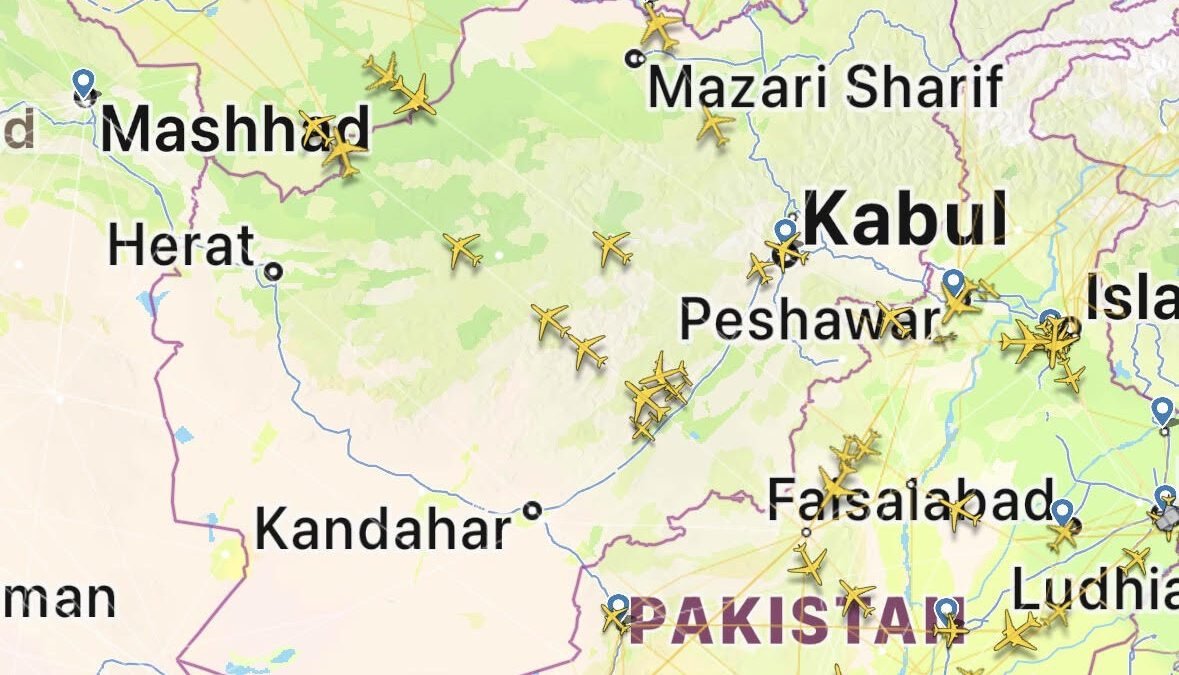
As of August 2026, the aviation landscape in Afghanistan remains one of the most complex and dynamic in the world. Following the events of 2021, the Kabul Flight Information Region (OAKX FIR) continues to operate without conventional air traffic control services, and it has seen sustained transit traffic through 2026. Much of this stems from airlines rerouting around closed or restricted Middle Eastern corridors amid ongoing regional tensions.
For aircraft operators, cargo charter companies, ground handlers, and support service providers, understanding the current NOTAMs, Aeronautical Information Publication (AIP) updates, permission requirements, and broader risk environment is not optional—it is essential for compliance, safety, and operational continuity. This guide draws from verified official and cross-referenced sources, including the Afghanistan Civil Aviation Authority's (ACAA) NOTAM portal at afgais.com, procedural NOTAMs, and international regulator advisories. It aims to equip flight planners, dispatchers, and decision-makers with the detail needed to assess feasibility and mitigate risk. Because NOTAMs in the Kabul FIR turn over frequently, always confirm the current, active NOTAMs directly before flight dispatch — the specific NOTAM numbers below illustrate the type of restrictions in force earlier in 2026 and should not be relied on as current without re-verification.
Current Status of Kabul FIR (OAKX): Uncontrolled Class G Airspace
The entire Kabul FIR remains uncontrolled Class G airspace with no Air Traffic Services (ATS) provided. There is no en-route ATC, approach control at major airports is frequently unserviceable, and pilots bear full responsibility for separation. This arrangement has been in place since 2021 and remained unchanged as of mid-2026.
- Traffic Information Broadcast by Aircraft (TIBA) on
125.2 MHzevery five minutes while in the FIR (and 10 minutes prior to entry for overflights), per ICAO Annex 11, Attachment B. - Strict adherence to published laterally de-conflicted high routes (FL300–FL510 on most airways; specific exceptions noted).
- Maintenance of 15-minute longitudinal spacing from preceding traffic at the same flight level.
- Offset procedures for climb/descent (5 NM right of track) and specific lateral offsets to avoid active prohibited areas (e.g., OAP 201).
- Non-RVSM operations restricted at FL290.
- All flights must file flight plans at least 24 hours in advance and operate via contingency routes only.
These procedures are set out in ACAA's AIP (General, Enroute, and Aerodrome sections) and periodic AIRAC amendments, together with an ATM Contingency Plan and TIBA guidance aligned with ICAO Annex 11 and Doc 4444, all available via the official ACAA portal. Operators are strongly advised to pull the current AIP and AIRAC editions directly from the portal before any operation, since editions and amendment numbers are superseded regularly.
Airport Operations: What Operators Can Expect
Kabul International (OAKB) remains the primary international gateway, though services are limited. Illustrative examples of the type of NOTAM restrictions ACAA has issued through 2026 include:
- Extended H24 (24-hour) operations during periods of high seasonal demand (e.g., Hajj-related traffic in spring 2026).
- Rescue and Firefighting Service (RFFS) upgraded to Category 9.
- Control Zone (CTR) is Class D within 6 NM radius up to 9,500 ft AMSL; Tower 125.4 MHz, Ground 120.6 MHz.
- Approach Control Unit unserviceable for extended periods (e.g., NOTAM G0166/26, in effect 18 April–14 July 2026).
- ATIS out of service for extended periods (e.g., NOTAM G0186/26, in effect 4 May–31 July 2026), requiring specific arrival briefing (position, intentions, etc., not closer than 30 NM).
- Certain apron stands (e.g., 23 and 24 on Apron 4) closed due to pavement damage.
- SID TAPIS 2 not authorised.
Similar limitations apply at other major aerodromes (Kandahar OAKN, Herat OAHR, Mazar-e-Sharif OAMS), with local TIBA frequencies published for arrivals and departures. Ground handling, fuel availability, and security screening can be unpredictable; advance coordination is critical. Unplanned diversions are strongly discouraged—most international guidance treats any landing as high-risk.
Overflight Permissions and Fees
Prior Permission Required (PPR) is mandatory for all operations in the Kabul FIR. Submit requests at least 48–72 hours in advance (ideally one week) to flightpermissions.acaa@gmail.com (cc: flightpermission.atm@mota.gov.af). Include:
- Completed ACAA Excel application form.
- Copy of insurance certificate.
- Airworthiness certificate and aircraft registration.
- AOC (for commercial operations).
A flat fee of USD 700 applies for overflights. Approvals are typically issued within 24 hours when documentation is complete. Domestic and international airlines must also file flight plans 24 hours prior via the same channel.
Regional Context and Neighbouring Airspace Considerations
The sustained level of Afghan overflight traffic through 2026 is directly linked to the closure of much of Iranian, Iraqi, and parts of Gulf airspace amid regional tensions in the Middle East (see our related analysis of the Middle East conflict's impact on civil aviation). Many Europe–Asia carriers now route via the Caucasus, Turkmenistan, Uzbekistan, Tajikistan, and then across Afghanistan (northern corridor) before continuing eastward — a pattern also tracked in our Central Asia overflight surge advisory.
Operators should monitor NOTAMs from adjacent FIRs and plan fuel for potential holding or diversion around congested entry/exit points.
International Advisories and Risk Assessments
Major regulators continue to issue clear guidance:
- EASA CZIB 2017-08 R19 (extended to 31 January 2027): Operators should not enter OAKX below FL320, citing continued risk from non-state actor groups and recurrent Pakistani cross-border military activity.
- US FAA SFAR 119 / 14 CFR 91.1619 (extended to 25 July 2028): US-registered aircraft prohibited below FL320 in the Kabul FIR except authorised transiting overflights on P500/G500 at or above FL300, or under a US government contract/grant.
- UK, Italy, Germany, France, Canada: Similar altitude restrictions (typically FL250–FL330) and requirements to follow contingency procedures.
General advice across regulators emphasises the absence of ATC, potential for military activity, and the need for robust risk assessments. Afghanistan's Ministry of Transport and Civil Aviation has publicly stated that the airspace is "completely safe for civilian flights," but international operators are expected to apply their own due diligence and state-specific approvals.
Operational Challenges for Cargo Charters and Service Providers
Cargo charter operators face the same procedural hurdles as passenger flights, with additional considerations:
- Insurance: Many policies cover high-level overflights on published routes but may exclude low-level or landing operations. Verify war-risk and uncontrolled-airspace clauses explicitly.
- Fuel and Ground Handling: Availability can be limited and expensive; pre-positioning or uplift planning is advisable.
- Payments and Banking: Sanctions and recognition issues may complicate financial transactions—cash or specific correspondent banking arrangements are often required.
- Security and Permits: Airport access control is enforced, but infrastructure degradation and short-notice changes remain common.
- Crew and Aircraft: Fatigue management, overflight of conflict-adjacent areas, and contingency planning for medical or technical diversions are critical.
Service providers (handling agents, fuellers, maintenance organisations) should maintain close liaison with ACAA and expect heightened demand during peak rerouting periods. See also our dedicated guide to cargo charter routing through the Middle East for connecting-sector considerations.
Practical Recommendations for Safe Operations
- Always consult the latest NOTAMs and AIP via https://www.afgais.com/ before flight planning.
- Secure PPR well in advance and carry confirmation documentation.
- Brief crews thoroughly on TIBA procedures, contingency routes, and emergency descent broadcasts.
- Plan ETPs (equal time points) to minimise any need to land in Afghanistan.
- Monitor regional developments daily—Middle East tensions can shift routing options rapidly.
- Maintain open communication with the next FIR and adhere strictly to filed levels and speeds.
The situation in Afghanistan, while operationally manageable for well-prepared high-altitude transits, demands rigorous pre-flight preparation and ongoing vigilance.
For organisations requiring specialist support — whether in securing permissions, interpreting complex NOTAMs, arranging compliant charters, or developing robust risk mitigations in high-complexity environments — experienced providers can make a significant difference.
Safe Fly Aviation (safefly.aero), with its long track record in mission-critical operations across South Asia and beyond, offers precisely this level of tailored expertise to help operators navigate these challenges safely and efficiently.
Get Expert Support →Safe Fly Aviation Cargo Charter Services – Global Reach, Precision Execution
Beyond flight support and risk consulting, Safe Fly Aviation operates a dedicated cargo charter division, offering on‑demand airfreight solutions for time‑sensitive, oversized, or high‑value shipments. Our network covers the most challenging environments, including Afghanistan, the Middle East, Africa, and Central Asia. Whether you need to move humanitarian aid, oil & gas equipment, automotive parts, perishables, or general cargo, our team provides end‑to‑end logistics: from route planning and overflight permits to ground handling and security coordination.
With a fleet of available cargo aircraft (including B737, B757, B767 freighters and IL‑76 for heavy lift) and partnerships with major ACMI providers, we ensure rapid response and operational integrity. Our in‑depth understanding of the Kabul FIR and surrounding restricted airspaces means your cargo moves without unnecessary delays, fully compliant with ACAA, EASA, FAA, and local regulations.
Key cargo charter features:
- Full‑service charter management: from quoting to post‑flight reporting.
- Specialised handling for dangerous goods, temperature‑controlled, and out‑of‑gauge cargo.
- 24/7 operational control and real‑time tracking.
- Risk‑mitigated routing through complex airspace (including Afghanistan overflights).
- Short‑notice ad‑hoc charters and long‑term block space agreements.
To request a cargo charter quote or discuss your logistics requirements, visit our cargo charter aircraft hub or contact our charter desk directly. Let Safe Fly Aviation deliver your freight safely, on time, and without compromise.
Aviation in Afghanistan is not for the unprepared, but with current official information, disciplined procedures, and the right partners, responsible operations remain achievable. Stay safe, fly informed, and always check the latest official publications.
This intelligence brief was originally published April 2026 and updated August 2026. Always verify the latest NOTAMs before flight dispatch — specific NOTAM numbers cited above may have lapsed or been superseded.