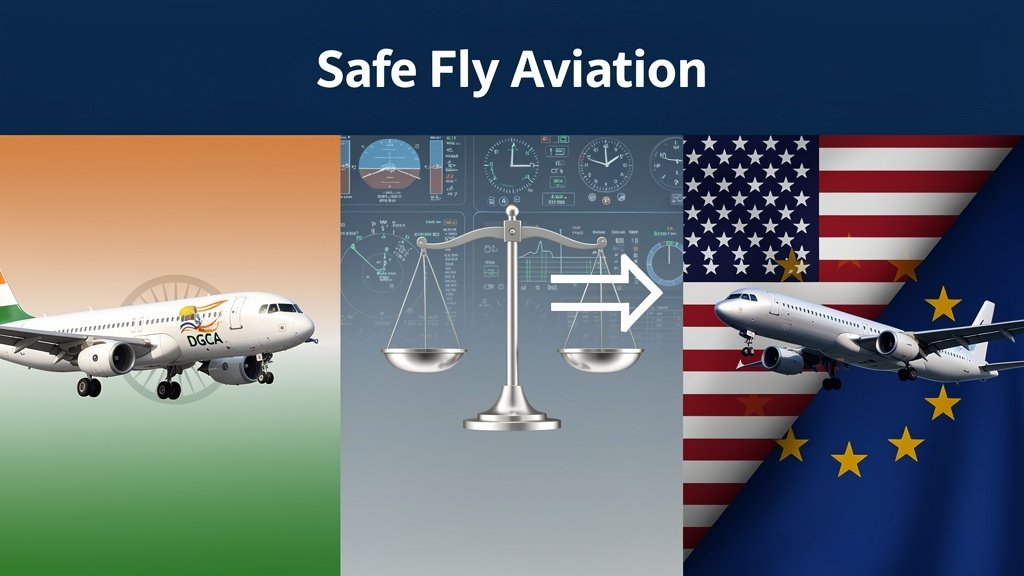
DGCA- New FDTL Rules: How Do They Stack Up Against Global Standards?
DGCA's New FDTL Rules: How Do They Stack Up Against Global Standards?
Executive Summary
India's aviation landscape stands at a pivotal juncture. As the nation's skies prepare to accommodate what industry analysts project will be the world's third-largest aviation market by 2026, the Directorate General of Civil Aviation (DGCA) has introduced comprehensively revised Flight Duty Time Limitations (FDTL) regulations throughout 2025. These landmark changes, implemented in two critical phases during July and November, represent the most significant overhaul of pilot fatigue management protocols in Indian aviation history.
This comprehensive analysis examines how India's refreshed regulations measure up against the benchmarks established by the United States Federal Aviation Administration (FAA) and the European Union Aviation Safety Agency (EASA), both of which derive their frameworks from the International Civil Aviation Organisation (ICAO) foundational principles. We'll dissect the implications for flight safety, operational efficiency, and India's positioning within the global aviation community.
Understanding Global FDTL Frameworks: The Foundation
International standards for pilot duty limitations aren't arbitrary—they're rooted in decades of fatigue science and accident investigation data. Research consistently shows that pilot fatigue accounts for approximately 15-20% of aviation incidents worldwide, making robust FDTL regulations essential for maintaining the highest safety standards.
The ICAO Baseline
The International Civil Aviation Organisation provides the prescriptive framework upon which member states build their national regulations. ICAO's Annexe 6 establishes core requirements designed to mitigate two distinct types of fatigue:
- Transient Fatigue: Short-term tiredness resulting from immediate operational demands, inadequate rest, or circadian disruption
- Cumulative Fatigue: Long-term exhaustion accumulating over weeks or months due to sustained operational pressure
Whilst ICAO mandates specific safeguards, it deliberately allows regulatory flexibility, permitting states to adapt requirements to their operational realities. Crucially, ICAO also champions Fatigue Risk Management Systems (FRMS)—sophisticated, data-driven approaches that complement traditional prescriptive limits.
🌍 Global Regulatory Approaches
FAA (United States) – 14 CFR Part 117
The Federal Aviation Administration's science-based regulations emphasize circadian rhythm protection. Their framework features dynamic Flight Duty Period (FDP) limits—up to 14 hours for unaugmented crews—adjusted based on the duty start time and the pilot's acclimatisation status. The FAA's approach notably prioritizes cumulative rest requirements, ensuring pilots receive adequate recovery time over rolling periods.
EASA (European Union) – Regulation (EU) No 965/2012
Europe's regulations employ a 13-hour baseline FDP (extendable under specific conditions) with notably stringent protections for night operations. EASA defines the critical night period as 02:00-04:59, during which human performance naturally deteriorates. The agency's 2023 amendments, informed by comprehensive fatigue research, further tightened restrictions on night duties and late finishes to address what European regulators term "disruptive schedules."
DGCA (India) – 2025 Enhanced Framework
Building upon 2019 foundations, India's regulator has introduced phased enhancements that address both international alignment and domestic operational realities:
- 48-hour mandatory weekly rest (increased from 36 hours)
- Expanded night duty definition (now 0000-0600, previously 0200-0600)
- Strict night landing limits (maximum two landings, reduced from six)
- FDP capping formula (flight time + 1 hour maximum)
- Quarterly fatigue reporting requirements for all operators
- Optional FRMS implementation pathway for progressive operators
These frameworks share common ICAO DNA—prioritizing adequate rest and duty limits—yet diverge significantly in implementation specificity, operational flexibility, and regional adaptation strategies.
Comprehensive Regulatory Comparison: The Details Matter
To facilitate meaningful comparison, we've compiled detailed specifications for two-pilot (unaugmented) operations across all three regulatory frameworks. It's essential to note that these represent baseline standards; provisions exist for extensions during unforeseen operational circumstances or when crews are augmented with additional pilots.
| Parameter | DGCA (India, 2025) | FAA (United States) | EASA (European Union) |
|---|---|---|---|
| Maximum Daily Flight Time | 10 hours standard (8 hours during encroaching night) |
8-9 hours (varies by duty start time) |
Up to 10 hours (dependent on sector count) |
| Maximum Flight Duty Period (FDP) | Flight time + 1 hour (typically 11-12 hours; night: 10 hours) |
9-14 hours (adjusted for start time, acclimatization, sectors) |
13 hours baseline (up to 15 with extensions; night: reduced) |
| Night Duty Definition | 0000-0600 (maximum two landings) |
0000-0459 (WOCL: 0200-0759; FDP reduces) |
0200-0459 (stringent limits; 2023 tightening) |
| Minimum Daily Rest | 12 hours (post-duty) | 10 hours minimum (enhanced 28/56-hour cumulative rules) |
12 hours (split duty allowances available) |
| Weekly Rest Requirement | 48 hours consecutive (including two local nights) |
30-34 hours (every 168 hours) |
36 hours (every 7 days) |
| Cumulative Duty (7 days) | 60 hours maximum | 60 hours maximum | 60 hours maximum |
| Cumulative Flight Time (28 days) | 100 hours maximum | 100 hours maximum | 100 hours maximum |
| FRMS Implementation | Optional (data-driven, alongside prescriptive rules) | Integrated with Part 117 | Available post-approval with monitoring |
| Primary Regulatory Focus | Night operations reduction Quarterly fatigue reporting |
Acclimatization status Time-of-day science |
Disruptive schedules Late finish protection |
Sources: DGCA CAR Section 7 Series J Part III Revision 2 (2025); FAA 14 CFR Part 117; EASA ORO.FTL & CS-FTL.1 (2023 Amendment). Values represent standard operations; consult complete regulations for operational nuances and extensions.
Critical Analysis: Where India Leads and Learns
🔵 Areas of Global Alignment
Cumulative Fatigue Management
The DGCA's adoption of identical 60-hour (7-day) and 100-hour (28-day) cumulative caps aligns with FAA and EASA standards and reflects global consensus on sustainable workload limits. This harmonisation facilitates crew movement across regulatory jurisdictions and ensures that Indian pilots receive protection equivalent to that of their international counterparts.
FRMS Embrace
By incorporating optional Fatigue Risk Management Systems, India joins leading aviation nations in recognizing that prescriptive rules alone cannot address every operational scenario. FRMS enables airlines to employ sophisticated bio-mathematical modelling, predictive analytics, and real-world fatigue data to optimize crew scheduling whilst maintaining—or exceeding—safety margins.
Enhanced Weekly Rest
India's 48-hour consecutive weekly rest requirement places it in a global leadership position, surpassing EASA's 36 hours and the FAA's approximate 30-34 hours. This extended recovery period is particularly crucial given India's intense domestic aviation environment, where high-frequency short-haul operations can rapidly accumulate fatigue.
Night Operations Refinement
The restriction to two night landings aligns with EASA's 2023 evidence-based amendments, which tightened night-duty parameters following comprehensive fatigue research. Both approaches acknowledge that reduced visibility, circadian disruption, and the cumulative effect of multiple night approaches significantly elevate risk profiles.
🔍 Strategic Differences and Regional Adaptation
Flight Duty Period Philosophy
The FAA's approach—permitting FDPs up to 14 hours—reflects the operational realities of U.S. long-haul trans-oceanic flying, where acclimatization and circadian considerations dominate. American regulations dynamically adjust limits based on the duty start time, recognising that a duty commencing at 07:00 imposes different physiological demands than one commencing at 03:00.
EASA employs a 13-hour baseline with structured extension protocols, including provisions for in-flight rest facilities on longer sectors. European regulations specifically address "disruptive" scheduling patterns—late finishes, rapid time zone transitions, and split duties—that characterise the continent's complex multinational operations.
India's "flight time + 1 hour" formula creates a tighter baseline (approximately 11-12 hours for most operations) and is specifically calibrated for the nation's predominantly short-haul, high-frequency domestic network. Whilst this reduces operational flexibility compared to FAA/EASA frameworks, it provides enhanced fatigue protection in an environment characterized by:
- Dense, congested airspace requiring sustained vigilance
- Rapid turnarounds at major hubs (Delhi, Mumbai, Bangalore)
- Significant seasonal weather variations (monsoons, winter fog)
- Infrastructure constraints at secondary airports
The November 2025 Disruption Context
The implementation challenges that emerged in November 2025—with major carriers, including IndiGo, experiencing over 300 flight cancellations across just two days—illustrate the complexities of the transition. Airlines reportedly faced difficulties adapting rostering systems to the new parameters, particularly the enhanced weekly rest requirements and stricter night operation limits.
The DGCA has launched formal investigations whilst simultaneously granting limited temporary exemptions (such as Air India's 30-minute B787 FDP extension for specific ultra-long-haul routes). This balanced approach demonstrates regulatory pragmatism: maintaining safety standards whilst acknowledging genuine operational transitions in a rapidly expanding market.
Night Operations: India's Stringent Approach
India's two-landing night limit represents the strictest standard globally when compared directly to FAA and EASA frameworks. This conservative approach addresses several India-specific factors:
- Seasonal fog conditions at major northern airports (Delhi, Lucknow, Amritsar) can persist for weeks
- Variable airport lighting infrastructure at tier-2 and tier-3 facilities
- High-density traffic even during night hours at primary hubs
- Limited alternate airport options in certain regions
The trade-off is significant: low-cost carriers report needing to increase pilot staffing by 10-20% to maintain schedule integrity under the new night limitations. However, preliminary data from July-November 2025 indicate a 20% reduction in pilot-reported fatigue incidents, suggesting the enhanced conservatism is achieving its safety objectives.
Rest Philosophy—Quantity versus Quality
India's emphasis on extended weekly rest (48 hours) contrasts with FAA/EASA's relatively stronger focus on daily rest quality and cumulative recovery patterns. Both approaches have merit:
- India's approach: Prioritises regular, substantial recovery periods that allow for complete circadian rhythm resynchronization and genuine time away from aviation duties
- FAA/EASA approach: Emphasises optimized daily rest (considering factors like travel time to rest facilities) and sophisticated cumulative rest accounting over multiple time windows
In India's high-growth context—with projections of 1,000+ aircraft deliveries through 2035—the extended weekly rest provision also serves workforce sustainability goals, potentially improving pilot retention and quality of life in what remains a competitive labour market.
The Operational Impact: Early Evidence and Industry Response
Safety Metrics Show Positive Trends
Preliminary data from the DGCA's mandatory quarterly fatigue reporting system reveal encouraging early indicators:
- 20% reduction in pilot-reported fatigue occurrences since July 2025 implementation (Phase 1)
- Decreased frequency of fatigue-related discretionary reports submitted through Safety Management Systems
- Improved crew alertness scores in post-flight assessments (data from participating airlines implementing FRMS)
These metrics, whilst preliminary, suggest the enhanced regulations are achieving their primary objective: meaningfully reducing operational fatigue risk.
Operational Challenges Persist
The transition has not been seamless. November 2025's flight disruptions highlighted several pressure points:
- Rostering Technology Gaps: Many Indian carriers reportedly utilize crew scheduling systems designed for previous FDTL parameters. Upgrading these platforms to accommodate the new "flight time + 1 hour" calculation, enhanced weekly rest tracking, and night landing limits has proven more complex than anticipated.
- Pilot Supply Constraints: India already faces a well-documented pilot shortage, with industry estimates suggesting a deficit of 1,000-1,500 qualified commercial pilots. The new regulations—notably the two-landing night limit—exacerbate this pressure by requiring more crew members to maintain existing schedules.
- Regional Variation: Airlines serving tier-2 and tier-3 cities report disproportionate impact, as these routes frequently involve night positioning flights and limited crew base options. The flexibility that previously allowed creative scheduling has diminished under the tighter framework.
💬 Industry Perspective
Pilot unions have broadly welcomed the safety enhancements, with the Indian Commercial Pilots Association characterizing the changes as "long overdue and essential for sustainable aviation growth." However, some union representatives have criticized airlines for what they term "inadequate preparation," suggesting carriers had sufficient notice to adjust operations smoothly.
Conversely, airline industry bodies have highlighted the unprecedented growth pressures facing Indian aviation, arguing that balancing safety, capacity expansion, and operational efficiency demands regulatory flexibility during transition periods.
Global Context: Positioning Indian Aviation for the Future
International Harmonisation Benefits
India's regulatory evolution positions the nation favourably within the global aviation ecosystem:
- Enhanced Crew Mobility: As Indian airlines expand internationally (IndiGo, Air India, Vistara, and Akasa Air all pursuing aggressive international growth), alignment with ICAO principles and practical convergence with FAA/EASA standards facilitates crew interchange, foreign pilot recruitment, and codeshare agreements.
- Safety Reputation: Demonstrating commitment to fatigue management—particularly in areas where India now exceeds specific Western standards—enhances the nation's safety reputation with international regulatory bodies, potentially smoothing bilateral aviation agreements and traffic rights negotiations.
- Airline Investment Appeal: Foreign airline investors and potential joint venture partners evaluate regulatory robustness when considering market entry into the Indian market. Progressive, science-based FDTL regulations signal a mature regulatory environment.
The FRMS Opportunity
Whilst India has adopted FRMS as an optional enhancement, full embrace of this methodology could unlock significant benefits:
- Operational Efficiency: Airlines implementing comprehensive FRMS can potentially justify operational variations from prescriptive limits when supported by robust data demonstrating equivalent or superior safety margins. This could provide the scheduling flexibility that carriers need for ultra-long-haul expansion (such as non-stop India-U.S. West Coast routes) whilst maintaining safety integrity.
- Predictive Capabilities: Advanced FRMS platforms employ bio-mathematical models that predict fatigue risk for specific roster patterns before they're flown. This proactive approach prevents fatigue rather than merely limiting it through prescriptive rules.
- Continuous Improvement: FRMS creates institutional learning mechanisms, capturing operational fatigue data that informs ongoing regulatory refinement and airline-specific optimization.
Conclusion: India's Aviation Safety Evolution
The DGCA's 2025 FDTL regulations represent far more than technical rule adjustments—they signal India's commitment to world-class aviation safety standards as the nation ascends to become a global aviation powerhouse. By adopting enhanced weekly rest requirements that exceed both FAA and EASA standards, tightening night operations beyond international norms, and embracing modern FRMS methodology, India demonstrates regulatory sophistication and a safety-first approach.
The framework isn't perfect. Teething troubles evident in November 2025's operational disruptions reveal genuine challenges in balancing safety enhancement with the practical realities of rapid aviation growth. Crew shortages, technology gaps, and infrastructure constraints won't disappear overnight.
However, the direction is unequivocally positive. As airlines invest in advanced rostering technology, expand pilot training pipelines, and potentially adopt FRMS systems that optimize both safety and efficiency, India's aviation sector will emerge more resilient and sustainable.
The global comparison is instructive: India has selectively adopted the best elements of the FAA and EASA frameworks whilst tailoring them to subcontinent-specific operational realities. The result is a hybrid approach that prioritizes rest quality, addresses night operations risks, and maintains international harmonization—positioning Indian aviation for safe, sustainable growth through 2030 and beyond.
💬 Join the Conversation
How are these regulatory changes impacting your operations? Are you experiencing challenges with roster adaptation? Has your airline begun exploring FRMS implementation?
We'd love to hear from:
- Flight operations professionals navigating the transition
- Pilots experiencing the new frameworks firsthand
- Airline executives balancing safety and operational efficiency
- International operators comparing Indian regulations to their home jurisdictions
Share your perspectives—aviation safety improves through collective wisdom and open dialogue.