Top 10 MRO Companies in the World (2026) | Safe Fly Aviation
Top 10 MRO Companies in the World (2026)
Market leaders, capability comparisons, emerging players, and the $132 billion aerospace maintenance industry
 Top 10 MRO Companies — 2026
Executive Summary
- Global aerospace and defense MRO market was valued at $132.5 billion in 2024 — projected to reach $174.9 billion by 2031, with a 4.1% CAGR
- GE Aerospace leads with 15% market share — the largest provider globally, driven by engine maintenance dominance
- Engine maintenance holds 40% of the MRO market — followed by line maintenance at 20% and airframe at 18%
- North America accounts for 30% of global MRO revenue — with Europe, China, and Japan as key regions
- Adani Group is emerging as a major player — acquiring Air Works and Indamer Technics to become India's largest private MRO provider
- Bottlenecks in engine MRO — LEAP and GTF shop visits are forecast to rise sharply through 2040, creating a "supercycle" of demand
- Digital MRO is transforming the industry — AI, predictive maintenance, and digital twins are reshaping MRO operations
The global Maintenance, Repair, and Overhaul (MRO) market is a critical pillar of the aviation industry, ensuring the safety and reliability of the world's commercial and military aircraft fleet. In 2024, the aerospace and defense MRO market was valued at $132.5 billion and is projected to reach $174.9 billion by 2031, growing at a compound annual rate of 4.1% .
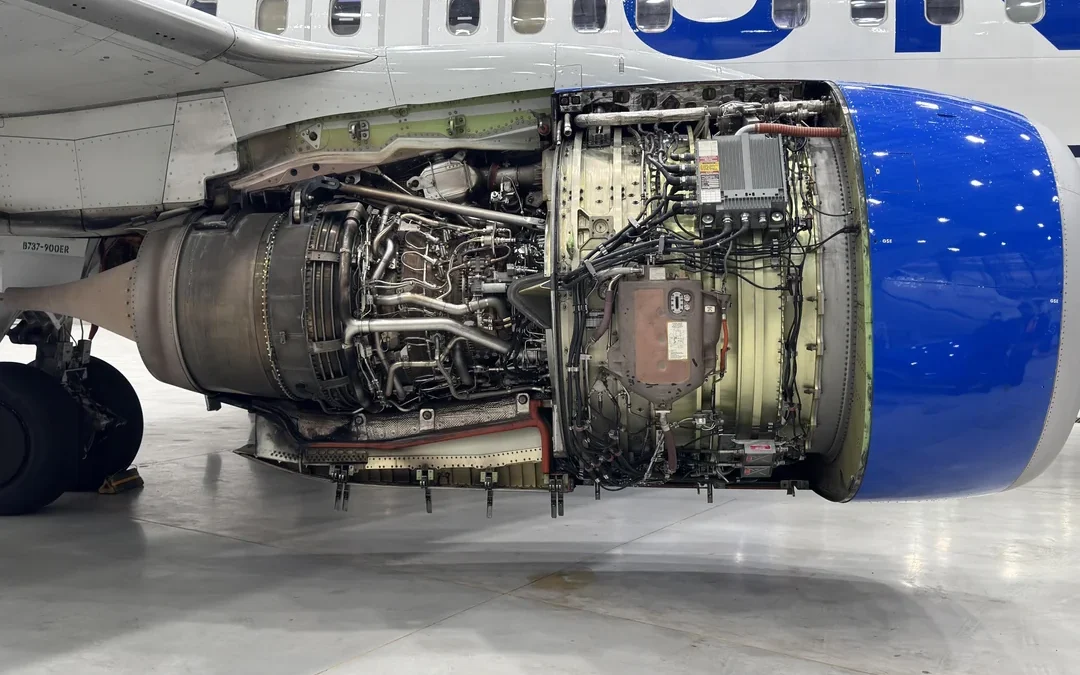
Engine maintenance dominates the MRO landscape, accounting for 40% of the market, followed by line maintenance at 20% and airframe maintenance at 18% . The market is concentrated among a handful of major players, with the top four companies holding more than 30% of the global market share .
This report profiles the top 10 MRO companies in the world, ranked by revenue, market share, and strategic importance. It also examines emerging players, market trends, and the growing MRO "supercycle" driven by supply chain constraints and an aging global fleet.
Ranking Methodology: How We Selected the Top 10
This ranking is based on a weighted combination of the following criteria:
Ranking Criteria
- Global Revenue: Annual MRO revenue from commercial and defense operations
- Market Share: Percentage of the global aerospace and defense MRO market
- Geographic Footprint: Global presence and facility locations
- Engine Capability: Ability to maintain LEAP, GTF, CFM56, Trent, and other engine families
- Airframe Capability: Heavy maintenance, line maintenance, and modifications
- OEM Partnerships: Strategic relationships with aircraft and engine manufacturers
- Digital Innovation: Adoption of predictive maintenance, AI, and digital twins
- Customer Base: Airlines, lessors, military, and government clients
- Certifications: FAA, EASA, CAAC, and other regulatory approvals
- Strategic Influence: Impact on industry standards and future MRO development
Publication Note: This ranking reflects the global MRO market as of mid-2026. Market consolidation and M&A activity may affect future rankings.
The Ranking: Top 10 MRO Companies
GE Aerospace
GE Aerospace is the world's largest MRO provider, holding 15% of the global aerospace and defense MRO market . The company's MRO dominance is driven by its position as a leading engine manufacturer for commercial and military aircraft. GE's Services Technology Acceleration Center is transforming the company's advanced repair development, with a focus on increasing overhaul shop efficiency and technical capabilities . As engine shop visits for LEAP and GTF platforms rise, GE Aerospace is well-positioned to capture significant aftermarket revenue. The company's MRO strategy includes expanding repair capabilities and developing new technologies to address the growing MRO "supercycle" .
Lufthansa Technik
Lufthansa Technik is one of the world's leading independent MRO providers, with a global network of facilities serving commercial and VIP aircraft . The company specializes in airframe, engine, and component maintenance, with particular expertise in VIP completions and widebody aircraft. Lufthansa Technik's position as a top-tier MRO provider is reinforced by its close relationship with Lufthansa Group and its extensive customer base across Europe, Asia, and the Americas. The company is actively investing in digitalization and predictive maintenance technologies .
Airbus
Airbus is a major player in the MRO market, leveraging its position as the world's largest aircraft manufacturer to provide OEM-level maintenance, repair, and overhaul services . The company's MRO network supports the global Airbus fleet, with facilities across Europe, Asia, and the Americas. Airbus's MRO capabilities span airframe, component, and line maintenance, with a growing focus on digital services and predictive maintenance. The company's position as an OEM gives it unique access to engineering data and technical expertise, making it a preferred MRO partner for many airlines .
AFI KLM E&M
AFI KLM E&M is the MRO arm of the Air France-KLM Group, one of the world's largest airline holding companies . The company provides comprehensive MRO services including airframe, engine, and component maintenance. AFI KLM E&M has established a strong reputation for engine maintenance, component repair, and line maintenance services across the global fleet. The company's position within the Air France-KLM Group gives it deep operational expertise and a broad customer base .
MTU Maintenance
MTU Maintenance is a leading independent engine MRO provider, specializing in the maintenance of commercial and military aircraft engines . The company has particular expertise in LEAP and GTF engine families, which are increasingly critical as the global fleet of A320neo and 737 MAX aircraft expands. MTU's position as an independent MRO provider gives it flexibility to serve a broad customer base across Europe, Asia, and the Americas. The company is actively expanding its MRO capacity to meet growing demand .
Rolls-Royce
Rolls-Royce is a major player in the engine MRO market, leveraging its position as a leading engine manufacturer to provide OEM-level maintenance services . The company's MRO capabilities span the entire Trent family of engines, as well as business jet and military engines. Rolls-Royce has been investing heavily in its MRO network, expanding capacity and developing new repair technologies to support the growing fleet of A350, A330neo, and Boeing 787 aircraft. The company's MRO strategy includes digitalization, predictive maintenance, and service agreement expansion .
AAR Corp.
AAR Corp. is a leading independent MRO provider, specializing in airframe, component, and logistics services . In November 2025, AAR acquired HAECO Americas for $78 million, adding 12 hangars in North Carolina and Florida, along with 1,600 employees . The acquisition expands AAR's airframe maintenance capacity significantly and positions the company for growth in the Americas market. AAR's MRO services span commercial and defense aviation, with a growing focus on supply chain and logistics .
ST Aerospace
ST Aerospace is a leading MRO provider in the Asia-Pacific region, with a strong reputation for airframe and component maintenance . The company's facilities in Singapore, China, and the United States provide comprehensive MRO services to airlines across the region. ST Aerospace is known for its passenger-to-freighter (P2F) conversion capabilities and its expertise in airframe heavy maintenance. The company's position as a premier MRO provider in Asia is reinforced by its strong customer relationships and technical capabilities .
SR Technics (Mubadala Aerospace)
SR Technics, owned by Mubadala Aerospace, is a leading independent MRO provider with facilities in Switzerland and the UAE . The company specializes in airframe maintenance and component repair, serving a global customer base. SR Technics' position within the Mubadala group gives it access to significant investment capital and strategic support. The company is actively expanding its MRO capabilities to meet growing demand in the Middle East and beyond .
SIA Engineering
SIA Engineering is the MRO arm of the Singapore Airlines Group, one of the world's most respected airlines . The company provides comprehensive MRO services including airframe, component, and engine maintenance. SIA Engineering's facilities in Singapore and across the Asia-Pacific region serve a broad customer base, with a strong reputation for quality and reliability. The company's position within the Singapore Airlines Group gives it deep operational expertise and technical capabilities .
MRO Capability Matrix: What Each Provider Offers
| Company | Engine | Airframe | Components | Landing Gear | APU | VIP |
|---|---|---|---|---|---|---|
| GE Aerospace | ✓ | — | ✓ | — | — | — |
| Lufthansa Technik | ✓ | ✓ | ✓ | ✓ | ✓ | ✓ |
| Airbus | ✓ | ✓ | ✓ | ✓ | ✓ | — |
| AFI KLM E&M | ✓ | ✓ | ✓ | ✓ | ✓ | — |
| MTU Maintenance | ✓ | — | ✓ | — | — | — |
| Rolls-Royce | ✓ | — | ✓ | — | — | — |
| AAR Corp. | — | ✓ | ✓ | — | — | — |
| ST Aerospace | — | ✓ | ✓ | ✓ | — | — |
| SR Technics | — | ✓ | ✓ | — | — | — |
| SIA Engineering | ✓ | ✓ | ✓ | ✓ | ✓ | — |
Aircraft Coverage: Which Aircraft Each MRO Supports
| Company | A320 Family | B737 | A330 | B777 | A350 | B787 | B747 |
|---|---|---|---|---|---|---|---|
| Lufthansa Technik | ✓ | ✓ | ✓ | ✓ | ✓ | ✓ | ✓ |
| AFI KLM E&M | ✓ | ✓ | ✓ | ✓ | ✓ | ✓ | ✓ |
| Airbus | ✓ | — | ✓ | — | ✓ | — | — |
| AAR Corp. | ✓ | ✓ | ✓ | — | — | — | — |
| ST Aerospace | ✓ | ✓ | ✓ | ✓ | — | — | — |
Engine Capability: Who Maintains What
| Company | LEAP | CFM56 | GTF | Trent | GEnx | V2500 | GE90 |
|---|---|---|---|---|---|---|---|
| GE Aerospace | ✓ | ✓ | — | — | ✓ | — | ✓ |
| MTU Maintenance | ✓ | ✓ | ✓ | — | — | ✓ | — |
| Rolls-Royce | — | — | — | ✓ | — | — | — |
| Lufthansa Technik | ✓ | ✓ | ✓ | ✓ | ✓ | ✓ | ✓ |
Regional MRO Leadership
Each region has its dominant MRO providers:
| Region | Leading Provider | Key Facilities | Specialization |
|---|---|---|---|
| North America | GE Aerospace | Multiple US facilities | Engine MRO |
| Europe | Lufthansa Technik | Germany, Europe-wide | Full-service MRO |
| Middle East | SR Technics / Sanad | UAE, Switzerland | Airframe & Component |
| Asia-Pacific | ST Aerospace | Singapore, China | Airframe & Component |
| China | Ameco Beijing | Beijing, Shanghai | Full-service MRO |
| India | Adani / Air Works | Nagpur, Mumbai | Emerging MRO Hub |
Emerging Players: The Adani Group
The Adani Group is rapidly emerging as a significant force in the global MRO market, particularly in India. The conglomerate has made strategic acquisitions to build what it describes as India's largest private-sector MRO platform .
Adani Group MRO Expansion
- Air Works Acquisition: Completed in December 2025 for Rs 400 crore ($44 million), adding line and base maintenance capabilities
- Indamer Technics Acquisition: 100% stake acquired for Rs 330 crore ($38 million)
- Nagpur Facility: 30-acre greenfield facility with 15 aircraft bays across 10 hangars, approved by DGCA, FAA, and other global regulators
- Future Plans: Landing gear overhaul, aircraft painting, passenger-to-freighter conversions, and engine maintenance
- Investment: $11 billion planned in airport business over five years
- Market Context: Indian airlines preparing to induct around 1,700 aircraft over the coming years, driving demand for maintenance services
Other Key MRO Players
Several other companies play significant roles in the global MRO market:
Notable MRO Providers
- Delta TechOps: The MRO arm of Delta Air Lines, one of the largest airline-owned MRO providers
- Haeco: Hong Kong-based MRO provider with significant Asia-Pacific presence
- Ameco Beijing: Joint venture between Air China and Lufthansa, major Chinese MRO provider
- Pratt & Whitney: OEM engine MRO provider, particularly for GTF and V2500 engines
- MROH Group: Formerly MRO Holdings, with 91 lines of airframe maintenance, backed by Bain Capital
- JAL Engineering: The MRO arm of Japan Airlines
- Korean Air MRO: Major Asia-Pacific MRO provider
Market Trends: The MRO Supercycle
The MRO market is experiencing what industry observers call a "supercycle" — a sustained period of elevated demand driven by several converging factors .
Key Market Trends
- Engine Backlogs: LEAP engine shop visits are forecast to rise from around 600–800 in 2025 to more than 5,000 by 2040, with GTF shop visits rising from 1,000 to more than 2,000
- GTF Groundings: 648 GTF-powered aircraft were grounded in March 2025, representing 28% of the fleet
- Aging Fleet: The global fleet age has reached a record 15.2 years
- Digital Transformation: MRO providers are investing in predictive maintenance, digital twins, and AI-powered optimization
- Consolidation: M&A activity is accelerating, with companies like AAR, Adani, and MROH Group expanding through strategic acquisitions
Digital MRO: Technology Transforming the Industry
Digital technologies are reshaping MRO operations:
Key Digital Technologies
- AI-Assisted Inspections: Computer vision and machine learning for defect detection
- Predictive Maintenance: AI algorithms predicting component failures before they occur
- Digital Twins: Virtual replicas of aircraft and engines for simulation and optimization
- Robotics: Automated inspection and repair systems
- Drone Inspections: UAVs for external aircraft inspections
- Additive Manufacturing: 3D printing for spare parts
- Blockchain Traceability: Secure tracking of parts and components
Future Rankings: Who Will Lead in 2030?
Based on current trajectories, these companies are likely to move up the rankings by 2030:
Likely Top 10 in 2030
- Adani Group: India's largest private MRO provider, expanding rapidly
- Turkish Technic: Growing hub connecting Europe, Asia, and Africa
- Sanad: Abu Dhabi-based MRO provider, expanding capabilities
- Joramco: Jordan-based MRO with strong Middle East presence
- Delta TechOps: Expanding beyond Delta's own fleet
- HAECO: Strengthening Asia-Pacific position
- Ameco: China's premier MRO provider
- GAMECO: Guangzhou-based MRO with growing capabilities
MRO Market Segment Breakdown
| Segment | Market Share | Key Players | Growth Outlook |
|---|---|---|---|
| Engine Maintenance | 40% | GE Aerospace, MTU, Rolls-Royce, Pratt & Whitney | High — Driven by LEAP/GTF backlogs |
| Line Maintenance | 20% | AFI KLM E&M, Lufthansa Technik, Delta TechOps | Stable — Consistent demand |
| Airframe Maintenance | 18% | AAR Corp., ST Aerospace, SR Technics | Growing — Aging fleet |
| Component Maintenance | 22% | SIA Engineering, Haeco, MTU | Steady — Continuous demand |
Key Players by Specialization
| Specialization | Leading Companies | Market Position |
|---|---|---|
| Engine MRO | GE Aerospace, MTU Maintenance, Rolls-Royce, Pratt & Whitney | OEM-led, highly concentrated |
| Airframe MRO | Lufthansa Technik, AFI KLM E&M, AAR Corp., ST Aerospace | Competitive, regional leaders |
| Component MRO | SIA Engineering, Haeco, MTU, SR Technics | Fragmented, many specialists |
| VIP / Business Jet MRO | Lufthansa Technik, SR Technics | Specialist, premium pricing |
MRO Revenue Ranking (Estimated)
Aviation Intelligence & Advisory
Need insight into MRO markets, engine maintenance, or aftermarket opportunities? Safe Fly Aviation provides data-driven intelligence for airlines, lessors, and investors.
Speak with Our Aviation Intelligence TeamConclusion: The MRO Market's Next Chapter
The global MRO market is entering a period of significant transformation. With a market size of $132.5 billion in 2024 and projections reaching $174.9 billion by 2031, the industry is poised for sustained growth .
Engine maintenance remains the dominant segment at 40% of the market, driven by the growing complexity of LEAP and GTF engines and the backlog of shop visits . The top four companies — GE Aerospace, Airbus, Lufthansa Technik, and AFI KLM E&M — hold more than 30% of the global market .
Emerging players like the Adani Group are reshaping the competitive landscape, particularly in high-growth markets like India. With Indian airlines preparing to induct 1,700 aircraft over the coming years, the opportunity for MRO providers is substantial .
The MRO "supercycle" — driven by supply chain constraints, an aging global fleet, and engine backlogs — is creating significant opportunities for MRO providers with the right capabilities and capacity . Companies that invest in advanced repair technologies, digital tools, and strategic partnerships are likely to lead the next chapter of the MRO market.
Sources & References
- Aviation Week Network — Movers And Shakers In MRO To Watch In 2026 (December 2025)
- The Statesman — Adani Group completes Indamer Technics acquisition (February 2026)
- Infrastructure Today — Adani Group Expands MRO Capabilities (August 2025)
- BW Businessworld — Crown Group Expanding Facilities in Karwar and Goa (August 2025)
- Global Info Research — Aerospace and Defense MRO Market Report 2025
- BW Businessworld — Adani Defence & Aerospace Acquires Indamer Technics (August 2025)
- Adani Enterprises — Media Release: Adani Defence & Aerospace Partners with Prime Aero
- IATA — Single Aisle Aircraft Engines MRO Study (June 2026)
- Oliver Wyman — MRO Spending Forecast 2025
- Aviation Week — Engine Aftermarket Report 2026
Disclaimer: This report is based on public sources and industry data as of June 2026. Market data and rankings are indicative and subject to change. Safe Fly Aviation provides independent aviation intelligence and advisory services.
Frequently Asked Questions
What is the largest MRO company in the world?
GE Aerospace is the largest MRO provider globally with a 15% market share in aerospace and defense MRO, generating over $10 billion in annual MRO revenue .
What is the global aerospace and defense MRO market size?
The global aerospace and defense MRO market was valued at $132.5 billion in 2024 and is projected to reach $174.9 billion by 2031, with a 4.1% CAGR .
Which segment dominates the MRO market?
Engine maintenance holds the largest market share at 40%, followed by line maintenance at 20% and airframe maintenance at 18% .
Who are the top MRO providers by region?
North America: GE Aerospace; Europe: Lufthansa Technik; Middle East: SR Technics/Sanad; Asia: ST Aerospace; China: Ameco; India: Adani/Air Works .
What is driving growth in the MRO market?
Key drivers include MRO backlogs, supply chain constraints, an aging global fleet (15.2 years average), and the need for advanced engine repairs on LEAP and GTF platforms .