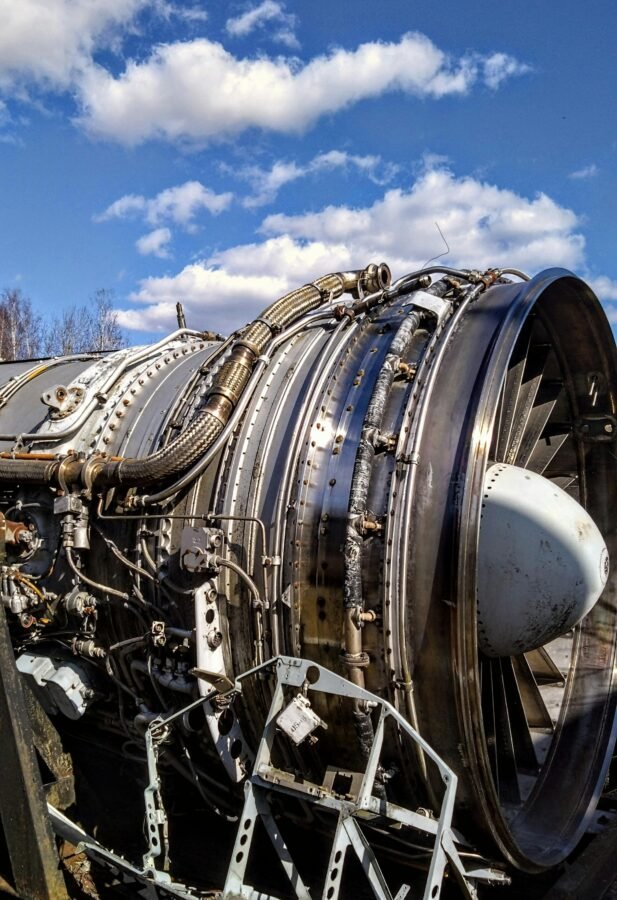
Why Engine Documentation Can Be Worth More Than a $5 Million Engine
Why Engine Documentation Is Worth More Than the Engine Itself

Executive Summary
In aircraft engine trading, the physical asset is only half the story. The documentation package—back-to-birth records, LLP traceability, and complete logbooks—often determines whether an engine trades at full market value or sells at a steep discount. Safe Fly Aviation has evaluated and traded engines across commercial, cargo, and regional fleets, with particular focus on documentation reviews during asset acquisitions, lease returns, and teardown projects. Based on our transaction data, engines with missing or incomplete documentation trade at 20-50% discounts compared to fully documented assets. In some cases, the documentation is literally worth more than the metal.
1. The $5M Documentation Gap: A Real-World Example
Consider two identical CFM56-7B engines, same cycles, same LLP remaining life, same physical condition. Engine A has complete back-to-birth records, unbroken LLP traceability, and a full set of logbooks. Engine B has a 3-year gap in documentation, missing LLP cards for one module, and unclear preservation records.
| Comparison | Engine A (Full Docs) | Engine B (Missing Docs) | Difference |
|---|---|---|---|
| Market value | $4.2M – $4.8M | $2.5M – $3.2M | ~$1.5M – $2.0M loss |
| Buyer pool | Global airlines, lessors, traders | Teardown specialists only | Severely restricted |
| Lease eligibility | Full | Limited or none | Major constraint |
2. Back-to-Birth Records: The Foundation of Value
"Back-to-birth" means continuous traceability from the engine's original manufacturing date to the present moment. Every owner, every shop visit, every modification must be documented. Documentation deficiencies rarely affect only one component of value. Missing records reduce buyer confidence, restrict financing options, limit leaseability, and increase technical due diligence costs, compounding the discount applied to an asset.
What Back-to-Birth Includes:
- Original manufacturing records — Build sheet, serial number provenance, test cell reports
- Ownership chain — Complete history of operators, lessors, and owners
- Shop visit history — Every maintenance event with work scope and parts replaced
- Modification status — All service bulletins (SBs) and Airworthiness Directives (ADs)
- Export certificates — Proof of legal transfer between countries
"In our trading experience, a break in back-to-birth traceability is often a deal-killer for major lessors and airlines. Without it, they cannot insure the asset or place it on lease. The engine becomes a teardown candidate regardless of its physical condition. For a full aircraft records audit and engine due diligence review, contact our trading desk."
3. LLP Traceability: Why Each Life-Limited Part Must Be Tracked
Life-Limited Parts (LLPs) are the most valuable components in any engine. A single HPT disk can be worth $400k-$900k. But LLPs are worthless without traceability. A proper engine records review begins with LLP life cards.
LLP Traceability Requirements:
- Serial number tracking — Each LLP has a unique serial number linked to its life record
- Cycle and hour accounting — Every cycle and operating hour must be logged
- Installation history — Which engine, which position, which dates
- Removal and storage records — Proper preservation during off-wing periods
- Certification documents — Form 8130-3 or equivalent airworthiness release
The table below shows how traceability affects LLP value:
| LLP Component | Value with Full Traceability | Value with Broken Traceability | Loss |
|---|---|---|---|
| HPT Stage 1 Disk (CFM56) | $420k – $480k | $100k – $150k (scrap/core) | ~$300k loss |
| IPC Spool | $310k – $360k | $80k – $120k | ~$230k loss |
| LPT Disk | $180k – $220k | $40k – $60k | ~$150k loss |
4. Missing Logbooks: The Most Common Value Killer
Logbooks are the daily diary of an engine's life. They record every flight, every maintenance action, every oil sample, every inspection. When logbooks go missing, buyers cannot verify:
- When the last shop visit occurred
- What work was performed during that shop visit
- Whether service bulletins were complied with
- The accuracy of LLP life records
- Storage preservation compliance
5. Documentation Discounts: What Missing Records Really Cost
| Documentation Status | Typical Value Discount | Impact on Saleability |
|---|---|---|
| Complete back-to-birth + all logbooks + full LLP traceability | 0% (baseline) | Full marketability |
| Missing LLP cards for one or more modules | 20-40% | Limited to buyers willing to teardown or scrap LLPs |
| Missing logbooks (partial or complete) | 15-35% | Severe restriction; most lessors will not accept |
| Broken back-to-birth traceability | 30-60% | Teardown-only asset |
| Unknown storage history + missing preservation records | 10-25% | Corrosion risk discount |
| Missing export/import documentation | 10-20% | Legal transfer complications |
6. Documentation Preservation Checklist
- ✅ Back-to-birth traceability — Unbroken chain from manufacture to present
- ✅ LLP life cards — Complete cycle and hour history for every LLP
- ✅ Logbooks (digital + physical) — All pages, including preservation records
- ✅ Shop visit reports — Detailed work scopes and parts replaced
- ✅ SB / AD compliance status — Current as of last operation
- ✅ Storage preservation records — Humidity, rotation, inspection logs
- ✅ Export / import documentation — Customs and airworthiness certificates
- ✅ Digital backup — Cloud storage of all records
7. What to Do With an Engine That Has Documentation Gaps
Not all is lost. Safe Fly Aviation helps clients maximize value even when documentation is incomplete:
- Teardown & USM sale — Components with individual traceability may still have value even if the engine-level records are incomplete
- LLP exchange programs — Trade high-value LLPs with partial records against fully documented parts
- Core disposal — Even undocumented cores have scrap value plus recoverable materials
- Documentation reconstruction — In some cases, missing records can be partially reconstructed through OEM and MRO archives
8. Best Practices: Protecting Documentation Value
- Digitize everything — Scan all records immediately; store in redundant cloud locations
- Maintain a documentation log — Track what exists and what is missing for each asset
- Include documentation in asset audits — Treat records as seriously as physical condition
- Train personnel — Ensure maintenance and records teams understand the financial impact of documentation
- Use documentation in lease returns — Insist on complete records as part of lease return conditions
9. How Safe Fly Aviation Helps With Documentation
- ✓ Pre-purchase documentation review — Identify gaps before you buy
- ✓ Asset valuation with documentation scoring — Realistic pricing based on record completeness
- ✓ Teardown advisory — Maximize recovery from undocumented assets
- ✓ Documentation reconstruction support — Liaison with OEMs and MROs to recover records
- ✓ LLP exchange programs — Trade partially documented LLPs for fully traceable parts
- ✓ Independent engine documentation audit — Confidential records assessment before purchase
Safe Fly Aviation has evaluated and traded engines across commercial, cargo, and regional fleets, with particular focus on documentation reviews during asset acquisitions, lease returns, and teardown projects. The firm has facilitated engine transactions across five continents and understands that aviation asset due diligence and engine records review are often the difference between a profitable transaction and a significant loss.
Contact Safe Fly Aviation for a confidential records assessment. Request an audit →
✈️ Protect Your Engine's Value
Documentation is not just paperwork—it's the key to unlocking full asset value. Contact Safe Fly Aviation for a confidential documentation review and valuation.
Request Documentation Review →10. Frequently Asked Questions
A: Back-to-birth traceability means continuous documentation from the engine's original manufacture to the present, including all owners, shop visits, modifications, and maintenance events. Any break in this chain can destroy significant asset value.
A: Life-Limited Parts (LLPs) cannot be sold or installed without complete cycle and hour records. Broken traceability reduces LLP value by 60-80% because buyers cannot verify remaining safe life.
A: Partially. Some records may be recovered from OEMs, MROs, or previous operators, but gaps often remain. Prevention through proper documentation management is far better than reconstruction.
A: Based on Safe Fly Aviation's transaction data, missing documentation typically destroys 20-50% of engine value, depending on which records are missing and the buyer's requirements.
A: Safe Fly Aviation provides pre-purchase documentation reviews, valuation adjustments for documentation gaps, teardown advisory, and LLP exchange programs for partially documented assets.
Safe Fly Aviation internal transaction database (2024-2026) | Industry standards from IATA, ISTAT | OEM documentation requirements from CFM, Rolls-Royce, GE, IAE