How Landing Gear Life Cycles Affect Aircraft Value | Strategic Analysis
How Landing Gear Life Cycles Affect Aircraft Value

Key Takeaways for Aircraft Investors & Lessors
Landing gear is among the most valuable and heavily regulated airframe components. With overhaul intervals of 10-12 years and costs ranging from $500,000 for narrowbody aircraft to $2.5 million for widebodies, landing gear life cycles have profound implications for aircraft residual values, lease return conditions, and maintenance reserve structures. This strategic analysis examines how landing gear timing and condition affect aircraft valuation — and how owners can optimize life cycle management.Source: ISTAT Aircraft Valuation Handbook 2026
1. Landing Gear Life Cycle: Technical & Regulatory Framework
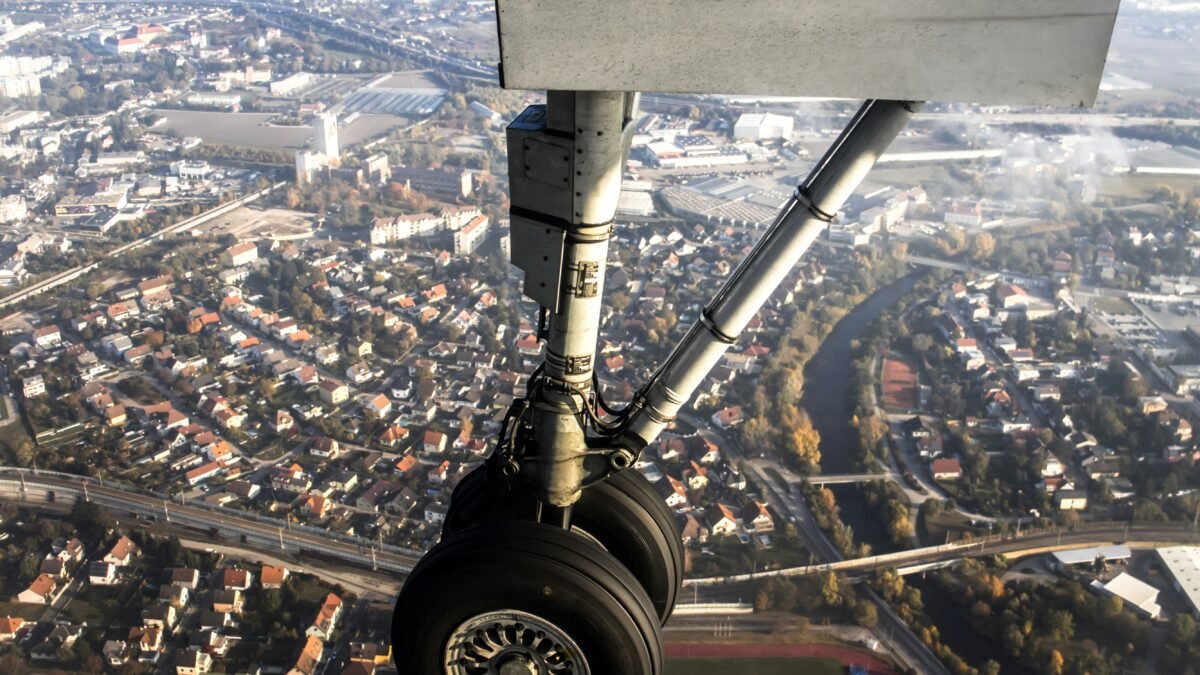
Landing gear life is measured in cycles (takeoffs and landings) and calendar time. Regulatory requirements under EASA CS-25 and FAR 25 specify mandatory overhaul intervals, typically 10-12 years or 20,000-30,000 cycles, whichever comes first. The overhaul process involves complete disassembly, non-destructive testing (NDT) of critical components (axles, beams, fittings), replacement of life-limited parts, and reassembly with new seals and bearings. Operators must maintain detailed records of cycle accumulation and inspection findings for lease return and resale.Source: FAA Advisory Circular 25.729-2 - Landing Gear Maintenance

| Aircraft Type | Typical Overhaul Interval | Estimated Cost (USD) | Key Life-Limited Parts |
|---|---|---|---|
| B737NG/MAX | 12 years / 24,000 cycles | $500,000-700,000 | Axle sleeves, trunnion fittings |
| A320ceo/neo | 10-12 years / 20,000-25,000 cycles | $550,000-750,000 | Side brace fittings, drag struts |
| B777 | 12 years / 20,000 cycles | $1,200,000-1,800,000 | Main beam, bogie beams |
| B787 | 12 years / 25,000 cycles | $1,500,000-2,200,000 | Composite structures, actuators |
| A330/A350 | 10-12 years / 20,000-25,000 cycles | $1,400,000-2,100,000 | Main fittings, torque links |
2. Impact on Aircraft Residual Value
Landing gear status is a top-five value driver in aircraft appraisals, alongside engine condition, airframe hours/cycles, cabin configuration, and maintenance status. An aircraft approaching landing gear overhaul (within 18-24 months) typically sees residual value reduced by 15-25% of the overhaul cost — effectively the buyer's expected capital expenditure. Conversely, an aircraft with freshly overhauled landing gear (less than 12 months since return to service) commands a premium of $300,000-800,000 for narrowbody and $800,000-1.8 million for widebody. The timing mismatch between lease expiration and overhaul due date creates negotiation leverage for lessees or lessors.Source: Aircraft Value Reference (AVR) 2026 - Landing Gear Adjustment Factors
Strategic Insight: The "Overhaul Cliff"
Aircraft values typically decline gradually as landing gear approaches overhaul, then recover to baseline levels upon completion. The steepest value depreciation occurs in the final 12-24 months before scheduled overhaul — typically 2-3% per month of remaining value. Owners who overhaul proactively can avoid selling at the bottom of this cycle.
3. Lease Return Conditions & Landing Gear
Standard operating leases require landing gear to be returned with a minimum remaining life — typically 36-48 months or 25-30% of the overhaul interval, whichever is greater. Failure to meet these conditions triggers cash settlement at agreed rates (e.g., $8-12 per flight hour for narrowbody, $15-25 per flight hour for widebody). Disputes over landing gear condition at return are among the most common lease disagreements, often centered on NDT findings, corrosion limits, or life-limited part usage. Lessors increasingly require pre-return landing gear inspection by independent third-party MROs to avoid disputes.Source: Aviation Working Group - Lease Return Conditions Standard 2025
| Lease Provision | Typical Requirement | Settlement Formula |
|---|---|---|
| Remaining life at return | 36 months or 25-30% of interval | Prorated based on hours/cycles |
| Damage/corrosion limits | No corrosion beyond Level 2 per OEM manual | Cost of repair + 15-20% admin |
| Life-limited parts | Minimum 50% remaining life | Replacement cost pro-rated |
| NDT documentation | Full records from last overhaul to return | Cost of repeat inspection if missing |
4. Maintenance Reserves for Landing Gear
Maintenance reserves are monthly payments from lessee to lessor covering future major maintenance events, including landing gear overhaul. Reserve rates are calculated based on expected overhaul cost divided by the interval (hours or months). Typical narrowbody landing gear reserves: $0.35-0.55 per flight hour or $2,500-4,500 per month. Widebody reserves: $0.80-1.20 per flight hour or $6,000-10,000 per month. At lease end, unused reserves are returned to lessee, while deficiency (overdue overhaul) requires lessee to fund shortfall. Landing gear reserves typically represent 25-35% of total airframe maintenance reserves.Source: Aircraft Leasing & Financing - Maintenance Reserve Structures

5. Optimization Strategies for Owners & Lessors
To maximize aircraft value, owners should: (1) schedule landing gear overhaul 12-18 months before intended sale or lease expiry — capturing the post-overhaul premium; (2) maintain meticulous NDT and component traceability documentation — critical for lease return and resale; (3) use OEM or OEM-authorized MROs for overhaul — non-authorized shops may reduce value by 5-10%; (4) consider landing gear exchange programs (swap serviceable gear while yours is overhauled) — reducing downtime from 8-12 weeks to 7-10 days.Source: Safe Fly Aviation Asset Management Advisory
Case Study: Narrowbody Lease Return
A lessor returning an A320 with landing gear 18 months overdue negotiated a $425,000 cash settlement. However, the lessee had under-reserved at $0.32 per flight hour, creating a $180,000 shortfall. The lessee could have avoided this by increasing reserves to $0.48 per flight hour over the lease term — a lesson in proactive reserve planning.
6. Future Trends: Life Extension & Composite Landing Gear
Emerging technologies are reshaping landing gear life cycles. Advanced NDT methods (phased array ultrasound, computed radiography) enable more accurate remaining life assessment, potentially extending intervals by 15-20% under EASA's Continued Airworthiness framework. Composite landing gear structures (B787 torque links, A350 fittings) offer corrosion resistance but require specialized inspection and repair. By 2035, analysts expect landing gear intervals to extend to 14-16 years for next-generation aircraft, reducing lifecycle costs by 20-25%.Source: SAE Landing Gear Technology Roadmap 2026
Frequently Asked Questions
References & Data Sources
- ISTAT Aircraft Valuation Handbook 2026
- Aviation Working Group - Lease Return Conditions Standard
- FAA Advisory Circular 25.729-2 - Landing Gear Maintenance
- EASA CS-25 Certification Specifications
- OEM Landing Gear Maintenance Planning Documents (Boeing, Airbus)
- Aircraft Value Reference (AVR) 2026 - Landing Gear Adjustments
- SAE Landing Gear Technology Roadmap
Aircraft Asset Management & Valuation Advisory
Safe Fly Aviation provides strategic advisory on aircraft valuation, lease return planning, maintenance reserve optimization, and landing gear lifecycle management.
Request Strategic Briefing → Asset Management Advisory Aircraft Valuation ServicesStrategic Conclusion
Landing gear life cycles are a critical but often overlooked driver of aircraft value. For lessors and owners, proactive overhaul timing, meticulous documentation, and properly structured maintenance reserves can preserve $500,000-1.5 million in asset value per aircraft. In an era of rising MRO costs and regulatory scrutiny, landing gear management has evolved from a technical necessity to a strategic value lever.