How Black Boxes Work | Safe Fly Aviation
How Black Boxes Work

📑 Technical Intelligence Brief
- 1. Why "Black Box" – The Name Origin
- 2. Two Essential Recorders – FDR & CVR
- 3. Flight Data Recorder (FDR) – What It Records
- 4. Cockpit Voice Recorder (CVR) – The Human Element
- 5. Crash Survivability – How They Survive
- 6. Underwater Locator Beacons (ULB) – Finding Black Boxes
- 7. Data Analysis – From Raw Data to Investigation
- 8. Modern Innovations & The Future of Flight Recording
✓ Two independent recorders: Flight Data Recorder (FDR) + Cockpit Voice Recorder (CVR)
✓ Crash survivability: 3,400 G impact, 1,100°C fire for 60 minutes, 6,000m underwater pressure
✓ FDR parameters: Minimum 88 parameters (altitude, airspeed, heading, engine performance, control positions)
✓ ULB beacon: 37.5 kHz, 30+ day battery, 2,000–4,000m detection range
✓ Future technology: Deployable recorders, real-time streaming (eXtended Performance Recording)
1. Why "Black Box" – The Name Origin
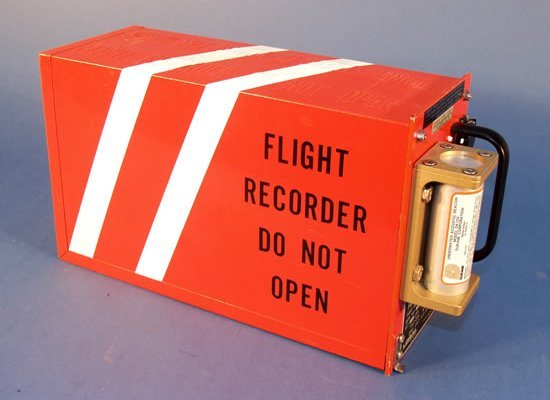
Despite being painted bright orange (officially "international orange") for visibility in wreckage, flight recorders are universally known as "black boxes." According to aviation historians, the term originated in early electronics where functional modules were called "black boxes" – their internal workings unknown to the user. By the time flight recorders were mandated in the 1960s, the name had already stuck. The bright orange color, required by ICAO (International Civil Aviation Organization) Annex 6, includes reflective tape to aid post-accident recovery teams.
• 1953: Dr. David Warren conceives the idea of a crash-survivable cockpit recorder
• 1960: First mandatory flight recorders introduced in Australia after crash investigation gaps
• 1967: ICAO makes flight recorders mandatory for commercial aircraft
• 1980s: CVR and FDR become integrated into combined units
• 2000s: Solid-state memory replaces magnetic tape, increasing durability
• 2020s: Extended recording durations (25 hours for CVR now mandated by ICAO)
2. Two Essential Recorders – FDR & CVR
Modern aircraft carry two independent recording devices, each serving distinct purposes:
🖥️ Flight Data Recorder (FDR)
Captures aircraft performance parameters: altitude, airspeed, heading, vertical acceleration, engine metrics, control surface positions, autopilot status, and system warnings. According to ICAO regulations, minimum 88 parameters (newer aircraft record thousands).
🎙️ Cockpit Voice Recorder (CVR)
Records audio from pilot headsets, cockpit area microphones, and ambient sounds (alarms, switches, engine noise). Modern CVRs capture 25 hours of audio (increased from 2 hours by ICAO mandate effective 2024). Helps investigators understand crew communications and environmental context.
3. Flight Data Recorder (FDR) – What It Records
According to ICAO Annex 6 and FAA regulations, modern FDRs capture a comprehensive set of parameters. The minimum required for aircraft certificated after 2020 includes:
Modern aircraft like Boeing 787 and Airbus A350 record over 2,000 parameters, providing unprecedented detail for incident analysis and proactive safety monitoring (Flight Data Monitoring / FDM programs).

4. Cockpit Voice Recorder (CVR) – The Human Element
The CVR provides context that FDR data alone cannot explain. According to investigation reports from NTSB and BEA, CVR recordings have been critical in understanding crew decision-making, fatigue, task saturation, and communication breakdowns. Key features under current regulations:
- Recording duration: 25 hours minimum (ICAO mandate effective 2024, previously 2 hours)
- Audio channels: 4 channels – Captain's headset, First Officer's headset, third crew headset, cockpit area microphone (ambient)
- Voice-based alerts recorded: GPWS ("Pull up, terrain"), TCAS ("Traffic, traffic"), stall warnings
- Privacy protections: ICAO Annex 13 prohibits public release of CVR audio; only transcripts may be released after investigation
• US Airways Flight 1549 ("Miracle on the Hudson") – recording captured the decision-making process and successful ditching
• Tenerife disaster (1977) – revealed communication breakdown between KLM and ATC
• Air France 447 (2009) – provided crucial insights into pilot response to unreliable airspeed indications
• Colgan Air 3407 (2009) – revealed fatigue and task saturation contributing to stall recovery failure
5. Crash Survivability – How They Survive
Flight recorders are built to meet EUROCAE ED-112 (European Organisation for Civil Aviation Equipment) standards – among the most demanding crashworthiness specifications in any industry. According to certification tests, black boxes survive:
The memory unit is encapsulated in multiple layers: titanium or stainless steel shell, high-temperature insulation, and thermal protection blankets. The stack-up design ensures that even if the outer casing is compromised, the memory board (CSMU – Crash Survivable Memory Unit) remains intact. According to NTSB data, >95% of crash-damaged recorders are successfully read.
6. Underwater Locator Beacons (ULB) – Finding Black Boxes
Finding a black box underwater is one of the greatest challenges in accident investigation. Each recorder is equipped with an Underwater Locator Beacon (ULB) that activates upon contact with water. Key specifications:
| Parameter | Traditional ULB | Next-Generation ULB |
|---|---|---|
| Frequency | 37.5 kHz | 8.8 kHz (deeper penetration) |
| Detection range | 2,000–4,000 meters | 6,000+ meters |
| Battery life | 30 days minimum | 90 days minimum |
| Acoustic output | 160 dB | 160 dB (optimized for deeper) |
The 37.5 kHz beacon is standard on most recorders. However, after the difficult search for Air France 447 (2009, crashed in 3,900m water), the aviation industry began transitioning to 8.8 kHz beacons with deeper penetration and longer battery life. Newer recorders also incorporate dual beacons for redundancy.
7. Data Analysis – From Raw Data to Investigation
According to NTSB and BEA investigation protocols, black box data analysis follows a systematic process:
- Recovery & Transport: Recorder sent to specialized laboratory (NTSB Washington, BEA Paris, AAIB UK, etc.)
- Physical inspection: Assess damage, clean connections, determine read strategy
- Data extraction: Connect to specialized interface; download raw memory
- Decoding & validation: Convert raw binary data into engineering units using aircraft-specific parameters
- Data animation: Reconstruct flight path using flight simulator software
- CVR transcription: Time-synchronized transcript created by trained investigators
- Correlation: FDR data aligned with CVR transcript, radar, and ATC recordings
- Report generation: Final analysis informs probable cause determination
8. Modern Innovations & The Future of Flight Recording
The aviation industry continues to evolve flight recorder technology. According to ICAO and industry working groups, emerging trends include:
- Deployable Recorders (DVR): Automatically eject from aircraft on impact, transmit GPS location and data via satellite – eliminating underwater search
- Extended Performance Recording (XPR): Real-time streaming of critical parameters to cloud-based storage
- Image Recording (Cockpit Image Recorder): Debate continues on camera installation in cockpits
- Increased CVR duration: ICAO now mandates 25 hours – aligning with long-haul flight durations
- AI-assisted analysis: Machine learning to rapidly identify anomalies in FDR data
❓ Frequently Asked Questions
✈️ Safe Fly Aviation – Safety First, Always
Whether you're purchasing a pre-owned aircraft, chartering a flight, or managing a fleet, Safe Fly Aviation prioritizes safety, compliance, and operational excellence.
• ICAO Annex 6 (Operations of Aircraft) – flight recorder requirements
• ICAO Annex 13 (Aircraft Accident and Incident Investigation)
• FAA 14 CFR Part 91, 121, 135 – US flight recorder regulations
• EUROCAE ED-112 – crash survivability standards
• NTSB – accident investigation reports and recorder recovery data
• BEA (France) – recorder analysis and underwater search methodology
• Safe Fly Aviation – aviation safety consulting and advisory services