The Airbus A350: Revolutionising Passenger and Cargo Aviation – Expert Analysis 2026
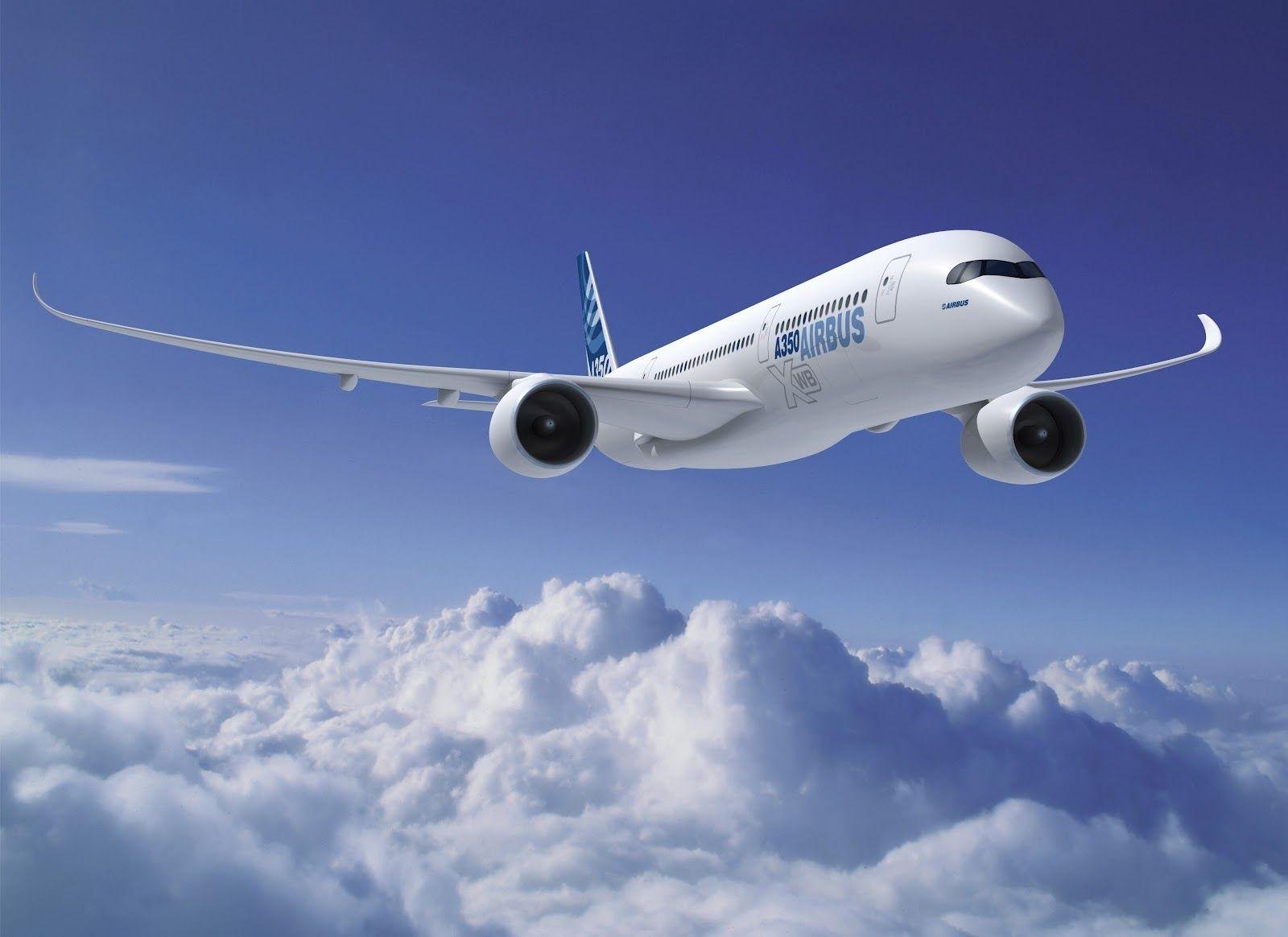
The Airbus A350: Revolutionising Passenger & Cargo Aviation
In an era where airlines demand unprecedented efficiency, passenger comfort and environmental responsibility, the Airbus A350 stands as the benchmark widebody aircraft of its generation. At Safe Fly Aviation — an international aviation advisory, charter brokerage, cargo and aircraft services company — we have supported operators across the globe with aircraft acquisition, spares and operational expertise. Our deep involvement in both passenger and freight charter operations gives us unique insight into why the A350 family, in both pax and cargo configurations, is transforming global aviation in 2026.
This comprehensive guide covers the A350's clean-sheet design, passenger variants (A350-900 and A350-1000), the groundbreaking A350F freighter, performance metrics, cabin innovation and sustainability credentials — everything an airline executive, cargo operator or aviation enthusiast needs to know.
(March 2026)
vs Prior Generation
in Airframe
(A350-900 ULR)
Section 01
The Evolution of the Airbus A350 XWB
Launched in 2006 as a clean-sheet "XWB" (Extra Wide Body) programme, the A350 entered service in January 2015 with Qatar Airways (A350-900) and in February 2018 with the stretched A350-1000. By March 2026, more than 650 aircraft have been delivered to operators worldwide, with a substantial backlog.
Over 70% of the airframe comprises 53% carbon-fibre composites, titanium and advanced alloys, alongside Rolls-Royce Trent XWB engines. The result is 25% lower fuel burn per seat vs previous-generation widebodies.

Airbus A350 at Frankfurt Airport – prototype tour. Composite fuselage and raked wingtips visible.
Section 02
Advanced Design & Technology
The A350's wing spans 64.75 metres, incorporating natural laminar flow. Composite fuselage enables a lower cabin altitude of 6,000 ft vs 8,000 ft, reducing fatigue. HEPA filters renew air every 2–3 minutes.
- Full LED ambient lighting with circadian rhythm support
- 225-cm cabin width — widest in class, 3-3-3 seating
- Up to 9 dB quieter than comparable widebodies
- ETOPS 370 approval, common type rating with A330

A350 XWB flight deck — six large LCD displays, dual HUD, advanced fly-by-wire.
Section 03
Passenger Configurations: A350-900 & A350-1000
A350-900 — Versatile Long-Haul Workhorse
Typical 3-class: 300–350 passengers, max 440. Standard range 8,500 nm; ULR variant reaches 9,700 nm (Singapore–New York).
A350-1000 — Maximum Capacity
7 metres longer, seats 350–410 (3-class), max 480. Trent XWB-97 engines: 97,000 lbf thrust, range 9,000 nm. 40% more premium cabin space.

A350-900 — versatile long-haul variant

A350-1000 — maximum capacity variant · Stretched fuselage and Trent XWB-97 engines.
Section 04
Full Technical Specifications
| Parameter | A350-900 | A350-1000 |
|---|---|---|
| Overall Length | 66.80 m | 73.78 m |
| Wingspan | 64.75 m (Identical) | |
| MTOW | 283 t | 322 t |
| Engines | Rolls-Royce Trent XWB-84 | Rolls-Royce Trent XWB-97 |
| Typical Passenger Capacity | 300–350 | 350–410 |
| Range (Standard) | 8,500 nm | 9,000 nm |
| Belly Cargo Capacity | 172 m³ (36 LD3 Containers) | 208 m³ (44 LD3 Containers) |
| Cabin Altitude | 6,000 ft | |
| ETOPS Certification | ETOPS 370 | |
Section 05
A350 vs Boeing 787 Dreamliner vs Boeing 777X
| Aircraft | Typical Seats | Range (nm) | MTOW | Key Advantage |
|---|---|---|---|---|
| A350-900 | 300-350 | 8,500 | 283 t | Longest range in class, ULR capability |
| A350-1000 | 350-410 | 9,000 | 322 t | Largest A350 cabin, premium capacity |
| Boeing 787-9 | 280-300 | 7,600 | 254 t | Lighter composite airframe and lower operating costs |
| Boeing 787-10 | 320-330 | 6,300 | 267 t | Largest 787 variant, optimized for high-density long-haul routes |
| Boeing 777-9 | 400-426 | 7,200+ | 351 t | Highest passenger capacity with folding wingtips |
While the 787 pioneered composite fuselage technology, the A350 offers greater range and larger cargo volume. The 777X delivers maximum passenger capacity, but the A350 excels in fuel efficiency and belly freight capability.
Section 06
The Airbus A350F Freighter: Future of Cargo Aviation
Based on A350-1000, the A350F delivers 111 tonnes payload and 4,700 nm range. First flight scheduled Q3 2026, entry into service H2 2027. Up to 40% lower CO₂ vs prior freighters.
A350F — Key Specifications
- Payload: up to 111 tonnes
- Range at high payload: 4,700 nm
- Door width: 15% wider than 777F
- Volume: 11% more usable cargo
- CO₂ savings: up to 40%
- MTOW: 319 tonnes

A350F – next‑generation freighter · Designed for efficiency and future cargo demands.
Section 07
Major Airlines Operating the A350
65+ aircraft (largest operator)
Launch customer, 70+ aircraft
45+ aircraft
Largest order (110+ units)
Major European operator
Growing South Asian operator
Section 08
Performance, Efficiency & Sustainability
- 25% lower fuel burn per seat vs previous generation
- 40% fuel/CO₂ reduction (A350F) vs legacy freighters
- External noise 24 EPNdB below Chapter 14
- Designed for 50% SAF blend, 100% pathway
- Dispatch reliability consistently above 99.3%

A350 Economy Class — wide cabin, LED lighting, enhanced passenger comfort.
Section 09
Safety & Operational Reliability
- Real-time structural health monitoring
- ETOPS 370 certified before entry into service
- Fly-by-wire with multiple redundancies
- Predictive maintenance via live data streaming
- Superior damage tolerance of composite airframe
The A350 has achieved one of the highest dispatch reliability rates in widebody history.
Section 10
Frequently Asked Questions
Speak to Our Aviation Specialists
A350 leasing, cargo strategy, fleet advisory or charter — 24/7 team ready.