
Boeing 767 Cargo Aircraft – The Global Workhorse of Modern Air Freight
Boeing 767 Cargo Aircraft – The Global Workhorse of Modern Air Freight
Comprehensive insights into the industry-leading Boeing 767 Freighter: specifications, operational excellence, and why it dominates global cargo logistics
Introduction
Since its debut in the early 1980s, the Boeing 767 family has become one of the most versatile and commercially successful aircraft platforms in global aviation. Whilst the passenger variants shaped long-haul travel for decades, it is the Boeing 767 Freighter—particularly the 767-300F and 767-300BCF—that has evolved into one of the most indispensable assets in the world of air cargo logistics.
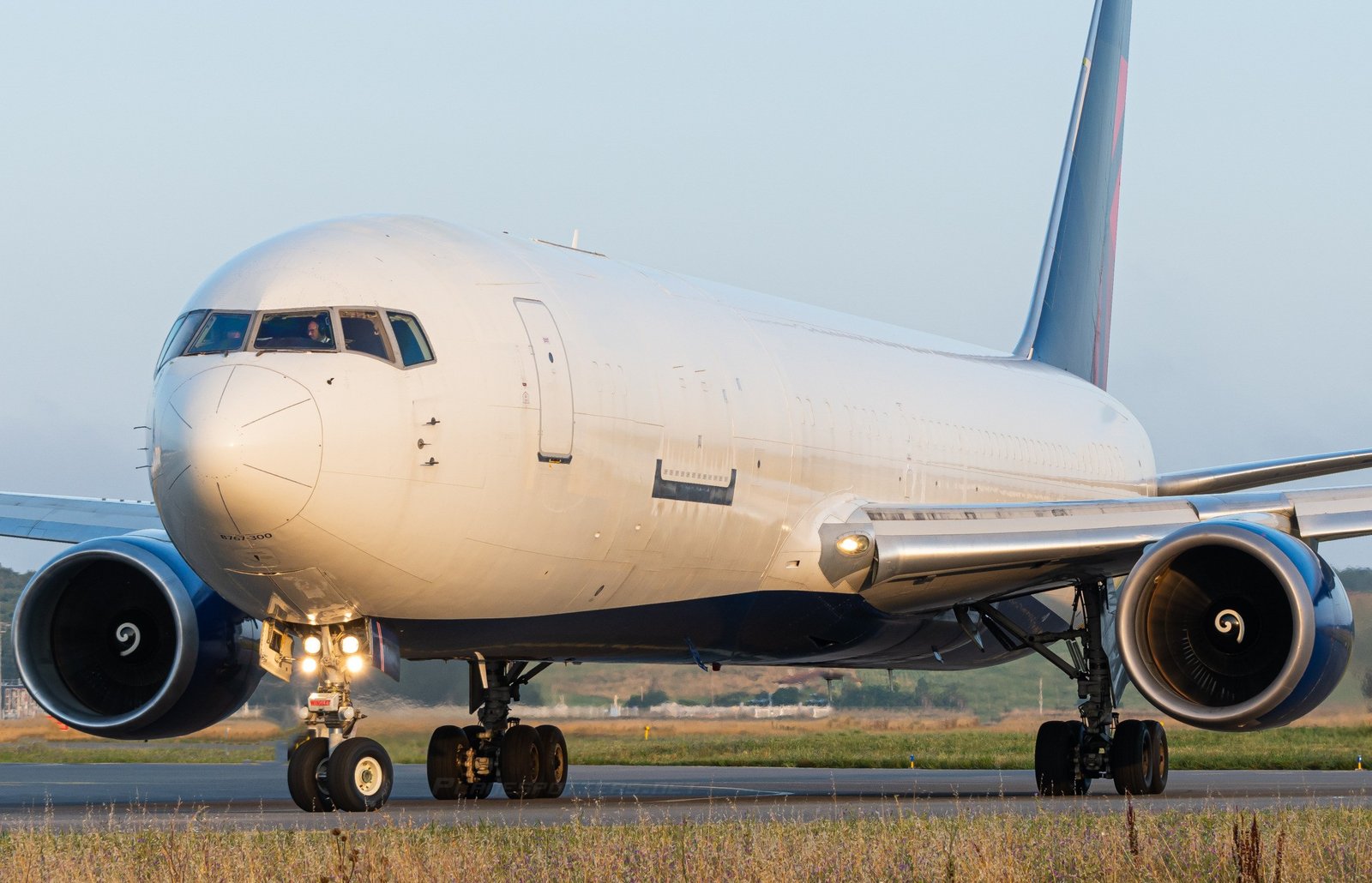
Today, the 767 Freighter operates across major integrators, express parcel networks, e-commerce giants, postal services, and independent cargo operators, offering a perfect balance of payload, range, fuel efficiency, and dependability. Because it sits between the narrow-body and heavy wide-body categories, it is also one of the few freighter types that genuinely suits both regional feeder routes and longer intercontinental sectors.
Perfect for Time-Critical Operations
For companies and logistics providers looking to move time-critical shipments, pharmaceuticals, perishables, or industrial cargo, the Boeing 767 is recognised worldwide as a proven, reliable, and cost-effective air freight solution. For a manufacturer's overview of the platform, see Boeing's own Freighter Family page.
Because demand for this platform spans everything from a single urgent charter to a full fleet acquisition, most operators end up needing more than one kind of support over the aircraft's life—which is where a firm with hands-on experience across the type becomes useful, whether that means arranging a 767 cargo charter for a time-critical shipment or advising on the acquisition and leasing side of a longer-term fleet decision.
Why the Boeing 767 Freighter Remains a Cargo Industry Favourite
1. Impressive Payload Capacity
The 767-300F offers a maximum structural payload of approximately 52.7 tonnes, depending on configuration. It accommodates up to 24 standard 88″ × 125″ pallets (main deck) plus additional LD2/LD3 unit load devices (ULDs) in the lower belly—providing excellent flexibility for mixed cargo, palletised freight, pharma containers, and oversized items.
2. Optimal Range for Regional & Intercontinental Operations
Because the Boeing 767F's range of 5,500–6,025 km sits between short-haul and true long-haul freighters, it is ideal for missions such as:
- India – Middle East routes
- Europe – North Africa connections
- China – Southeast Asia corridors
- Intra-US hub-and-spoke operations
This range allows operators to maximise network efficiency without the higher operational cost of wide-body freighters like the 777F or 747-8F.
3. Fuel Efficiency & Cost Advantage
Significant Cost Savings
One of the biggest strengths of the 767 is its high fuel efficiency and reduced direct operating cost (DOC). Its twin-engine configuration offers significant cost savings over older tri-jet and quad-jet freighters, helping operators remain competitive in the modern e-commerce and express logistics environment.
4. Proven Reliability & Low Downtime
The Boeing 767 enjoys one of the highest dispatch reliability rates in its class, since decades in service have matured its global support network. As a result, operators can count on availability of:
- Spare parts worldwide
- Certified MRO facilities
- Trained technical personnel
- Extensive operational knowledge
This reduces AOG (Aircraft on Ground) downtime and enhances operational continuity for cargo airlines. The aircraft's type certification and airworthiness records are publicly documented in the FAA's Type Certificate Data Sheets system, for readers who want to verify structural and equipment limits directly.
5. Ideal for Express & E-commerce Era
The rise of global e-commerce has dramatically increased demand for medium wide-body freighters, so the 767 has become the backbone of major fleets, including:
- FedEx – Extensive 767 fleet for express operations
- UPS – Major integrator utilising 767s globally
- Amazon Air (Prime Air) – Rapidly expanding 767 operations
- DHL Air – Strategic deployment across networks
- LATAM Cargo – Regional cargo dominance
- Air Transport Services Group – ACMI and charter services
Its reliability and fuel performance make it the preferred aircraft for overnight express networks.
Boeing 767F vs Competing Freighter Aircraft
Operators rarely evaluate the 767F in isolation—it is usually weighed against other medium and heavy wide-body freighters. The table below gives a like-for-like comparison for quick reference:
| Aircraft | Typical Payload | Typical Range | Best Suited For |
|---|---|---|---|
| Boeing 767-300F | ~52.7 tonnes | ~6,025 km | Regional-to-intercontinental express & e-commerce networks; best-value entry point via P2F conversion |
| Boeing 757-200PF | ~39 tonnes | ~5,830 km | High-density express routes with shorter sectors; smaller cargo hold than the 767 |
| Airbus A330-200F | ~65–70 tonnes | ~7,400 km | Higher-capacity intercontinental routes where volume justifies the larger frame and cost |
| Boeing 777F | ~103 tonnes | ~9,070 km | Long-haul, high-volume trunk routes for major integrators and cargo airlines |
In practice, the 767F's advantage is less about outright capacity and more about cost-efficient positioning: it carries meaningfully more than a 757F, covers most intercontinental sectors that don't require an A330F or 777F, and — because so many passenger 767s have already been converted — offers by far the deepest and most liquid secondary market of any aircraft in this comparison. Figures above are typical/representative and vary by specific engine and configuration; always confirm exact figures against the aircraft's own type certificate data sheet before making an acquisition decision.
Variants of the Boeing 767 Freighter
1. Boeing 767-300F (Factory-Built Freighter)
The factory-built freighter remains the most sought-after type due to its superior structural design and optimised cargo loading systems.
Key Highlights
- Payload: ~52.7 tonnes maximum structural capacity
- Range: Up to 6,025 km with full payload
- Capacity: 24 main deck pallet positions
- Technology: Enhanced avionics and improved engine options
2. Boeing 767-300BCF (Boeing Converted Freighter)
The BCF (Boeing Converted Freighter) programme converts retired passenger 767s into full cargo aircraft with structural modifications, and remains the officially Boeing-licensed conversion route.
BCF Advantages
- Lower acquisition cost than a factory-built freighter
- Excellent ROI for mid-tier cargo operators
- Ideal for charter companies, regional express networks, and start-ups
- Faster market availability
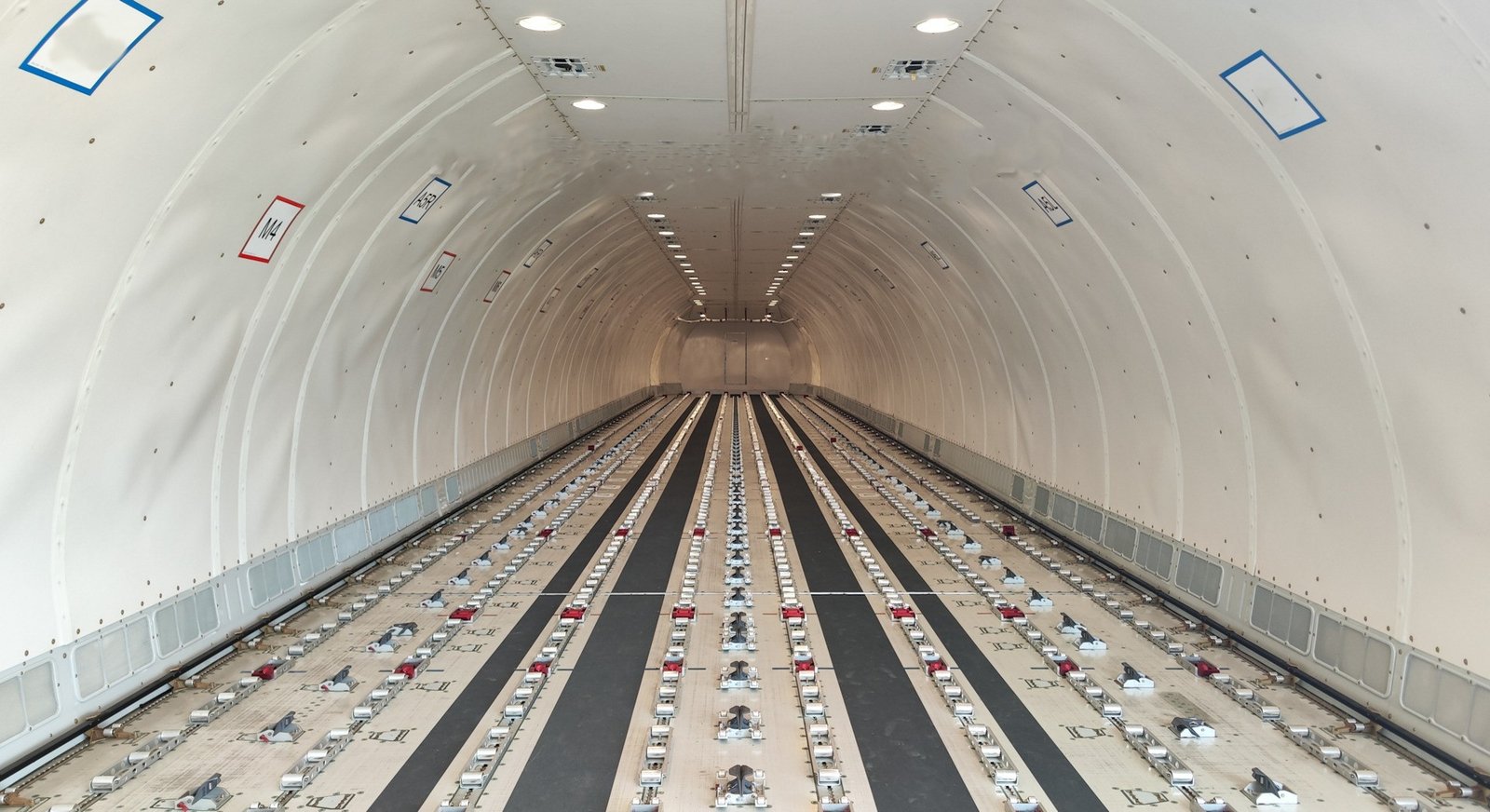
3. 767-300BDSF (Bedek Special Freighter Conversion)
Developed by Israel Aerospace Industries (IAI) — see the official IAI 767-300BDSF programme page — the BDSF variant is known for:
- Lower conversion cost compared to BCF
- Improved cargo door placement for efficient loading
- High market availability with multiple conversion slots
- Proven track record with major operators
Because both the BCF and BDSF routes draw from the same large pool of retired passenger 767s, buyers generally have more conversion slots and price flexibility with the 767 than with less common freighter donor aircraft.
Technical Specifications: Boeing 767-300F
| Specification | Details |
|---|---|
| Maximum Payload | ~52.7 tonnes |
| Maximum Take-Off Weight (MTOW) | 186,880 kg |
| Range | 5,500–6,025 km |
| Engines | GE CF6-80C2, PW4000 |
| Cruise Speed | Mach 0.80 |
| Main Deck Positions | 24 × 88″ × 125″ pallets |
| Lower Deck Capacity | 30+ LD2/LD3 units |
| Cabin Volume | ~438 m³ (combined decks) |
| Cargo Door Dimensions | 3.40m × 2.69m (main deck) |
| Cockpit Crew | 2 (Captain + First Officer) |
Why Logistics Companies Prefer the 767 Freighter
1. Balanced Payload-to-Range Ratio
The 767 hits a "sweet spot"—large enough for high-volume cargo yet cost-efficient enough for regional routes where wide-bodies may be uneconomical. This makes it the perfect middle-ground solution for operators needing more capacity than narrow-bodies but less than heavy wide-bodies.
2. High Versatility
The Boeing 767 Freighter is suitable for diverse cargo types:
- Express parcels – E-commerce and overnight delivery networks
- Automotive components – Just-in-time manufacturing supply chains
- Pharmaceuticals – Temperature-controlled ULD containers
- Live animals – Specialised animal transport configurations
- Heavy machinery – Industrial and mining equipment
- Dangerous goods – Full DG compliance and certification
3. Reduced Crew Requirement
Operational Efficiency
Two-pilot operation lowers staffing costs compared to older three-crew aircraft, whilst maintaining the highest safety standards. Modern flight deck automation reduces pilot workload and enhances operational reliability.
4. Excellent Airport Compatibility
Because it is compatible with mid-sized airports, the 767F is also ideal for emerging cargo hubs in:
- India – Delhi, Mumbai, Bengaluru, Chennai, Hyderabad
- Middle East – Dubai, Sharjah, Doha, Muscat, Riyadh
- Africa – Nairobi, Addis Ababa, Lagos, Johannesburg
- Eastern Europe – Warsaw, Budapest, Bucharest, Sofia
- Latin America – São Paulo, Mexico City, Buenos Aires
These are also the corridors where Safe Fly Aviation's own charter and advisory work is concentrated, since India–Middle East–Africa routes are typically where a 767-class freighter outperforms a larger wide-body on cost per tonne.
Boeing 767 Freighter Market Demand in 2025–2035
Industry Forecast Highlights
- Global freighter demand is expected to grow significantly over the next decade, per Boeing's own World Air Cargo Forecast
- Medium wide-body freighters like the 767 will continue powering the e-commerce boom
- Same-day and next-day delivery is becoming standard across major markets
- Boeing has extended the programme's future due to continued demand from integrators
- Secondary market for converted freighters remains robust
This growth is drawing a wider range of entrants into the market—not only established cargo airlines, but investors and start-up operators evaluating the 767 for the first time. For most of them, the early decisions cluster around the same handful of questions: whether to acquire a 767-300F/BCF/BDSF outright or pursue a dry lease, ACMI, or wet lease arrangement instead; how to plan fleet expansion and route profitability against real network data rather than guesswork; and, for shippers who need capacity now rather than in a future quarter, how to secure a worldwide cargo charter on short notice. Working through those questions with an operator who has already navigated them—on the acquisition and leasing side as much as the charter side—tends to shorten that learning curve considerably.
Operating Economics of the Boeing 767 Freighter
Although exact numbers vary by operator and engine type, typical operational metrics include:
1. Fuel Burn
Approximately 5.5–6.0 tonnes per hour, significantly lower than older wide-bodies like the DC-10F, MD-11F, or 747-400F. This translates to substantial cost savings on long-haul and regional routes.
2. Maintenance Costs
The aircraft benefits from decades of operational history, so it offers:
- Predictable maintenance cycles with well-documented intervals
- Abundant spare parts availability worldwide
- Certified MRO partners globally across all continents
- Lower maintenance man-hours compared to competitive aircraft
3. Conversion Cost (BCF/BDSF)
Conversion Investment
Approximately USD $12–18 million, depending on conversion type, configuration requirements, and market conditions. This includes structural modifications, cargo door installation, floor reinforcement, and certification — see IAI's passenger-to-freighter conversions overview for one conversion provider's published process.
4. Total Acquisition Cost
| Aircraft Type | Approximate Cost |
|---|---|
| Factory-built 767-300F (New) | USD $220–240 million |
| Converted 767-300BCF/BDSF | USD $30–45 million (depending on vintage) |
| Passenger-to-Freighter Conversion | USD $12–18 million |
This makes the 767 one of the best-value freighters on the global market, offering exceptional ROI for operators. Because these figures move with aircraft age, engine hours, and prevailing market conditions, they are best treated as a starting point for budgeting rather than a firm number—when evaluating a specific airframe, including current listings among available aircraft for sale, it is worth getting an up-to-date, aircraft-specific figure before committing.
Ready to Charter or Acquire a Boeing 767 Freighter?
Safe Fly Aviation offers comprehensive support for cargo charters, aircraft acquisition, leasing solutions, and operational consulting worldwide. Contact our expert team today to discuss your requirements.
Boeing 767 Freighter: Frequently Asked Questions
What is the payload capacity of the Boeing 767-300F?
The Boeing 767-300F has a maximum structural payload of approximately 52.7 tonnes, accommodating up to 24 standard 88″ × 125″ pallets on the main deck plus additional LD2/LD3 containers in the lower belly.
What is the range of the Boeing 767 Freighter?
The Boeing 767-300F has an operational range of approximately 5,500–6,025 km at maximum payload, making it well suited to regional and intercontinental cargo operations.
What is the difference between a 767-300BCF and a 767-300BDSF?
Both are passenger-to-freighter conversions of the 767-300, performed by different programmes. The BCF (Boeing Converted Freighter) is Boeing's own licensed conversion programme, while the BDSF is Israel Aerospace Industries' (IAI) conversion, generally available at a lower cost with a different cargo door placement. Both deliver a comparable factory-freighter-like cargo configuration.
How much does it cost to convert a Boeing 767 into a freighter?
A passenger-to-freighter (P2F) conversion of a Boeing 767-300 typically costs approximately USD $12–18 million, depending on the conversion programme, aircraft configuration, and market conditions, in addition to the cost of acquiring the donor passenger aircraft.
Which airlines and integrators operate the Boeing 767 Freighter?
The Boeing 767 Freighter is operated by major express integrators and cargo carriers worldwide, including FedEx, UPS, Amazon Air, DHL Air, LATAM Cargo, and ATSG (Air Transport Services Group), among others.
How does the Boeing 767 Freighter compare to the Airbus A330-200F?
The Airbus A330-200F carries a larger payload (around 65–70 tonnes) over a longer range than the 767-300F, but at a higher acquisition and operating cost. The 767-300F remains the more cost-efficient choice for operators whose networks don't require the A330F's extra capacity, and its much larger converted-freighter market gives buyers more entry points at lower cost.
Conclusion
The Boeing 767 Freighter stands as a timeless symbol of efficiency, capability, and reliability in global air cargo. Its unique blend of payload, range, performance, and cost-effectiveness ensures its uninterrupted dominance in the medium wide-body freighter category for years to come.
As trade volumes rise, and as e-commerce reshapes logistics around the world, the Boeing 767 remains the trusted backbone of express networks and cargo airlines. From FedEx and UPS to Amazon Air and regional operators, the 767 continues to prove its value day after day.
Your Global Aviation Partner
For cargo charters, aircraft acquisition, leasing, or operational consulting, Safe Fly Aviation is equipped to support clients across every region—from India to the Middle East, Africa, Europe, and beyond.
With over 15 years of aviation expertise, we understand the complexities of cargo operations and provide tailored solutions that deliver results.
Contact Safe Fly Aviation
Safe Fly Aviation – Your Global Partner in Cargo Charters, Aircraft Sales, Leasing & Aviation Solutions