Aircraft Runway Requirements Guide | Takeoff & Landing Distance Explained | Safe Fly Aviation
Aviation Operations
Aircraft Runway Requirements Guide: Takeoff & Landing Distance Explained

Key Takeaways — Runway Requirements
- Light jets can operate from runways as short as 3,000–4,000 feet (915–1,220 metres).
- Heavy business jets typically require 5,000–7,000 feet (1,525–2,135 metres) depending on weight and conditions.
- Runway elevation and temperature significantly affect takeoff distance — high-elevation airports may require 30–50% more runway.
- Aircraft weight is the single most important variable determining runway requirements.
- Landing distance is typically 60–70% of takeoff distance for the same aircraft.
- Turboprops can access shorter and unpaved runways inaccessible to most jets.
1. Introduction: Why Runway Requirements Matter
Whether you are planning a private jet charter, evaluating an aircraft for acquisition, assessing an airport for operational suitability, or designing a new airfield, understanding runway requirements is fundamental to safe and efficient aircraft operations. Having spent over three decades in air traffic control and airport operations — first with the Airports Authority of India and later in private aviation — I have seen firsthand how critical runway performance data is to every flight operation.
Runway length, width, surface, elevation, and surrounding obstacles all directly affect which aircraft can operate from a given airport — and under what conditions. For charter clients, runway requirements determine which aircraft can access specific destinations. A heavy jet may not be able to operate from a short regional runway, while a turboprop might access remote airstrips that jets cannot reach. For aircraft owners and operators, runway performance data is essential for flight planning, weight management, and regulatory compliance.
This guide provides a comprehensive reference for aircraft runway requirements, covering the key concepts, influencing factors, and specific data for common aircraft types — from light jets to commercial airliners — drawing on both regulatory standards and practical operational experience.
From the Author's Experience
During my years in the ATC tower, one of the most common operational issues I encountered was pilots requesting takeoff clearances that exceeded the available runway distance for their actual aircraft weight and the prevailing conditions. A Gulfstream departing on a hot afternoon from a 5,500-foot runway might be perfectly safe at a reduced weight but marginal at maximum takeoff weight. Understanding these variables — not just the published numbers — is what separates safe operations from assumptions. This guide is written to help aviation professionals and charter clients alike understand what actually determines whether an aircraft can safely operate from a given runway.
2. Key Runway Concepts Defined
Before examining specific requirements, it helps to understand the standard terminology used in aircraft performance and runway planning. These are terms I worked with daily in ATC and airport operations:
- Takeoff Distance Required (TODR)
- The total runway distance needed for an aircraft to accelerate from a standing start, lift off, and reach a height of 35 feet above the runway surface. Includes safety margins mandated by aviation authorities (EASA, FAA, DGCA). As a controller, I always ensured that the declared TODA exceeded the aircraft's TODR by the required margin.
- Landing Distance Required (LDR)
- The runway distance needed for an aircraft to cross the runway threshold at 50 feet, touch down, and decelerate to a complete stop. Landing distance is typically 60–70% of takeoff distance for the same aircraft. This is why many airports can accept an aircraft for landing even when they cannot support its departure at maximum weight.
- Balanced Field Length
- The runway distance required for an aircraft to either continue takeoff after an engine failure at V1 (decision speed), or to safely stop on the remaining runway. This is the most critical safety calculation in takeoff performance and one I always verified when clearing aircraft for departure.
- V1 (Decision Speed)
- The maximum speed at which a rejected takeoff can be initiated and the aircraft stopped within the remaining runway. Above V1, the takeoff must continue even if an engine fails. From the tower, once an aircraft passes V1, we know the departure is committed.
- Accelerate-Stop Distance
- The distance required to accelerate to V1, experience an engine failure, and bring the aircraft to a complete stop using brakes, spoilers, and thrust reversers. This must be less than the ASDA (Accelerate-Stop Distance Available) published for the runway.
- Runway Declared Distances
- TORA (Takeoff Run Available), TODA (Takeoff Distance Available), ASDA (Accelerate-Stop Distance Available), and LDA (Landing Distance Available) — the officially declared operational lengths of a runway as published in the Aeronautical Information Publication (AIP). These are the numbers controllers and pilots use for every operation.
3. Factors Affecting Runway Requirements
Runway requirements are not fixed — they vary significantly based on multiple operational and environmental factors. In my experience, the most common mistake is assuming that published "minimum runway length" figures apply to all conditions.
Aircraft Weight
Weight is the single most important variable. A heavier aircraft requires more runway for both takeoff and landing. A Gulfstream G650 at maximum takeoff weight (MTOW) may require 6,000+ feet of runway. At a reduced weight — with fewer passengers or less fuel — it may operate from a 5,000-foot runway. This is why long-range flights often require longer runways: the aircraft must carry more fuel, increasing takeoff weight. I have cleared the same aircraft type from the same runway on different days with vastly different takeoff rolls, purely due to weight differences.
Runway Elevation (Pressure Altitude)
Higher elevation means lower air density. Lower air density reduces engine performance (less oxygen for combustion) and aerodynamic performance (less lift generated by the wings). An aircraft operating from Denver International Airport (5,434 feet elevation) may require 30–50% more runway than at sea level on a standard day. In India, airports such as Leh (10,682 feet) present extreme challenges where even modest aircraft require careful weight and performance calculations.
Temperature
Higher temperatures also reduce air density. This effect compounds with elevation — the combination is known as "hot and high" operations. An aircraft departing from a high-elevation airport on a hot summer day faces the most demanding runway requirements. I have seen days in Delhi where the combination of summer heat and a fully loaded aircraft pushed takeoff performance to its limits, even at near-sea-level elevation.
Runway Slope
An uphill slope increases takeoff distance (the aircraft must overcome gravity). A downhill slope reduces takeoff distance but increases landing distance. Runway slope is published in airport data and factored into performance calculations. During my time in airport planning, we always ensured that slope data was accurately surveyed and published — it can make a meaningful difference to operational limits.
Wind
Headwinds reduce both takeoff and landing distance by increasing airflow over the wings. Tailwinds increase required distance. Most aircraft have maximum tailwind limits for takeoff and landing (typically 10–15 knots). As a controller, I would always assign the runway most closely aligned into the wind — not just for aircraft performance, but because it is fundamental to safe operations.
Runway Surface & Condition
Dry paved runways provide the best performance. Wet runways increase stopping distance. Contaminated runways (standing water, snow, ice) significantly increase both takeoff and landing distance. Grass and unpaved surfaces increase rolling resistance, requiring more runway. I always briefed pilots on the latest runway condition reports, especially during monsoon season when braking action could deteriorate rapidly.
Flap Setting
Higher flap settings reduce takeoff and landing distance by increasing lift at lower speeds, but they also increase drag. Pilots select the optimal flap setting based on runway length, weight, and conditions.
Regulatory Requirement: For transport category aircraft, certified takeoff and landing distances include mandatory safety margins. Takeoff distance must include a 15% margin over the demonstrated distance. Landing distance at destination must be achievable within 60% of the available runway length (dry runway) or 115% of the demonstrated dry landing distance (wet runway) — the so-called "60% rule" and "115% rule." These are not theoretical — they are applied to every flight. — EASA CS-25 / FAA Part 25 Airworthiness Standards
4. Runway Requirements by Aircraft Type
The table below provides typical runway requirements for common aircraft categories under standard conditions (sea level, 15°C, maximum takeoff weight). Actual requirements vary based on the factors discussed above. Always consult the aircraft flight manual (AFM) and current performance data for specific operations.
| Aircraft Category | Example Aircraft | Takeoff Distance (Sea Level, MTOW) | Landing Distance (MLW) | Minimum Runway Width |
|---|---|---|---|---|
| Very Light Jet | Citation M2, Phenom 100 | 3,000–4,000 ft (915–1,220 m) | 2,500–3,000 ft (760–915 m) | 75 ft (23 m) |
| Light Jet | Citation CJ3+, Learjet 75 | 3,500–4,500 ft (1,065–1,370 m) | 2,800–3,300 ft (855–1,005 m) | 75–100 ft (23–30 m) |
| Mid-Size Jet | Hawker 900XP, G280 | 4,500–5,500 ft (1,370–1,675 m) | 3,000–3,800 ft (915–1,160 m) | 100 ft (30 m) |
| Super Mid-Size Jet | Challenger 350, Falcon 2000 | 5,000–6,000 ft (1,525–1,830 m) | 3,500–4,500 ft (1,065–1,370 m) | 100 ft (30 m) |
| Heavy Jet | Gulfstream G650, Global 7500 | 5,500–7,000 ft (1,675–2,135 m) | 3,500–4,500 ft (1,065–1,370 m) | 100–150 ft (30–45 m) |
| Ultra-Long Range | Global 7500, G700 | 6,000–7,500 ft (1,830–2,285 m) | 4,000–5,000 ft (1,220–1,525 m) | 150 ft (45 m) |
| Turboprop | King Air 200, Pilatus PC-12 | 2,500–4,000 ft (760–1,220 m) | 2,000–3,000 ft (610–915 m) | 60–100 ft (18–30 m) |
| Regional Jet | Embraer E175, CRJ-900 | 5,000–6,500 ft (1,525–1,980 m) | 4,000–5,000 ft (1,220–1,525 m) | 100–150 ft (30–45 m) |
| Narrow-Body | Airbus A320, Boeing 737-800 | 6,000–8,000 ft (1,830–2,440 m) | 5,000–6,500 ft (1,525–1,980 m) | 150 ft (45 m) |
| Wide-Body | Boeing 777-300ER, A350-900 | 8,000–11,000 ft (2,440–3,350 m) | 5,500–7,500 ft (1,675–2,285 m) | 150–200 ft (45–60 m) |
Note: Distances are indicative for standard conditions (ISA, sea level, MTOW/MLW). Actual requirements vary with weight, elevation, temperature, runway slope, wind, and flap setting. Always consult official performance data. These figures represent typical operational values observed over years of ATC and airport operations experience.
5. Private Jet Runway Requirements
Private jets span a wide range of runway requirements, from very light jets that can access small regional airports to ultra-long-range aircraft requiring major airport infrastructure.
Very Light Jets (VLJs)
Aircraft such as the Citation M2, Phenom 100, and HondaJet can operate from runways as short as 3,000–4,000 feet. These jets are ideal for accessing smaller regional airports and private airfields. Typical passenger capacity: 4–6. Typical range: 1,200–1,800 nm.
Light Jets
Citation CJ3+, Learjet 75, and Phenom 300 require approximately 3,500–4,500 feet for takeoff. These aircraft offer excellent short-field performance while providing comfortable cabins for 6–8 passengers. Their ability to access shorter runways makes them popular for regional business travel.
Mid-Size Jets
Hawker 900XP, Citation Latitude, and Gulfstream G280 typically require 4,500–5,500 feet. These aircraft offer stand-up cabins, full galleys, and 7–9 passenger capacity with transcontinental range. Runway requirements increase significantly at high-elevation airports.
Heavy Jets
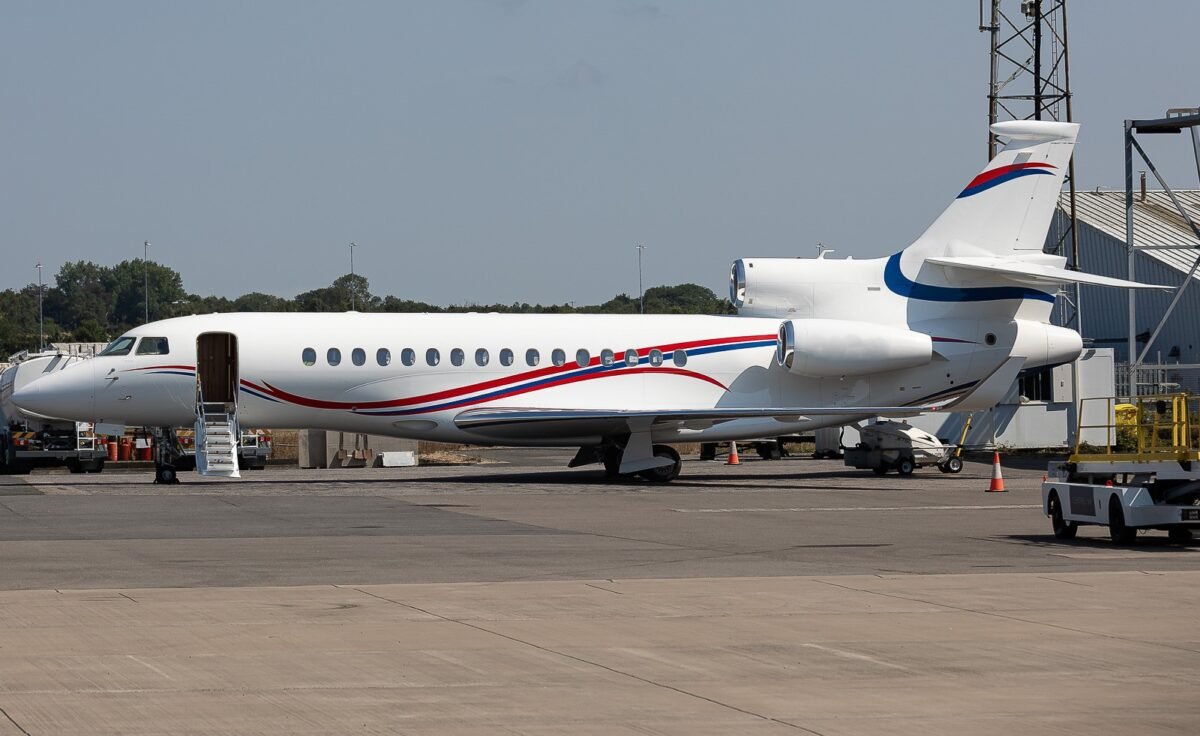
Gulfstream G650, Global 7500, and Falcon 8X are capable of intercontinental non-stop flights but require 5,500–7,000+ feet for takeoff at maximum weight. These aircraft need well-maintained runways at major airports or dedicated business aviation facilities. Their superior range comes with greater runway demands.
Charter Planning Tip
When requesting a private jet charter, always confirm the runway length at both your departure and destination airports. If you are flying to a regional airport with a shorter runway, a mid-size or light jet may be more suitable than a heavy jet — even for longer distances — if the aircraft can make a fuel stop en route. Our private jet charter team advises on the optimal aircraft for your specific route and airport requirements.
6. Commercial Aircraft Runway Requirements
Commercial aircraft require substantially more runway than private jets due to their higher weights and passenger capacities. During my time managing airport operations, I routinely assessed whether our runways could accommodate different commercial types at various weights.
Regional Jets
Embraer E-Jets and CRJ series typically require 5,000–6,500 feet. These aircraft serve smaller cities and regional routes, often operating from airports with shorter runways than major international hubs.
Narrow-Body Aircraft
Airbus A320 family and Boeing 737 series require 6,000–8,000 feet at MTOW. These aircraft dominate short and medium-haul routes. The A319 and 737-700 variants, with lower passenger capacity, can operate from shorter runways than their larger A321 and 737-900 counterparts.
Wide-Body Aircraft
Boeing 777, 787, Airbus A330, and A350 require 8,000–11,000+ feet at MTOW. These aircraft operate from major international airports with runways typically exceeding 10,000 feet. Long-haul flights at high takeoff weights demand the most runway.
7. Turboprop & Specialist Aircraft
Turboprop aircraft offer unique runway flexibility that jets cannot match. I have cleared turboprops into airstrips that would be unthinkable for jet operations:
- King Air 200/350: Can operate from runways as short as 2,500–3,500 feet. Suitable for unpaved and grass runways with operator approval.
- Pilatus PC-12: Exceptional short-field performance — can operate from runways under 2,500 feet. Designed for unpaved and rugged airstrips. Popular for accessing remote locations in the Himalayas and other challenging terrain.
- Cessna Caravan: The ultimate utility aircraft — operates from runways under 2,000 feet, including water (with floats), snow (with skis), and unprepared surfaces.
- ATR 42/72: Regional turboprops requiring 4,000–5,000 feet. Can operate from shorter and less developed runways than regional jets. Common at airports across India and Southeast Asia.
For charter clients needing access to remote locations, private estates, or undeveloped airstrips, turboprops are often the optimal solution. Our helicopter charter service provides an alternative where even turboprops cannot operate.
8. Hot & High Operations
"Hot and high" refers to operations from airports with both high elevation and high temperature — a combination that significantly degrades aircraft performance. This was a daily consideration during my ATC career, particularly at airports in northern India and when coordinating with colleagues at high-altitude aerodromes.
- North America: Denver (5,434 ft), Mexico City (7,316 ft), Calgary (3,557 ft)
- South America: Bogotá (8,360 ft), Quito (9,228 ft), La Paz (13,325 ft)
- Africa: Addis Ababa (7,625 ft), Nairobi (5,327 ft), Johannesburg (5,558 ft)
- Asia: Leh (10,682 ft), Lhasa (11,713 ft), Daocheng Yading (14,472 ft — world's highest commercial airport)
- Middle East: Dubai, Doha, and Riyadh at low elevation but extreme summer temperatures (45°C+) create "hot" (but not "high") conditions
Performance Impact
At high-elevation airports, aircraft may require 30–50% more runway than at sea level. In extreme cases (such as La Paz or Leh), maximum takeoff weight may be significantly restricted — an aircraft may need to reduce payload (passengers or fuel) to operate safely. This can necessitate a fuel stop at a lower-elevation airport for long-range missions.
Operational Reality: I recall coordinating operations at Leh — one of the world's highest commercial airports at 10,682 feet. Even turboprop aircraft that routinely operate from short runways at sea level require careful weight and balance calculations. On warm afternoons, some aircraft simply cannot depart at full load. This is not a theoretical limitation — it is a daily operational constraint that requires disciplined flight planning and, sometimes, difficult decisions about payload reduction. — G Maini, from 35 years of ATC and airport operations experience
9. Runway Surface, Width & Infrastructure
Surface Type
- Paved (Asphalt/Concrete): Required for virtually all jet aircraft. Provides consistent friction, load-bearing capacity, and all-weather capability. During my airport management years, maintaining pavement condition was a constant priority.
- Grass/Unpaved: Restricted to turboprops and specialist utility aircraft with appropriate certifications. Even then, surface condition, drainage, and load-bearing capacity must be assessed. Wet grass significantly increases stopping distance.
- Gravel: Some turboprops (notably the King Air series with gravel kits) are certified for gravel runway operations. Propeller and engine protection modifications are required.
Runway Width
ICAO recommends minimum runway widths based on aircraft approach category. Light aircraft can operate from runways as narrow as 60 feet (18 metres). Business jets typically require 75–100 feet (23–30 metres). Commercial aircraft require 150 feet (45 metres) or more. Runway width affects crosswind limits and directional control — I have seen narrower runways become operationally limiting in strong crosswind conditions.
Load-Bearing Capacity (PCN)
The Pavement Classification Number (PCN) indicates a runway's load-bearing capacity. An aircraft's Aircraft Classification Number (ACN) must be equal to or less than the runway's PCN for unrestricted operations. Heavy aircraft may be restricted from operating at airports with low PCN values, regardless of runway length. This is a frequently overlooked constraint — I have had to decline heavy aircraft operations at airports where the runway was long enough but the pavement strength was insufficient.
Approach & Departure Obstacles
Runway requirements extend beyond the pavement. Obstacles in the approach or departure path — buildings, terrain, towers — may require steeper climb gradients, reducing the maximum allowable takeoff weight. This is particularly relevant for airports in mountainous or urban environments. During airport planning projects, obstacle limitation surfaces were among the most critical — and contested — considerations.
10. An ATC Perspective: What Controllers Need Pilots to Know
After 35 years in air traffic control and airport operations — spanning both government service with the Airports Authority of India and private sector roles — I want to share some practical insights that go beyond the published numbers:
Declared Distances Are Sacred
The TORA, TODA, ASDA, and LDA published in the AIP are not arbitrary — they are calculated based on obstacle surveys, runway strip dimensions, and clearway/residential area assessments. When a controller assigns a runway, these declared distances form the basis of every takeoff and landing clearance. Pilots must ensure their required distances do not exceed what is declared — not just what the concrete length appears to be.
Conditions Change Rapidly
A runway that was perfectly adequate at 6:00 AM with cool temperatures and light winds may become marginal by 2:00 PM when the temperature has risen 15°C and the wind has shifted. I have seen aircraft that departed comfortably in the morning unable to depart at the same weight in the afternoon. This is why performance calculations must be done for the actual conditions at the time of departure — not based on assumptions from earlier in the day.
Contaminated Runway Reports Are Critical
When a controller issues a runway condition report — dry, wet, damp, contaminated — this directly affects landing distance calculations. The difference between "wet" and "damp" may seem minor, but it can mean several hundred feet of additional stopping distance for a heavy aircraft. Take these reports seriously.
Communication Saves Lives
If you are a pilot and you are uncertain whether your aircraft can safely operate from a given runway under the current conditions, tell the controller. We would rather spend five minutes discussing performance than manage an overrun. Good communication between the flight deck and the tower is the foundation of runway safety.
11. Runway Considerations for Charter Clients
When planning a charter flight, runway requirements affect aircraft selection and operational feasibility:
- Know your airports: Provide our team with both departure and destination airports. We verify runway data as part of mission planning.
- Private strips and estates: If you wish to use a private airstrip, we assess runway length, surface, width, obstacles, and load-bearing capacity to determine suitable aircraft.
- Weight flexibility: If runway length is marginal, reducing passenger count or fuel load may enable a larger aircraft to operate. Our team advises on the optimal balance.
- Seasonal considerations: Runway conditions vary seasonally. A runway that accommodates a mid-size jet in dry summer conditions may be unsuitable in monsoon season with standing water.
- Alternate airports: If your preferred airport cannot accommodate your desired aircraft, we identify nearby alternatives with suitable runway infrastructure.
Need Aircraft Charter with Specific Runway Requirements?
Our team — informed by decades of operational expertise — assesses runway suitability for every charter mission. Whether you need a light jet for a regional airport, a turboprop for a private estate, or a heavy jet for intercontinental travel, we match the right aircraft to your airports.
Request Private Jet Charter12. Frequently Asked Questions
What is the minimum runway length for a private jet?
Very light jets can operate from 3,000–4,000 feet. Light jets require 3,500–4,500 feet. Mid-size jets need 4,500–5,500 feet. Heavy jets require 5,500–7,000+ feet at maximum weight. These are sea-level standard-day figures — higher elevations and temperatures increase requirements significantly.
How does elevation affect takeoff distance?
Higher elevation reduces air density, decreasing engine and aerodynamic performance. Aircraft may require 30–50% more runway at high-elevation airports such as Denver, Bogotá, or Leh. Always consult performance data for the specific airport elevation.
What is the difference between takeoff and landing distance?
Takeoff distance is typically longer, as the aircraft must accelerate from rest to flying speed. Landing distance is shorter (60–70% of takeoff distance) as the aircraft approaches at speed and uses brakes, spoilers, and thrust reversers to stop.
Can private jets land on grass runways?
Most business jets require paved runways. Turboprops such as the King Air and Pilatus PC-12 can operate from grass and unpaved runways with appropriate approvals. Always verify aircraft and operator approvals for unpaved operations.
What is balanced field length?
The runway distance required for an aircraft to either continue takeoff after an engine failure at V1, or stop safely on the remaining runway. This is the fundamental safety calculation that ensures an aircraft can safely abort or continue a takeoff following an engine failure.
What is the "60% rule" for landing?
For transport category aircraft, the landing distance at destination must be achievable within 60% of the available runway length on a dry runway. This provides a 67% safety margin over the demonstrated landing distance. On wet runways, the requirement is 115% of the dry landing distance.
How does aircraft weight affect runway requirements?
Weight is the most significant variable. A heavier aircraft requires more runway. Reducing payload (passengers or fuel) can significantly reduce takeoff distance, enabling operation from shorter runways. This is often the difference between a viable and non-viable departure from a marginal runway.
Data Sources & References
- ICAO Annex 14 — Aerodromes, Volume I: Aerodrome Design and Operations — icao.int
- EASA CS-25 — Certification Specifications for Large Aeroplanes — easa.europa.eu
- FAA Part 25 — Airworthiness Standards: Transport Category Airplanes — faa.gov
- DGCA India — Civil Aviation Requirements, Aerodrome Standards — dgca.gov.in
- Aircraft Flight Manuals (AFM) and Manufacturer Performance Data — Gulfstream, Bombardier, Dassault, Embraer, Cessna, Boeing, Airbus
- G Maini — 35 years of operational ATC and airport operations experience, Airports Authority of India and private sector.