Global Aircraft Availability Trends 2026 | Safe Fly Aviation
Global Aircraft Availability Trends 2026

📑 Market Intelligence Brief
✓ Global parked aircraft fleet: Industry estimates suggest ~12% of total fleet remains in storage (down from ~18% in 2023)
✓ Narrowbody availability: Tight – strong passenger demand, production delays, cargo conversions
✓ Widebody availability: Moderate – regional variations, freighter conversions absorbing supply
✓ Engine availability: Constrained – GE90, CFM56, V2500 lead times extended; LEAP and GTF production delays
✓ Lease rates: Up 8–12% YoY for narrowbodies, stable for widebodies
Understanding global aircraft availability is essential for buyers, sellers, lessors, and charter operators. According to industry data from Cirium and IATA, current market dynamics are shaped by post-pandemic recovery, production delays at Boeing and Airbus, aging fleet retirements, and sustained passenger demand. At Safe Fly Aviation, we track these trends daily to help clients time acquisitions, divestments, and charter fleet planning. This intelligence brief provides the market data you need to make informed decisions.
1. Current Market Overview
Industry estimates from FlightGlobal and IATA suggest the global commercial aircraft fleet stands at approximately 28,500 active aircraft (passenger and cargo). An additional 3,500–4,000 aircraft are currently parked – either in storage, maintenance, or awaiting redeployment. This represents a significant improvement from 2023, when parked aircraft exceeded 18% of the fleet according to Cirium data. Key drivers of current availability:
- Production delays: Boeing 737 MAX and 787 delivery slowdowns; Airbus A320neo family engine constraints (LEAP and GTF)
- Retirement wave: Older 737 Classics, 747s, A340s, and early A320s exiting fleets
- Freighter conversions: 737-800, 767-300, and 777-300ER conversion programs absorbing mid-life narrowbodies and widebodies
- China reopening: Domestic and international capacity returning, reducing parked aircraft in Asia
• Total in-service: ~28,500 aircraft (Cirium estimate)
• Parked/stored: ~3,800 aircraft (~12% of fleet)
• Under conversion: ~400 aircraft (freighter modification)
• Combined Boeing-Airbus annual output remains below pre-2019 levels
2. Narrowbody Availability (737, A320 Families)
Narrowbody aircraft remain the most actively traded segment, representing approximately 65% of secondary market transactions according to ISTAT data. Current availability by subtype:
| Family | Typical Age in Market | Availability | Trend | Buyer Demand |
|---|---|---|---|---|
| Boeing 737-800 | 10–18 years | Moderate | Tightening | Strong – cargo conversion active |
| Boeing 737 MAX 8/9 | 2–6 years | Low | Very tight | High – lease returns scarce |
| Airbus A320ceo | 12–20 years | Moderate-high | Stable | Moderate – value-conscious buyers |
| Airbus A320neo | 2–7 years | Low | Very tight | High – engine constraints limit supply |
Key insight: Boeing 737-800 and A320ceo represent the current sweet spot for buyers seeking value with reasonable fuel efficiency. However, competition from cargo conversion programs is reducing available passenger-configured units, pushing prices upward according to recent transaction data.

3. Widebody Availability (777, 787, A330, A350)
Widebody availability varies significantly by region and subtype. Current trends based on industry tracking:
| Family | Typical Age in Market | Availability | Trend | Notes |
|---|---|---|---|---|
| Boeing 777-300ER | 8–14 years | Moderate | Stable | High demand for cargo conversion |
| Boeing 777-200ER | 15–22 years | Moderate-high | Increasing supply | Value opportunity for cargo |
| Boeing 787-8/9 | 4–10 years | Low | Very tight | Few lease returns, strong demand |
| Airbus A330-200/300 | 10–18 years | Moderate | Stable | Cargo conversion active |
| Airbus A350-900/1000 | 3–8 years | Very low | Extremely tight | Rarely trade on secondary market |
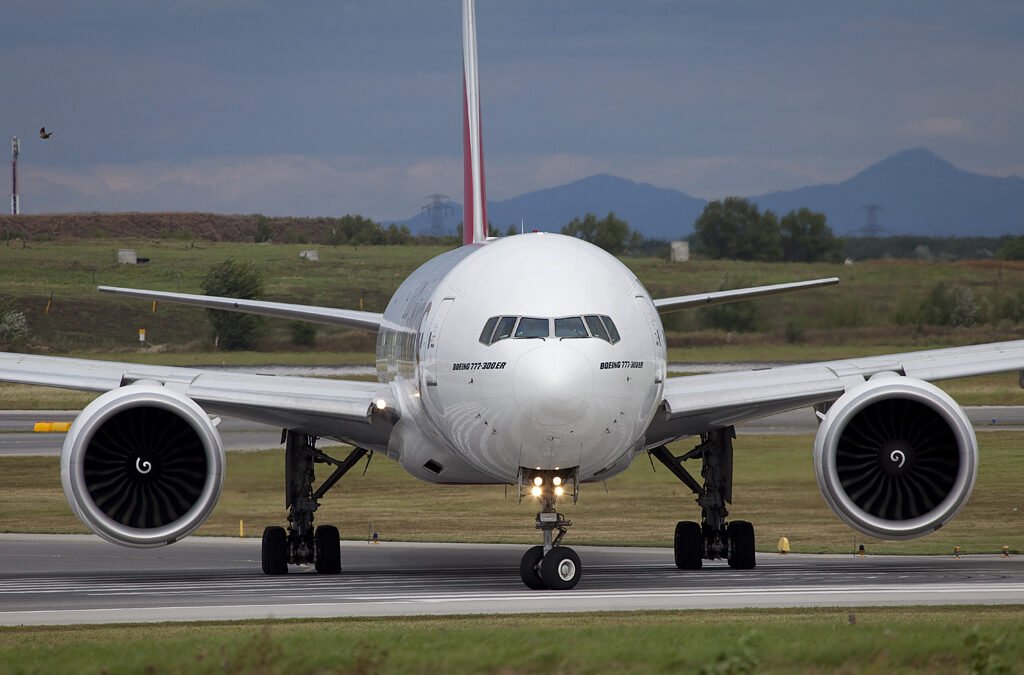
Key insight: The 777-300ER remains the most liquid widebody asset, with strong buyer interest from cargo carriers and airlines seeking capacity. The 777-200ER offers a value entry point for cargo conversion candidates.
4. Engine Availability Trends
Engine availability directly impacts aircraft transactions. Based on recent market observations, current engine market dynamics:
- GE90-115B: Constrained – high demand from 777-300ER operators and cargo converters; lead times 6–12 months for green-time units
- CFM56-7B: Tightening – 737NG fleet remains active; LLP availability becoming constrained
- V2500-A5: Moderate – stable supply as A320ceo fleet ages; reasonable LLP availability
- LEAP-1A/1B: Very constrained – production delays; few secondary market units available
- PW1100G (GTF): Constrained – durability issues and recall programs affecting availability
• GE90-115B green-time representation: $5–8M depending on LLP remaining life
• CFM56-7B mid-life: $2.5–3.5M
• V2500-A5 mid-life: $1.8–2.5M
• Lead times for overhauled units: 6–18 months depending on shop capacity
Note: Prices fluctuate based on market conditions, LLP status, and overhaul history. Contact Safe Fly Aviation for current pricing.
5. Regional Availability Differences
According to market intelligence from Aviation Week and IBA, aircraft availability varies significantly by geographic region:
| Region | Narrowbody Availability | Widebody Availability | Key Driver |
|---|---|---|---|
| North America | Tight | Moderate | Strong domestic demand; cargo conversion active |
| Europe | Moderate | Moderate | Summer season demand tightening inventory |
| Asia-Pacific | Tightening | Moderate | China recovery absorbing narrowbodies |
| Middle East | Low | Low | Carriers retaining fleet for growth |
| Latin America | Moderate-High | Moderate | Currency challenges driving lease returns |
Key opportunities: Latin America and Europe currently offer potential acquisition targets for buyers seeking 737-800 or A320ceo aircraft at competitive pricing.
6. Lease Rates & Asset Values
Current lease rate trends reflect supply-demand imbalances. Representative monthly dry lease rates (12-month term) observed in recent market activity:
- Boeing 737-800 (2008–2012): $160k–200k – up ~10% YoY
- Airbus A320ceo (2008–2012): $140k–180k – up 5–8% YoY
- Boeing 737 MAX 8 (2018–2022): $320k–380k – up ~12% YoY
- Boeing 777-300ER (2010–2014): $280k–350k – stable
- Boeing 787-9 (2014–2018): $380k–450k – up ~5% YoY
Asset values remain elevated for late-model narrowbodies and fuel-efficient widebodies. Safe Fly Aviation provides current market pricing and transaction comparables for buyers and sellers.

7. Freighter Conversion Impact
Industry data indicates the freighter conversion market is absorbing significant mid-life passenger aircraft, tightening availability for passenger operators:
- 737-800BCF (Boeing Converted Freighter): According to Boeing, over 300 converted to date; demand strong for e-commerce and express cargo
- 767-300BCF: Conversion line at capacity; feedstock of 767-300ER diminishing
- 777-300ERSF (GECAS / IAI): First deliveries completed; program is expected to absorb a meaningful portion of mid-life 777-300ER availability over the coming years
- A330-300P2F: Growing program; competing for mid-life A330 feedstock
• Each 737-800 conversion removes one passenger-configured aircraft from the secondary market
• The 777-300ER conversion program is expected to absorb a meaningful portion of mid-life fleet availability
• Buyers seeking passenger configuration may face increasing competition from cargo operators
8. How Safe Fly Aviation Navigates Market Trends
Safe Fly Aviation (Safefly.aero) is an active participant in global aircraft sales, engine trading, and charter solutions. Our market intelligence services include:
- Availability Tracking: Real-time monitoring of aircraft and engine inventory globally
- Buyer Representation: Sourcing scarce assets in tight markets
- Seller Representation: Timing divestments for maximum value
- Lease Rate Analysis: Current market comparables for negotiation
- Cargo Conversion Advisory: Identifying candidates for freighter modification
- Portfolio Strategy: Optimizing fleet mix based on availability trends
❓ Frequently Asked Questions
📊 Leverage Market Intelligence for Your Next Transaction
Contact Safe Fly Aviation for current aircraft availability, pricing, and strategic advisory.
View Inventory → Charter Services → Request Market Brief → WhatsApp Us →➡️ Email: sales@safefly.aero | Phone: +91 78400 00473 | Web: https://safefly.aero
• IATA – Aircraft fleet and traffic forecasts
• Cirium – Fleet utilization and parked aircraft data
• Boeing and Airbus – current production and delivery status
• ISTAT – industry market surveys and lease rate benchmarks
• Aviation Week Network / IBA – regional availability intelligence
• Safe Fly Aviation transaction database – indicative market comparables
Market conditions change rapidly. Contact Safe Fly Aviation for current intelligence specific to your target assets.