The US–Canada Aircraft Certification Dispute: What the Latest Developments Could Mean for Aviation Safety
Aircraft certification is designed to be technical, evidence-led and independent of politics. In late January 2026, a high-profile row involving the United States and Canada put that principle in the spotlight—raising questions for operators, owners and passengers alike. The original certification dispute was resolved by the end of February 2026, though a related trade dispute involving the same manufacturer resurfaced in September 2026 — see the update below.
The specific certification dispute described in this article was resolved seven months ago. Transport Canada certified Gulfstream's G500 and G600 on 15 February 2026, then the G700 and G800 on 24 February 2026 — completing approvals for all four aircraft named in the original threat and removing the immediate trigger for the proposed 50% tariff and Bombardier "decertification." Separately, on 7 September 2026, President Trump raised a new, differently-framed threat against Bombardier as part of a broader, escalating US–Canada trade dispute — this time demanding the company manufacture in the US rather than citing certification delays. That newer dispute remained unresolved as this update was published. Full detail and sources are in Resolution and later developments below; the sections that follow it are preserved as they were reported at the time, for the historical record.
What happened (in plain English)
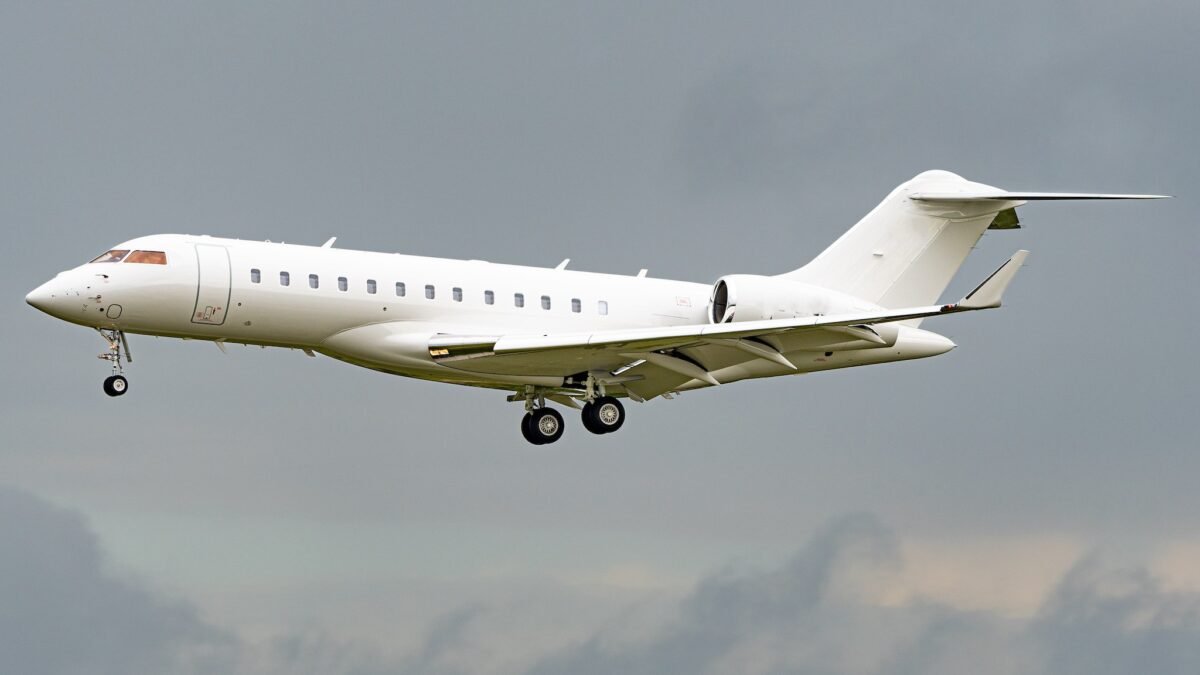
In late January 2026, President Donald Trump publicly threatened to "decertify" certain Canadian-made aircraft (often cited as Bombardier's Global Express family, the predecessor to today's Global 7500) and to impose a 50% tariff on aircraft imported from Canada. Reporting linked the threat to Canada's pace in certifying (validating) several US-made Gulfstream business jets for Canadian operation.
- Major outlets reported the "decertification" threat and the proposed 50% tariff. (Reuters; Washington Post; AP)
- A White House official was quoted as indicating any action would not affect currently operating aircraft. (Reuters)
- Transport Canada said it was working with the FAA on the approvals after the dispute flared. (Reuters (3 Feb 2026))
- 10 Feb 2026: Reuters reported the FAA Administrator said Canada was expected to announce certification of some Gulfstream jets "later this week." (Reuters (10 Feb 2026))
- Confirmed: that expectation held — see the Resolution section below for what actually happened on 15 and 24 February 2026.
Status as first reported (late January – mid-February 2026)
This section is preserved as it was written while the story was developing; it is not the current state of affairs — see Resolution and later developments for that. At the time, the headline risk in late January was "politicised certification." By early February, reporting had shifted towards de-escalation: Transport Canada publicly said it was working with the FAA on the approvals, and on 10 February Reuters reported the FAA Administrator expected Canada to announce certification of some Gulfstream jets shortly. (Reuters (3 Feb 2026); Reuters (10 Feb 2026))
- If the Gulfstream certifications were issued as expected, the immediate political pressure around "decertification" and blanket aircraft tariffs could ease — which is what happened (see below).
- Even once resolved, the episode was a reminder that cross-border validation timelines can become commercially and politically sensitive—especially on flagship programmes.
Resolution and later developments (updated 8 September 2026)
Transport Canada confirmed the expected approvals in two stages: the G500 and G600 were certified on 15 February 2026, followed by the G700 and G800 on 24 February 2026 — completing certification of all four Gulfstream models named in the original dispute and, by most industry accounts, closing that specific standoff. (Aviation International News; Skies Mag; The Deep Dive)
- Transport Canada stated publicly that its safety standards — including cold-soak operation and freezing-rain testing suited to Canada's climate — applied uniformly and were not politicised, and that the G700/G800 applications were already in progress before the January threats.
- Important nuance: Canada's certification is separate from the FAA's own time-limited fuel-icing exemption for the G700/G800 (see below), which still requires Gulfstream to complete full compliance testing before 31 December 2026 regardless of Canadian validation status.
- Reporting reviewed for this update found no confirmation that the threatened 50% tariff or Bombardier "decertification" was ever formally implemented before the certifications were announced.
That said, the underlying US–Canada trade relationship did not stay quiet. On 7 September 2026, President Trump raised a new threat against Bombardier — this time demanding the company manufacture aircraft in the United States or lose access to the US market, rather than citing certification delays — as part of a broader, escalating tariff dispute between the two countries. Canada's own retaliatory tariffs, covering roughly CA$27.6 billion of US goods and announced in late August 2026, took effect on 8 September 2026. (Global News)
The January–February 2026 dispute was specifically about Canada's pace in validating already-FAA-certificated Gulfstream jets. The September 2026 threat is about where Bombardier manufactures its aircraft, and arrived bundled into a wider tariff standoff that goes well beyond aerospace. They share a company, a tariff percentage, and a president's frustration — but not the same underlying demand. Additional coverage of the September developments exists from Reuters, CNBC, Forbes, Al Jazeera and The Globe and Mail, among others; those specific pages could not be independently re-verified by the tools available in this session (paywalls or access restrictions), so treat exact quotes from them as reported by search results rather than independently confirmed here.
What "aircraft certification" actually means
Aircraft certification is the formal, documented process by which a regulator confirms an aircraft meets airworthiness and safety standards. In the US, the Federal Aviation Administration (FAA) issues type certification. In Canada, Transport Canada Civil Aviation performs the equivalent function.
Importantly, when an aircraft is designed and certificated in one country, another country often performs a validation—a structured review that can accept much of the original work while still asking for additional evidence where needed. This cooperation is governed by bilateral arrangements and implementation procedures. (FAA BASA listings and TC implementation procedures)
- FAA Bilateral Aviation Safety Agreement (BASA) resources: FAA BASA listing page
- Transport Canada implementation procedures with the US: Transport Canada
Why Gulfstream is part of the story
Reporting around the dispute points to Canadian validation delays affecting several Gulfstream business jets. Coverage has repeatedly referenced fuel-system icing as a technical theme—where water in fuel can freeze under cold conditions, potentially restricting fuel flow.
Fuel-system icing is a long-recognised risk across aviation. Transport Canada's safety material on the topic explains how water can be retained in fuel and later freeze, blocking fuel systems. (Transport Canada advisory)
The "time-limited exemption" referenced in reporting
In January 2024, the FAA issued a temporary exemption tied to fuel-icing certification rules for Gulfstream's G700 and G800 programme work, requiring full compliance testing to be complete before 31 December 2026. This deadline is unaffected by Canada's 2026 certifications — it is a separate, US-side compliance clock that continues to run. (FlightGlobal; Exemption document (Regulations.gov PDF))
Why Bombardier is part of the story
President Trump's public remarks targeted Canadian-manufactured aircraft—reporting frequently mentioned Bombardier's Global family. Analysts and industry groups warned that broad "decertification" would be highly disruptive, given how many Canadian-built aircraft operate in US fleets. This same company and a similar tariff figure resurfaced in a separate demand in September 2026 — see Resolution and later developments above.
Reuters reported more than 5,400 Canadian-built aircraft registered in the US and cited roughly 150 Bombardier Global Express jets registered in the US. (Reuters — this specific page could not be independently re-verified by the tools available this session; treat the figures as reported rather than re-confirmed here.)
Can the FAA "decertify" aircraft for trade reasons?
Multiple aviation lawyers and industry watchers noted a core constraint: the FAA's certification powers are grounded in airworthiness and safety—not trade retaliation. Reuters reported that legal experts said the FAA can revoke certification on safety grounds, not economic ones. (Reuters)
Why this matters to safety (and to everyday flyers)
Certification must stay evidence-led
When certification becomes a bargaining chip, trust in the system weakens—especially across borders where mutual confidence is essential.
Supply chains can feel the shock
Even threats can create uncertainty around deliveries, registrations, maintenance planning and parts provisioning—particularly for operators relying on cross-border support.
Current flights were not immediately affected
Reporting quoted a White House official saying operating aircraft would not be affected by the threatened action. (Reuters)
Global standards depend on cooperation
The aviation system works best when regulators share data, validate thoroughly and avoid "tit-for-tat" pressure — and trade disputes involving the same manufacturers keep testing that cooperation.
Quick reference: what's been reported
| Aircraft / topic | What is known (fact-checked) | Why it matters for safety |
|---|---|---|
| Gulfstream G700 |
FAA certification announced 29 March 2024. (PR Newswire / Gulfstream)
Transport Canada certified it on 24 February 2026. (AIN)
Certified in both countries as of Feb 2026 |
The FAA's fuel-system icing exemption still requires full compliance testing by 31 Dec 2026, independent of Canadian validation. |
| Gulfstream G800 |
FAA and EASA certification announced 16 April 2025. (PR Newswire / Gulfstream)
Transport Canada certified it on 24 February 2026, the same day as the G700. (Skies Mag)
Certified in the US, EU and Canada as of Feb 2026 |
Same fuel-icing exemption deadline (31 Dec 2026) applies as for the G700. (Regulations.gov PDF) |
| Jan 2026 "decertification" & tariff threat |
Threats and tariff figure (50%) widely reported in late Jan 2026. (Reuters;
Washington Post)
Resolved — all four Gulfstream models certified by 24 Feb 2026 |
Regulatory independence is essential to public confidence; politicisation can raise systemic risk. |
| Sept 2026 Bombardier trade threat |
On 7 Sept 2026, a new threat demanded Bombardier manufacture in the US or lose market access, amid a broader tariff dispute; Canada's ~CA$27.6bn in counter-tariffs took effect 8 Sept 2026. (Global News)
New, separate dispute — unresolved as of publication |
A different demand than the certification-delay dispute above, but a reminder that aerospace trade friction between the two countries can resurface quickly. |
| Canadian-built aircraft in US fleets |
Reuters cited 5,400+ Canadian-built aircraft registered in the US as of late Jan 2026. (Reuters)
High disruption potential |
Any broad certification or trade action would have knock-on effects for airline schedules, maintenance and parts. |
Data charts
Chart 1: Scale of exposure mentioned in reporting (US registrations)
Chart 2: Timeline — from certification filing to resolution and renewed trade tensions
-
31 Dec 2019Gulfstream files the G700/G800 type-certificate amendment application with the FAA.
-
17 Jan 2024FAA issues a time-limited exemption tied to fuel-icing certification rules for the G700/G800.
-
29 Mar 2024Gulfstream G700 earns FAA certification.
-
24 Feb 2026Transport Canada certifies the G700 and G800 (having certified the G500/G600 on 15 Feb) — the certification dispute is resolved.
-
7 Sep 2026A renewed, separate Bombardier trade threat emerges amid a broader, escalating US–Canada tariff dispute.
-
31 Dec 2026FAA fuel-icing exemption compliance deadline for the G700/G800 — unaffected by Canada's certification.
Images
The following images are sourced from Wikimedia Commons with permissive licences and are hotlinked directly from Commons. Because this session's tools could not fetch wikimedia.org to confirm exact pixel dimensions or that the files still resolve, we recommend downloading and re-hosting them on safefly.aero's own media library before publishing — this avoids depending on a third party's servers for page-load performance and protects against the file being renamed, moved or removed without notice. Fixed aspect-ratio boxes have been added below so the layout won't shift regardless.


FAA logo (public domain, US government work) and Transport Canada logo, both via Wikimedia Commons.
The terms people keep searching
- Type certificate (TC)
- The regulator's approval that an aircraft's basic design meets airworthiness standards. It's the "design approval" foundation for production and operation.
- Validation
- A structured review by a second regulator (e.g., Canada reviewing a US-certificated aircraft) that may accept much of the original work but can request extra evidence.
- BASA (Bilateral Aviation Safety Agreement)
- An agreement enabling cross-border cooperation on certification, production oversight and maintenance. It helps avoid duplicate work while allowing independent safety checks. (See FAA and Transport Canada BASA/implementation pages.)
- Fuel-system icing
- A hazard where water in fuel can freeze, potentially blocking fuel lines or components. It is a known aviation risk and has been addressed through advisories and testing guidance. (Transport Canada safety advisory.)
- Exemption (time-limited)
- A regulator-granted allowance to deviate from specific rules under defined conditions and deadlines—commonly used to permit operations while additional compliance demonstrations are completed.
Frequently asked questions
Are Bombardier aircraft currently flying in the US affected?
No. Reporting quoted a White House official indicating that operating aircraft would not be affected by the January 2026 threatened action, and no broad decertification was ever implemented. (Reuters)
Has the US–Canada Gulfstream certification dispute been resolved?
Yes. Transport Canada certified the Gulfstream G500 and G600 on 15 February 2026, then the G700 and G800 on 24 February 2026, completing approvals for all four aircraft named in the original dispute. Separately, on 7 September 2026, a new and differently-framed threat against Bombardier emerged as part of a wider US–Canada trade dispute — see the next question.
Is the September 2026 Bombardier threat part of the same dispute?
Not directly. The September 2026 threat centers on a demand that Bombardier manufacture aircraft in the US or lose American market access, and arrived alongside broader retaliatory tariffs between the two countries — a different underlying issue from the certification delays that drove the original January 2026 dispute, even though both involve a 50% tariff figure and the same manufacturer. (Global News)
Why would Canada ask for more data if the FAA already certificated the aircraft?
Validation is meant to be cooperative but independent. A receiving authority can request additional evidence, particularly for hazards relevant to its operating environment (cold-weather risks, icing scenarios, operational assumptions, and so on). Transport Canada's own material highlights fuel-system icing as a recognised hazard. (Transport Canada)
Can a president directly order aircraft certification changes?
Certification decisions are made by regulators under statutory authority. Reuters reported that legal experts said the FAA can revoke certification on safety grounds, not economic disputes. (Reuters)
What should operators and owners do right now?
Monitor official regulator communications, keep maintenance planning conservative around the FAA's 31 December 2026 fuel-icing compliance deadline, and avoid reacting to headlines alone — including the September 2026 trade tensions, which remain fluid. If you are planning cross-border operations, an aircraft acquisition or import/export, seek professional regulatory advice early.
Conclusion: keep certification technical, not tactical
The late-January 2026 dispute was a reminder that aviation safety depends on regulators being free to follow evidence wherever it leads. Delays and additional validation requests can be inconvenient, but they can also be a sign the system is doing what it was built to do: interrogate risk before it becomes an incident. That specific dispute reached a clean resolution within a month, once Transport Canada completed its Gulfstream approvals in February 2026.
The September 2026 revival of tensions around Bombardier — this time over manufacturing location rather than certification — shows the underlying trade relationship remains unsettled even when a specific regulatory question is closed. At Safe Fly Aviation, we encourage flyers—whether you are a passenger, a private owner, or a corporate operator—to treat certification as a safety signal, not a political headline, and to keep an eye on how the broader trade dispute develops. If you need support navigating operational, documentation or cross-border flight planning considerations, or are weighing an aircraft purchase amid this uncertainty, our team brings 15+ years of aviation experience to help you make informed decisions.
Sources & further reading (fact-check)
- Reuters coverage of the threats and expert/legal context (30 Jan 2026): Reuters link — could not be independently re-verified by the tools available this session.
- Reuters note on operating aircraft not being affected (30 Jan 2026): Reuters link — same caveat.
- Reuters: Transport Canada says it is working with FAA on approvals (3 Feb 2026): Reuters link — same caveat.
- Reuters: FAA says Canada expected to announce certification of Gulfstream jets (10 Feb 2026): Reuters link — same caveat.
- Washington Post reporting (30 Jan 2026): Washington Post link — could not be independently re-verified this session (access restricted).
- AP coverage (29 Jan 2026): AP link — same caveat.
- Aviation International News: Transport Canada certifies the G700 and G800 (24 Feb 2026), verified live: AIN link
- Skies Mag: Transport Canada certification announcement, verified live: Skies Mag link
- The Deep Dive: dispute-resolution recap, verified live: The Deep Dive link
- Global News: September 2026 Bombardier threat and Canada's counter-tariffs, verified live: Global News link
- FAA BASA resources (updated listing page), verified live: FAA
- Transport Canada implementation procedures with the US, verified live: Transport Canada
- Fuel system icing advisory (Transport Canada), verified live: Transport Canada
- Exemption documentation (Regulations.gov PDF), verified live: PDF
- Industry reporting on the FAA exemption (Jan 2024), verified live: FlightGlobal
- Gulfstream announcement: G700 FAA certification (29 Mar 2024), verified live via PR Newswire: PR Newswire / Gulfstream
- Gulfstream announcement: G800 FAA & EASA certification (16 Apr 2025), verified live: PR Newswire / Gulfstream
Editorial note: This article is an educational explainer and does not constitute legal or regulatory advice. For operational decisions, consult official regulator publications and qualified aviation counsel.